

 Neftchi Fergana: the oil-workers’ club that dominated early Uzbek football
Special series – The Clubs Behind Uzbekistan’s World Cup Dream
As Uzbekistan plays in its first-ever FIFA World Cup after a historic qualification campaign, Novastan looks at the clubs that shaped the country’s football identity. From Soviet-era Pakhtakor Tashkent to regional powerhouses such as Nasaf Qarshi, Navbahor Namangan and Neftchi Fergana, this series explores how club football helped build the foundations of the White Wolves’ rise.
In the first years after Uzbekistan’s independence, the strongest club in the country was not always Pakhtakor Tashkent. For much of the 1990s, Uzbek football revolved around Fergana, where a team born from the oil industry became the first great provincial power of the new national league.
That team was Neftchi Fergana. Founded in 1962 as Neftyanik and renamed Neftchi after independence, the club carried the world of Fergana’s industrial economy into football. Its name means “oil worker” or “oilman”, a direct reference to the city’s refinery, chemical production and working-class sporting culture. If Pakhtakor’s name evokes cotton and Soviet Uzbekistan, Neftchi’s evokes oil, labour and the industrial pride of the Fergana Valley.
The club’s importance lies above all in what it achieved after 1991. Neftchi shared the first independent Uzbek league title with Pakhtakor in 1992, then won the championship outright in 1993, 1994 and 1995. It added another title in 2001. In the formative decade of Uzbek football, Neftchi was not an outsider challenging the hierarchy. It was the hierarchy.
The roots of that dominance go back to the Soviet period. Neftyanik Fergana spent years in the Soviet lower leagues, developing within sports structures linked to the region’s oil industry. In 1990, it won its Soviet Second League zone and reached the Soviet First League. In 1991, the final year of Soviet football, it finished seventh in that division. When Uzbekistan became independent, Neftchi entered the new national championship with organisation, confidence and a squad already used to competitive football.
The figure who connected these eras was Yuriy Sarkisyan. Born in Yerevan, Sarkisyan made his football life in Uzbekistan. He joined Neftyanik as a player in the 1970s, finished his playing career in Fergana, and later became head coach. From 1987 to 2013, he led the club for more than a quarter of a century, an almost unimaginable tenure in post-Soviet football.
Also read on Novastan: Uzbekistan at the World Cup: The White Wolves Enter the Global Stage
Sarkisyan was more than a successful coach. He became the face of Neftchi’s golden age. Under his leadership, the club won five Uzbek league titles, two Uzbek Cups and nine silver medals. Local football media often called him the “Uzbek Ferguson”, a comparison to Sir Alex Ferguson that reflected not only his trophies, but his longevity, authority and ability to build a club culture over decades.
Support Novastan, the European Central Asia magazine
By supporting Novastan, you are supporting the only English, French and German-language media specialising in Central Asia. We’re independent and we need your help to stay that way!His approach also shaped Neftchi’s identity. Sarkisyan relied heavily on domestic and local players rather than building the team around foreign signings. That made Neftchi feel like a Fergana club in a deeper sense: not only based in the city, but built from its football environment. At a time when many post-Soviet clubs were unstable, changing names, sponsors, budgets and squads, Neftchi had a recognisable structure and a coach who became an institution.
The 1990s side became the foundation of the club’s legend. Neftchi’s early champions were not only title winners; they helped define the new Uzbek league. The club’s squads included players who would become important figures in Uzbek football, including Andrey Fyodorov, later one of the country’s best-known defenders and coaches, and Oleg Shatskikh, who passed through Neftchi before becoming associated with other major clubs. The team also relied on players from Fergana and the wider valley, reinforcing its regional character.
Also read on Novastan: Pakhtakor Tashkent: The Club That Carries Uzbek Football’s Memory
For supporters, Neftchi’s strength was not only about results. It was about the feeling that Fergana could stand at the centre of national football. The early years after independence were a moment of reordering, when cities, institutions and regions were looking for their place in a new state. Neftchi gave Fergana a football voice at precisely that moment.
The club’s home today is Istiqlol Stadium, opened in 2015 with a capacity of around 20,500 spectators. The name means “independence”, which suits Neftchi better than almost any other Uzbek club. Its greatest period came when independent Uzbekistan’s football institutions were being born. The stadium is therefore not only a modern arena, but a reminder of the era that made the club famous.
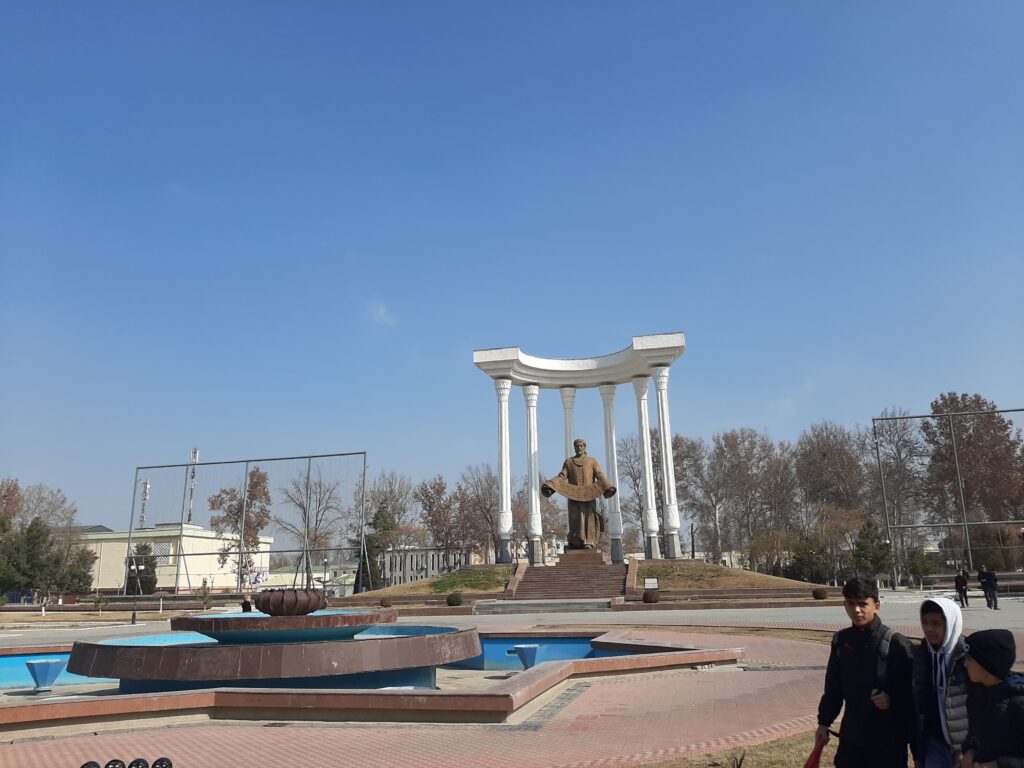
Fergana itself gives the team much of its meaning. The city is one of the main urban centres of the Fergana Valley, long associated with oil refining, chemicals, textiles and regional production. Around it lies one of Central Asia’s richest cultural landscapes: Margilan and its silk traditions, Rishtan and its ceramics, Kokand and the memory of the khanate. Neftchi belongs to that setting: industrial, regional, confident and deeply connected to the valley.
This identity sets it apart from the other clubs in this series. Pakhtakor Tashkent carries Soviet memory and national tragedy. Nasaf Qarshi represents regional ambition and Asian success. Navbahor Namangan expresses popular passion and supporter culture. Neftchi represents the first post-independence football order: disciplined, industrial, local and built around a coach who became part of the club’s mythology.
Its rivalries reflect that history. Matches against Pakhtakor were among the defining fixtures of the early Uzbek league, opposing the capital’s historic club to Fergana’s rising power. Matches against Navbahor Namangan carry the internal geography of the Fergana Valley. Navbahor represents Namangan’s emotional football culture; Neftchi represents Fergana’s industrial memory and early dominance. Their rivalry is not only about points, but about prestige between neighbouring cities.
Yet Neftchi’s story is not one of uninterrupted glory. After the 2001 title, the club gradually lost ground. Pakhtakor reasserted itself. Bunyodkor became the prestige project of the late 2000s. Nasaf developed its own regional model and won the AFC Cup. Neftchi, once the symbol of the new Uzbek league, began to look like a club living more on memory than on present success.
Also read on Novastan: Nasaf Qarshi: the club that put Uzbek football on Asia’s map
The decline became severe enough for the club to spend time outside the top flight, a painful fall for a team that had once shaped the championship. That is why its recent revival matters. Neftchi’s return to the top of Uzbek football in 2025 was not simply another sporting success. It restored one of the original names of the independent Uzbek league to the centre of the domestic game.
The 2025 championship ended a 24-year wait. In Fergana, it was received as more than a trophy. It was the return of a club that had once made the city central to Uzbek football. Local media and regional officials presented the achievement as a source of pride, linking it to a wider ambition to strengthen football in the region. The title showed that Neftchi was not only a nostalgic reference to the 1990s. It could again shape the present.
The institutional context also remains important. Neftchi has long been closely connected to Fergana’s industrial and regional structures, above all through the oil-refining economy that gave the club its name and identity. Like many Uzbek clubs, it sits at the intersection of sport, local administration, industrial support and regional prestige. Its story is therefore not only about football results, but also about the way regional institutions, industries and local pride have helped shape club football in Uzbekistan.
Its present-day squad also gives it a link to the wider national-team environment. Goalkeeper Botirali Ergashev, who has been called up by Uzbekistan and plays for Neftchi Fergana, connects the club to the country’s current football generation. But Neftchi’s deeper contribution is historical rather than symbolic. The club helped create the competitive domestic culture from which Uzbek football developed.
Also read on Novastan: Discussions sur le développement du football féminin au Kazakhstan
That is why the club deserves a central place in any account of Uzbekistan’s football rise. It was there at the beginning of the independent league. It gave Fergana a national football voice. It had one of the longest and most successful coaching eras in post-Soviet football. It rose, declined, rebuilt and returned. Few Uzbek clubs offer such a complete football biography.
Neftchi’s story contains several layers of modern Uzbek football: the Soviet legacy, the first years of independence, regional ambition, industrial sponsorship, coaching continuity, collapse and revival. It is not only a club of the past, nor simply a revived champion of the present. It is a bridge between both.
As Uzbekistan steps onto the World Cup stage, Neftchi reminds us that national football identities are built over decades, often far from the spotlight. They are built in cities like Fergana, through clubs that give local pride a structure, a history and a stadium.
The road to Uzbekistan’s first World Cup passed through many places: Tashkent, Qarshi, Namangan, foreign leagues and national-team camps. But it also passed through Fergana, through Neftchi, and through the long shadow of Yuriy Sarkisyan, the coach who turned an oil-workers’ club into one of the founding powers of independent Uzbek football.
Mathieu Lemoine, Editor-in-Chief for Novastan-English