


 Nasaf Qarshi: the club that put Uzbek football on Asia’s map
Special series – The Clubs Behind Uzbekistan’s World Cup Dream
As Uzbekistan plays in its first-ever FIFA World Cup after a historic qualification campaign, Novastan looks at the clubs that shaped the country’s football identity. From Soviet-era Pakhtakor Tashkent to regional powerhouses such as Nasaf Qarshi, Navbahor Namangan and Neftchi Fergana, this series explores how club football helped build the foundations of the White Wolves’ rise.
If Pakhtakor Tashkent carries Uzbek football’s memory, Nasaf Qarshi represents its modern regional ambition. The club from Qarshi, in the southern region of Qashqadaryo, has become one of the clearest examples of how Uzbek football moved beyond the capital and built a wider national geography.
As Uzbekistan makes its first appearance at the FIFA World Cup, attention naturally falls on the national team’s most visible names: Eldor Shomurodov, Abdukodir Khusanov, Abbosbek Fayzullaev and Fabio Cannavaro, the Italian World Cup winner now leading the White Wolves. But behind that national breakthrough lies an ecosystem of clubs that developed players, created competitive pressure and gave Uzbek football its domestic foundation. Nasaf is central to that story.
The World Cup may be new for Uzbekistan, but Nasaf’s role in the country’s football rise is not. Current national-team goalkeeper Abduvohid Nematov and defender Umar Eshmurodov both connect the club directly to Uzbekistan’s first World Cup squad, while Nasaf has also become known for developing and giving responsibility to Uzbek players at a high competitive level. In a football culture long associated with Tashkent’s dominance, Nasaf showed that a club from Qarshi could win at home, compete in Asia and become a national reference point.
Nasaf was founded in 1986 under the name Geolog, a reminder of the Soviet and industrial context in which many clubs across the region were created. Like other post-Soviet teams, its early identity reflected local institutions, economic structures and regional life as much as sport itself. The club later became known as Nasaf, a name linked to the historical name of the Qarshi area, connecting the team to a deeper local geography.
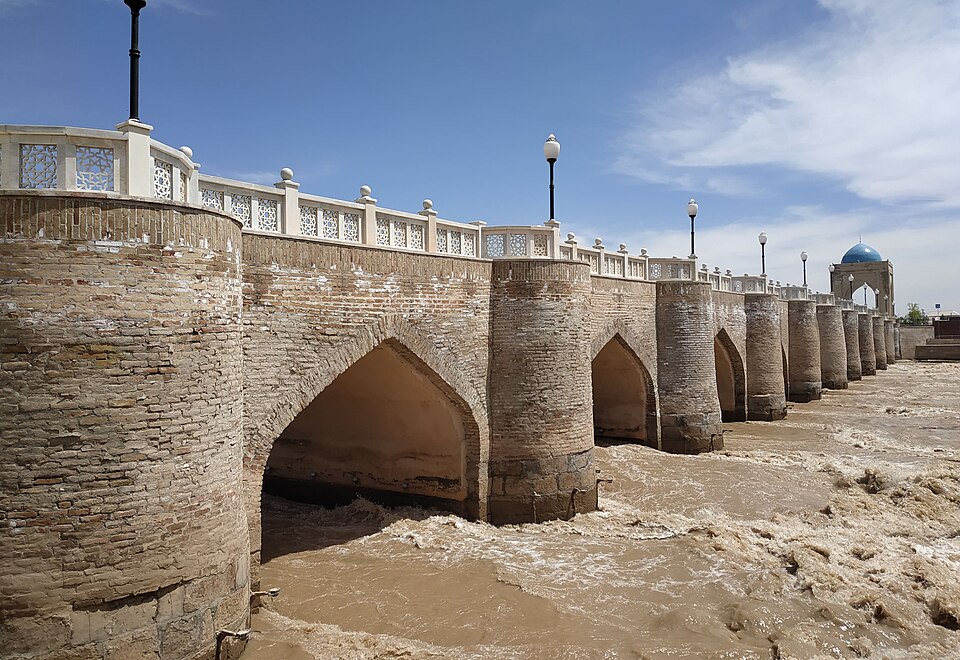
That geography matters. Qarshi is not Tashkent. It is not the political, administrative or media centre of Uzbekistan. Located in Qashqadaryo, in the south of the country, it sits in a region associated with energy, agriculture, industry and routes towards the wider south. For a club from Qarshi to become one of Uzbekistan’s leading football institutions means that Uzbek football cannot be understood only through the capital.
Also read on Novastan: Uzbekistan at the World Cup: The White Wolves Enter the Global Stage
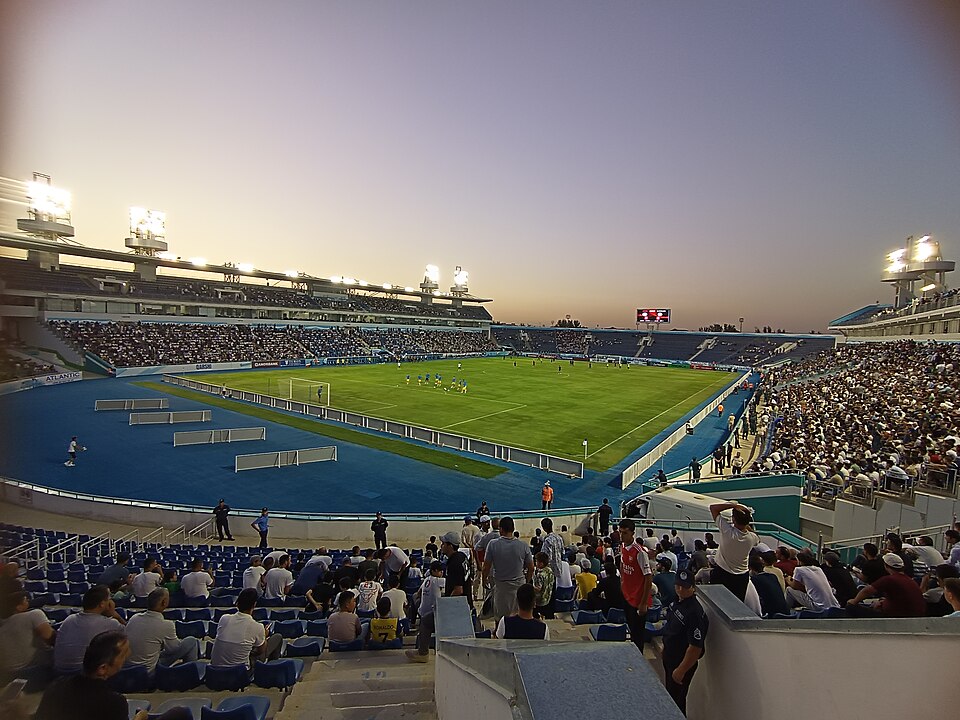
Nasaf’s home is Markaziy Stadium, also known as Nasaf Stadium, in Qarshi. Built in the 2000s and holding around 21,000 spectators, it became one of the most important football arenas outside Tashkent. Its most famous night came on 29 October 2011, when Nasaf hosted the AFC Cup final against Kuwait SC. For one evening, the centre of Uzbek football was not the capital. It was Qarshi.
Support Novastan, the European Central Asia magazine
By supporting Novastan, you are supporting the only English, French and German-language media specialising in Central Asia. We’re independent and we need your help to stay that way!That final remains the defining moment in Nasaf’s history. Playing at home, the club beat Kuwait SC 2-1 and became the first Uzbek side to win the AFC Cup. The goals came from Ilkhom Shomurodov and Andrejs Pereplotkins, before Kuwait SC reduced the score. The result did more than add a trophy to the cabinet. It proved that an Uzbek club from outside Tashkent could win a major Asian competition and make the country visible beyond the domestic league.
The symbolism was powerful. Pakhtakor had carried Uzbek football through Soviet visibility, post-independence dominance and repeated Asian ambitions. Bunyodkor would later become associated with money, international names and prestige projects. But Nasaf offered something different: regional consistency, continental seriousness and a sense that football development could come from outside the capital.
Also read on Novastan: Pakhtakor Tashkent: The Club That Carries Uzbek Football’s Memory
Nasaf’s main symbol is the dragon. The club is widely nicknamed The Dragons, or Ajdarlar in Uzbek, and its official social-media identity has used the hashtag #FireDragons. The image suits the club’s modern identity. Unlike Pakhtakor, whose name evokes cotton and Soviet Uzbekistan, Nasaf’s dragon symbol suggests force, regional pride and a more contemporary football brand. For supporters in Qarshi, the dragon is not only a nickname; it is a way of turning a regional club into a recognisable national and Asian football image.
Nasaf’s popular culture is less nationally mythologised than Pakhtakor’s, but the club has its own fan identity. Online fan material includes songs such as Nasaf Ajdaholari – “Nasaf’s Dragons” – a title that draws directly on the club’s nickname. This is different from Pakhtakor’s place in Uzbek pop music: Nasaf’s cultural image is more regional and supporter-driven, tied to Qarshi pride, the dragon symbol and the memory of the 2011 AFC Cup victory.
Unlike Pakhtakor, Nasaf does not appear to have generated the same publicly visible literature of tragedy, memory and commemoration. Its story is preserved more through match reports, AFC retrospectives, fan media, club archives and the memory of decisive games, especially the 2011 AFC Cup final. This also says something about the club’s identity: Nasaf is less a monument to the past than a symbol of regional football ambition and institutional work.
Nasaf’s 2011 AFC Cup victory was not an isolated emotional moment. It became a reference point for the club’s identity. Nasaf returned to the AFC Cup final in 2021 and continued to appear regularly in Asian competitions. In recent years, it has also participated in the continent’s higher-level tournaments, showing that the 2011 win was not only a memory, but part of a longer process of institutional consolidation.
Domestically, Nasaf long carried a paradox. It was one of Uzbekistan’s strongest and most respected clubs, but for many years it had not won the national league. It collected cup titles, challenged the leading sides and built a strong reputation, yet the league crown remained elusive. That changed in 2024, when Nasaf finally won the Uzbekistan Super League. The title was more than another honour. It confirmed the club’s place as one of the country’s major football powers.
Nasaf has now won one Uzbek league title, four Uzbek Cups and four Uzbek Super Cups, alongside its 2011 AFC Cup triumph. This trophy list is not as large as Pakhtakor’s, but it tells a different story. Pakhtakor’s honours speak of dominance and hierarchy. Nasaf’s speak of persistence, regional ambition and gradual consolidation.
Also read on Novastan: L’Ouzbékistan savoure sa première participation à la Coupe du monde de football
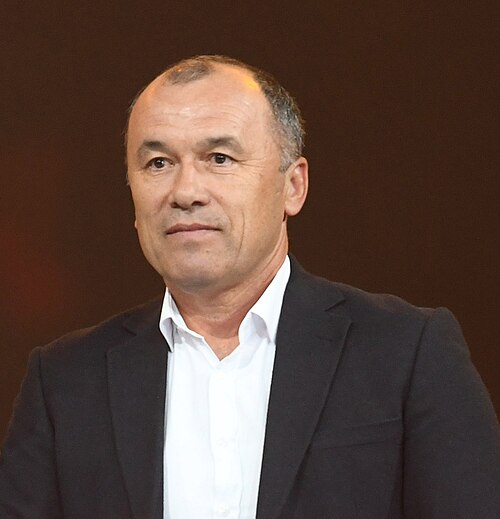
The club is often associated with stability. Since the early 2010s, Ruziqul Berdiev has been one of the central figures in Nasaf’s modern identity. Long coaching cycles are rare in football, especially in post-Soviet leagues where clubs often change direction quickly. Nasaf’s relative continuity has helped shape its image as a structured club rather than only a spending project or temporary force.
Nasaf’s player history is closely linked to its 2011 breakthrough and to the current national-team cycle. Ilkhom Shomurodov, who scored in the AFC Cup final against Kuwait SC, remains one of the names most strongly associated with the club’s greatest night. Latvian international Andrejs Pereplotkins, who scored Nasaf’s second goal in that final, added an international dimension to the team. In the following years, players such as Turkmenistan international Artur Gevorkyan helped keep Nasaf competitive in the Berdiev era. Today, goalkeeper Abduvohid Nematov and defender Umar Eshmurodov connect the club directly to Uzbekistan’s first World Cup squad, showing that Nasaf’s role in the national team is not only historical, but current.
This is one of the reasons Nasaf matters for understanding Uzbek football today. It has not been built only around glamour, foreign stars or sudden ambition. Its image is closer to that of a working institution: a club that competes, develops, returns to Asian tournaments and gives Qarshi a permanent place on the football map.
What makes Nasaf distinctive is not only one trophy, but the kind of club it became. It is famous as the first Uzbek club to win the AFC Cup, after its 2-1 victory over Kuwait SC in Qarshi in 2011. It is famous as the club of Ajdarlar, the Dragons, a symbol that gives Nasaf a sharper modern identity than many post-Soviet teams. It is also famous for offering a regional counterweight to Tashkent: a club from Qarshi that could win in Asia, challenge domestically, develop players and eventually become national champion in 2024. In that sense, Nasaf is less a club of nostalgia than a club of proof – proof that Uzbek football could be built outside the capital.
Also read on Novastan: Discussions sur le développement du football féminin au Kazakhstan
The club’s importance also lies in what it says about the geography of Uzbek football. Tashkent remains central, and Pakhtakor remains the historic institution. But Uzbekistan’s football identity is broader: Qarshi, Namangan, Fergana, Samarkand, Bukhara, Almalyk and Termez all form part of the national map. Nasaf is the strongest argument that this map has become more balanced.
This regional dimension matters even more in the World Cup year. Uzbekistan’s qualification is often presented through the national team’s stars abroad, from Shomurodov to Khusanov. That is understandable. But the deeper story is domestic. Before players reach Istanbul, Manchester, Lens, Rome or other foreign clubs, they emerge from a football environment shaped by local teams, regional competitions, youth systems and national rivalries. Nasaf is one of the clubs that made this environment stronger.
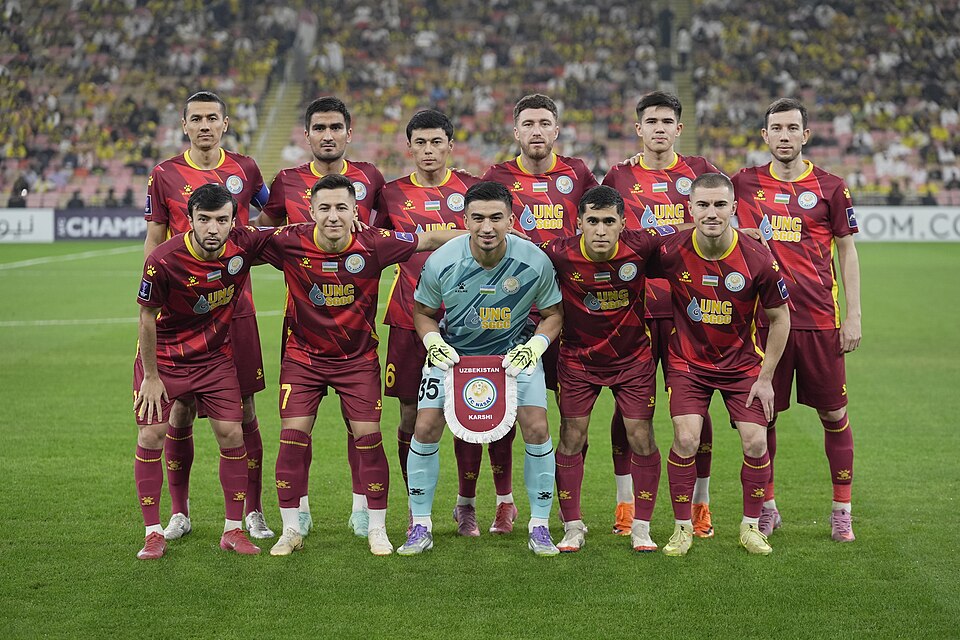
The club also shows how Uzbek football has professionalised. Its Asian results, domestic trophies and ability to remain competitive over time suggest that success no longer depends only on capital-city prestige. Nasaf’s rise helps explain why Uzbekistan could build a national team with greater depth, stronger defensive organisation and players accustomed to competitive continental football.
For supporters in Qarshi, Nasaf’s success is also a matter of local pride. Football gives the city visibility in a country where Tashkent often dominates politics, media and national attention. When Nasaf won the AFC Cup in 2011, the victory was not only Uzbek. It was also Qarshi’s victory. It showed that the south of the country could host a continental final, win it, and make the rest of Asia look towards Qashqadaryo.
That is why Nasaf is the natural second chapter in this series. Pakhtakor explains where Uzbek football’s memory begins. Nasaf explains how Uzbek football became more geographically ambitious. One is the capital’s historic institution; the other is the regional club that turned consistency into continental success.
As Uzbekistan steps onto the World Cup stage, Nasaf’s role is therefore both practical and symbolic. It is practical because the club contributes players and competitive experience to the national ecosystem. It is symbolic because it represents the expansion of Uzbek football beyond Tashkent. If the White Wolves’ World Cup debut is a national achievement, Nasaf reminds us that the national story is built from regional foundations.
The road to the World Cup did not begin only in the stadiums of Europe, the Middle East or North America. It also ran through Qarshi, through Markaziy Stadium, through the night Nasaf beat Kuwait SC, and through the long work of a club that proved Uzbek football could be ambitious far from the capital.
Mathieu Lemoine, Editor-in-Chief for Novastan-English