




 Carbon neutral by 2060? Kazakhstan’s green pledge faces a reality check
As Kazakhstan officially starts the construction of its new nuclear plant, the region is overwhelmed with an extreme heat wave. The climate change is especially noticeable in the continental climate: in the land where summer temperature peak at 49 degrees Celcius is even the slightest upgrade dangerous. But the efforts to become climate neutral country prove to meet some complications.
The temperatures in Kazakhstan – as anywhere in the world – are rising. The winter of 2024/2025 has been classified as ‘anomalously’ warm, as temperatures exceeded the norm by 2 to 6 degrees. Spring and summer have been way too hot as well: monthly reports show temperature records. Over the last 75 years, the average yearly temperature in Kazakhstan has risen by 6 degrees.
The efforts to counteract climate change, or at least to slow it down, are extremely relevant in this context. But the current starting point makes the green future look rather distant.
Fuel dependence in the background
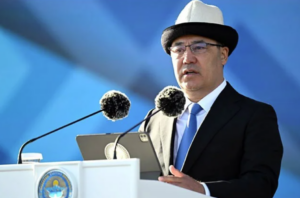
In 2023, Kazakhstan’s president Kassym-Jomart Tokayev signed the ambitious Strategy of the Republic of Kazakhstan on Achieving Carbon Neutrality by 2060. Nevertheless, in a country where the economy is deeply reliant on the fossil fuel industry, the shift toward renewable energy poses considerable difficulties.
Since Kazakhstan’s independence (now well over three decades ago), subsequent governments were betting on the extraction of fuel for continued economic growth, as well as securing investments through selling the exploration and recovery rights to fossil giants like British Petroleum, Exxon and Shell. Petroleum currently makes up 52,5% of Kazakhstan’s export, which earns the country up to 34,8 billion GBP annually. Whilst Russia is subjected to sanctions as a result of its war against Ukraine, western countries are looking for alternative suppliers. And Kazakhstan has proven to be an interesting partner in that regard – a fact reflected in the signing of new contracts, primarily for oil exports to Europe.
The fossil fuel industry remains far too profitable to scale back, let alone to significantly reduce oil production. Yet such a decline seems inevitable: if not driven by environmental imperatives, then by sheer necessity. Current forecasts suggest that known oil reserves could be exhausted within just 30 years at present production rates. While this projection may align with broader climate objectives, governments continue to pursue new exploration efforts in regions considered geologically promising.
The main problem: coal
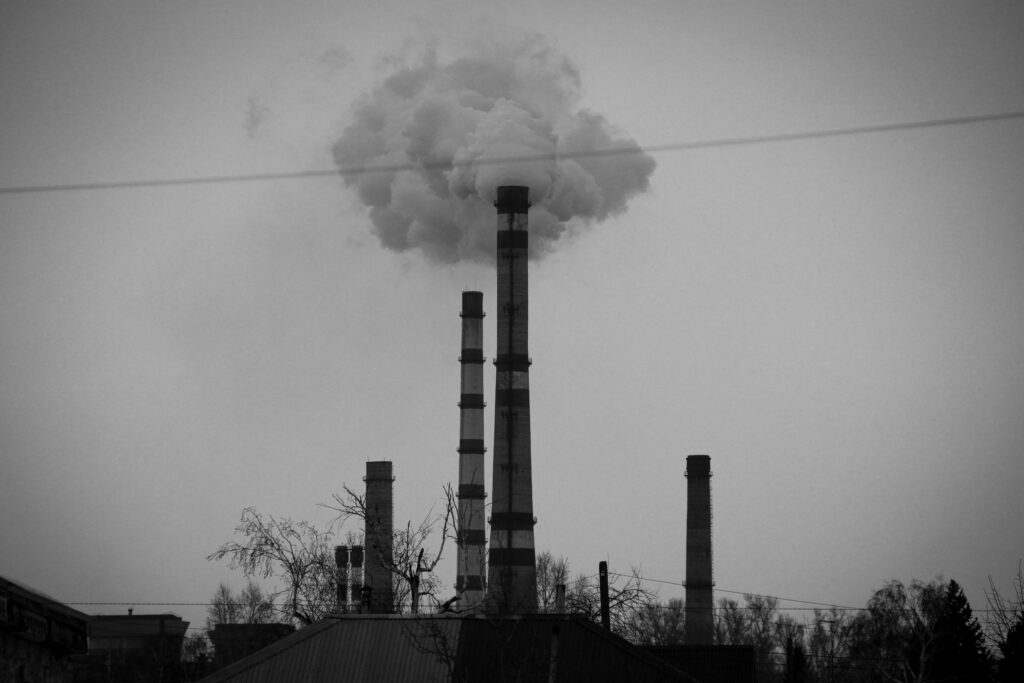
Oil is only part of the problem. The energy sector in general is Kazakhstan’s number one source of greenhouse gas emissions. Although energy demand from industry accounts for just over a fifth of final energy consumption, more than a third is spent on the building sector. This is where coal processing comes in.
Kazakhstan possesses vast coal reserves, though extraction remains costly. The country’s largest deposits are relatively shallow but consist of exceptionally thick seams, making mining operations less efficient. In 2023, a tonne of coal could be purchased directly from mines for around 9,000 tenge – approximately £15.75 at the prevailing exchange rate – well below global market prices. For domestic consumers, transportation costs can nearly double that price, yet coal remains the most affordable source of energy production. However, its widespread use is responsible for more than half of Kazakhstan’s greenhouse gas emissions.
Most of Kazakhstan’s coal is consumed domestically, primarily to supply the country’s thermal power plants. Coal accounts for 99% of heat generation and more than half of total electricity production. However, many of these power stations are outdated and, in some cases, in disrepair. Most were built during the Soviet era and have long exceeded their intended operational lifespan.
Read more on Novastan: Kazakhstan stops investment agreement with ArcelorMittal after deadly explosion in Kostenko mine takes 46 lives
The government does not seem particularly willing to completely abandon coal. News outlet zakon.kz cites Kazakhstan’s Minister of Energy Yerlan Akkenzhenov: ‘We live on wealth. Coal-fired power generation is considered the cheapest option. In addition, the construction of combined heat and power plants also allows us to control the heat supply. As you know, all our cities are supplied by combined heat and power plants and a central heat supply. We must continue to pursue this approach […]’
As an alternative, the minister has proposed equipping the power plants with modern boilers that enable coal to be burned ‘without residue’. By 2035, ‘every combined heat and power plant will be gradually converted exactly to clean coal technology’.
Want more Central Asia in your inbox? Subscribe to our newsletter here.
In a country with very cold winters, less than half of households are connected to a central heating network. In single-family detached homes, coal is frequently used as the main energy source for heating, which in turn contributes to the already high levels of smog produced by thermal power plants in big cities like Almaty. Taking into consideration the state of Kazakhstan’s housing stock, a considerable amount of energy gets wasted due to insufficient insulation or outdated heating systems. Ironically, even with the energy wasted, heating is still cheaper in the long term than investing in renovations.
Read more on Novastan: Breathing space: air quality and energy transition in Kazakhstan
Slow decarbonization in transport
A similar situation can be observed in the transport sector, the country’s second-largest energy consumer. The UN, in its roadmap for achieving the 7th sustainable development goal (‘Ensure access to affordable, reliable, sustainable and modern energy for all’), recommends that Kazakhstan decarbonize 15% of its passenger cars by 2050. Currently there are 6.17 million cars registered in the country, of which electric cars account for only 0.003%.
A quarter of a century is a long time – after all, 25 years ago, electric cars as we know them today did not even exist. However, the timeframe proposed by the UN seems optimistic for Kazakhstan: almost half of the cars in the country are at least 20 years old, and a significant proportion of these are cars would no longer pass vehicle safety tests, or would be banned from towns and cities for not meeting environmental standards. Although the government is planning to impose fines on car owners whose vehicles exceed emission standards, there are no plans to use the revenue to directly fund environmental initiatives. Many drivers only replace their cars when they are no longer roadworthy, and even then, they tend to turn to secondary and tertiary markets when looking for a replacement.
Switching to an electric car is not easy in Kazakhstan: all charging stations are located within the three largest cities – Astana, Almaty and Shymkent – and even there, their availability is limited. Due to the risk of fire, for example, it is prohibited to install charging stations in apartment parking areas. Electric car owners are hence dependent on public charging stations in large car parks and near shopping centres – which often do not supply green electricity.
According to internal research of a car manufacturer in the region, more than half of car owners do not consider electric cars as a purchase option when thinking about their next buy. After the boom in 2022/2023, when cheap electric cars were imported en masse from China, excitement has subsided. The urban population with above-average incomes who wanted and could afford an electric car, have already purchased it; for the rest these cars are just too expensive, far too impractical, far too unfamiliar. Car dealers are now focusing on hybrid models instead, which could serve as a transitional solution. Yet even these are no option for the majority of the population, given the current state of infrastructure in Kazakhstan.
Clean energy: only a fraction in the market
It is not that Kazakhstan produces no clean energy at all.
Hydroelectric power plants, however, play only a minor role in the country’s energy mix — for understandable reasons. Most of them were built in the same era as the aging thermal power plants. Moreover, water resources are steadily dwindling, raising doubts about whether there will be enough water to sustain hydroelectric production in the coming years.
Read more on Novastan: Kazakhstan: Residents suffer from lack of water
Despite Kazakhstan’s favorable geographic conditions, solar and wind energy remain surprisingly underused. As of 2024, the country operated just 59 wind farms and 46 solar parks — a modest number given its vast, sparsely populated steppes that are ideally suited for renewable energy generation. The southern regions enjoy between 2,200 and 3,000 hours of sunshine per year — two to three times more than the United Kingdom. Kazakhstan also has excellent wind potential: average wind speeds of 5–6 m/s are common across most of the country, reaching up to 8.27 m/s in certain areas. Experts estimate Kazakhstan’s total wind energy potential at around 920 billion kWh per year.
Yet, this immense potential remains largely untapped. The main reason is economic. At current price levels, the clean energy sector is unattractive to private investors. Equipment must be imported at high cost, while the electricity produced can be sold for no more than seven pence per kilowatt hour, VAT included. For most households, retail prices are roughly half that. As a result, revenues barely cover maintenance, and the payback period for new projects is so long that, by the time investors see a return, much of the infrastructure is already outdated and in need of further investment.
It has long been evident that energy prices in Kazakhstan will have to rise to finance sector modernization and accelerate the shift toward green energy. The controversial new nuclear power plant will not be profitable otherwise: experts estimate that the price of nuclear power will be 12.5 pence per kilowatt hour in the first 15 years. Ultimately, however, it is sustainable energy that must take the lead. Sergei Agafonov, chairman of the Kazakh Association of Energy Suppliers, envisions an optimal energy mix in which renewables provide at least half of the demand, while nuclear power accounts for roughly the global average – projected to reach 12% by 2040. ‘Yes, renewable energies will have to dominate our energy balance over all other types of energy generation. The main thing is that we carry out this change carefully [..]’, said Agafonov in an interview with Orda.kz.
New turning point
The strategy for achieving carbon neutrality in 2060 contains neither an implementation plan, nor success indicators, nor any sanctions for failing to achieve the set targets. In 2017, it was already announced at the EXPO in Astana that the share of renewables should increase to 30% by 2030. As things stand, the quota is only 6.2%. This still shows a 4% increase over the last seven years, but the growth estimate was clearly far too optimistic. Just four years after the EXPO, the target value has been halved.
A scenario in which Kazakhstan fails to meet its 2060 targets remains entirely plausible. The Climate Action Tracker has voiced similar concerns, rating the country’s climate policies as ‘insufficient,’ noting that ‘emissions will continue to rise until at least 2035 under current policies.‘ The lack of genuine political will to tackle the issue is perhaps best illustrated by President Kassym-Jomart Tokayev’s abrupt change of stance. Speaking at a forum of the National Council for Science and Technology on September 26, Tokayev underscored the continued importance of coal and made a striking remark about climate change:
‘frankly, everything that is happening looks like a large-scale fraud.’
For more news and analysis from Central Asia, follow us on Twitter, Facebook, Telegram, Linkedin or Instagram.