




 Central Asia: At The Crossroads – highlights from Berlin’s new regional film festival
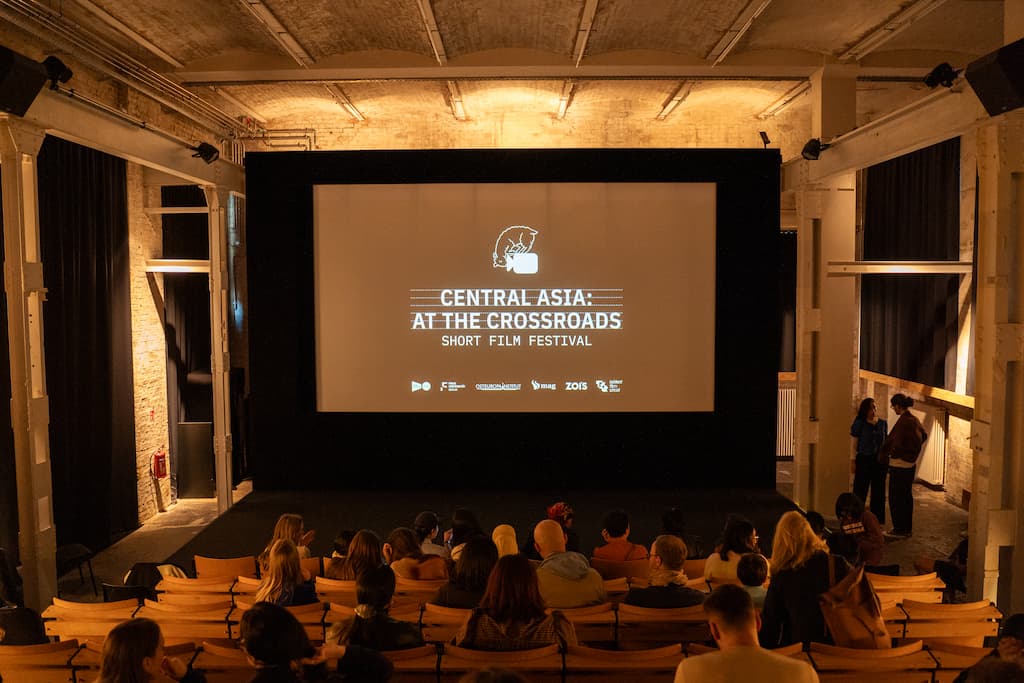
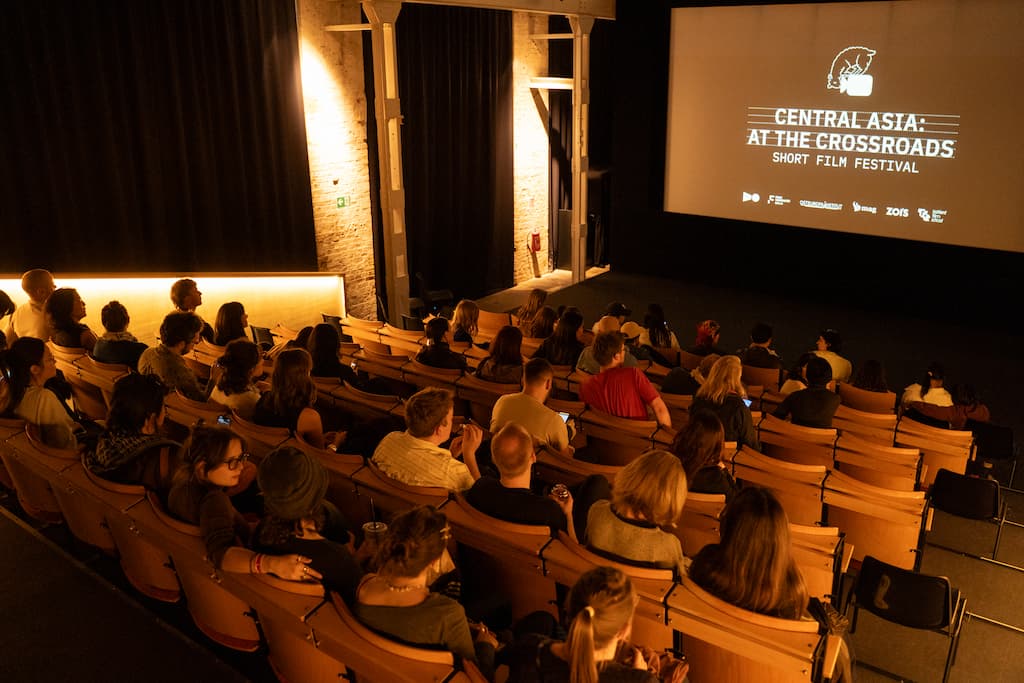
Berlin’s Sinema Transtopia hosted the first edition of Central Asia: At The Crossroads on September 27–28, 2025, a new short film festival spotlighting bold and diverse voices from Uzbekistan, Kazakhstan, Kyrgyzstan, Tajikistan, and the Uyghur region of China. The two-day event offered a vivid glimpse into the region’s emerging cinema: from intimate personal stories to striking social portraits. In this article, we highlight some of the most memorable works featured in the programme.
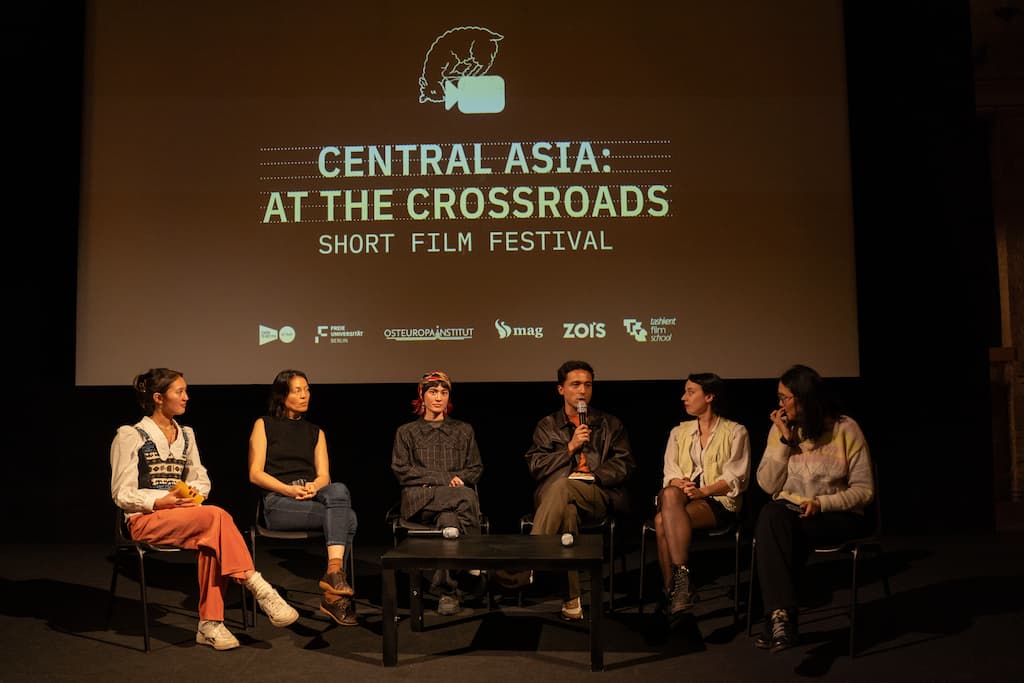
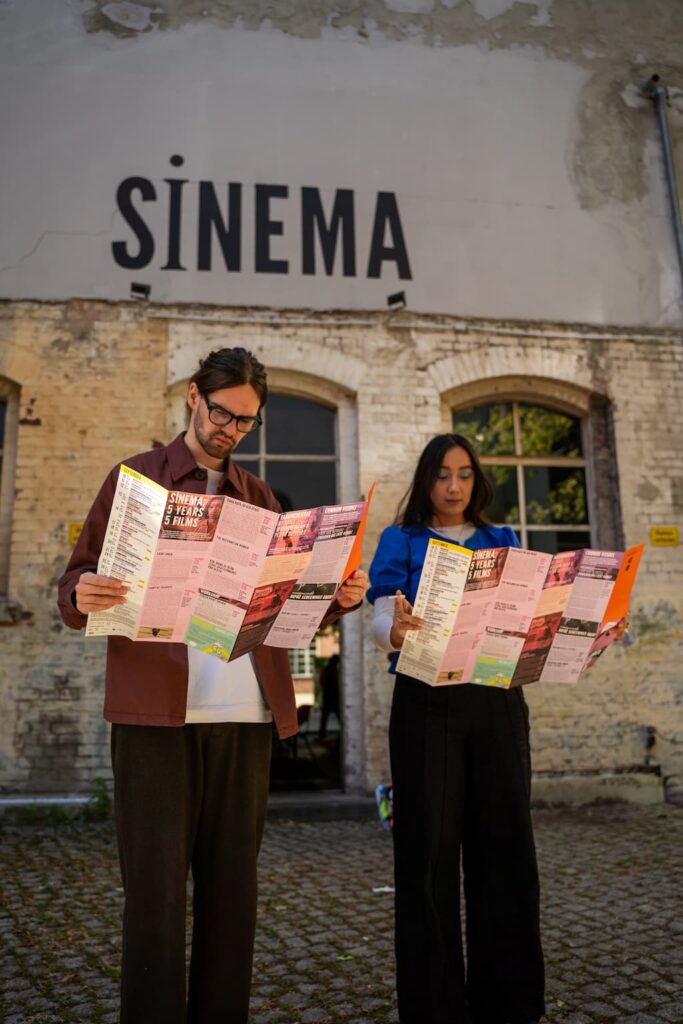
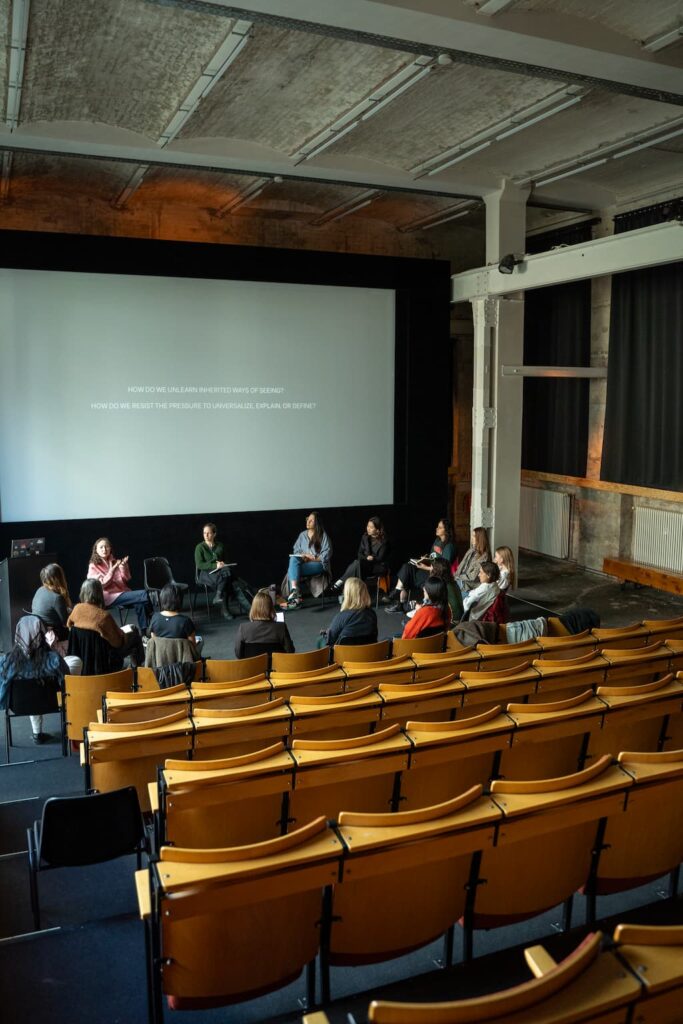
On September 27 and 28, Berlin’s Sinema Transtopia hosted the launch of the Central Asia: At the Crossroads short film festival, held in parallel with a sister programme in Tashkent supported by the independent Tashkent Film School. Alongside a main selection showcasing works by filmmakers from Uzbekistan, Kazakhstan, Kyrgyzstan, Tajikistan, and the Uyghur region of China, the festival also featured a workshop on decolonial and feminist approaches to film writing and curating, and a talk exploring the challenges of filmmaking and festival organisation.
The films were thematically curated into four independent sections – Radical Hopefulness, Tender is the Youth, Kinds of Remembrance, and Yurt – bu? Homeland – is? Yet across all screening blocks, several overarching themes emerges, ranging from the routines of everyday life, questions of youth and identity, collective and personal memory, feminist and queer perspectives, to various other pressing social issues. This article will discuss several programme highlights.
Read more on Novastan: “JAÑA CEKARA” Film Festival Forced to Go Online due to Pressure from Law Enforcement
Mirtemir Is All Right
Daytime shots of a dilapidated hut in dusty Nukus gradually give way to evening scenes of a bustling street. In this way, directors Sasha Kulak and Michael Borodin juxtapose the two sides of young Mirtemir’s reality. In the morning, he is a caring older brother, watching over his sister, and a grandson tending to his blind grandmother; in the evening, he becomes a fast-food waiter and a street singer, entertaining passersby with the help of a mobile karaoke machine. Such early responsibility fell upon him after his mother left for a neighbouring country to earn a living.
Mirtemir himself dreams of doing the same: leaving for Almaty to work as a waiter. Though he has learned to balance work and pleasure – finding, for instance, a moment in the middle of the day to roller-skate with his younger sister – it becomes clear both to the viewer and, perhaps, to the boy himself: childhood is slipping away. Games and mischief are giving way to the care of loved ones and the pursuit of family well-being.
The documentary, almost reportorial in style, lends the story a particular authenticity and restrained emotional depth. And even if the viewer cannot be sure whether Mirtemir truly exists, one thing is beyond doubt: the film addresses a pressing social issue — that of children left without parental care in Uzbekistan, where adults are forced to migrate for work to provide for their families. Despite its youthful and at times ironic tone, attuned to both the protagonist’s age and the atmosphere of his surroundings, Мiртемiрде бэрi жаксы (Mirtemir Is All Right) raises profoundly serious themes of poverty, forced maturity, and the loss of childhood.
Want more Central Asia in your inbox? Subscribe to our newsletter here.
Comrade policeman
If you have ever wondered how Kazakhstani news media actually operate, Assel Aushakimova’s short film will satisfy that curiosity completely in just thirteen minutes. The story of producing a pseudo-television report on the state program Жолда Қабылдау (“Reception on the road”) unfolds into a charming satire — not only of contemporary news broadcasting but also of the inner workings of law enforcement institutions.
The essence of the program itself becomes clear through the carefully selected takes of the so-called report: at specially designated roadside points, any citizen may approach police representatives with a question or concern. For illustrative purposes, the local journalist Nur (played by Dinara Aliyeva) chooses to film directly opposite one such station — a minivan faintly resembling a police van. Nearby, at a small table, a policeman responsible for the post leisurely cracks sunflower seeds. Yet a single shot of a lonely “reception point” proves insufficient — the program’s popularity among the public must be demonstrated. Thus, Aliyeva’s character resorts to a peculiar solution: she persuades a taxi driver to act as a citizen with a question.
The comic tension reaches its peak when both participants of the improvised “reception” begin speaking to the camera about their supposed experience — or rather, haltingly reading from a pre-written script of the state television channel.
Although the film was released four years ago, it has lost none of its relevance. The confusion over the capital’s name (Astana or Nur-Sultan?) still provokes a smile, while its ironic portrayal of state media operations continues to resonate sharply with viewers’ sense of recognition.
Read more on Novastan: New voices – Central Asian short films at the GoEast Festival 2024
Blue Gate
A poignant story by Kyrgyz director Narghiza Dotieva appeared in the thematic block Yurt – bu? Homeland – is?, dedicated to reflections on the notion of home. Unlike the other films in this section, which approached the idea of home through the prism of memory, cultural belonging, or even denied the concept of home as a constant and fixed place, Көк Дарбаза (Blue Gate) presents a different, more tangible image — that of a house hidden behind blue gates. Yet does the director confine herself to this single interpretation?
The protagonist – a solitary, reticent young man – is drawn, inexplicably and irresistibly, to those very blue gates. Or rather, to what lies beyond them: an old, humble house, a half-bare garden, and, beside it, on a timeworn bench, a blind old woman catching rays of sunlight. Unable to remain a timid observer, the young man repeatedly sneaks into the yard – pulling weeds here, mending the bench there, the old woman’s favorite resting spot. Though blind, she nevertheless senses his presence and something more: his loneliness. It seems she is the only one around him who has truly seen him — not his face, but his soul.
A tragic accident on the road separates the two, though only physically. The spiritual bond between them endures, like a thread entwining the branches of the trees stretching from the house toward the lake – the young man’s final, secret gesture of care left as a gift to the old woman.
Thus, Көк Дарбаза, in answering the question “What is home?”, transcends the boundaries of physical space. It is a story of spiritual closeness arising despite the absence of blood ties, despite circumstance and silence. A story of love, attachment, and acceptance, transforming the very notion of “home” into a metaphor for human connection and inner warmth.
For updates on future screenings or editions of the festival, follow the Central Asia: At The Crossroads Instagram-page.
All photos used in this article are published with the permission of the photographer, @fogg_films.
Written by Darya Loza
For more news and analysis from Central Asia, follow us on Twitter, Facebook, Telegram, Linkedin or Instagram.