



 “If You’re Scared, You do it Scared”: How Bishkek’s Techno Scene Survives State Repression
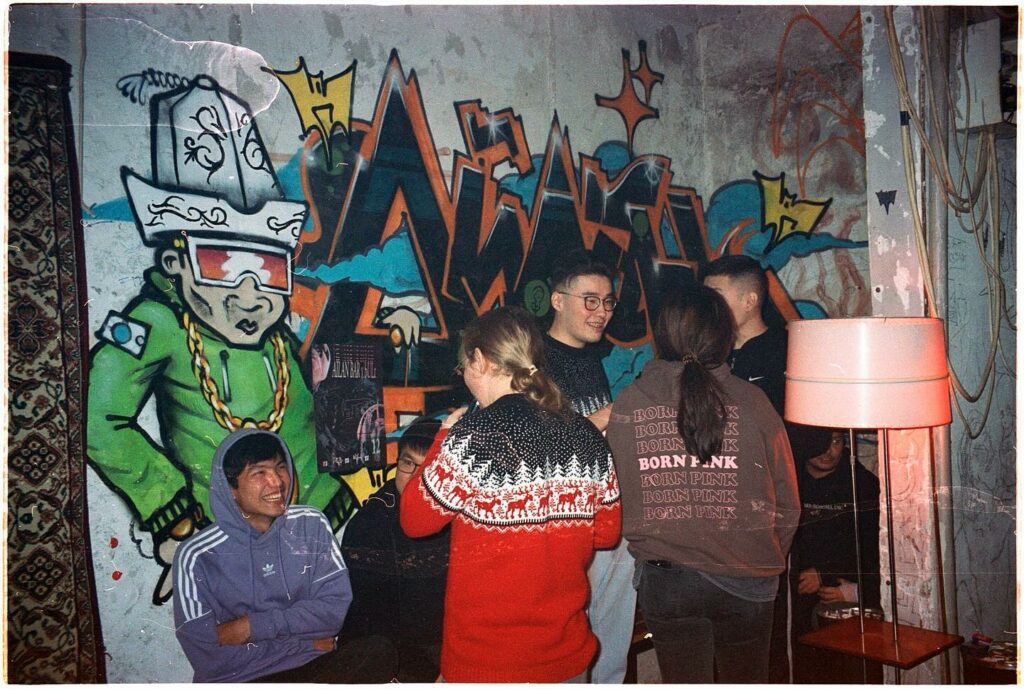
Last April, Kyrgyzstan’s special forces carried out heavy-handed raids on two of Bishkek’s most popular electronic-music bars. Expecting a hotspot of drugs and illicit activity, officers found instead a young, diverse nightlife community carving out one of Bishkek’s few remaining safe spaces for self-expression. After a year marked by escalated repression and shrinking civil liberties in Central Asia’s “island of democracy,” Novastan sits down with two leading figures from the targeted venues to discuss how their communities endure as Kyrgyzstan slides deeper into authoritarianism.
Kyrgyzstan has long been seen beyond Central Asia as a rare abode of democratic values in a region dominated by post-Soviet authoritarianism. When Sadyr Japarov, the country’s current president, suddenly rose to power in the wake of the 2020 Kyrgyz Revolution, he swore to the nation from day one to protect the Kyrgyz people’s cherished liberty. Four years later, the president himself has emerged as the largest threat to Kyrgyzstan’s already fragile democracy.
Japarov’s governance in just the first two years of his rule landed Kyrgyzstan on the 2022 Freedom House Index’s list of “consolidated authoritarian regimes.” In 2024, Kyrgyzstan earned a position on the CIVICUS Monitor’s “watchlist of countries experiencing a rapid decline in civic freedoms.” At the heart of Japarov’s consolidation of power lies the systematic erosion of Kyrgyzstan’s already flimsy freedom of expression. Japarov has frequently deployed his power over state institutions to stifle dissent in both political and civic spheres. An unlikely casualty of the crackdown has been Bishkek’s emerging techno scene.
Japarov’s Techno Raids
On the night of 14 April 2024, Kyrgyzstan’s special forces, working alongside local police, raided Ailan Bar to conduct a search for illegal substance use at electronic music gatherings. In addition to heavy firearms and drugs tests, the police brought along a professional camera crew to document the raid for their social media page. The following night, another raid was done at PLUR, another of Bishkek’s techno institutions, in a similar fashion. Both bars are central to Bishkek’s electronic music scene and known throughout the city for providing above all else a “safe space” for all partygoers, regardless of background.
In both instances, officers drew their weapons and forced the men present to lie on the floor with their hands behind their backs while they searched the venues. According to RFE/RL, police assaulted several people at Ailan Bar, striking one in the leg and another in the stomach.
In both raids, police were noted to be genuinely surprised with the minimal amount of illicit substances they were able to sniff out. At Ailan Bar, officers opened the raid with a lecture on “irresponsible drug use,” a message that fell flat when only three of the dozens present tested positive for cannabis use. The police statement regarding that night notes they were only able to find “a ready-made cigarette with narcotics” and a packet of a legal anti-epilepsy medication.
The lack of significant narcotics did not surprise Chyngyz, one of Ailan Bar’s directors and part-owners. “Our community is quite healthy in that sense,” he asserted. Chyngyz explained that like himself, the vast majority of those who enjoy techno music in Bishkek do not use illegal substances at their parties. “I think if people truly love electronic music, they don’t need drugs.”
Read More on Novastan: Inside Bishkek’s Metal Boom: Portrait of a Music Pioneer in Kyrgyzstan
Unlike most patrons to Bishkek’s techno venues, some of the police involved with the raid were later revealed to be engaging in illegal activities themselves. “In the fall, I read in the news that one of the investigators present at the raid got charged with corruption,” Chyngyz stated.
New Wave of Kyrgyz Populism Threatens Self-Expression
For both partygoers and staff, the raids were an unprecedented shock. Up to that point, both bars had been cooperative with local police and had never faced any prior incidents. Both the heavy-handed police tactics and the state’s post-raid messaging indicated that the operations were directed from the highest levels of government.
The raids aligned neatly with Japarov’s emerging populist agenda to enforce traditional Kyrgyz values. “In the government’s eyes, young people must study and start a family. There’s no room for alcohol and dancing,” Chyngyz states.
Want more Central Asia in your inbox? Subscribe to our newsletter here.
In addition to sensationalizing illegal drug usage in electronic music spaces, authorities have begun to frame Bishkek’s techno community as a conduit for LGBTQ+ influence, portraying it as a danger to Kyrgyz youth due to the bars’ inclusive policies. LGBTQ+ youth in Kyrgyzstan already face severe state and social repression, and to many, Bishkek’s electronic music parties are the only spaces where they are fully allowed to be their truest selves. This, to those running Bishkek’s techno institutions, is a red line they will not back down from. “Keeping our environment safe for all is our main responsibility,” Chyngyz states firmly.
Repression Necessitates Adaptation
After the raid, PLUR bar began adjusting its strategies to deal with the new wave of state repression. Constrained by resources and now under the state’s watchful eye, the bar’s operators refused to surrender to their opposition. “We hadn’t done a lot yet. We still hadn’t shown everybody what we really want to create,” says Innokentii, PLUR’s creative director. “No one has told us no yet.”
Ailan Bar, too, remained committed to their vision to provide safety and a safe space for their community in the months following the raid. However, their brazen commitment to provide for and defend the LGBTQ+ community had to transition to more covert operations if it were to continue in the new repressive climate. Prior to the raids, Chyngyz used to host regular “queer nights” at Ailan Bar. He is firmly committed to continuing these events, but recognizes that Ailan Bar’s public advertising must now be more strategic. “It is all about being discreet. Queer people must know that they are welcome here, but also the wrong people must not know that queer people are welcome.”
Read More on Novastan: Queer life under pressure in Kyrgyzstan
Since the raid, Ailan Bar has closed its physical location and transitioned to a model where the organization pops up for one-time events across Kyrgyzstan. The bar’s organizers note that they feel safer in Kyrgyzstan’s more remote regions away from the state’s watch.
PLUR has since taken on a new identity as QQ Bar and moved into a smaller space closer to the city center. Innokentii sees the move as an opportunity to learn from their past mistakes. “I want to make it stable enough to continue without me if I leave the country. I’m not from here—I don’t want to die here,” he says. Innokentii, like a large part of Bishkek’s contemporary techno community, came to Kyrgyzstan from Russia in recent years to flee war drafts. Helping to create spaces for electronic music in Bishkek helps him feel close to the subculture in his home country, a subculture that remains his central inspiration.
In order to ensure their subculture survives, Chyngyz has founded a DJ school within Ailan Collective to train and teach the next generation of Bishkek’s rebellious electronic music scene.
The Future for Bishkek Ravers
While law enforcement targeting youth subcultures is nothing new for Kyrgyzstan, those involved with Bishkek’s techno scene note that the current wave of repression feels different than those that have preceded it. “With the previous government, it is not right to categorize what we had as ‘freedom.’ We had negligence. We could only exist freely because the government didn’t care about us,” Chyngyz notes. “Now, authorities no longer turn a blind eye–they have a blueprint and they follow it. They’re populists, and populists have to show results in order to keep the people happy.”
After the raids, both bars saw their regular number of attendees dwindle. However, since the bars have implemented new strategies to prevent police altercations, they have largely been successful in fending off further government attacks. In just over a year and a half since the April raids, the crowds have largely returned. QQ Bar, even in their smaller venue, now sees over two hundred attendees at their most popular events.
The techno community in Bishkek is as diverse as it is tight-knit. Chyngyz notes that he always finds it hard to describe the demographics of his crowd to others, as it spreads across every age group, profession, and walk of life. Innokentii, however, notes that there is one thread that unites all of their party participants. “Unlike techno scenes in larger cities, in Bishkek, everyone who comes is a character.”
With the survival of Bishkek’s techno institutions, the venues now serve as a cultural meeting point for the city’s other repressed creative communities. Innokentii notes that it is not an uncommon sight at QQ Bar to see people from Bishkek’s art industry, bar industry, rock scene, and rap underground all mixing freely.
Bishkek’s electronic music vanguard now sees their scene’s creativity and resilience as more than a local story. They have created something unique that they want to share with the world. While domestic challenges persist, few in Bishkek’s techno leadership appear ready to back down. “If you’re scared, you do it scared. So we do it scared,” Chyngyz remarked.
Chyngyz believes that the techno scene’s ability to adapt to evermounting challenges and unite diverse communities is not only what has led to the scene’s survival in Bishkek, but truly illuminates what the community is all about. “Techno is something that has the power to unite completely different people with completely unrelated backgrounds–people who maybe can’t even speak the same language. But they love techno, and enjoy the space it provides. Out of nothing, you create common ground.”
For more news and analysis from Central Asia, follow us on Twitter, Facebook, Telegram, Linkedin or Instagram.
Joseph Fisher for Novastan