



 Uzbekistan’s Disability Rights Reforms: Progress on Paper, Barriers in Practice
Support Novastan, the European Central Asia magazine
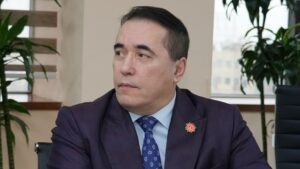
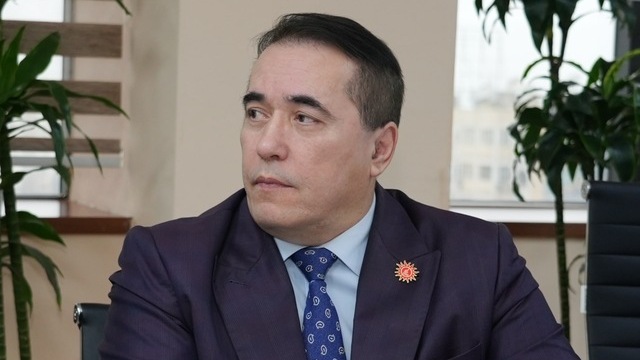
By supporting Novastan, you are supporting the only English, French and German-language media specialising in Central Asia. We’re independent and we need your help to stay that way!Uzbekistan has introduced new social protection institutions and committed itself to international disability rights standards. Yet persons with disabilities continue to face inaccessible infrastructure, discrimination and bureaucratic obstacles. In an interview with Novastan, Oybek Isakov, Chairman of the Association of Disabled People of Uzbekistan, discusses the progress achieved, the shortcomings of recent reforms and why persons with disabilities must have a greater say in decisions affecting their lives.
However, he argues that legislative reforms have moved faster than their implementation. Inaccessible public transport, limited employment opportunities, inadequate social benefits and the exclusion of disability organisations from policymaking continue to undermine progress.
Speaking to Novastan Editor-in-Chief Mathieu Lemoine, Isakov explains why the transition from a medical and charitable approach to a rights-based model remains incomplete.
How has life changed for persons with disabilities in Uzbekistan over the past five to ten years, beyond the adoption of new legislation?
One of the most important developments has been a change in society’s understanding of disability. Previously, the difficulties faced by persons with disabilities were often considered a personal misfortune or a responsibility for their families alone. Today, there is greater recognition that ensuring equal opportunities is a responsibility shared by the state and society.
The expectations of persons with disabilities have also changed. They no longer want simply to survive on benefits. They want to study, work, travel and participate fully in society.
Institutionally, the establishment of the National Agency for Social Protection in 2023 was an important step. The agency oversees social protection policy, while the Inson centres provide social services at the local level. New mechanisms have also been introduced to monitor compliance with social protection legislation and accessibility requirements.
Read more on Novastan: When reform reaches everyday life: Lessons from Uzbekistan and Mongolia
Nevertheless, there remains a considerable gap between legislation and everyday reality.
One particularly serious problem concerns access to social benefits. According to the figures available to us, Uzbekistan has approximately 1.06 million persons with disabilities, but only a fraction are included in the relevant social protection registry. Eligibility for certain forms of assistance is linked to registration, while the criteria for inclusion can be extremely restrictive.
For example, a father with a disability sought financial assistance from the Youth Affairs Agency to help pay his daughter’s university tuition fees. His request was rejected because he was not included in the social registry. When he attempted to register, he was refused because he had a leased car, even though he needed the vehicle to move around the city.
Disability pensions are another concern. Their low level, combined with rising living costs, leaves many persons with disabilities in an increasingly difficult financial situation.
Uzbekistan ratified the UN Convention on the Rights of Persons with Disabilities in 2021. Has this brought tangible improvements?
Ratification was an important step, but its effects have been uneven.
For active citizens and non-governmental organisations, the Convention has become a valuable legal instrument. It allows us to refer to international obligations when communicating with government institutions, challenging discriminatory decisions and demanding the protection of rights.
However, one of the main obstacles to implementation is the absence of dedicated budget allocations specifically linked to fulfilling the obligations arising from the Convention.
The gap between commitments and reality is particularly visible in three areas.
The first is accessibility. In Tashkent and some major regional centres, new infrastructure increasingly incorporates accessibility standards. Elsewhere, progress is much slower. We still see ramps built at impossible angles, missing tactile paving, inaccessible public transport and high pavements that prevent people from moving independently.
The second is inclusive education. Although inclusive education is developing through legislation and pilot projects, ordinary schools and kindergartens often lack trained specialists, adapted teaching materials and accessible facilities. Parents of children with disabilities may face informal refusals when seeking admission to mainstream schools, leaving them with few alternatives beyond specialised institutions or home education.
The third is employment. Job quotas exist, but some employers prefer to pay penalties or formally employ persons with disabilities without providing meaningful work or suitable conditions. Prejudice remains widespread, particularly towards persons with intellectual or psychosocial disabilities.
Ratification has helped shift the discussion from medicine and charity towards human rights. But laws are changing faster than administrative practices, infrastructure and social attitudes.
Has the attitude of government institutions changed? Are persons with disabilities increasingly treated as rights-holders rather than recipients of assistance?
The government has allocated more resources, expanded the range of assistive and rehabilitation devices and increased funding for inclusive initiatives.
However, the emphasis often remains on individual material assistance rather than systemic rights. Accessibility, meaningful employment and inclusive education require coordination between government institutions and effective enforcement of legislation.
Most importantly, many decisions affecting persons with disabilities are still made without adequately considering the views and recommendations of their representative organisations.
The Convention’s principle of “Nothing about us without us” is not yet being implemented in practice.
What about public attitudes? Have stereotypes and paternalism declined, particularly among younger generations?
Attitudes are changing, although not uniformly.
For a long time, persons with disabilities were viewed either with pity or through the lens of stigma. Many lived in isolation and were rarely visible in public spaces.
Today, social media, inclusive initiatives and greater public visibility are gradually changing perceptions. People are becoming more accustomed to encountering persons with disabilities in workplaces, public transport, cafés and other everyday settings.
Younger generations tend to be more open to inclusion. Growing up with digital technologies and greater access to information has helped them see diversity as a normal part of society.
Nevertheless, paternalistic attitudes persist, including among young people. Some still assume that persons with disabilities need constant protection or cannot work on equal terms with others. The historical separation of children with disabilities from mainstream education has also limited opportunities for everyday interaction.
Language is changing too. Stigmatising expressions are gradually being replaced by terminology that puts the person first.
There is also growing recognition that occasional charitable assistance, such as distributing food during holidays, cannot resolve systemic problems. People increasingly understand the importance of accessibility, independence and equal opportunities.
Accessibility is often associated with ramps and physical infrastructure. Which less visible barriers most severely restrict independent living?
Some of the most difficult barriers are not physical. They exist in administrative procedures, digital services, employment practices and social attitudes.
Digital accessibility is a major problem. Many government websites, online public services, banking applications and media platforms remain inaccessible to persons with visual or hearing impairments. Screen readers are not always supported, while sign-language interpretation and subtitles are often unavailable.
This can prevent people from independently accessing essential services, finding employment or managing financial and legal matters.
Read more on Novastan: “Disability is a Mirror for the Development of Societies” – A Conversation with Dilmurad Yusupov
Bureaucratic procedures create another obstacle. Obtaining recognition of disability status or accessing assistive devices can require repeated visits to institutions, medical assessments and extensive documentation. For persons with significant mobility limitations, these procedures can be particularly burdensome.
Discrimination in employment is often less visible but equally damaging. Even qualified candidates may be rejected before reaching the interview stage or offered only low-paid, routine work that does not reflect their abilities.
Healthcare presents additional difficulties. There is a shortage of rehabilitation specialists, and some medical facilities remain physically or communicatively inaccessible. Medical professionals may lack sign-language skills, while diagnostic equipment is not always adapted for patients with limited mobility.
Finally, isolation within families remains a serious issue. Because of stigma or misplaced concerns about safety, some relatives discourage persons with disabilities from leaving home or participating in society.
Physical obstacles can be removed through construction and better design. But inaccessible information, discriminatory practices and deeply rooted prejudices are often harder to overcome.
In which areas is the gap between legal reforms and everyday reality greatest?
Employment, public transport and inclusive education.
Uzbekistan has adopted standards and regulations in these areas, but implementation continues to face systemic obstacles.
Read more on Novastan: Janina Arsenjeva: “Finding a problem doesn’t mean reform has failed”
Without accessible transport, people cannot reliably reach schools, workplaces or public institutions. Without genuinely inclusive education, their opportunities are restricted from childhood. And without meaningful employment, achieving financial independence becomes extremely difficult.
These problems are interconnected and cannot be resolved through isolated measures.
To what extent do persons with disabilities and their organisations participate in developing public policy?
Participation has increased, but meaningful influence remains limited.
Disability organisations are more visible and their voices are heard more frequently. However, government institutions often consult them only after decisions have largely been made.
Instead of involving organisations in drafting policies from the beginning, authorities may ask them to comment on documents that are already close to completion.
This is not genuine participation.
The disability community has demonstrated that it can influence public discussions, but progress still depends heavily on the commitment and reputation of individual activists and organisations.
What we need are institutional mechanisms that make consultation with representative organisations a mandatory and meaningful part of policymaking.
We have moved from a situation in which our voices were largely ignored to one in which we are fighting for genuine participation in decision-making.
How different is the situation in Tashkent from that in smaller towns and rural areas?
The differences are substantial.
In Tashkent, some streets and pedestrian crossings are being modernised, lifts are installed in certain crossings and low-floor buses are increasingly available. These improvements remain uneven, but they represent progress.
Outside major regional centres, accessibility often exists only on paper. High kerbs, damaged roads, inaccessible schools, hospitals and government buildings make independent mobility extremely difficult.
For some wheelchair users, leaving their homes without assistance is practically impossible.
Employment opportunities also differ significantly. Tashkent offers more possibilities in the service sector, IT, office work and remote employment. Inclusive recruitment initiatives and business development programmes are more visible.
In rural areas, economic opportunities are much more limited. Local businesses often lack the resources or willingness to adapt workplaces, leaving many persons with disabilities dependent on modest benefits or family support.
Social attitudes can also be more restrictive outside the capital. In some communities, families continue to conceal the disability of relatives because of shame or fear of social judgement.
The influence of the mahalla, or local community, does not always help overcome these barriers. In some cases, social pressure reinforces isolation.
Is there a particular development in recent years that gives you hope for the future?
Uzbekistan’s ratification of the Convention and the recognition of the country as a social state in its Constitution provide an important foundation for building a more inclusive society.
But what gives me the greatest hope is seeing young persons with different disabilities publicly demonstrate their abilities.
Young people who might previously have been isolated at home or placed in residential institutions are now presenting IT projects, developing start-ups, participating in professional competitions and speaking openly about their ambitions.
Initiatives such as Abilympics and the “Towards an Inclusive Society” awards illustrate this change.
These examples demonstrate that the greatest transformation is taking place in people’s understanding of what persons with disabilities can achieve.
If you could change one thing in Uzbekistan tomorrow to improve the lives of persons with disabilities, what would it be?
I would focus on changing public attitudes and overcoming stereotypes.
We can build ramps and adopt sophisticated legislation, but genuine inclusion will remain impossible while people continue to view disability primarily through pity, fear or shame.
As long as society assumes that a person with a disability cannot be a capable employee, parent, professional or leader, legal and physical improvements alone will not be enough.
Education and awareness-raising are therefore fundamental.
Particular attention must be paid to rural areas and mahallas, where stereotypes can be especially persistent. There, changing attitudes may mean the difference between a life of isolation and the opportunity to participate in society.
Personal examples are extremely powerful. When persons with disabilities succeed in business, culture, public administration or other fields, they challenge assumptions about what is possible.
Our association and the wider civil society sector have an important role in promoting this transformation: moving away from a medical or charitable understanding of disability towards recognition of persons with disabilities as citizens, professionals and independent individuals.
What would you like Uzbekistan to look like for persons with disabilities in five to ten years? What needs to happen to make that vision a reality?
I would like to see a country where persons with disabilities can live independently, regardless of whether they are in Tashkent, a small town or a remote village.
That means accessible public transport, streets, schools, workplaces and public institutions. It also means digital services that everyone can use, including persons with visual and hearing impairments.
I would like persons with disabilities to build careers rather than depend on minimal benefits. Employers should recognise their skills and compete to recruit talented people, instead of treating disability employment quotas as a bureaucratic obligation.
Inclusive education should become the norm from childhood, with properly trained teachers, support staff and accessible facilities. Children with and without disabilities should grow up and learn together.
Another priority is autonomy and legal capacity. Uzbekistan needs to reform arrangements that allow people to be deprived of their legal capacity and introduce supported decision-making mechanisms that respect their choices, including for persons with intellectual or psychosocial disabilities.
Achieving this vision requires several changes.
First, Uzbekistan must allocate adequate funding to implement its obligations under the Convention.
Second, accessibility standards must be properly enforced, with meaningful inspections and consequences for violations.
Third, resources and expertise must reach the regions, rather than remaining concentrated in the capital.
Fourth, disability organisations must be involved in developing legislation, budgets and urban planning policies from the outset.
Finally, public education must challenge stereotypes continuously, through schools, the media and government initiatives.
The ultimate goal should not be to report how many ramps have been built or how many programmes have been launched. It should be to assess whether persons with disabilities can actually live independently, exercise their rights and participate fully in society.
By Mathieu Lemoine, Editor-in-Chief for Novastan English.