



 Gilgit-Baltistan: Who Benefits from Development in Pakistan’s Mountain North?

Support Novastan, the European Central Asia magazine
By supporting Novastan, you are supporting the only English, French and German-language media specialising in Central Asia. We’re independent and we need your help to stay that way!As tourism, infrastructure projects and interest in mineral resources reshape Gilgit-Baltistan, questions over land ownership, political representation and the distribution of economic benefits are becoming increasingly urgent. Nadia Ali, a researcher at bicc-Bonn International Centre for Conflict Studies, examines questions of land governance, development and political marginalisation in Gilgit-Baltistan. Drawing on her research in Hunza and Gilgit, she discusses the region’s contested constitutional status, the implications of land reforms, the expansion of tourism and the challenges facing local communities.
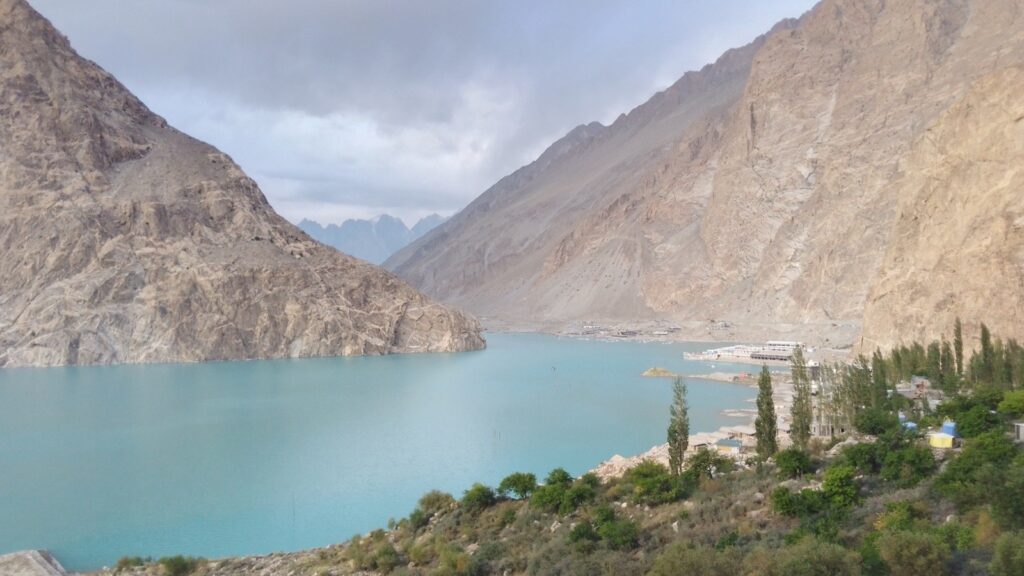
Situated at the intersection of Pakistan, China, India and Afghanistan, Gilgit-Baltistan occupies a strategically important position in South Asia. Its mountains, glaciers and valleys have attracted growing numbers of tourists, while the Karakoram Highway and the China–Pakistan Economic Corridor (CPEC) have reinforced its significance for trade and connectivity.
Read more on Novastan: Gwadar, Karachi and the Central Asian Dream of the Sea
Yet Gilgit-Baltistan remains outside Pakistan’s constitutional provincial structure. For many of its residents, economic development has therefore brought renewed questions about who controls the region’s land, resources and political future.
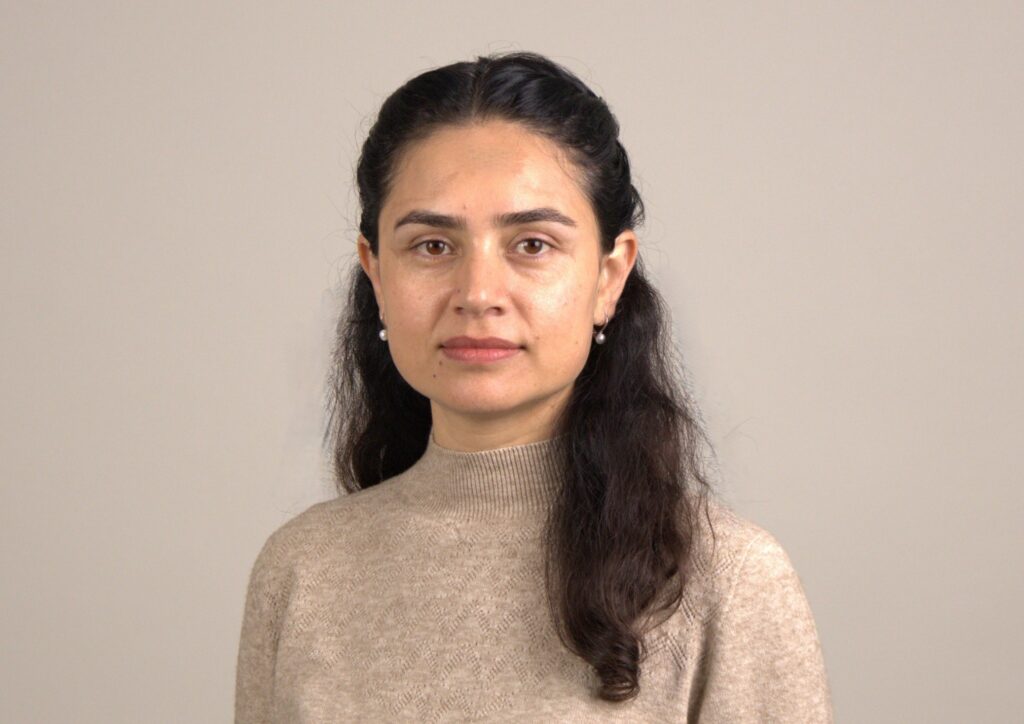
Nadia Ali, a researcher whose work examines land governance, development and political marginalisation in Gilgit-Baltistan, has studied these tensions, including through fieldwork in Hunza. In this interview with Novastan, she discusses the region’s contested constitutional status, the implications of the 2025 land reforms, the expansion of tourism and the challenges facing local communities.
A region whose political aspirations remain overlooked
Novastan: Gilgit-Baltistan is often discussed internationally primarily in relation to the wider Kashmir dispute. What does this framing miss about the political and social realities of the region today?
Nadia Ali: Gilgit-Baltistan is not Kashmir. Yet its political fate is entangled in the India–Pakistan dispute over Jammu and Kashmir because of its historical connection to the former princely state. This has shaped how the region is represented internationally, often leaving its distinct political realities and the aspirations of its people invisible.
Both Azad Jammu and Kashmir and Gilgit-Baltistan are administered by Pakistan, but neither has the same constitutional status as Pakistan’s provinces. While Azad Jammu and Kashmir has its own interim constitutional framework and elected institutions, Gilgit-Baltistan operates under a separate administrative arrangement.
It does not enjoy full constitutional provincial status or representation in Pakistan’s federal parliament. Instead, it has been governed through a series of Governance Orders that have provided limited substantive political empowerment.
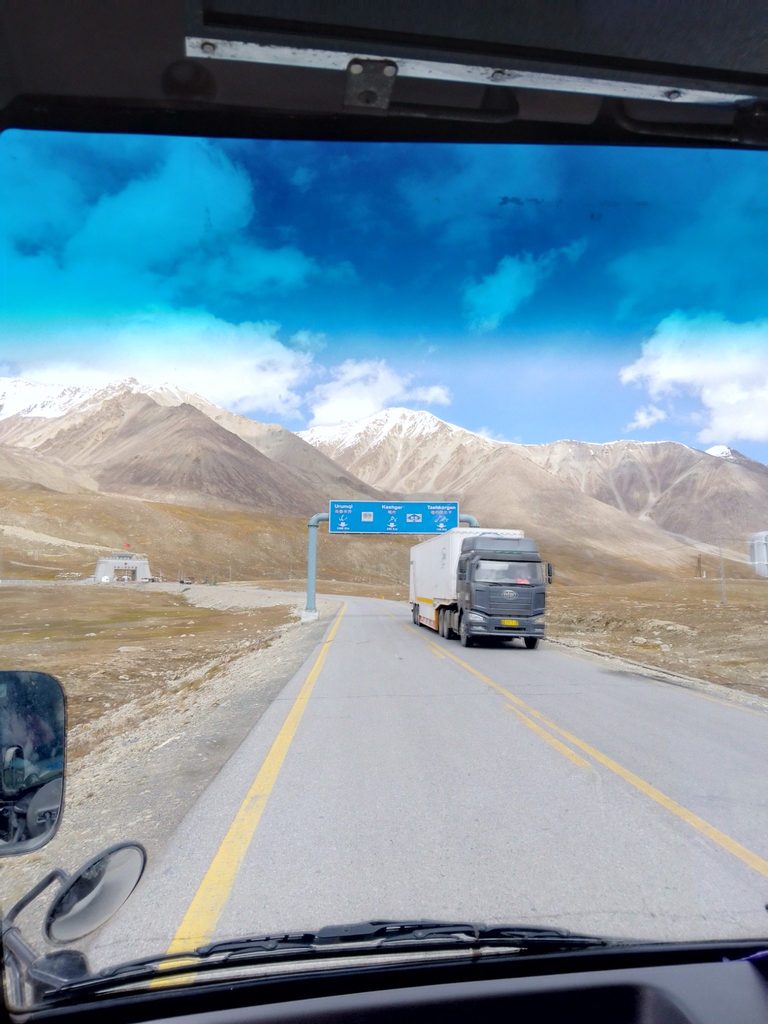
At the same time, Gilgit-Baltistan’s strategic location has made it increasingly important for Pakistan’s regional connectivity ambitions. The Karakoram Highway, its subsequent upgrades and its integration into CPEC have encouraged tourism and growing state and private interest in land and mineral extraction.
Read more on Novastan: Can Afghanistan Become Central Asia’s Bridge to the South?
Yet this growing economic importance has not brought constitutional recognition. In my view, the region’s legal ambiguity facilitates state control and external investment while weakening customary land rights.
International discussions that consider Gilgit-Baltistan only through the Kashmir dispute risk further marginalising local aspirations by subordinating people’s rights and agency to competing claims of sovereignty.
How would you describe the relationship between Gilgit-Baltistan and the Pakistani state? What are the main sources of political frustration today?
The relationship is marked by a fundamental contradiction: the state seeks control over the territory without fully assuming the political responsibilities that should accompany it.
Many residents want to be recognised as full citizens, with meaningful political representation and access to the rights and protections afforded to citizens elsewhere in Pakistan.
The state values Gilgit-Baltistan’s strategic location, land, water, mountains and mineral resources, but its inhabitants remain in a condition of legal uncertainty.
The main sources of frustration include unresolved constitutional status, limited representation, contested land rights, control over natural resources and insufficient local influence over decisions affecting people’s lives.
These concerns should not necessarily be interpreted as opposition to Pakistan itself. They are often demands for recognition, accountable governance and a meaningful voice in the region’s economic and political future.
The central question is not simply who exercises sovereignty over Gilgit-Baltistan, but whether those governing the territory are accountable to the people who live there.
Land rights and the struggle over ownership
Land has become an increasingly important political and economic issue. What is driving disputes over ownership, and what do they reveal about power and representation?
Land is particularly contentious because it is not merely an economic asset. It is also a source of community identity, livelihood and political authority.
Gilgit-Baltistan’s mountainous geography means that cultivable and residential land is limited. Expanding tourism and growing interest in mineral extraction have further increased its value.
Disputes are rooted in overlapping systems of ownership, including customary practices, communal and individual claims, and state legislation.
The Khalisa Sarkar framework, under which certain lands were classified as state property, was a particularly important source of conflict. Local communities challenged state claims over land they considered their own.
Although the 2025 land reforms abolished this framework, that does not necessarily resolve longstanding disputes over communal rights, ownership and administrative authority.
New forms of territorial control can emerge through legal reclassification, privatisation and commercial investment. The implementation of the reforms could therefore generate further disputes.
These disagreements go beyond property rights. They concern who has the authority to define ownership, regulate land use and determine who benefits from economic development.
In a region without full constitutional recognition, unresolved political questions directly affect communities’ ability to protect their livelihoods and retain control over natural resources.
Infrastructure: Greater connectivity, unequal benefits?
Large-scale infrastructure projects have transformed parts of Gilgit-Baltistan. How have they affected local communities, and who has benefited most?
Infrastructure projects have significantly improved connectivity between Gilgit-Baltistan and the rest of Pakistan.
The Karakoram Highway and other roads have made travel and the transport of goods easier. They have supported tourism and trade while improving access to education, healthcare and employment opportunities outside the region.
However, the Karakoram Highway was not built solely to improve mobility. It has also served Pakistan’s geopolitical interests, strengthened state control and attracted private investment in tourism and mineral extraction.
Beyond roads, investment in hydropower remains limited relative to the region’s potential. Communities continue to experience severe electricity shortages.
The Diamer-Bhasha Dam, a 4,500-megawatt project under construction, is primarily intended to contribute to Pakistan’s wider electricity generation and water-storage capacity, rather than provide a dedicated electricity supply for Gilgit-Baltistan.
Its development raises important questions about how costs and benefits are distributed between affected communities and the wider national population.
Digital connectivity also creates opportunities for communication, education and online employment. However, service quality remains uneven, particularly in remote mountain communities.
Major infrastructure projects may promote economic growth, but their lasting value depends on whether they address local needs and environmental risks. Community-focused development initiatives, including those associated with the Aga Khan Development Network, offer examples of approaches that emphasise local participation.
Tourism transforms Hunza’s economy and landscape
Tourism has expanded considerably in Gilgit-Baltistan. What changes have you observed, particularly in Hunza, where you conducted research?
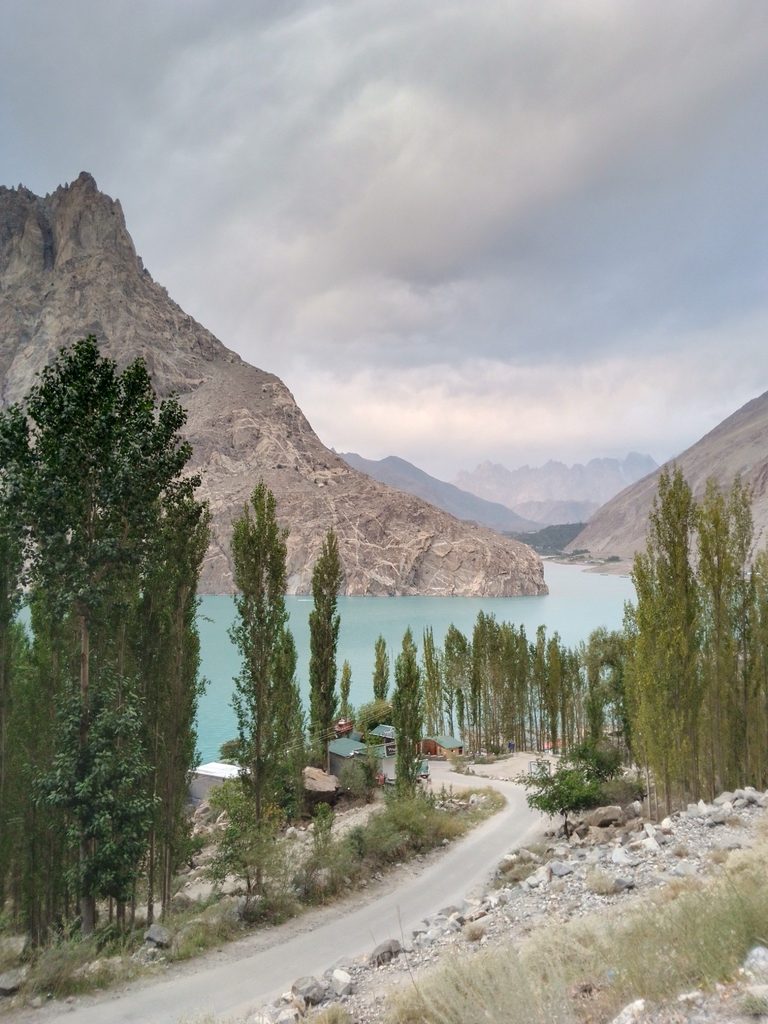
Tourism has significantly transformed local economies and communities in Hunza, generating opportunities while intensifying environmental pressures and changing traditional livelihoods.
I see tourism not simply as economic development, but as a process that reshapes people’s relationships with land, resources and local ways of life.
In Hunza, tourism has created employment and business opportunities for guesthouse owners, restaurant operators, transport providers and tour guides.
However, it has also attracted investors from other parts of Pakistan, raising questions about who captures the greatest economic benefits.
One of the most significant concerns is the conversion of agricultural land, particularly within Hunza’s green belt, into concrete buildings, including multi-storey tourism facilities.
This transformation threatens mountain agriculture and the ecological character of the region.
Local communities are increasingly moving away from subsistence farming towards tourism-related livelihoods, potentially weakening traditional relationships with land.
Yet tourism is not the only driver of change. Rising educational attainment, employment opportunities in cities and remittances from younger generations working elsewhere in Pakistan and abroad also influence household aspirations and land-use patterns.
The central tension is between tourism’s immediate economic benefits and its longer-term social and environmental costs.
Hunza’s experience highlights the need to ask who controls land, who benefits from tourism and how development can be balanced with the protection of local livelihoods and ecosystems.
China’s presence: More visible in trade than everyday politics
Gilgit-Baltistan is strategically important for Pakistan’s connectivity with China. How visible is China in everyday life, and how do local communities perceive this relationship?
China’s presence is shaped by cross-border trade, infrastructure development, tourism and wider economic cooperation with Pakistan.
However, it is not necessarily highly visible in everyday political and economic life.
Beyond official narratives surrounding CPEC and the Pakistan–China strategic partnership, people encounter China’s presence more routinely through Chinese products in local markets, tourists visiting during the summer and official delegations.
The growing availability of Chinese-language courses at universities and other institutions also reflects the educational dimensions of this relationship.
Public perceptions are influenced by narratives portraying China as Pakistan’s close friend and an emerging global power.
My research suggests that these perceptions are not uniform. Positive views are particularly evident among people involved in cross-border trade, who see China as a source of economic opportunity.
At the same time, increasing regulations and taxation are placing pressure on small-scale traders, making it more difficult for some to sustain their livelihoods.
Climate change becomes a political question
Gilgit-Baltistan is highly exposed to environmental pressures. How are these interacting with tourism and development, and to what extent have they become political issues locally?
Climate change and environmental degradation pose major challenges because local communities depend on fragile mountain ecosystems, glaciers, agricultural land and transport routes vulnerable to natural hazards.
Rising temperatures and glacial instability threaten lives, livelihoods and essential infrastructure.
Read more on Novastan: On a disappearing Kyrgyz glacier, seven women learn to read the ice
Landslides and flooding damage roads, hydropower facilities, irrigation channels and bridges, disrupting access to markets and public services.
Tourism is adding further pressure on limited water and electricity supplies, inadequate waste-management systems and local ecosystems.
These pressures are especially difficult to manage where communities already face gaps in public services and have limited influence over development priorities.
Environmental threats increasingly intersect with political grievances. Protests over electricity shortages, clean drinking water and inadequate services are often connected to broader concerns about political exclusion and unequal development.
Climate change is therefore not simply an environmental issue in Gilgit-Baltistan. It is increasingly inseparable from questions of governance, representation and accountability.
What future for Gilgit-Baltistan?
Looking ahead, what developments do you think will shape Gilgit-Baltistan most profoundly over the next decade? Could its relationship with Pakistan change?
I believe climate change, mineral extraction, tourism expansion and implementation of the 2025 land reforms will be particularly important.
Climate change is perhaps the most immediate threat, given the region’s exposure to glacial lake outburst floods, landslides and extreme weather.
A second major development will be growing interest in mineral extraction, including through Pakistan–China cooperation.
These investments may create economic opportunities, but they could also intensify conflicts over land ownership, communal resources and the distribution of benefits.
The implementation of the Land Reforms Act 2025 will be equally important. Its consequences will depend on whether the authorities address existing disputes and recognise local communities’ claims in practice.
If decision-making remains concentrated in state institutions and external commercial interests, the reforms could reproduce longstanding patterns of marginalisation.
I therefore expect Gilgit-Baltistan’s unequal relationship with the Pakistani state to persist through new forms of economic and territorial control, unless communities gain greater influence over decisions affecting their future.
Meaningful change requires more than economic investment or land reform. It demands political representation, legal protections and recognition of the region’s rights.
Without these, Gilgit-Baltistan risks becoming increasingly valuable to external actors while its inhabitants remain politically marginalised.
By Mathieu Lemoine, Editor-in-Chief for Novastan English.