
 Tajikistan’s contribution to the war effort during the Second World War
Local historian Gafur Chermatov details how the Tajik Soviet Socialist Republic contributed to the war effort during the Second World War, known in the USSR as the Great Patriotic War.
Victory in the Second World War was achieved at the cost of immense suffering for millions of people of different nationalities. During the most difficult trials, both at the front and in the rear, the peoples of the USSR were united and bonded as never before – and probably as never again afterwards.
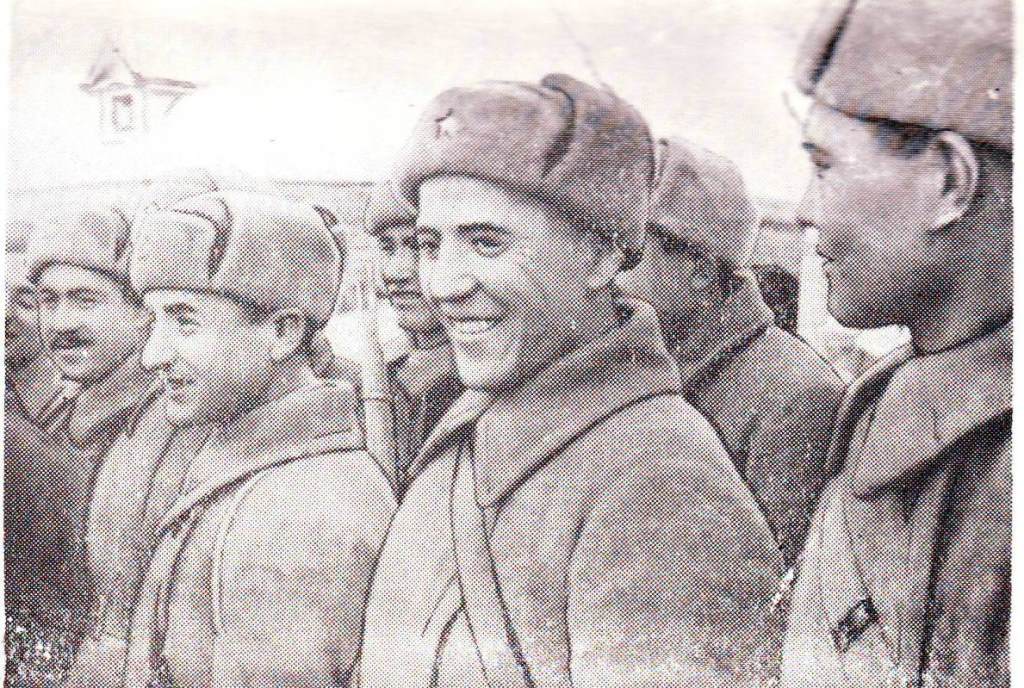
“We never had a single case of defection to the enemy. The Tajiks were always distinguished by their modesty, courage and unconditional respect for the commander’s combat orders. I will always keep the best memories of my Tajik comrades-in-arms,” recalled Lieutenant General Andrei Vedenin, who took part in the Battle of Rzhev, in his memoirs.
Support Novastan, the European Central Asia magazine
By supporting Novastan, you are supporting the only English, French and German-language media specialising in Central Asia. We’re independent and we need your help to stay that way!The 118th Rifle Division, which he commanded, was made up of almost 80% Central Asian fighters, mainly Tajiks.
Volunteering in the name of victory
On 22 June 1941, the terrible echo of war reached Tajikistan. One of the first reactions of Tajiks to the announcement of the war was to volunteer en masse to go to the front. In June-August 1941 alone, more than 5,857 applications to volunteer for the front were submitted to the Tajik military committee. By August 1945, more than 200,000 people from Tajikistan had been mobilised into the active army during the war. More than 15,000 other Tajiks served in the Workers’ and Peasants’ Red Army between 1938 and 1940.
More than 45,000 conscripts from Tajikistan were assigned to the defence industry and military construction sites. As a result, the total number of conscripts in the army and industry stood at 245,000. Tajik workers worked in defence industry enterprises in the Novosibirsk, Sverdlovsk and Chelyabinsk regions.
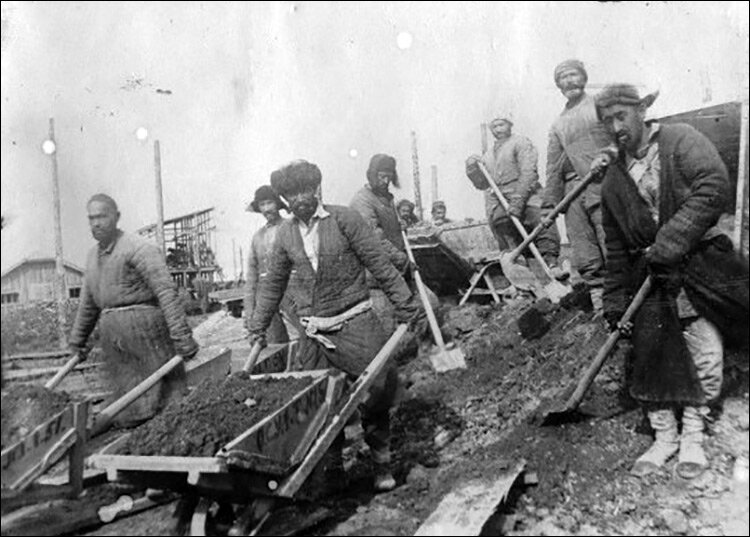
At the beginning of the war, 8,874 motor vehicles, 1,115 tractors, 19,326 horses, 1,791 carts and the necessary equipment were transferred from Soviet Tajikistan to Red Army units and formations. During the war years, versatile military specialists were trained in Tajikistan for the Red Army and Navy. Female specialists were also trained: snipers, telephone operators and radio operators, while 3,000 nurses and military nurses were trained in a short period of time.
Thousands of riflemen, tank crews, machine-gunners, paratroopers and others were trained. Later, tens of thousands of workers, representatives of the collective-farm peasantry and intellectuals who had undergone military training in the republic were mobilised into cavalry divisions and other military units formed on the territory of Tajikistan.
For the defence of Stalingrad
On 17 July 1942, the Battle of Stalingrad, now Volgograd, began. It was one of the most important and fiercest battles of the war, and radically changed its course. For six and a half months, bloody and intense fighting raged relentlessly across the vast steppes of the Don and the Volga.
In May 1942, the formation of the 104th Cavalry Division was under way in Tajikistan. Conscripts came from all corners of the republic. In the shortest possible time, thousands of horses, guns, mortars, hundreds of carts, vehicles, ammunition, engineering equipment, food and fodder were loaded onto wagons at railway stations near Stalinabad, now Dushanbe.
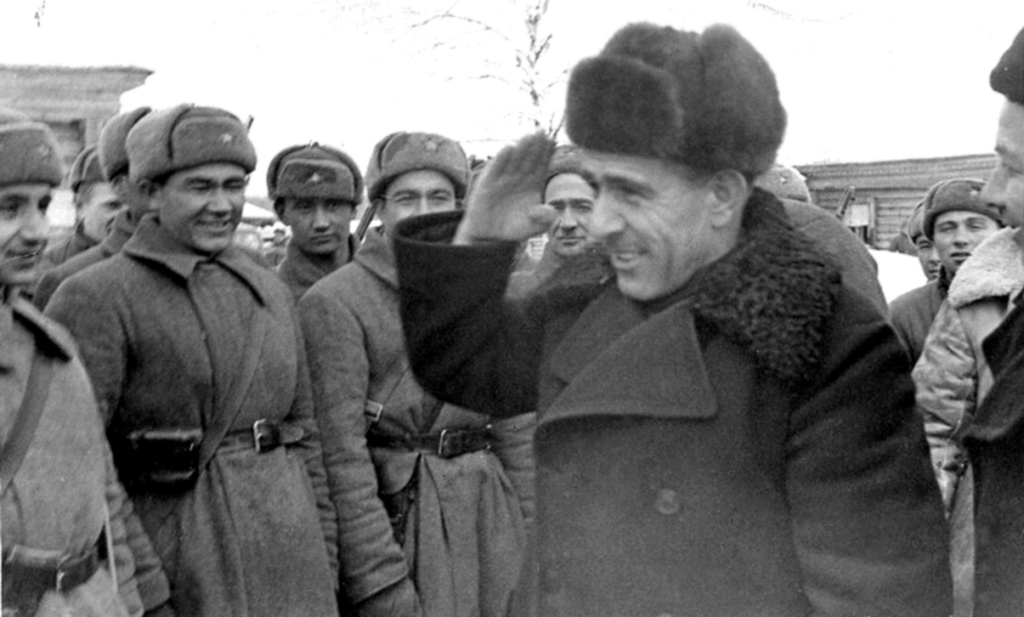
The defenders of Stalingrad offered firm and persistent resistance to German troops, showing unparalleled courage. Hundreds of thousands of Soviet soldiers distinguished themselves there, including many Tajiks. More than 7,000 soldiers recruited in Tajikistan later received the medal “For the Defence of Stalingrad”.
A reliable reserve for the front
Having rapidly shifted towards the production of military goods, Tajikistan had already been rebuilt on a wartime footing by the end of 1942. The republic supplied the front primarily with light industry and food products, as well as non-ferrous and rare metals needed for the production of military equipment.
Also read on Novastan : Au Kazakhstan, des passionnés cherchent à identifier des soldats morts pendant la Deuxième guerre mondiale
In total, during the war years, agricultural workers delivered 500,000 tonnes of raw cotton, more than 100,000 tonnes of meat, and tens of thousands of tonnes of vegetables and fruit to the state. Thanks to their selfless labour, in 1944 the Tajik Soviet Socialist Republic became one of the first in the Soviet Union to fulfil the grain procurement plan and, in addition, handed over thousands of quintals of grain to the Red Army.
Huge funds were collected in the republic for military equipment. During the war years, Tajikistan’s workers contributed more than one billion roubles to the defence fund and the weapons construction fund, including in the form of loans and cash lotteries.
An aircraft repair plant
In June 1943, the USSR People’s Commissariat of the Aviation Industry decided to create an aircraft repair plant in the village of Novobad, located in Tajikistan’s Hissar Valley, on the basis of the existing military airfield.
For this purpose, the 217th stationary aviation workshop arrived in Hissar. Construction of production buildings and workshops immediately began at the new site. By December 1943, the repair of aircraft and engines had multiplied compared with October. By January 1944, the number of employees had also increased severalfold compared with October.
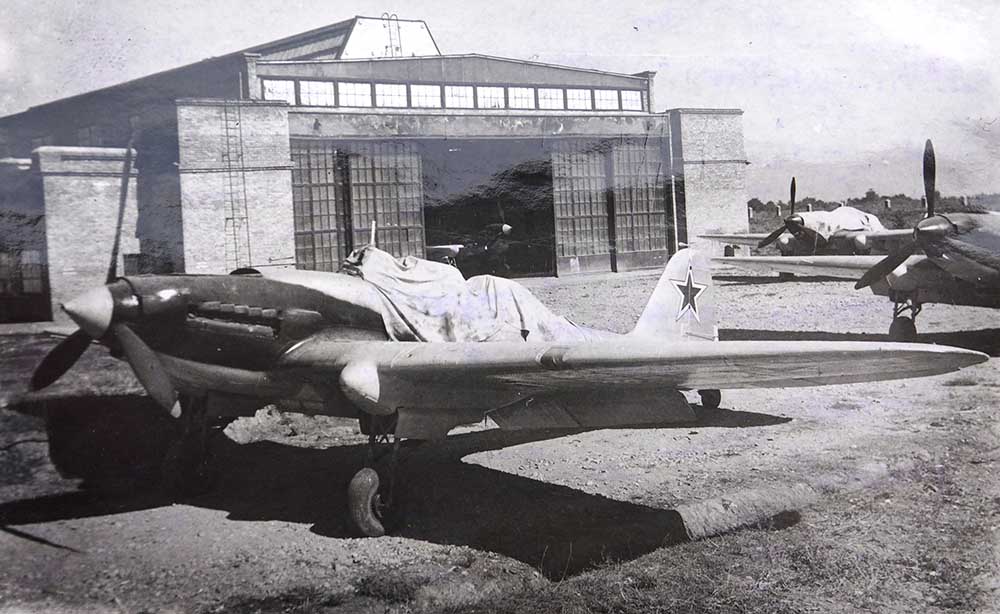
The workshops supplied 12 aviation regiments during their formation and deployment to the front, as well as almost all aviation schools in the district, including those evacuated from the front line.
In total, 468 aircraft, 1,219 aircraft engines and 352 vehicles were repaired during the war. Thousands of units of complex combat and navigation equipment were returned to the front after repair: cannons, machine guns, radio equipment and measuring instruments.
Seeking shelter
Fleeing the enemy, residents of the western regions of the USSR found shelter in Tajikistan. From August 1941 to September 1942, more than 140,000 Soviet citizens evacuated from Ukraine, Belarus, the Baltic states, Moscow and Leningrad arrived in the republic. The war did not only deprive these people of shelter. Most of them, fleeing the invaders, left their homes without even taking the most basic household items. In Tajikistan, they were welcomed with warmth and care.
The construction of new houses began. In Stalinabad, 3,600 square metres of housing were built for evacuees in just eight months. More than 12,000 families were housed. To help the evacuees, money in addition to that allocated by the state, warm clothes, necessary furniture and kitchen utensils were collected.
Want more Central Asia in your inbox? Subscribe to our newsletter here.
In the summer and autumn of 1941, a contingent from 14 orphanages arrived in Tajikistan. Among them were two orphanages for Polish children. The republic’s leaders faced the extremely difficult task of developing a network of orphanages in towns and villages. Collective farmers in the Shahrinav district of the Stalinabad region took the initiative to create orphanages for 20 to 30 children on collective farms.
Gafur Chermatov
Historian, for Asia-Plus
Translated from Russian by Sophie Combaret and from French by Mathieu Lemoine