



 Between Extended Family and Personal Boundaries: How Parenting is Changing in Kazakhstan
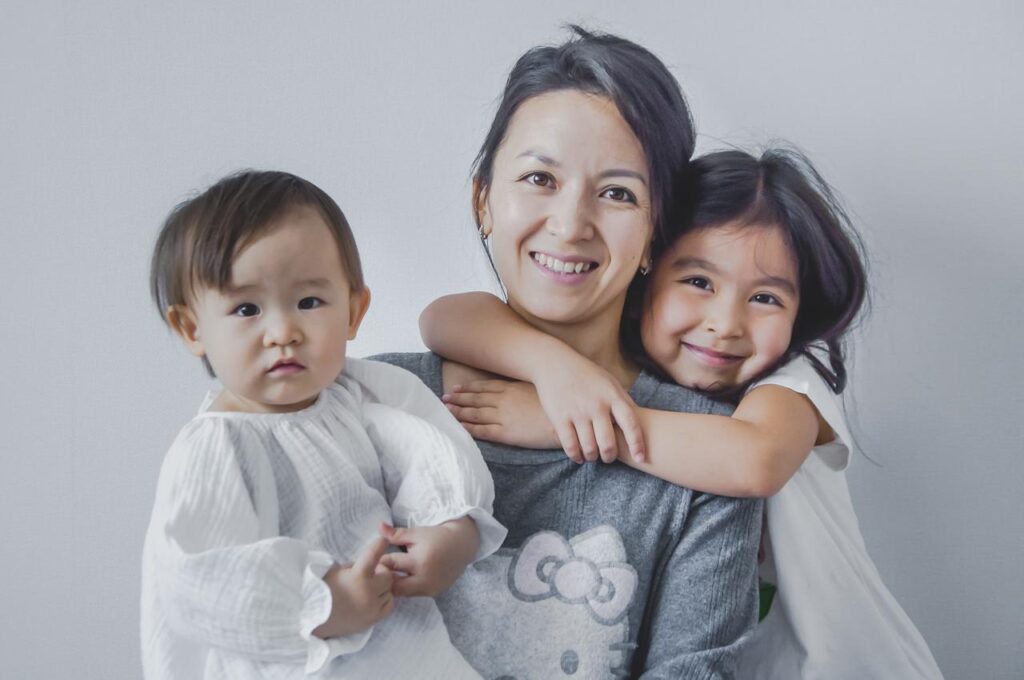
Every year on June 1st, Kazakhstan celebrates International Children’s Day. In many cities, it is marked with concerts, theater performances, and free activities for children. For families, it is a day of celebration. At the same time, a broader question arises: What does it mean to protect a child today? Is it simply about ensuring safety, education, and health, or also about taking their feelings, boundaries, and their own voice seriously?
Anyone who talks about parenting in Kazakhstan quickly encounters contradictions. Children often grow up in a strong family network, surrounded by grandparents, aunts, uncles, and older siblings. At the same time, they are under immense pressure to succeed in school, to be multilingual, to be independent, and to thrive in a globalized world. Alongside the traditional notions of obedience and respect, a new language is gradually emerging: that of emotional closeness, personal boundaries, and dialogue.
Parenting in Kazakhstan thus exists at the crossroads of several worlds: the Kazakh extended family, Soviet-influenced educational ideals, urban performance pressures, global anxieties about the future, and a growing psychological sensitivity towards children.
Experts note that in Kazakhstan, love for children is not changing. What is changing is the language of that love. Previously, care was primarily expressed through actions – feeding, clothing, and educating a child, perhaps later helping them find housing. Today, another question is increasingly being added: What does the child themselves feel?
Family as a sanctuary – and as a source of pressure
One of the most enduring characteristics of Kazakh parenting is the significant role of the extended family. A child often grows up not only with their mother and father, but amidst a wide circle of relatives. Sometimes this includes neighbors, family friends, or people from the neighborhood.
Anar Kakimova, mother of four, founder of the parenting community “Parentsclub” and the children’s club “Readkids,” describes such a family as a “holistic organism.” In this model, a child learns early on that they are supported not just by one adult, but by an entire network. In Kazakh society, she says, many feel that they are not alone in this world. Ayana Tokeyeva, a psychologist, lecturer, and mother of three with 15 years of experience in school and preschool education, sees a key strength of Kazakh upbringing in the continuity between generations. Values are conveyed less through direct instruction than through example, atmosphere, and relationships between generations.
Support Novastan, the European Central Asia magazine
By supporting Novastan, you are supporting the only English, French and German-language media specialising in Central Asia. We’re independent and we need your help to stay that way!The saying that it takes a village to raise a child therefore sounds almost literal in the Kazakh context. But Maiya Li, an art therapist and psychological counselor with international experience, points to a change: In the cities, this “village” no longer always exists in its former form. Young families often live far away from grandparents, one parent works long hours, and mothers are often left to care for small children largely on their own.
However, the extended family also has another side. It can provide support, but it can also exert pressure. Children grow up in a dense web of expectations: how they should behave, whom they should respect, how they should learn, what profession they should choose, what constitutes a “good son” or a “good daughter.”
Tradition and Modern Psychology
In Kazakh culture, there is a well-known principle: Until the age of five, a child is considered a khan; from five to fifteen, they are educated; and from fifteen onward, they are to be respected like an adult. Ayana Tokeyeva sees in this not only tradition but also a connection to modern psychology. In the first years of life, a child primarily needs love, acceptance, gentleness, and emotional security. From this, a fundamental trust in the world develops.
This idea shows that a gentle approach to children is not simply a Western import. Kazakh educational concepts have long included the idea that young children need protection, closeness, and acceptance. Only later are they gradually introduced to responsibility and independence.
Also read on Novastan: „Sich Feministin zu nennen, ist schon Protest“ – Frauen-Punkbands in Kasachstan
Gender roles are also being renegotiated. While boys were traditionally seen more as future pillars of the family and girls as guardians of warmth and security, younger parents today are more frequently asking how caregiving can be combined with education, career choices, and self-realization. Maiya Li points out that in some families, the expectation persists that a girl’s primary life path must lead primarily through marriage and motherhood. This issue is sensitive for Kazakhstan: The country is modernizing, women are gaining more educational and career opportunities, but traditional views remain.
From Obedience to Dialogue
For a long time, parental care in Kazakhstan was primarily practical. Parents invested in their children’s education, helped with their studies, provided financial support, and often remained heavily involved even into their children’s adult lives. Love was expressed less through words than through responsibility.
However, according to Anar Kakimova’s observations, communication with children in many families still revolves heavily around daily life and school: Is the homework done? Has the child eaten? Why did they get that grade? What assignments were given? Parents do a lot for their children, but they don’t always know what’s going on inside them: what they’re afraid of, what they like, what they dream about, what’s troubling them.
During her time in the United States, Kakimova noticed how naturally many parents there talk to their children about feelings, experiences, and wishes – and how visibly fathers are involved in everyday life. In Kazakhstan, the role of fathers is also being discussed more openly, but the daily responsibility for school, food, clothing, leisure activities, and the emotional atmosphere often still rests with mothers.
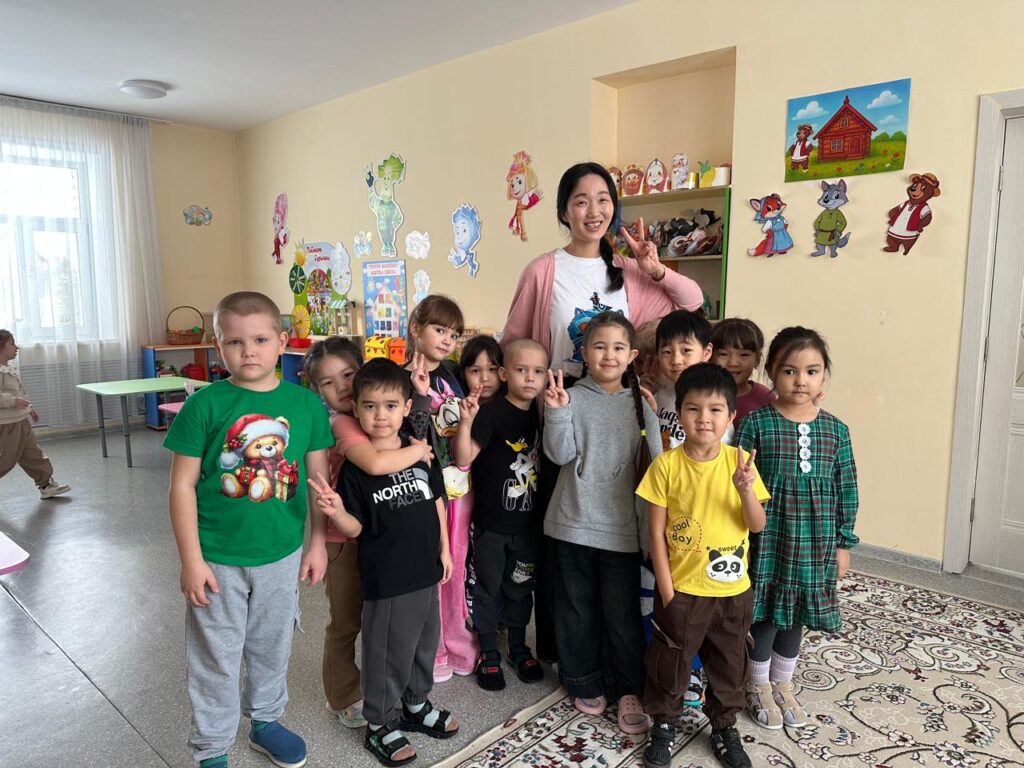
Maiya Li describes this shift with the term “conscious parenting,” often called “gentle parenting” in English-speaking countries. According to her, more and more parents in Kazakhstan are moving away from a strictly authoritarian model in which an adult’s word is never questioned. This isn’t about making the child the center of the family. Parents still establish boundaries. But they try to be more considerate of the child’s needs, feelings, and age, and to explain rules instead of simply demanding obedience.
This change isn’t uniform. In some families, physical punishment, psychological pressure, or discipline through fear remain part of everyday life. At the same time, Ayana Tokeyeva observes a change: parents are more aware of the consequences of pressure and are seeking help from child psychologists more often – especially during periods of high academic pressure, before final exams, or when transitioning to new educational levels.
Also read on Novastan: Wie ein Schüler versucht, tadschikische Mosaike zu retten
A new parenting culture thus begins not with the child, but with the adult: with the willingness to question their own experiences, not to automatically repeat old patterns, and to communicate with children differently.
Education as a springboard for social mobility
In Kazakhstan’s major cities, especially Astana and Almaty, parenthood is increasingly linked to investments in education. English courses, private schools, enrichment centers, sports, music, programming, creative programs, international exams, and preparation for studying abroad are part of the new strategy for many families.
English is no longer just a school subject. It represents mobility, the future, and access to a wider world. Rufina Adeleva, a mother of two and a master’s student in education and psychology, connects this interest to globalization: The digital world has reduced distances, children are exposed to people and opportunities outside of Kazakhstan earlier, and foreign languages broaden educational and life paths.
Maiya Li adds that multilingualism has become a key to competitiveness – not only internationally, but also domestically. Besides English, Chinese, Korean, and other languages, Kazakh is also gaining importance for families who envision their children’s future in Kazakhstan. Multilingualism is therefore not just a path abroad, but a key to participation within the country.
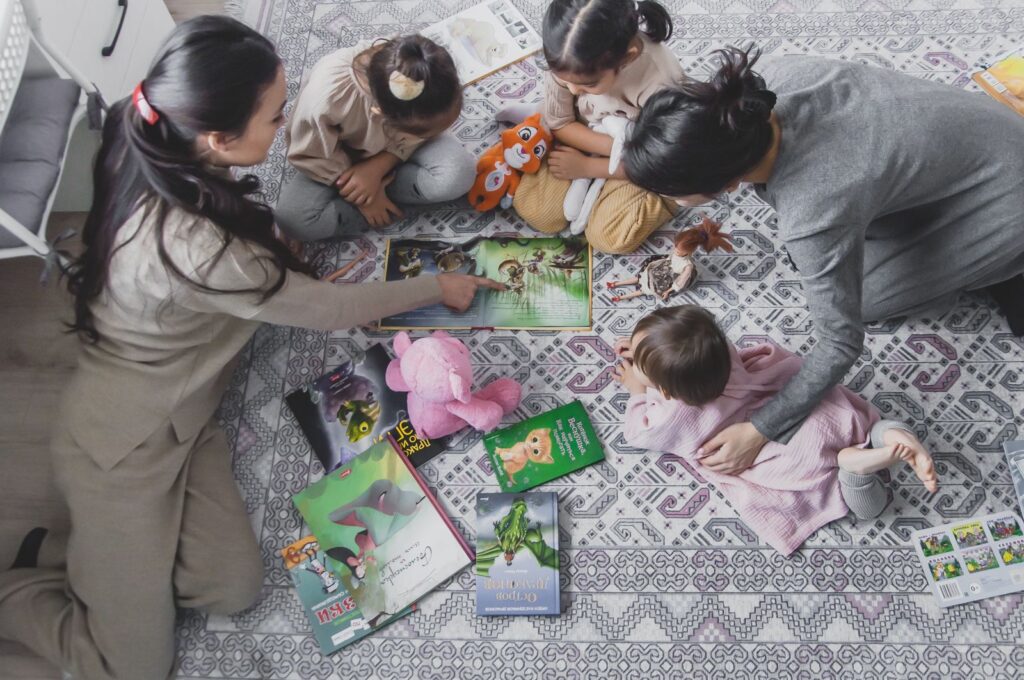
Ayana Tokeyeva emphasizes that education has long been considered a central value in Kazakhstan. What is new, however, is the anxiety with which parents now view it. Artificial intelligence, technological upheavals, and the disappearance of familiar professions intensify the worry that their child will not be able to keep up in the future. The desire to give them “the best” therefore stems not only from ambition, but also from fear.
Anar Kakimova’s experience as a mentor in the “iQanat” project [a social education project launched by Kazakh entrepreneurs to support rural schoolchildren, author’s note] shows how unequally these opportunities are distributed. For young people from rural areas, international exams, career guidance, or the possibility of studying abroad represent not only motivation, but also financial, organizational, and informational hurdles. For a child from the city, an English course might be part of the weekly schedule. For young people from rural areas, the same language can be a rare opportunity to leave the predetermined path.
When Pressure for the Future Displaces Childhood
The image of the successful child in Kazakhstan is still often clearly defined: good grades, a scholarship, a prestigious profession, a secure job, and later perhaps a car, an apartment, and social status. A child’s success is often seen as a reflection of parental success.
Today, this image is becoming even more demanding. According to Maiya Li’s observations, a modern, successful child is not only expected to excel in school. They attend several courses, learn foreign languages, play sports or music, participate in competitions, have long-term goals, consider studying abroad, are comfortable navigating the digital world, and simultaneously maintain respect for family, society, and country.
Also read on Novastan: Wie Frauen in Kasachstan die Kultur des Schweigens herausfordern
The pressure thus rests not only on the children but also on the parents. Many parents want to do everything right and, in doing so, end up controlling too much. The central question of modern parenting is therefore: How do you give a child a future without robbing them of their childhood?
City and Countryside, Freedom and Supervision
The difference between city and country remains pronounced in Kazakhstan. In cities, parents can structure a child’s childhood very carefully: A child’s weekly schedule can be almost as full as an adult’s work calendar.
In rural areas, there are fewer such opportunities. Rufina Adeleva, who herself grew up in the countryside, describes the difference this way: In the city, the focus is often on intellectual and cultural development, while in the countryside, it’s more on work and everyday life skills.
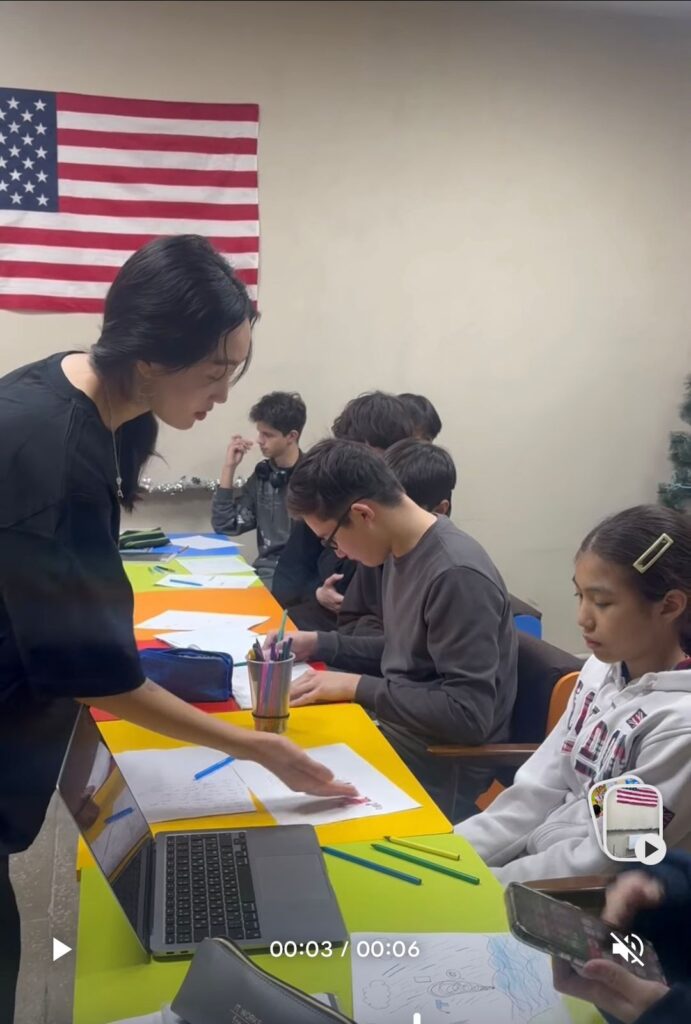
Anar Kakimova also observes that young people from rural areas often have a better understanding of the value of money, time, and opportunities. They are more cautious, more modest, and more careful with their resources. At the same time, families in rural areas often lack access to information about scholarships, international programs, career counseling, and educational pathways.
Another distinctive feature is the early independence of many children. In Kazakhstan, it’s not uncommon for elementary school children to walk to school alone, play in the yard, go to small shops, or stay at home unsupervised for periods of time. For many families, this is considered normal: A child should become independent step by step. But the line between freedom and lack of supervision is thin.
Digital Media as a New Boundary in Parenting
Over the past 10 to 15 years, parenting in Kazakhstan has been transformed by digital media. Smartphones, social networks, online games, cyberbullying, and cybersecurity are now among the everyday concerns of families.
Ayana Tokeyeva confirms that many current inquiries from parents are related to digital media. Excessive screen time can be associated with restlessness, aggression, emotional withdrawal, tantrums, school refusal, or a general lack of energy. The devices themselves are not always the problem. Often, these issues also reflect family tensions, communication problems, difficulties with peers, or the child’s inner turmoil.
This highlights the central conflict: technologies are changing everyday life faster than families can adapt their parenting models.
A New Formula for Parenting
Modern parenting in Kazakhstan is neither entirely traditional nor simply Western. Perhaps this is precisely where the new formula for parenting in Kazakhstan lies: preserving the strength of the family without increasing its pressures; enabling children to receive an education without depriving them of their childhood; fostering independence without leaving them alone; and respecting traditions without ignoring the child’s voice.
Nurgul Adambayeva for Novastan