
 Iran, Central Asia and the Limits of Academic Geography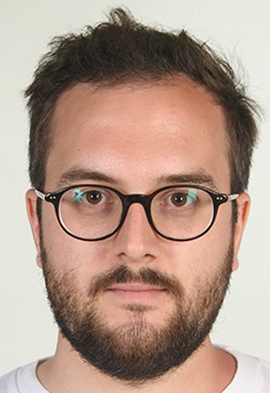
Support Novastan, the European Central Asia magazine
By supporting Novastan, you are supporting the only English, French and German-language media specialising in Central Asia. We’re independent and we need your help to stay that way!Historian Fernando Camacho Padilla, coordinator of the GEPI at the Universidad Autónoma de Madrid (UAM), discusses the cultural space linking Iran, Afghanistan, Tajikistan and other Iranian-speaking communities – and why European academia still struggles to study these connections across modern regional boundaries.
Iran, Afghanistan and Tajikistan are usually placed in different academic and geopolitical categories. Yet the histories, languages and cultures of these countries – and of Iranian-speaking communities extending across Central Asia, the Caucasus and the Middle East – have long been intertwined.
At the UAM, the Grupo de Estudios sobre Pueblos Iranios (GEPI) seeks to approach this wider Iranian world across modern political and disciplinary borders. Its members work on subjects ranging from history and literature to anthropology, gender studies, musicology and political science, while also examining the historical connections between Iranian and Hispanic societies.
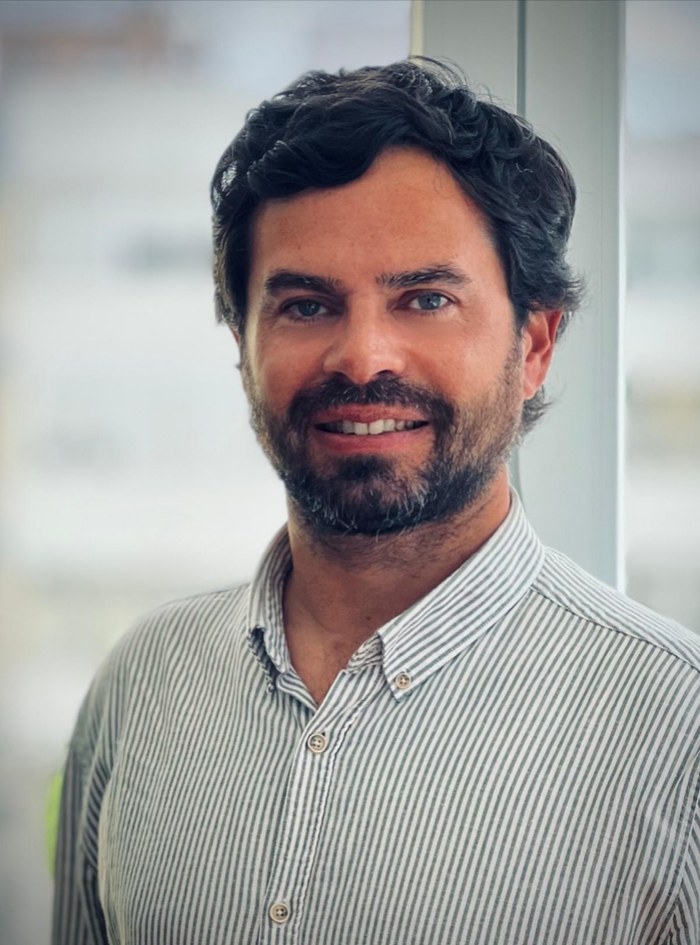
Novastan spoke with historian Fernando Camacho Padilla, coordinator of the GEPI, about the meaning of the “Iranian world”, the place of Central Asia within it, the development of Iranian studies in Spain and the role academic diplomacy can play in maintaining connections across politically divided regions.
Novastan: To begin, could you briefly introduce yourself and explain how your interest in Iran and, more broadly, the Iranian peoples began?
Fernando Camacho Padilla: I had a certain familiarity with Iran from childhood, as one of my parents’ colleagues and friends was Iranian and we spent quite a lot of time with him. The Iranian Revolution, the Iran-Iraq War and the situation in the country frequently came up in family conversations.
Later, during the almost nine years I lived in Sweden, I met several Iranian exiles as well as young second-generation Iranians. In 2010, after reading extensively about the country and becoming increasingly interested in its geopolitical situation, I decided to travel to Iran.
I contacted the University of Tehran and proposed giving several workshops or courses on the contemporary history of Latin America, which was already my main field of specialisation. The response was positive and, in 2011, I had the opportunity to spend some time teaching at the university.
That experience allowed me to travel through different parts of the country for the first time. Between then and 2022, I travelled to Iran on nine occasions.
The name of GEPI refers to “Iranian peoples”, rather than simply Iran. How would you define this historical, linguistic and cultural space?
The “Iranian world” is still a relatively little-known concept and often causes some confusion, because its boundaries vary depending on the definition being used.
For GEPI, it refers to a broad cultural space encompassing areas of Central and Western Asia that have historically been shaped by Iranian civilisations or by the presence of peoples speaking languages belonging to the Iranian branch of the Indo-European language family.
It is therefore not limited to the modern state of Iran. It also includes Afghanistan and Tajikistan, the Kurdish regions, and particular communities and historical areas in countries such as Syria, Kazakhstan, Turkmenistan and Kyrgyzstan, among others.
One element shared by many of these societies is the celebration of Nowruz, the new year festival with pre-Islamic roots that is closely associated with the Zoroastrian tradition originating in ancient Iran.
Read more on Novastan: Beyond fun and games – the politics of Nowruz
In Spain, Iran, Afghanistan and Central Asia are often studied separately. What do we lose by dividing regions with so many historical, linguistic and cultural connections into different academic categories?
This is an important problem in Spain, and one that specialists in the Iranian world have pointed out on many occasions.
So far, there has not been sufficient academic or political will to establish a distinct and permanent space dedicated to its study, as exists in other countries in Europe, Asia and North America.
Iran generally occupies a secondary place within programmes focused on the Arab or Muslim world, despite its obvious historical, cultural and linguistic particularities.
The countries of Central Asia, meanwhile, barely feature in Asian studies, which tend to concentrate on East and Southeast Asia.
Read more on Novastan: Bukhara Before the Border: Aini and the Politics of Tajik-Uzbek Memory
At GEPI, we try, within the limits of our resources, to help address this gap through academic and public-facing activities, including summer schools and short programmes dedicated to different countries, peoples and cultures of the region.
How have studies of Iran and the Iranian peoples developed in Spain? Which fields are relatively well established, and which remain largely unexplored?
The first courses on contemporary Iran and the Persian language began to be taught at the UAM in the mid-1970s.
Other institutions later followed, including the Complutense University of Madrid, the University of Salamanca and the University of Alicante, while some courses have also been offered occasionally in Granada and Barcelona.
The study of ancient Iranian history has a somewhat longer tradition, although it has generally been approached through archaeology.
By contrast, many other areas connected with the Iranian world remain almost entirely absent from Spanish university curricula. This is the case, for example, with the history and culture of Kurdish peoples, as well as the study of countries and regions such as Afghanistan and Tajikistan.
At GEPI, we try to fill part of this gap, although our possibilities are limited. The conditions at the UAM do not always make it easy to organise such courses, as they must be financially self-sustaining and cover all their costs through tuition fees. That means attracting a considerable number of students.
You coordinate the Group for the Study of Iranian Peoples at the UAM. Why was GEPI created, and what are its main objectives?
GEPI emerged from the need to bring together and coordinate Spanish lecturers and researchers – many of them of Iranian origin – interested in studying the Iranian world in all its breadth.
We also wanted to provide a common framework for the different projects and activities that were already under way, while establishing links with universities in the Ibero-American world and elsewhere.
The idea of creating the group first emerged in 2017, although it could not be formally established until December 2021. Our main objective is to give greater continuity and coherence to research on the Iranian world.
Read more on Novastan: From the Pamirs to the Aral Sea: Following the Amu Darya Through Central Asia
The group is interdisciplinary and brings together specialists in visual arts, history, gender studies, anthropology, musicology, political science and literature, among other disciplines, primarily within the humanities and social sciences.
In addition to regularly organising seminars and academic conferences, both in Spain and abroad, we have curated painting and photography exhibitions, created a podcast series featuring numerous interviews, and published books, academic articles and more accessible pieces for a general audience.
So far, we have developed three research projects, and we hope to launch new ones in the near future. These projects have already resulted in several books, as well as numerous articles and chapters in edited volumes.
Our research focuses primarily on relations, contacts and mutual representations between the Iranian and Hispanic worlds, both understood in a broad sense, although some members of the group also pursue research devoted exclusively to Iranian societies.
One of the main strands of your work concerns the historical relationship between Iran, Spain and Latin America. What have been some of the most important contacts between these regions?
Within GEPI, one of my main areas of interest is the historical and cultural relationship between the Iranian and Hispanic worlds. Contacts between them go back several centuries and encompass both political and social dimensions.
Among the most important sources are the chronicles written by diplomats who travelled in both directions from the 17th century onwards. These are of considerable historical and cultural value.
The work of the Spanish diplomat and traveller Adolfo Rivadeneyra is also particularly important. He travelled through Iran in the second half of the 19th century and left valuable descriptions of the country.
Curiously, despite being closer to us in time, the 20th century remains the least understood period in Iran’s relations with Spain and Latin America. Publications appearing in recent years are beginning to fill that gap, however, and GEPI has played an important role in this effort both within and outside Spain.
Among the lesser-known episodes are Ahmad Shah Qajar’s visit to Spain in 1922 and Mohammad Reza Pahlavi’s visit in 1957, as well as the latter’s trips to Argentina, Venezuela and Mexico.
The growing presence of the Spanish language and Hispanic culture in Iran also deserves greater attention.
Personally, I am especially interested in the work of the Spanish representative in Iran during the First World War. In addition to protecting the diplomatic interests of powers belonging to both sides in the conflict, he intervened on behalf of Christian minorities in northwestern Iran during the second Ottoman occupation.
It was an especially dramatic period, marked by terrible massacres committed against Armenian and Assyrian communities.
Relations between Iran and Latin America are often portrayed as recent and driven primarily by contemporary geopolitics. What does a broader historical perspective reveal?
Unfortunately, that perception is widespread, largely because there is still a shortage of rigorous research based on historical archives.
The available sources show that relations between Iran and several Latin American countries began as early as the start of the 20th century and were marked by episodes of considerable interest that remain poorly understood.
During the reign of Mohammad Reza Pahlavi, these relationships became more intense and significant, particularly from the 1940s and 1950s onwards.
Iran developed important relations with countries including Argentina, Brazil, the Dominican Republic, Peru and Chile.
It is a much richer history than is generally assumed, and one that still offers many possibilities for further research.
GEPI is involved in the project “Crossed Perspectives between the Iranian and Hispanic Worlds”. What does it mean to study these relations through “crossed perspectives”?
Speaking of “crossed perspectives” means studying these relationships in both directions, looking at how each space has come to know, interpret and imagine the other.
The project analyses images of the Iranian world constructed within Hispanic societies, while at the same time examining perceptions of Spain and Latin America that emerged in Iran and other societies shaped by Persian cultural traditions.
Through history, politics, literature and visual culture, we seek to understand which experiences, events and prejudices have shaped these representations.
We pay particular attention to periods of revolution, war and crisis, and to their impact on women, children and minorities.
The ultimate objective is to move beyond simplified representations and encourage a closer and more reciprocal understanding between the two worlds.
You have also studied the image of Kurdistan in the Hispanic world. How has that image developed historically?
The image of Kurdistan in Spain and Latin America is relatively recent.
Although earlier references existed in travel writing, literary works and specialist studies, for a long time they remained confined to a very limited audience.
Awareness began to grow in the 1970s and particularly in the 1980s, when the Iran-Iraq War and the development of mass media gave greater visibility to the Kurdish question.
Since then, the press, travellers’ accounts, literature and political solidarity networks have brought Kurdish struggles and experiences closer to Hispanic audiences, especially in the context of contemporary conflicts.
A generally positive image of Kurdish peoples has tended to prevail in the Hispanic imagination. They are often perceived as less fundamentalist than neighbouring societies, relatively more open on questions of gender and, above all, as victims of numerous injustices, persecution and repressive policies.
In Spain, the work of journalist Manuel Martorell has been crucial in bringing greater public attention to Kurdish history and society. In more recent years, I would also highlight the work of historian and writer Yashmina María Shawki-Aziz Gómez.
In your work, you have emphasised the importance of academic diplomacy. What can cooperation between universities and researchers achieve that traditional diplomacy cannot always accomplish?
Academic diplomacy has the capacity to build bridges where politics encounters obstacles.
Direct contact between universities, researchers and students makes it possible to share knowledge, establish networks of trust and maintain common projects even when relations between governments deteriorate.
It also helps people understand other societies beyond conflicts and the simplified images frequently presented by the media.
In the case of the Iranian world, these exchanges can reveal its cultural and social diversity and challenge many deeply rooted prejudices.
Academic diplomacy does not replace traditional diplomacy, but it can keep dialogue open during periods of tension and prepare the ground for greater mutual understanding and future forms of cooperation.
What practical difficulties stand in the way of academic cooperation between Spain and countries such as Iran, Afghanistan or the states of Central Asia?
The difficulties do not have a single cause, but rather reflect a combination of political, economic and institutional factors.
In the case of the Islamic Republic of Iran, relations are not a priority for Spain in the short or medium term because of the current context of war. Nor were they a major priority previously, given the nature of Iran’s government and the influence of the United States’ position.
Spain has generally maintained a somewhat closer and more amicable attitude towards Iran than some other European partners, although without developing a genuinely deep relationship. At the same time, it opposes the war, which it considers illegal and which has had terrible human consequences as well as repercussions for the global economy.
Read more on Novastan: Uzbekistan: towards greater cooperation with Iran?
With other countries in the region, the difficulties are different. Cooperation with Afghanistan is extremely complicated while the Taliban remain in power, particularly because of their treatment of women and other serious violations of basic human rights.
With Tajikistan, relations are practically non-existent.
The Kurdish question is also sensitive because one of the central principles of Spanish foreign policy is to avoid links or positions that could be interpreted as support for separatist movements.
In Iran, the Spanish Embassy provides support and assistance, and some individual initiatives receive funding. However, there is no substantial state budget prioritising this region, including through the Spanish Agency for International Development Cooperation.
Political barriers, a lack of resources and limited knowledge therefore all play a role, although I would not necessarily describe the problem as a lack of interest.
The financial support received by some GEPI projects shows that there is a willingness to support initiatives focused on the region. At the same time, however, we also have to recognise that Spanish civil society and academia themselves need to show greater initiative in developing this kind of cooperation.
GEPI also organises public events, cultural activities and a podcast series. Why is it important for academic research to reach beyond the university?
We believe research acquires its full value when it is shared and helps people understand realities that often reach the public surrounded by prejudice or reduced entirely to political conflict.
That is why we combine seminars and conferences with exhibitions, cinema, music, public meetings and podcasts. These formats allow us to reach not only researchers and students, but also journalists, members of diaspora communities, cultural associations and anyone interested in Iranian peoples.
The response has been very positive, and we have achieved considerable reach beyond academia. Our mailing list now includes several hundred people, although only a minority attend events regularly.
What matters most is that many people with no formal connection to the university come to the UAM and participate in its activities.
Collaboration has been crucial to making this possible, including with other universities, associations such as the Centro Persépolis, different institutions and several embassies representing countries in Western and Central Asia in Spain.
These partnerships broaden our audiences and help turn the university into a more open space for encounter and dialogue.
Looking ahead, do you see opportunities to expand GEPI’s work on Central Asia and strengthen cooperation with researchers, universities and specialised media in the region and across Europe?
One of our next challenges is to develop more clearly defined research lines focusing on specific geographical areas.
We already have some experience working on Afghanistan and Kurdistan, but Tajikistan remains unfinished business for us, as do other parts of Central Asia about which there is still very little knowledge in Spain.
We believe there are good opportunities to strengthen cooperation with researchers, universities and specialised media both in the region itself and in Europe.
In particular, we are beginning to strengthen cooperation with the Centro Universitario Internacional para Europa del Este y Asia Central (CUNEAC) at the University of Cádiz, which already has solid academic links with several universities in Central Asia. So far, we have organised two major activities on Uzbekistan in Madrid, and we are beginning to plan others in Cádiz itself and at several Central Asian universities. We hope Novastan will be able to take part in some of these occasions.
We also want to continue the podcast series, broaden its themes and begin recording in more languages, rather than only Spanish and English.
We are particularly interested in developing closer links with the Portuguese-speaking world, especially Portugal and Brazil, and in conducting interviews in Persian, different varieties of Kurdish and other minority languages of the region.
In the longer term, we would like to establish an academic journal, although that will require greater institutional and financial support.
In any case, we remain optimistic. GEPI has continued to grow and expand its connections since its creation.
That has been possible thanks to the collective commitment of everyone involved in the group and their determination to develop initiatives that contribute to the growth of Iranian studies in Spain and Latin America.
Interview conducted in Spanish and translated into English by Mathieu Lemoine, Editor-in-Chief for Novastan English.