





 Bukhara Before the Border: Aini and the Politics of Tajik-Uzbek Memory
Some books are interesting because they tell a story. The Sands of Oxus: Boyhood Reminiscences of Sadriddin Aini is interesting because it captures an entire world at the moment before it disappears.
Through the eyes of a clever, frightened and observant boy in late nineteenth-century Bukhara, Sadriddin Aini turns childhood into history. Village schools, sandstorms, canals, cholera, hunger, superstition, poetry, cruelty and humour all pass through the same narrow lanes.
The result is more than a memoir: it is a portrait of old Central Asia, and a quiet explanation of why that world could not remain unchanged.
Why the past refused to become propaganda
Originally published in Tajik as Yoddoštho / Ёддоштҳо between 1949 and 1954 in Stalinabad (now Dushanbe), The Sands of Oxus: Boyhood Reminiscences of Sadriddin Aini, appeared in English in 1998. Published at a time when Soviet writers were often expected to celebrate factories, production and Stalinist progress, Aini instead returned to childhood. That choice matters because the book is not a nostalgic retreat into the past. It is Aini’s attempt to explain how a child of old Bukhara became a modern writer, reformer and Soviet-era national figure.
Also read on Novastan: “Hafiz Saifullaev’s prose marks a fruitful turning point in Russian-language Tajik literature”
The book begins in rural Bukhara, among village celebrations, halva workshops, shifting sands, irrigation canals, family disputes, religious lessons, fasting, fairs, harvests and death. Aini writes about the physical struggle of everyday life: villagers fighting sandstorms, digging canals, enduring hunger and disease. But he also captures the mental universe of the time: fear of demons, belief in exorcism, the authority of religious teachers, the prestige of Persian poetry and the weight of inherited customs.
Support Novastan, the European Central Asia magazine
By supporting Novastan, you are supporting the only English, French and German-language media specialising in Central Asia. We’re independent and we need your help to stay that way!One of the most striking things about the book is that it does not read like simple Soviet propaganda. Aini certainly condemns the old order. Poverty, superstition, arbitrary power, clerical abuse and social cruelty appear throughout the book. However, the book does not present history as a clean march from darkness to socialism. Lenin is absent; Saadi is present. Poetry often matters more than ideology.
That ambiguity made Aini’s work powerful, but also politically delicate. Aini was not an anti-Soviet dissident, and Yoddoštho was published in the Soviet Union. The memoirs could be read as anti-feudal, anti-clerical and pro-enlightenment, which made them acceptable to Soviet editors. Yet his writing sat uneasily within Soviet nationality policy. It preserved a Persianate world of Islamic learning, village ethics, oral memory and Bukharan social complexity. It helped build modern Tajik identity while also describing a shared Central Asian past that did not fit neatly into Soviet national borders.
Bukhara between Tajik and Uzbek memory
The renewed relevance of The Sands of Oxus lies in the fact that Central Asia is once again debating its past. Jadidism, Bukhara, colonialism, Soviet modernisation, Islamic heritage, national identity and the relationship between Uzbek and Tajik cultural histories are all being reconsidered.
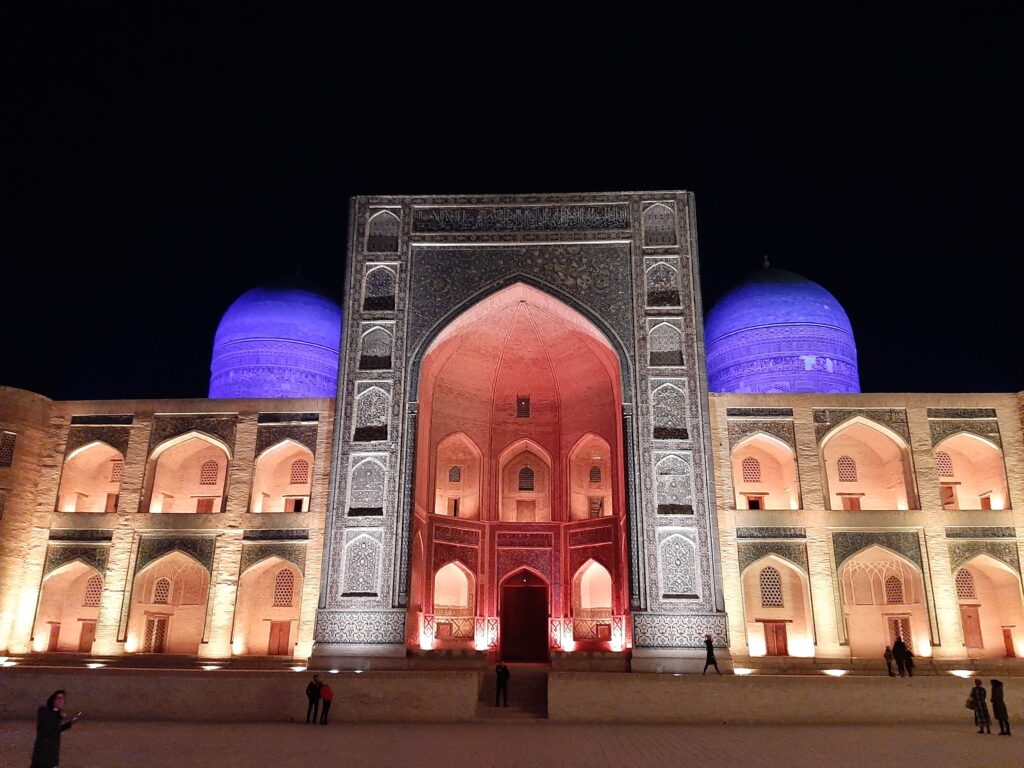
Aini stands exactly at that intersection. He was born in what is now Uzbekistan, wrote across Tajik and Uzbek contexts, and described Bukhara, a city central to both national narratives. His memoirs are therefore not only personal recollections. They are an archive of nineteenth- and early twentieth-century Central Asian life: village customs, schools, professions, beliefs, family structures and social hierarchies.
This is why the book speaks so strongly today. It recalls a Central Asia before national borders hardened, when Persianate culture, Turkic speech, Islamic education, local identities and imperial pressures overlapped in complicated ways.
In Tajikistan: a national classic
In Tajikistan, Aini is foundational. He is not simply a writer, but a national institution: the father of modern Tajik prose, a builder of the literary language, and a figure through whom Tajik Soviet and post-Soviet identity have been narrated.
For Tajik readers, Yoddoštho is more than an autobiography. It is almost a national archive. Through Aini’s childhood, Bukhara becomes part of a recoverable Tajik past. Village life, old schools, artisans, religious figures, intellectuals and reformers all become elements of a literary homeland.
The book therefore carries emotional and cultural weight. It preserves a world that Tajik national memory claims as central to its own formation.
In Uzbekistan: a shared but sensitive legacy
In Uzbekistan, Aini’s reception is more layered. He belongs to Uzbek literary history as well: he lived in Bukhara and Samarkand, wrote in Uzbek contexts, and engaged with the Jadid and Soviet transformations of the region.
Yet his legacy is sensitive because his work also helped define a distinct Tajik literary identity, often by presenting Persian-speaking Bukhara as a central part of Tajik cultural history. In a country where Bukhara is one of the great symbols of Uzbek heritage, this creates a complex overlap rather than a simple national ownership.
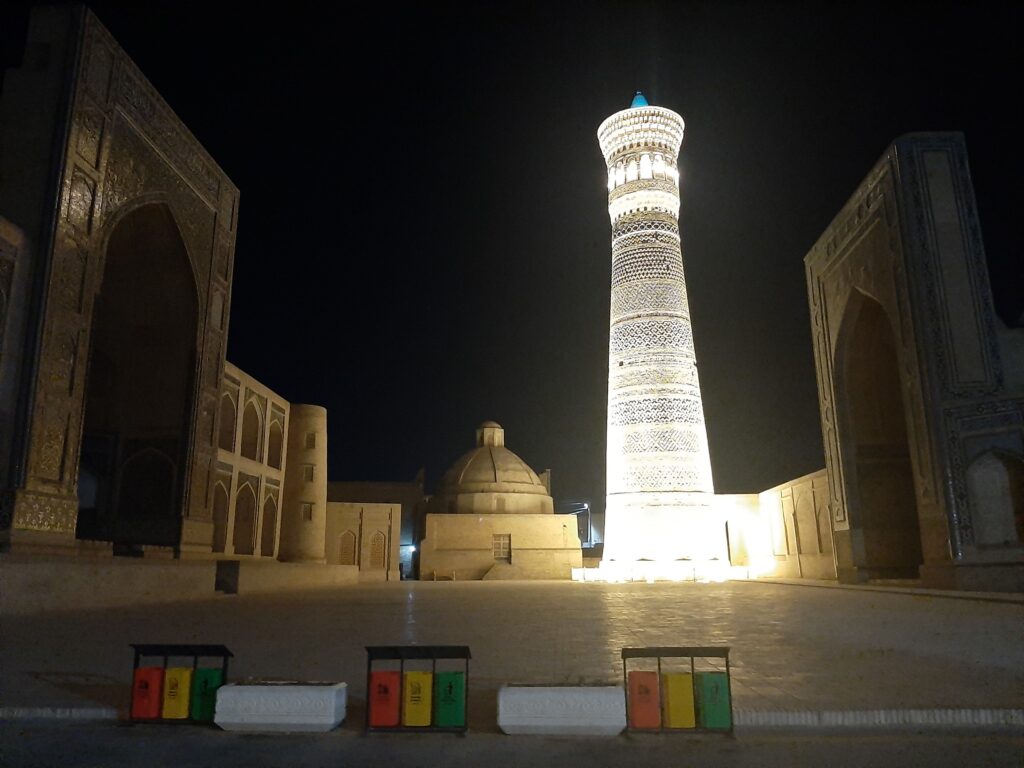
Today, as Uzbekistan revalorises Jadidism and revisits its early modern intellectual history, Aini can be read in a new way: not only as a Soviet Tajik monument, but as a Bukharan intellectual whose life crossed the Uzbek-Tajik divide.
Before borders hardened
Beyond Tajikistan and Uzbekistan, The Sands of Oxus is less of a national classic, but it remains an important regional text. In Kazakhstan, Kyrgyzstan and Turkmenistan, Aini does not occupy the same canonical place as national literary figures such as Abai, Chingiz Aitmatov or Makhtumkuli. Yet his memoirs illuminate a shared Central Asian problem: how traditional authority, religious education, rural poverty, imperial pressure and Soviet modernisation interacted before borders and national canons became fixed.
Also read on Novastan: Central Asia through the lens of… Behzod Boltayev
The book is therefore valuable not only for Tajik or Uzbek readers, but for anyone interested in how Central Asia entered the twentieth century.
A past too complex for Soviet ideology
The Sands of Oxus is not a fast book, but it is a rewarding one. Its power lies in detail: a schoolroom, a sandstorm, a canal, a death, a rumour, a poem, a beating, a feast. Through these fragments, Aini turns childhood into a map of pre-Soviet Central Asia.
The book refuses to belong neatly to one category. It is Tajik and Bukharan, Persianate and Soviet, autobiographical and political, nostalgic and accusatory. That refusal is exactly what makes it so relevant today. At a time when Central Asian states are reassessing Jadidism, Soviet rule, colonial legacies and the ownership of cities such as Bukhara, Aini’s memoirs are a reminder that the region’s past cannot be divided cleanly into today’s national narratives. They show a world where Persianate culture, Islamic learning, rural poverty and early reformist politics overlapped before Soviet borders turned shared histories into competing national legacies.
Maya Ivanova, Author for Novastan-English and Mathieu Lemoine, Editor-in-Chief for Novastan-English