




 When the clarinet speaks Uzbek: bringing an overlooked classical repertoire to the world
Support Novastan, the European Central Asia magazine
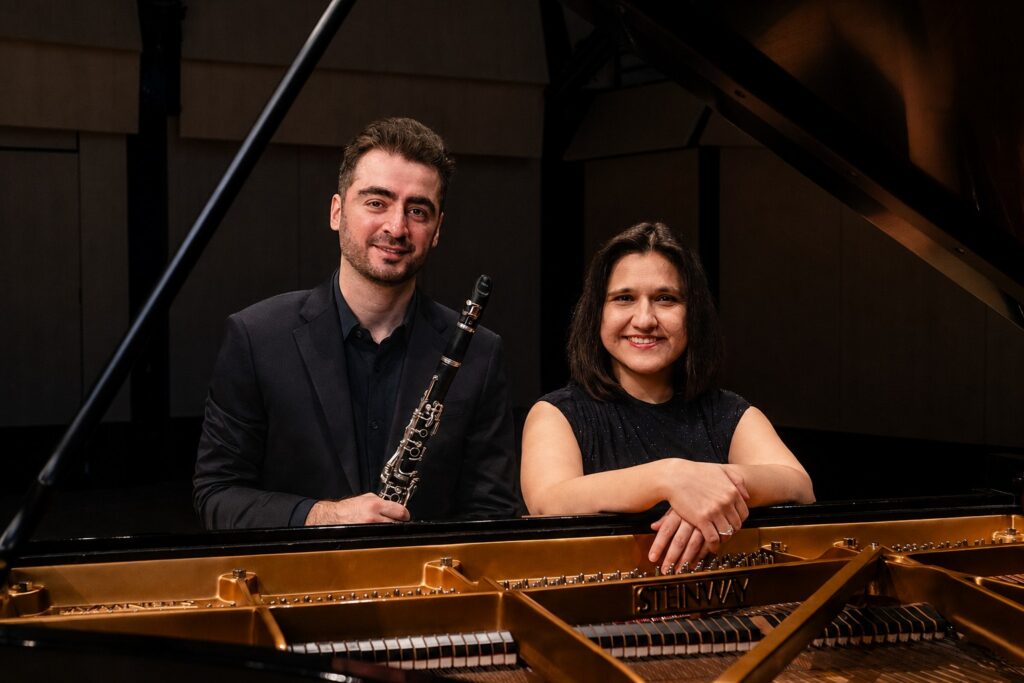
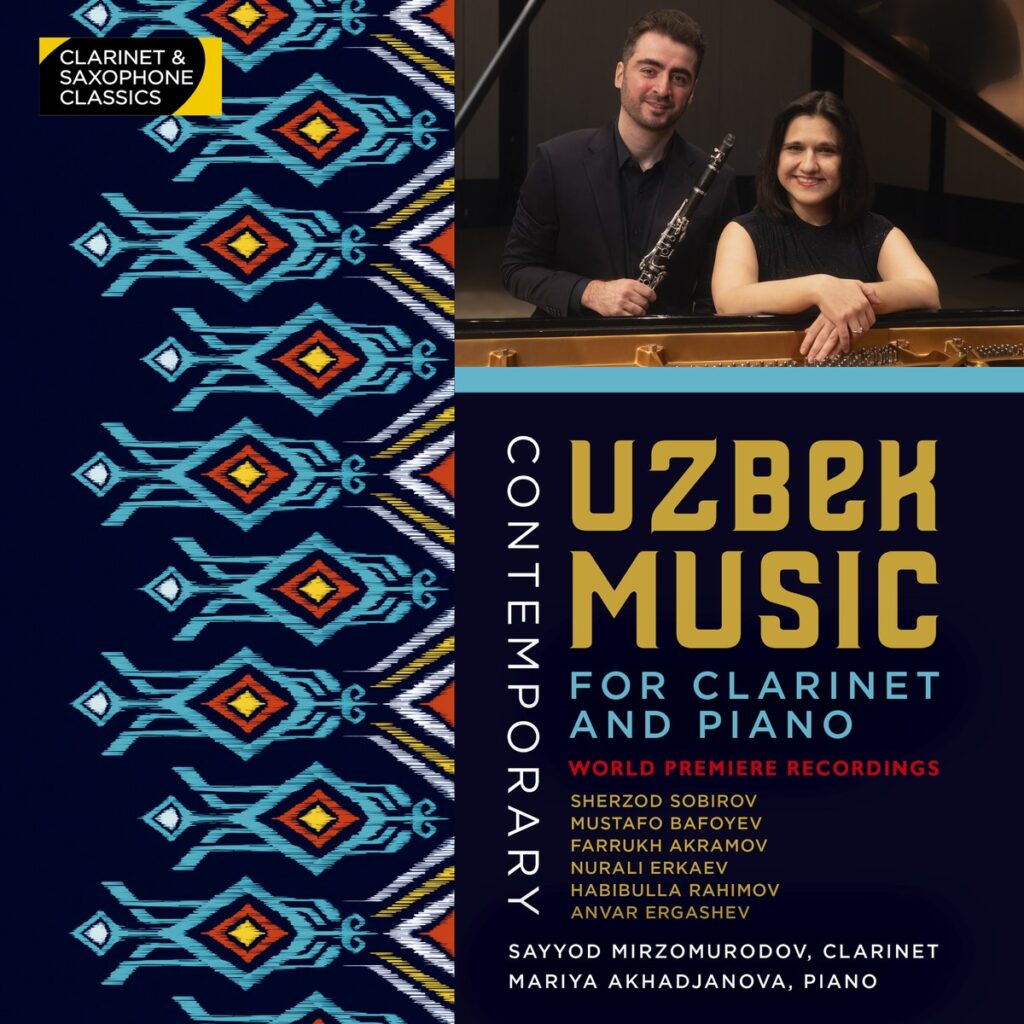
By supporting Novastan, you are supporting the only English, French and German-language media specialising in Central Asia. We’re independent and we need your help to stay that way!Clarinetist Sayyod Mirzomurodov and pianist Mariya Akhadjanova have released Contemporary Uzbek Music for Clarinet and Piano, the first commercial album devoted entirely to contemporary Uzbek repertoire for the two instruments. Issued by the British label Clarinet & Saxophone Classics, the 72-minute recording brings together nine works by six composers, all presented as world-premiere recordings.
The project combines established pieces with new works written specifically for Mirzomurodov. It grew out of his effort to document, expand and bring international attention to a repertoire that had often remained inaccessible beyond Uzbekistan because of the scarcity of published scores, professional recordings and international distribution.
In this interview with Novastan’s Editor-in-Chief Mathieu Lemoine, Mirzomurodov discusses his path from Surkhandarya to the United States, the influence of maqom and other Uzbek musical traditions on contemporary composition, his collaboration with Akhadjanova and the wider challenge of bringing Uzbek academic music to international audiences.
Novastan: Could you begin by telling us about your path as a clarinetist and your relationship with Uzbek classical music?
Sayyod Mirzomurodov: I was born and raised in O’zgarish, in the Sariosiyo district of Surkhandarya, in southern Uzbekistan. Music was present in my family from an early age. My father, Sultonmurod Saidov, was an artist and founded the Tajik band Parvin, which was known not only in Surkhandarya but also in Samarkand, Bukhara, Tajikistan and Afghanistan.
He was a perfectionist who expected a very high standard from himself. His seriousness towards artistic work had a lasting influence on me.
When I was in the fifth grade, I moved to Tashkent and entered the V. A. Uspensky Specialized Music School, where I began studying the clarinet. I later continued at the State Conservatory of Uzbekistan. My clarinet teacher, Bakhodir Salikhov, played an especially important role in my development.
Read more on Novastan: From Uzbekistan to Strasbourg: Aziz Shokhakimov, a conductor between cultures and languages
Another major influence was Timur Vyacheslavovich Mirzaev, the conductor of the student wind orchestra. His detailed and inspiring approach encouraged me to think beyond simply playing the correct notes and to understand the larger meaning, character and structure of the music.
In 2017, I moved to the United States to study with Amanda McCandless at the University of Northern Iowa, where I completed a Master of Music degree in clarinet performance. I later began a Doctor of Musical Arts programme at the University of Iowa, studying with Jorge Montilla and working as a teaching assistant.
Most of my early formal education was centred on the Western classical tradition. I played the standard European clarinet repertoire but did not yet have a deep understanding of the history and richness of Uzbek academic music.
As my career developed, especially after I left Uzbekistan, I became increasingly interested in my own cultural and musical roots. I began searching for works by Uzbek composers, speaking with composers directly, researching maqom and Uzbek musical history and presenting this repertoire in my recitals.
What began as a personal search eventually became a central part of my artistic work and a responsibility that I felt towards this repertoire.
How did the idea for an album devoted entirely to Uzbek clarinet music emerge?
The idea first came to me when I was an undergraduate at the State Conservatory of Uzbekistan. Even then, I understood that the main problem was not necessarily an absence of repertoire. Much of the repertoire was simply insufficiently documented, professionally recorded, published or made available internationally.
When I began my doctoral studies at the University of Iowa, I learned that I could complete a major creative recording project as part of my doctoral work. I immediately knew that I wanted to record Uzbek music.
Initially, I imagined documenting several existing works. But I also wanted the project to stimulate the creation of new repertoire. I first approached Nurali Erkaev and explained my idea to him. He responded enthusiastically and wrote Sonata-Fantaziya for me.
Through that collaboration, I developed connections with other composers. Sherzod Sobirov wrote his Fantasy, Farrukh Akramov composed his Sonata for Clarinet and Piano, and Mustafo Bafoyev wrote Buxorcha. All four works were dedicated to me. Bafoyev later wrote another piece for me, Ston Serdtsa – Cry of the Heart – which will be included on my next album.
What began as a smaller doctoral recording project eventually expanded into a 72-minute album containing nine works by six composers.
I realised there was enough material for a complete album when I saw how the new commissions could be placed alongside important existing works, including Anvar Ergashev’s Eastern Capriccio, Mustafo Bafoyev’s Clarinet Concerto and lyrical pieces representing other dimensions of the Uzbek school of composition.
The album is therefore not simply a collection of unrelated works. It presents several generations, forms and artistic directions, including fantasy, sonata, song-poem, poem-ballad, lyrical miniature, capriccio and concerto.
Together, these pieces demonstrate that Uzbek clarinet music already possesses considerable artistic depth and diversity, even though none of them had previously been commercially recorded.
Who are the composers represented on the album?
The album includes six composers from different generations and artistic directions within Uzbek professional music.
Mustafo Bafoyev is one of the most prominent figures in contemporary Uzbek music. His catalogue includes symphonic, chamber, operatic, ballet and stage music. His works combine Uzbek and Tajik intonational traditions with a sophisticated contemporary language.
Four of his works appear on the album, making him a central figure in the programme. They reveal different periods and dimensions of his music, from the early lyricism of Lirik Hikoya to the large-scale Clarinet Concerto and the newly composed Buxorcha.
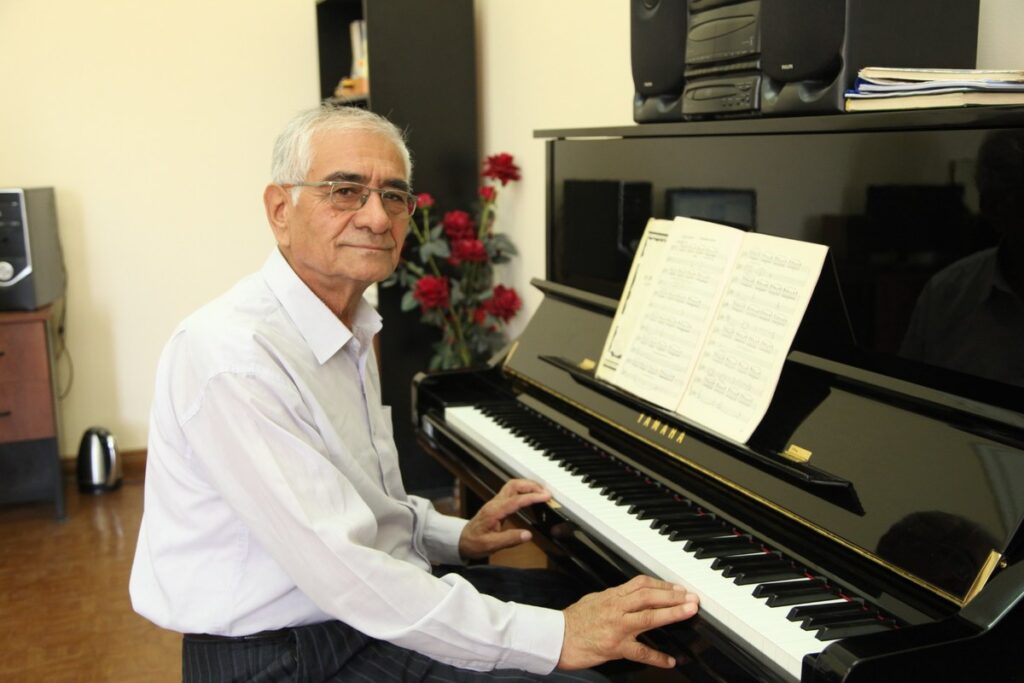
Habibulla Rahimov is an established composer and educator with extensive experience writing for wind instruments. His music has been performed in Uzbekistan, elsewhere in Central Asia and internationally. His Poema-ballada represents one of the album’s more abstract and experimental sound worlds.
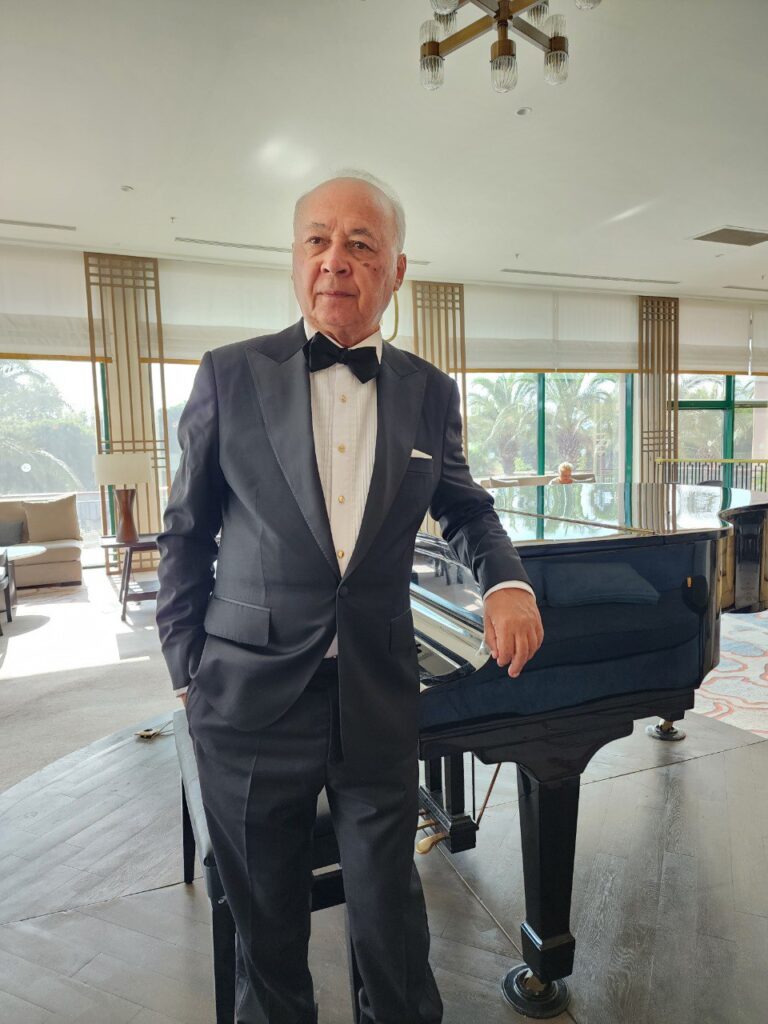
Anvar Ergashev was one of Uzbekistan’s most influential composers, as well as an accomplished pianist and conductor. His music is distinguished by vivid imagery, theatrical energy, rich instrumental colour and strong emotional intensity. He combined European classical forms with Eastern melodic and rhythmic traditions in a highly individual manner.
His Eastern Capriccio, written for the clarinetist Bakhodir Salikhov, is probably the most frequently performed Uzbek clarinet work represented on the album. It combines virtuosity, lyricism, improvisatory freedom and a strong theatrical character.
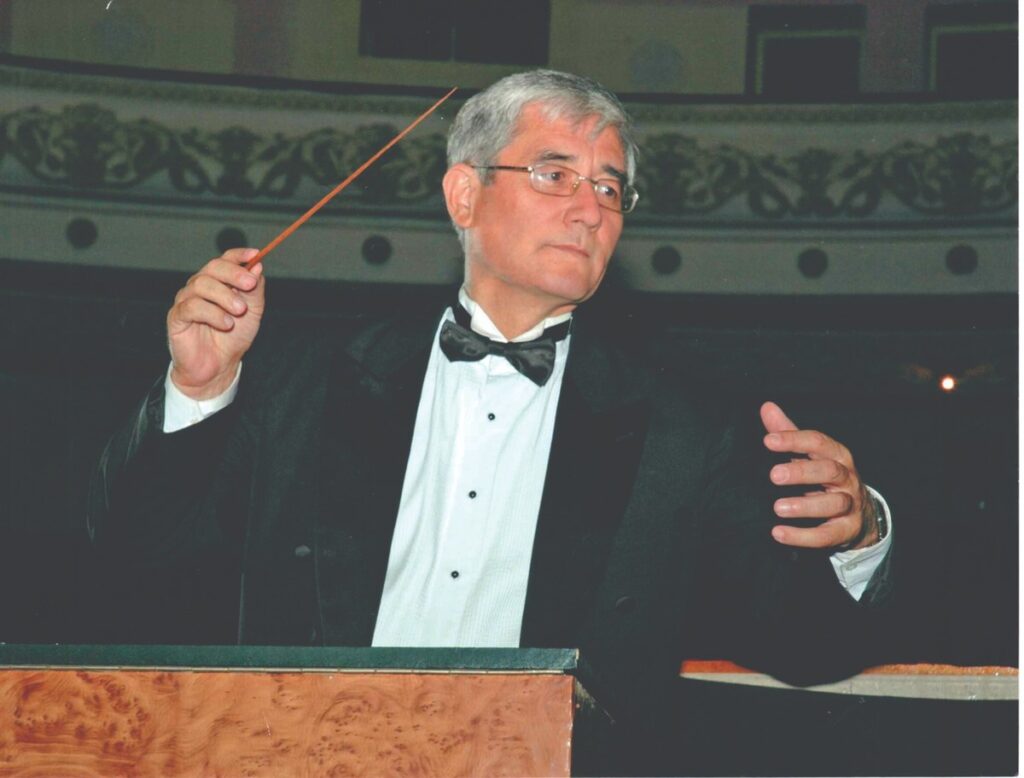
Nurali Erkaev is a composer, scholar and educator whose work combines serious academic research with creative imagination. His Sonata-Fantaziya brings together maqom-inspired phrasing, contemporary harmony, rhythmic transformation and the dramatic freedom of the fantasy genre.
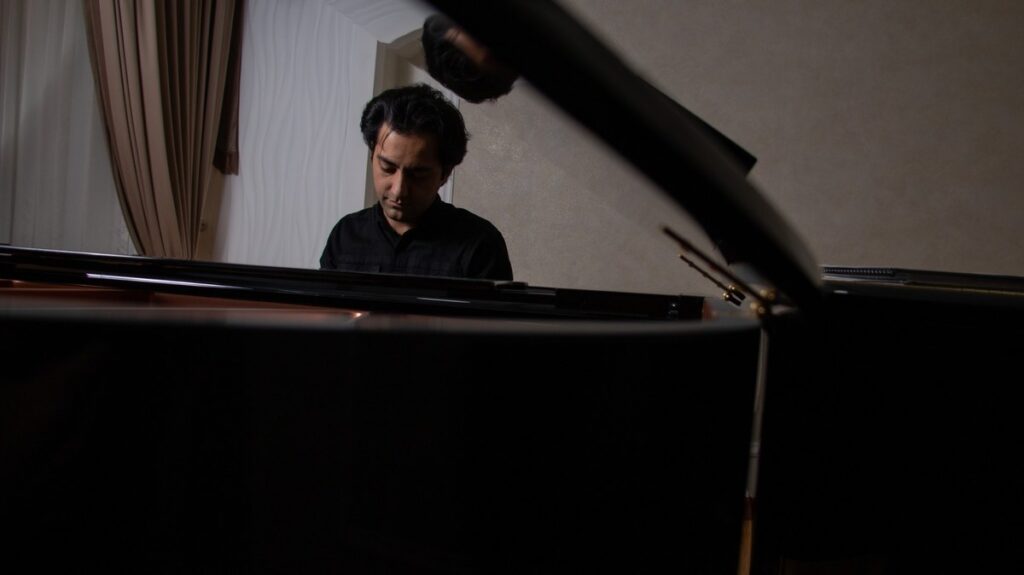
Farrukh Akramov represents a younger generation of Uzbek composers connected with international contemporary-music festivals and masterclasses. His music combines modal lyricism and carefully developed musical ideas with modern harmony and texture.
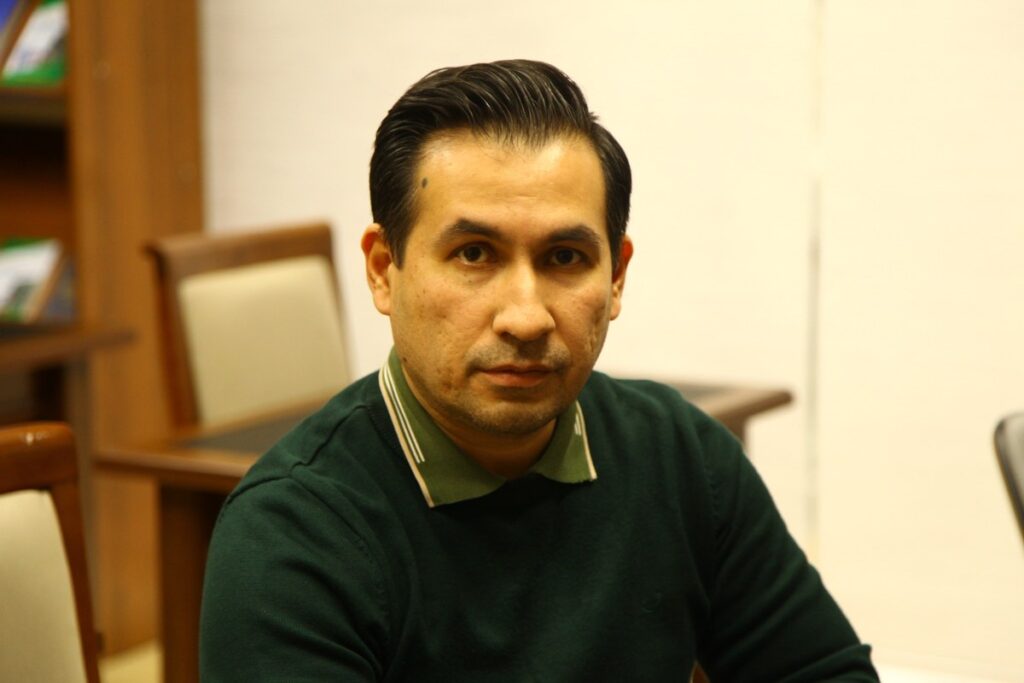
Sherzod Sobirov is a composer and educator whose work includes chamber music, orchestration and music for traditional Uzbek instruments. His Fantasy has strong rhythmic energy, lyrical contrast and a contemporary treatment of Uzbek musical colour.
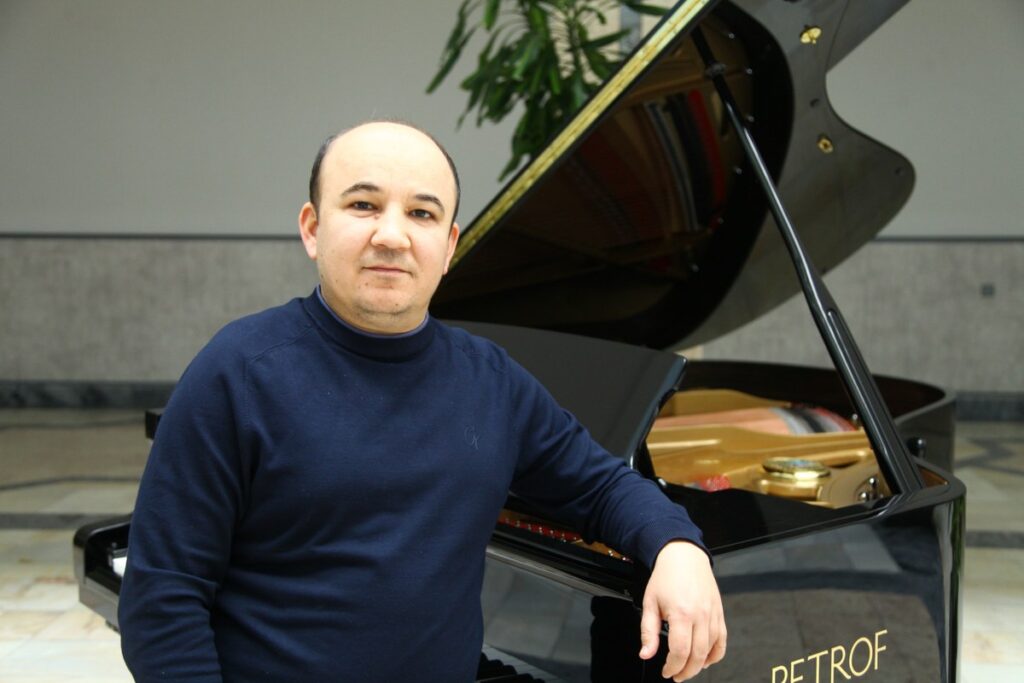
Together, these composers show that Uzbek academic music cannot be reduced to a single style. The album connects established senior figures with younger composers who are continuing and transforming the tradition in their own ways.
Is there something recognisably Uzbek about music written for Western instruments such as the clarinet and piano?
Yes, although it is not always a matter of hearing a direct quotation from a traditional melody. In many of these works, the Uzbek character is expressed through melodic behaviour, ornamentation, modal colour, rhythm, flexibility of phrasing and the relationship between instrumental music and the human voice.
Maqom and shashmaqom are especially important sources. Their influence can be heard in characteristic modal patterns, melodic turns, ornamental figures, rhythmic organisation and the gradual development of a musical line. Certain passages use modal inflections resembling a Phrygian colour, as well as augmented seconds and other intervals associated with Eastern melodic expression. Traditional rhythmic cycles, or usul, also influence contemporary works, sometimes through irregular or changing metres.
Another important quality is nola: an emotionally charged melodic sigh or cry. In Uzbek music, a line is often expected to breathe, bend, ornament and intensify almost as a singer would. The clarinet is particularly suited to this language because its sound can be very close to the human voice. It can move from an intimate, almost whispered tone to intense expression, laughter-like brightness or virtuosic energy.
Bafoyev’s Buxorcha, for example, draws on the musical world of Bukhara and on intonations related to mavrigi, shashmaqom and local song-and-dance traditions. The clarinet takes on a vocal and ornamented role, while the piano provides a flexible harmonic and rhythmic framework and participates actively in the musical dialogue. Together, the two instruments move between reflective lyricism and energetic, dance-like motion.
Sobirov’s Fantasy uses a Phrygian-flavoured sound world, song-like melodic lines, rapid changes of character and dance-like rhythmic energy. Erkaev’s Sonata-Fantaziya places maqom-inspired phrasing and rhythmic patterns within a contemporary harmonic framework.
Ergashev’s Eastern Capriccio uses augmented seconds, chromatic figuration, ornamentation, changing metres and rhythmic freedom to create an improvisatory character.
The music is therefore recognisably Uzbek not because every work imitates traditional music, but because the composers have absorbed its way of breathing, shaping melody, creating rhythm and expressing emotion.
How did the encounter between European classical forms and local traditions shape Uzbek composition?
The development of Uzbek academic music during the twentieth century involved a complex encounter between two musical systems.
Uzbekistan already possessed highly developed traditions such as maqom, shashmaqom, folk song, regional dance music and the ustoz-shogird teacher-student system, through which music was passed from one generation to another through listening, imitation, direct practice and close personal instruction.
During the Soviet period, Western systems of notation, harmony, counterpoint, formal design, orchestration and conservatory education became institutionalised.
This encounter transformed both traditions. Uzbek composers began using Western forms such as the sonata, concerto, symphony, opera, ballet and chamber ensemble while drawing on local modes, melodic gestures, rhythms, poetry and instrumental colours.
The move towards notation and institutional education was also important. Figures such as Yunus Rajabiy helped preserve and notate maqom repertoire, allowing later composers and conservatory-trained performers to study this material and reinterpret it for modern instruments.
Earlier composers such as Mutal Burhanov, Sulaymon Yudakov, Tolibjon Sadikov and Mansur Mansurov helped establish the foundations of Soviet-era Uzbek academic music. Later composers, including Felix Yanov-Yanovsky, developed increasingly individual and sophisticated musical languages.
Since independence, the interaction between national tradition and contemporary composition has continued, but it has become more stylistically diverse.
Some composers remain close to maqom, folk melody and recognisable regional traditions. Others use abstraction, dissonance, experimental textures or international contemporary techniques while retaining subtler elements of Uzbek musical thinking.
Contemporary Uzbek academic music is therefore not simply Western music with Eastern decoration. It is the result of more than a century of creative interaction between different systems of musical thought.
How did you locate the music, and what was it like to work directly with the composers?
The process was based largely on personal research and direct contact with composers, their families and performers connected with the repertoire.
None of the nine works on the album had previously been commercially recorded, although some, especially Ergashev’s Eastern Capriccio, already had a performance history.
Most of the scores were not available through international publishers or standard music catalogues. Many were sent to me directly by the composers or obtained during the collaborative process.
Eastern Capriccio requires a special explanation. Although the work circulated among clarinetists and appeared in certain collections, it had never been formally issued by a commercial publisher and could not be purchased through a regular catalogue.
I obtained the musical material from Anvar Ergashev’s widow, Namuna Ergasheva, who holds the copyright. I also consulted my former conservatory professor Bakhodir Salikhov, for whom the work was composed and to whom it was dedicated.
Bafoyev’s Clarinet Concerto had an orchestral performance available online, but there was no commercial recording and no known recording of the piano reduction used on the album.
For the newly commissioned works, the process was much more collaborative. The composers sent initial versions from Uzbekistan, and I played through the clarinet parts in the United States.
I then shared observations about register, breathing, articulation, technical difficulty, balance with the piano and which passages felt natural or less effective on the instrument. The composers revised the scores, and gradually polished versions emerged.
The artistic voice remained entirely the composer’s. My role was to contribute the practical and expressive perspective of the performer and to help the composer use the clarinet as effectively as possible.
During a meeting with Nurali Erkaev in Tashkent in the summer of 2024, we discussed Sonata-Fantaziya in detail, including its musical character, phrasing, harmony, form and the relationship between the clarinet and piano. This direct discussion had an important effect on the way I interpreted the work.
Four of the newly written pieces were premiered during my doctoral recital in March 2025 with Mariya Akhadjanova. Performing them before the recording allowed us to understand what worked in a live setting and continue refining our interpretation.
For me, this was one of the most meaningful aspects of the project. I was not only preserving repertoire from the past. I was participating in the creation of repertoire that had not previously existed.
How did your collaboration with pianist Mariya Akhadjanova shape the recording?
My collaboration with Mariya began while we were studying at the State Conservatory of Uzbekistan. We performed together frequently in concerts, masterclasses and special events in Tashkent.
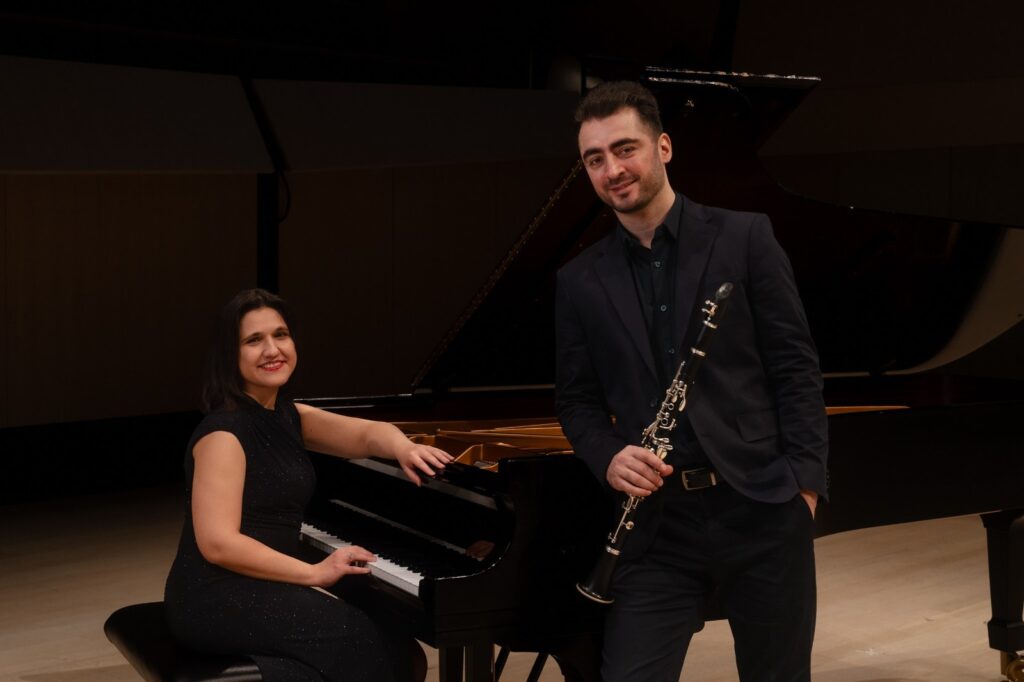
She was the natural and ideal partner for this project. She is an outstanding pianist and collaborative musician, with a beautiful sound, refined technique, musical intelligence and the ability to understand both the large structure of a work and its smallest expressive details.
I was also fortunate that she was studying at the University of Iowa. Being at the same institution allowed us to rehearse regularly, return repeatedly to difficult passages and work over a long period rather than preparing the album in only a few concentrated meetings.
Mariya is from Uzbekistan and studied at the State Conservatory before continuing her education at the University of Northern Iowa and beginning her doctorate at the University of Iowa. She therefore has a deep understanding of both Uzbek musical traditions and Western classical performance practice.
That shared cultural background was important because many stylistic details are difficult to explain through words or notation alone. We often understood naturally how a phrase should breathe, where the music needed flexibility, how an ornament should be shaped or when a rhythm should feel more like speech or dance.
At the same time, we did not assume that cultural familiarity alone was sufficient. We studied the scores carefully, researched the composers, discussed the structure and character of every section and tested different balances, articulations, tempos and colours.
We also wanted to avoid treating the piano as a secondary accompaniment. In many of these works, the piano creates the rhythmic environment, dramatic tension, harmonic colour and orchestral scale. The clarinet and piano function as equal partners in a dialogue.
The album was recorded in December 2025 in the Concert Hall of the Voxman Music Building at the University of Iowa. Our aim was to respect the Uzbek character of the works while presenting them at a high professional chamber-music standard.
Why has Uzbek classical music remained relatively unknown internationally?
There are several interconnected reasons.
The first is access. Many scores by Uzbek composers are not distributed by major international publishers. A musician outside Uzbekistan may not know that a work exists, may not know where to obtain it or may need a personal connection with the composer, the composer’s family or another musician.
The second problem is the lack of professional recordings. A score is important, but notation alone cannot fully communicate all the stylistic details of Uzbek music.
A performer unfamiliar with the tradition may read the correct notes but still miss the national intonation, ornamentation, flexibility of phrase, rhythmic freedom or an expression such as nola. Recordings provide an essential interpretive reference.
Another reason is that Uzbek music abroad is often represented mainly through folk or traditional genres. Those traditions are extremely important, but they do not represent the country’s entire musical culture.
The contemporary academic layer – sonatas, concertos, chamber works, operas, ballets and symphonic works – is much less visible.
There have also been limited systems for publishing, professional recording, rights management, promotion and international distribution. An important work may be performed at a concert in Uzbekistan and then disappear from public access because the performance is not professionally documented or distributed.
Programming habits are another factor. International performers and institutions naturally return to established repertoire that already has scores, recordings, teaching traditions and audience recognition. It is much more difficult for unknown music to enter that cycle.
The album has already begun to change this situation. For the first time, all nine works exist together in a professionally produced commercial recording, released by the British specialist label Clarinet & Saxophone Classics and available internationally.
I am also collaborating with a publishing company, the composers and the relevant rights holders to prepare official editions of the scores. The recordings are already accessible internationally, and the scores are being prepared for publication so that the repertoire will also become officially and practically available to performers around the world.
Which works and composers would you recommend to listeners who want to explore Uzbek academic music further?
For a clarinetist beginning to explore this repertoire, I would recommend Anvar Ergashev’s Eastern Capriccio. It is virtuosic, colourful and theatrical, and is perhaps the most established Uzbek clarinet work internationally.
I would also recommend Nurali Erkaev’s Sonata-Fantaziya. It presents a particularly strong synthesis of Uzbek-inspired intonation, contemporary harmony, formal development, rhythmic energy and expressive freedom. It has a clear national character without depending on direct quotation, and gives both the clarinetist and pianist substantial artistic roles.
Bafoyev’s Buxorcha offers a strong connection to the musical traditions of Bukhara, while his Clarinet Concerto demonstrates the larger symphonic possibilities of Uzbek clarinet writing. Akramov’s Sonata and Sobirov’s Fantasy show two contrasting contemporary approaches.
Beyond the album, I would encourage listeners to explore composers such as Felix and Dmitri Yanov-Yanovsky, Mirsodiq Tojiev, Ikrom Akbarov and Rustambek Abdullaev, as well as other composers whose work has shaped modern Uzbek academic music.
Uzbekistan is becoming increasingly connected internationally. Are you seeing a similar opening in its classical-music scene?
Yes, I believe there are clear signs of greater international openness. This process is already taking place through composers, performers, universities, festivals, recordings and digital communication.
Uzbek composers are increasingly participating in international festivals, masterclasses, research conferences and contemporary-music programmes. Farrukh Akramov’s music, for example, has been presented in the United States, Europe, Asia and other former Soviet countries. Sherzod Sobirov’s works have also been performed internationally.
Nurali Erkaev is another important example. He combines composition, scholarship and education, and his work is rooted in serious study of Uzbek orchestration and national musical identity while also using a contemporary language that can communicate internationally.
My collaboration with him demonstrates how these connections can develop. He wrote Sonata-Fantaziya for me in Uzbekistan while I was studying and performing in the United States. I premiered the work, discussed it with him directly in Tashkent, performed it at Carnegie Hall and at universities and concert venues, and then recorded it commercially for an international label.
Performers and students from Uzbekistan are also studying abroad and creating connections between institutions and musical communities. Digital platforms make it possible for composers and performers to exchange scores and recordings almost immediately, even when they live on different continents.
The release of this album by a British label is another concrete example of this opening. It has placed works by six Uzbek composers in an international commercial recording catalogue and made them available to listeners, libraries, educators, researchers and performers in different countries.
What would success for this project ultimately mean to you?
For me, this project is already a success.
It is the first commercial album devoted entirely to contemporary Uzbek music for clarinet and piano. The fact that these nine works now exist together in a professionally produced and internationally available recording is already a major artistic and cultural achievement.
They can be heard internationally, studied by musicians and researchers and used as interpretive references by performers who previously had no practical way of encountering this repertoire.
I am deeply grateful to Victoria Samek and her team at Clarinet & Saxophone Classics for believing in the project and helping bring it to completion. Their experience and commitment gave this repertoire a professional international platform.
The effect is also visible in live performance. After concerts, students, professors, clarinetists and other musicians regularly approach me to ask about the composers, recordings and scores.
Musicians are already studying the repertoire, requesting the music and beginning to perform it themselves. The album is therefore not simply being heard as a finished recording. It is generating further musical activity.
Even before the recording was completed, I saw an example of this effect. After I premiered several of the new works, another performer contacted one of the composers to learn more about a piece and discuss the possibility of commissioning another work. This showed that the repertoire had already begun creating new artistic connections.
The official publication of the scores is the next stage. I am working with the composers, rights holders and a publishing company so that musicians around the world can obtain and perform the complete repertoire represented on the album.
The project has demonstrated that contemporary Uzbek academic music can stand on an international stage not simply as a cultural curiosity, but as substantial, expressive and artistically valuable chamber music.
For people from Uzbekistan and Central Asia living abroad, the album can create a connection to culture, memory and the feeling of home. For listeners with no previous connection to Uzbekistan, it opens a musical world they may never have encountered before.
Contemporary Uzbek Music for Clarinet and Piano is available through Clarinet & Saxophone Classics.
Interview by Mathieu Lemoine, Editor-in-Chief for Novastan English.