




 Uzbekistan Tightens Environmental Rules for Greenhouses Near Tashkent

Support Novastan, the European Central Asia magazine
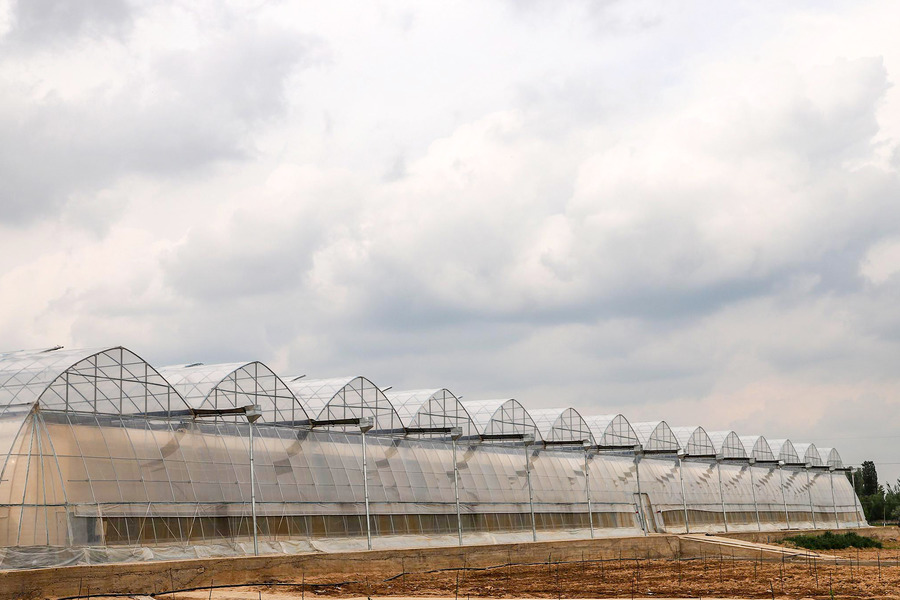
By supporting Novastan, you are supporting the only English, French and German-language media specialising in Central Asia. We’re independent and we need your help to stay that way!The government of Uzbekistan has introduced new environmental regulations for greenhouses operating in Tashkent and five neighbouring districts. Under the new rules, coal-fired greenhouses must switch to natural gas, electricity, geothermal or solar energy, or recovered waste heat by December 1, unless they meet strict pollution-control requirements.
Originally published by Gazeta.uz on October 23, 2026. Translated from Russian into English by Caroline Solomon for Novastan.
The government of Uzbekistan has introduced new environmental regulations for greenhouses operating in Tashkent and five surrounding districts. Under the new resolution, issued October 22, coal-fired greenhouses must make the switch to natural gas, electricity, geothermal or solar energy, or waste heat by December.
The directive also created additional measures to ensure greenhouses in Tashkent and its adjacent areas are operating in a more environmentally friendly manner. These requirements apply exclusively to greenhouses operating in a new “ecological zone”, encompassing the capital city of Tashkent, as well as the Yuqorichirchiq, Qibray, Yangiyo‘l, Zangiota and Tashkent districts of Tashkent Region. The requirements were announced by the National Committee on Ecology and Climate Change (NCECC), which also presented this proposal to the president on October 13.
What Is Required?
In this new ecological zone, heating systems within greenhouses can only be fuelled by natural gas, including liquefied gas, electricity, geothermal or solar energy, or waste heat from thermal power plants. Greenhouses must also pass a state environmental assessment.
This means that greenhouses using solid fuels, such as coal or biomass in briquette or pellet form, must transition their systems to the allowed energy sources by December 1 of this year if they wish to continue operating without additional pollution-control measures.
The only exception to this general restriction on solid fuels is if the facility installs all of the following systems:
- Automatic fuel supply and combustion control systems;
- Pollution-control devices such as scrubbers;
- Continuous emissions monitoring systems (CEMS) with real-time data output capabilities;
- Certificates of compliance for boilers, pollution-control equipment and monitoring systems;
- Cameras providing real-time, remote monitoring of boiler operations and emissions;
- Reliable power supplies and backup generators for all emissions-control equipment.
In addition to these physical systems, greenhouses must also collect, transport and properly dispose of all captured pollutants, including ash, heavy metals, scale, sludge and other toxic substances. Equipment must be certified, and all data from CEMS and cameras must be integrated with state information systems. Unauthorised modifications affecting equipment operations are also prohibited.
Greenhouses operating in the ecological zone are also forbidden to burn any of the following materials as fuel: tyres, bitumen, heating oil, plastics, synthetic cardboard, rubber, wool fibres, used oil, household and industrial waste, and any other materials of similar composition.
Financial Incentives
Greenhouses in the designated zone will not have to enact these changes entirely at their own expense: the state will also provide financial support for environmental upgrades.
Specifically, the directive introduces subsidies covering 50% of expenses related to the purchase of emissions-scrubbing equipment, boilers, energy-saving screens, energy-efficiency technologies and heating systems using electricity, geothermal or solar energy, or cogeneration. These subsidies will be available until January 1, 2028, with a maximum of 50 million soums per hectare.
Greenhouse operators may also apply for favourable financing terms. In 2026 and 2027, commercial banks are to provide seven-year loans, in Uzbek soums, at an annual interest rate of 14% (4% of which will constitute the bank’s margin). The loans include a three-year grace period and can cover up to 50% of project costs, but must not exceed 3 billion soums per hectare.
Additionally, greenhouses installing CEMS are eligible for financial support of up to 350 million soums per monitoring station.
This financing will be provided on the basis of a three-way agreement, with interest-free instalments over seven years. Recipients must meet technical requirements approved by the NCECC-managed State Environmental Certification and Standardisation Centre. As a condition of this financial support, they must install CEMS, integrate them with NCECC’s information systems and ensure uninterrupted data transmission.
Failure to comply with these requirements, or late payments, may result in the monitoring systems being removed and recovered following written notice. Overdue debts may also be recovered according to the procedures established in the agreement.
Boilers in other industries relying on emissions-intensive fuels for heat generation will also be subject to environmental regulations. Businesses with an environmental impact will be assigned levels of “red”, “yellow” and “green”, with corresponding requirements for each level to be established in future legislation.
Finally, the resolution calls for imports of eligible emissions-reduction technologies not manufactured in Uzbekistan to be exempt from customs duties until January 1, 2030. This exemption would apply to scrubbers, energy-efficient boilers, cogeneration infrastructure, CEMS and equipment associated with the use of geothermal or solar energy.
Wastewater Treatment and Reuse
According to the directive, hazardous liquid waste generated through the filtration of greenhouse heating systems, as well as wastewater from hydroponic systems, must also be treated and reused as technical water. A reservoir for the temporary storage of these effluents will be installed in an “eco-industrial” zone in the Akhangaran district of Tashkent Region by January 1, 2027, with the land plot for this reservoir to be determined by the Tashkent Regional Administration by November 1 of this year.
A competitive bidding process will be held for a contractor to process the hazardous effluents, with a winner selected by June 1, 2027. The construction of the reservoir for temporary storage will be carried out in stages based on the project documentation, in compliance with urban planning standards and regulations. Owners of greenhouses, regardless of the form of ownership, will be required to transfer the effluents they generate to the selected contractor at agreed-upon prices.
“Balancing Business Development with a Clean Environment”
In its statement, the Committee on Ecology noted: “The retrofitting of greenhouse farms with emissions reduction equipment is an important step in our comprehensive effort to improve air quality in Tashkent and surrounding areas. Modern scrubber systems, automatic monitoring, and energy-efficient technologies will help address our local environmental concerns, while also making our greenhouses more sustainable for years to come.”
“Our main goal is to achieve a balance between allowing for business development, the efficient use of resources, and the right of our citizens to a clean environment,” the committee stressed.
Earlier this month, the Committee on Ecology reported that representatives of area greenhouses had suggested installing a special air-filtration system that would allow them to continue operating. However, the filter presented was not effective enough to pass the committee’s tests.
In November 2025, as air quality in Tashkent rapidly deteriorated, a decision was made to immediately switch all greenhouses in the capital and surrounding areas to gas heating. In March of this year, it was reported that restrictions on the construction of new greenhouses in the capital and adjacent areas would be introduced, effective as of October.
In June, a special commission aimed at improving air quality began dismantling greenhouses in the Tashkent region and disconnecting them from solid-fuel heating systems. As part of this effort, greenhouse owners were also offered the opportunity to relocate their businesses to the Surkhon-Agro free economic zone in the Surxondaryo Region.
The mayor of Tashkent, Shavkat Umrzoqov, had said in a recent interview with Gazeta.uz that, for greenhouse farms wishing to continue operating in the capital region, the possibility of using permitted fuels with scrubbers was being considered. He also mentioned the possibility of using financing instruments as a policy tool to support these goals.
Originally published by Gazeta.uz on October 23, 2026. Translated and edited from Russian into English by Caroline Solomon for Novastan.