




 “When Appearance Replaces Faith”: Sarvar Karimov on His Uzbek Film Farz
Support Novastan, the European Central Asia magazine
By supporting Novastan, you are supporting the only English, French and German-language media specialising in Central Asia. We’re independent and we need your help to stay that way!Set in Uzbekistan’s Fergana Valley, Farz (Duty) explores faith, moral responsibility and the pressure to conform to society’s expectations. Director and co-screenwriter Sarvar Karimov speaks to Novastan about the film’s minimalist visual language, the difference between genuine belief and public displays of piety, and the role of community in contemporary Uzbek society.
Watch here the trailer of Farz.
In a society where reputation and public expectations can shape personal decisions, what does it mean to remain true to one’s principles?
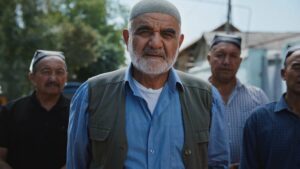
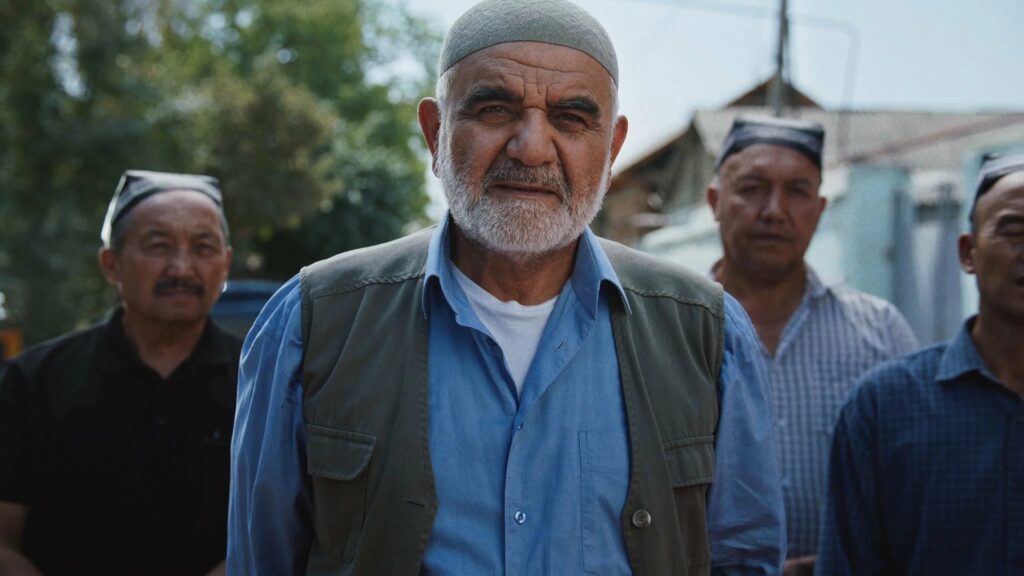
This question lies at the heart of Farz (Duty), a film by Uzbek director and co-screenwriter Sarvar Karimov. Set in the city of Fergana, the story follows Sobir aka, a man whose determination to honour a promise made to a deceased friend puts his convictions to the test.
Through its understated storytelling, the film explores the relationship between religious faith and social recognition, as well as the tensions within the mahalla, Uzbekistan’s traditional neighbourhood community. It also raises a broader question about the difference between being a good person and being perceived as one.
Read more on Novastan: The Vocabulary of Reform: Why Central Asia Is Reimagining Its Political Traditions
Featuring veteran Uzbek actor Matyakub Matchanov in the leading role, Farz has already been released in Uzbekistan and is included in the programme of the 2026 Asian Film Festival Barcelona.
Novastan Editor-in-Chief Mathieu Lemoine spoke with Karimov about the making of the film, the values embodied by its protagonist, and the challenges of telling a deeply local story with universal themes.
“We decided that a simple story should be told simply”
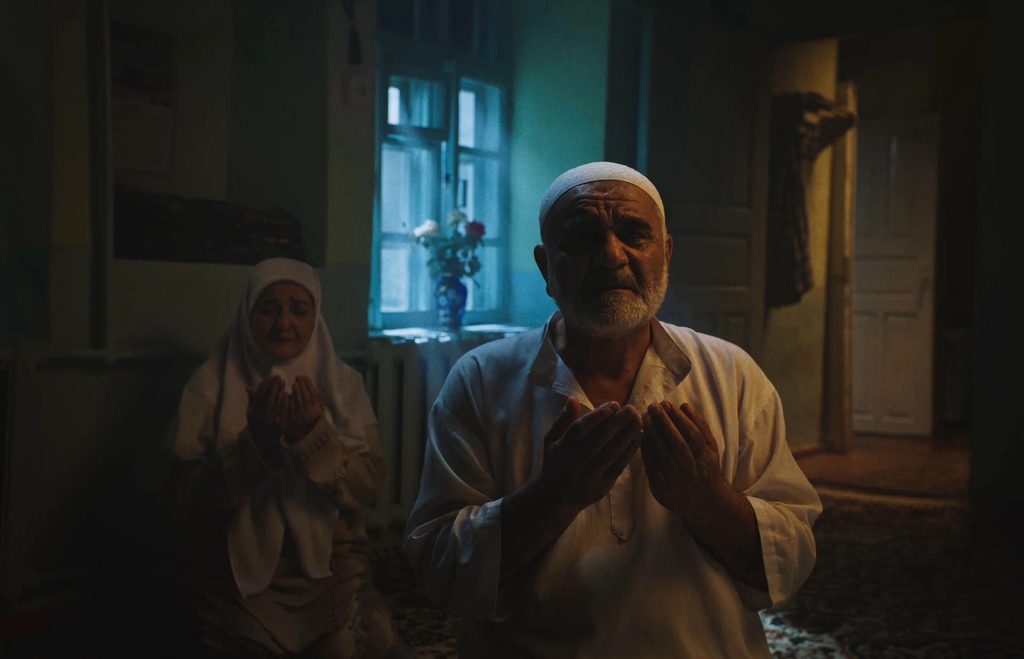
Novastan: I watched Farz and was particularly struck by its visual beauty. Many shots feel almost like photographs, inviting viewers to pause and contemplate them. How did you develop the film’s visual style with your cinematographer and production designer? What roles did lighting, colour and composition play in telling the story? Are there visual symbols that viewers might miss on their first viewing?
Sarvar Karimov: Thank you for your kind words. It’s very encouraging to hear that.
When I first read the draft screenplay, the main question for me was how to tell this story. At its core, it is a very simple, sincere and deeply human story.
Together with cinematographer Izzatilla Lutfullaev and production designer Kazakbay Khadzhimuradov, I came to a shared conclusion: a simple story should be told simply. We have been friends since our student days. We studied together and even made our graduation film together.
We consciously avoided unnecessary camera tricks, reducing dynamic editing and visual noise to a minimum. We chose a minimalist approach, closer to the way life actually unfolds.
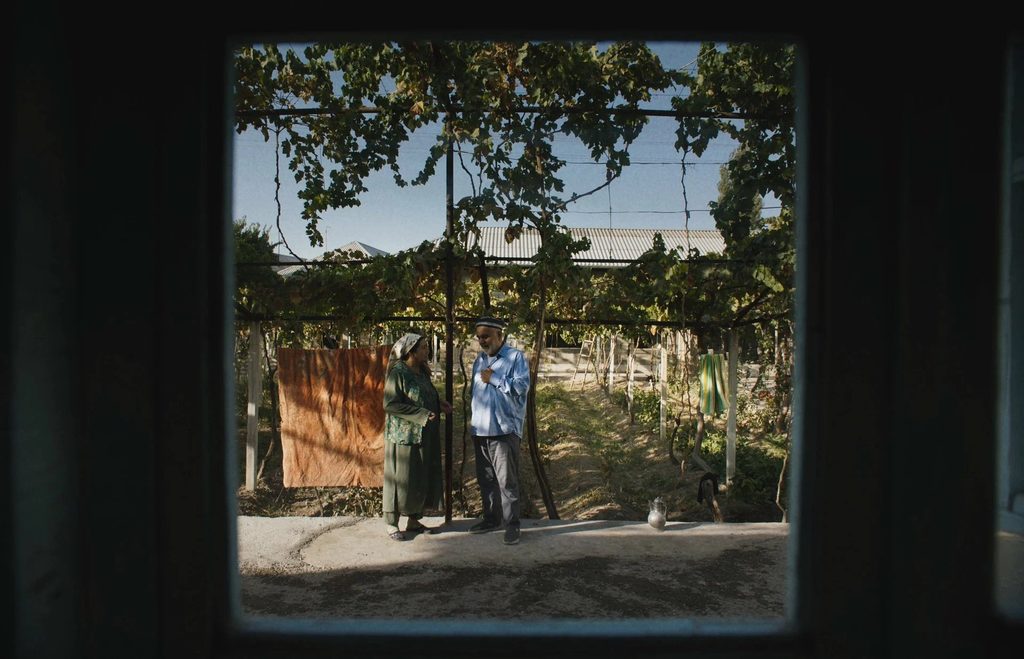
Many scenes were filmed using static shots, from a certain distance, without frequent cuts. We wanted viewers to feel personally present, as though they were sitting in the same room as the characters, observing events with their own eyes and becoming silent witnesses to their lives.
We did not want to overload the images with complicated metaphors. Perhaps the only deliberate visual symbol was the use of strict, square shapes in the protagonist’s home, a subtle visual reference to the Kaaba, the sacred site of pilgrimage for Muslims.
I genuinely do not believe that cinema needs to be deliberately complicated or that viewers should have to struggle intellectually to empathise with the characters. A truly good story is understandable to everyone. It speaks directly to the heart.
Fergana as a character in its own right
The film beautifully portrays the streets, courtyards, parks and everyday life of Uzbekistan. I thought I recognised Al-Farghani Park in one of the scenes. Where did filming take place, and how did you choose the locations? How important was it to capture their atmosphere?
You are right. That was indeed Al-Farghani Park. The entire film was shot in Fergana, a city in eastern Uzbekistan. It is a wonderful place that I love very much and visit frequently.
Uzbekistan is a secular state where the majority of the population is Muslim, and the Fergana Valley has historically been characterised by a particularly strong sense of community, deeply rooted traditions and spiritual culture. The people there are incredibly open-hearted and kind.
One local detail has always fascinated me: many people in Fergana still leave their doors unlocked. In the courtyards of private houses, neighbours often have small connecting gates between their properties, allowing them to visit one another freely, share food and help each other.
There is none of the constant rush associated with large cities. Life moves at a more measured pace, with sincerity and a deep respect for others. That is why we had no doubts when choosing our locations: Fergana was ideal for our story. It was extremely important for us to convey this genuine, unembellished atmosphere, without artificial sets or anything that felt false.
The city itself, with its streets, parks and courtyards, became a character in the film, providing an essential emotional and thematic backdrop.
“The ability to keep one’s word is a fundamental human quality”
Sobir aka, the film’s protagonist, struck me as an extraordinarily humane character. He follows his moral principles almost unconditionally, even when doing so comes at a personal cost. Why did you choose to create such a character? Is he a moral ideal, or someone you believe can still be encountered in contemporary Uzbekistan?
Sobir aka is perhaps the kind of person we are all missing in our lives today, someone we would like to encounter more often in the real world. I would not call him perfect or a saint. He is an ordinary person with his own weaknesses, but he possesses an unshakeable inner foundation and principles. What he does in the film is not an extraordinary feat or a demonstration of heroism. He simply remains faithful to his word and fulfils a promise made to a friend who has passed away.
For me, the ability to keep one’s word is a fundamental quality that makes us human. It is a basic form of human dignity that should exist in each of us but which, unfortunately, seems increasingly rare in today’s fast-moving world.
The remarkable actor Matyakub Matchanov made an enormous contribution to creating this character. In fact, the original idea for the film came from him. Matyakub aka recently turned 70, and I feel that, in a way, his entire life has led him towards this role, towards portraying this wise, quiet man who remains true to himself.
When appearing righteous becomes more important than being righteous
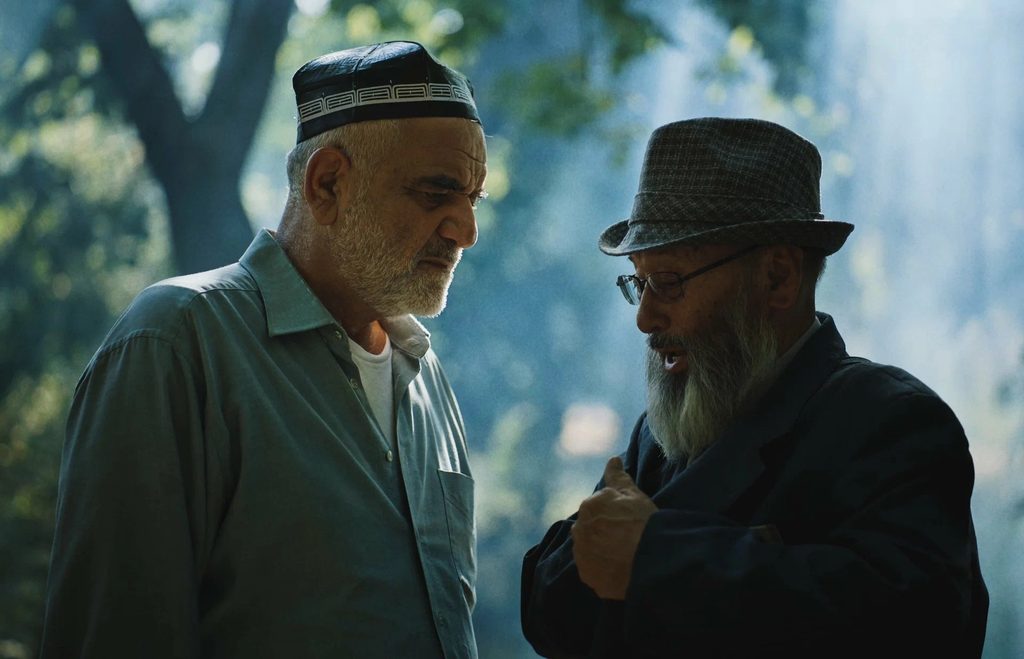
One of the film’s most interesting themes is the difference between who a person truly is and how they wish to be perceived by others. This is particularly evident in its treatment of religion, the Hajj pilgrimage and social recognition. How important was it for you to explore the contradiction between sincere faith and the desire to publicly demonstrate one’s righteousness?
This is a subject that genuinely concerns me. We live in an age when displaying one’s life often becomes more important than actually living it.
Just look at social media: almost everyone tries to appear better, more successful, more attractive or more intelligent than they really are. Perhaps this is simply a natural human weakness, and it is difficult to judge people for it.
But the most dangerous thing happens when this deep-seated need to appear rather than to be enters the realm of spirituality and faith. When someone prays or undertakes a pilgrimage not out of an inner spiritual need or sincere love for God, but to gain society’s approval and put on the mask of a righteous person. That is when form completely replaces substance. It was essential for me to raise this question in the film: external recognition and the respect of one’s neighbours do not make someone a saint.
We can deceive those around us. We can create a perfect illusion of ourselves for social media or for the people on our street. But we can never deceive ourselves, and certainly not God.
The mahalla: solidarity and social pressure
In Farz, the mahalla is both a space of mutual support and a source of gossip, judgement and social pressure. How do you see this duality? To what extent does the fear of “what people will say” still influence behaviour in contemporary Uzbek society?
I think the fear of “what people will say” is one of the main sources of unhappiness for a huge number of people, and not only in Uzbekistan. For some reason, many of us grow up believing that others are constantly watching our every move, waiting for an opportunity to judge us. But in reality, everyone has their own worries and problems. By and large, people are not nearly as interested in our lives as we imagine.
Unfortunately, most of us come to understand this simple truth rather late, usually around the age of 40.
Because of this fear of judgement, thousands of people never dare to pursue their dreams. They abandon their own desires and end up living someone else’s life. The mahalla is a unique institution with deeply rooted traditions of mutual assistance. But like any community, it can also exert considerable social pressure.
My message is simple: we should not become obsessed with what others think. Even if people gossip about or condemn you, it will last a couple of days, and then everyone will return to their own lives.
Is it really worth sacrificing your happiness for that? I think that when making important life decisions, we should listen not to whispers from behind the neighbour’s fence, but to our own hearts.
“I never wanted to tell the audience how to live”
Farz addresses sensitive subjects, including religion, morality, social expectations and interpersonal relationships. How did you approach these themes without resorting to simplistic judgements, while preserving the story’s depth? What was the greatest creative challenge?
My main priority was to avoid moralising or adopting a preachy tone. I absolutely did not want to tell viewers how to live or divide the characters into those who are entirely “good” and those who are entirely “bad”. I do not consider myself smarter than the people who come to the cinema, and I never look down on my audience.
For me, it was essential to establish a dialogue between equals. Religion and faith are deeply personal, intimate subjects. God lives in every person’s heart, and a filmmaker has no right to act as a judge. Audiences today are perceptive and intelligent. They are capable of feeling and understanding things for themselves.
People often ask me: “What is the main message of your film? What does it teach us?” But from a creative perspective, the most difficult and, at the same time, the most interesting challenge was not to provide a ready-made answer, but to ask the right question. Through this story, I wanted to encourage people to reflect inwardly, because I do not have simple, definitive answers to such complicated questions myself.
From Uzbekistan to international audiences
Farz has already been released in Uzbekistan and is now being presented at the Asian Film Festival Barcelona. How did audiences in Uzbekistan respond? Were there any reactions that particularly surprised or moved you? And how do you think international audiences will relate to a story so deeply rooted in Uzbek culture?
Audiences in Uzbekistan received the film very warmly.
After the premiere screening, the audience gave us a ten-minute standing ovation. I can honestly say that nothing like this had ever happened in my professional career before, and I was deeply moved. The film also performed very well at the box office.
For us, that is an important indication that we managed to find precisely the subject and tone that resonate with people in Uzbekistan today.
Will the story be understandable and meaningful to international audiences? I sincerely hope so. Although the film is deeply rooted in Uzbek everyday life and culture, at its heart it is about fundamental humanism, compassion and humanity. These values are universal. They can be understood by anyone, regardless of nationality, language or cultural background.
Bringing Alisher Navoi to the screen
What projects are you working on following Farz? Are there any new films or stories you can already tell us about? And what themes would you particularly like to explore in the future?
I try not to limit myself to just one filmmaking profession.
A film for which I wrote the screenplay should premiere very soon, and towards the end of the year we are planning to release a television series on which I worked as showrunner.
I am genuinely interested in experimenting with different genres, formats and platforms.
Uzbek cinema is also receiving substantial government support today. The government is allocating resources to projects it considers important for society, encouraging interest in our history, prominent scholars, poets and historical figures.
Read more on Novastan: Share Happiness, build an industry: Lola Animation’s Uzbek animation story
I have been entrusted with a major project about the life and work of Alisher Navoi, a central figure in our culture who played a foundational role in the development of the Uzbek literary language.
It is an enormous responsibility.
I sincerely hope that our team will manage to create a film that, on the one hand, approaches the great poet’s legacy with profound respect and sensitivity, and, on the other, remains lively, compelling and accessible to contemporary audiences.
After all, whatever the genre or historical period, the most important task for an artist is to reach the human heart.
By Mathieu Lemoine, Editor-in-Chief for Novastan English.