
 Pakhtakor Tashkent: The Club That Carries Uzbek Football’s Memory
Special series – The Clubs Behind Uzbekistan’s World Cup Dream
As Uzbekistan plays in its first-ever FIFA World Cup after a historic qualification campaign, Novastan looks at the clubs that shaped the country’s football identity. From Soviet-era Pakhtakor Tashkent to regional powerhouses such as Nasaf Qarshi, Navbahor Namangan and Neftchi Fergana, this series explores how club football helped build the foundations of the White Wolves’ rise.
As Uzbekistan makes its first appearance at the FIFA World Cup, attention naturally falls on the national team’s stars: Eldor Shomurodov, Abdukodir Khusanov, Abbosbek Fayzullaev and Fabio Cannavaro, the Italian World Cup winner now leading the White Wolves. But behind the historic debut lies a longer football story, one that begins not in North America, but in Tashkent.
That story begins with Pakhtakor.
Founded in 1956, Pakhtakor Tashkent became the main football symbol of Soviet Uzbekistan, later the dominant force of the independent Uzbek league, and above all the bearer of a national sporting trauma after the 1979 air disaster that killed much of its team. Today, as Uzbekistan enters the World Cup for the first time, Pakhtakor remains part of the national-team ecosystem. Current squad members such as Khojiakbar Alijonov, Sherzod Nasrullaev, Akmal Mozgovoy and Dostonbek Khamdamov play for the club. The World Cup may be a new stage for Uzbekistan, but the roots of Uzbek football’s visibility run through Pakhtakor.
Also read on Novastan: Uzbekistan at the World Cup: The White Wolves Enter the Global Stage
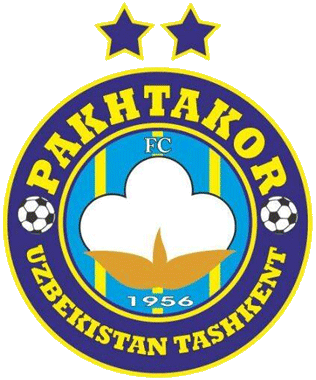
Pakhtakor was created in Tashkent on 8 April 1956, at a time when football in the Soviet Union was not only a sport, but also a system of representation. Clubs carried the identities of cities, factories, ministries, military institutions and republics. Pakhtakor carried Uzbekistan. Its name means “cotton grower” or “cotton picker”, a direct reference to the crop that defined the Uzbek SSR’s place in the Soviet planned economy.
Support Novastan, the European Central Asia magazine
By supporting Novastan, you are supporting the only English, French and German-language media specialising in Central Asia. We’re independent and we need your help to stay that way!The name matters. Cotton was not simply an agricultural product in Soviet Uzbekistan. It was a political and economic identity imposed on the republic, shaping landscapes, labour and the way Uzbekistan was imagined from Moscow. Pakhtakor’s name therefore linked football to a broader Soviet story: the republic that produced cotton now had a club that could represent it on the all-Union sporting stage.
The club’s identity is also visible in its Uzbek nicknames. Pakhtakor is known as Paxtakorlar, the Cotton Growers; Sherlar, the Lions; and Xalq jamoasi, the People’s Team. Together, these names capture three layers of meaning: labour and cotton, strength and pride, and the idea of a club that belongs not only to Tashkent, but to Uzbek football as a whole.
Also read on Novastan: A hundred years of Kyrgyz football
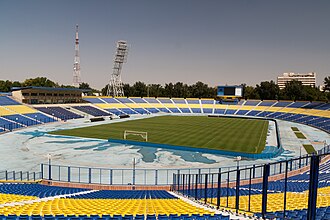
The club’s home, Pakhtakor Central Stadium, also became part of that identity. Built between 1954 and 1956 in central Tashkent’s Shaykhantahur district, it opened the same year as the club and became one of the main sporting arenas of Uzbekistan. Today it holds around 35,000 spectators after several renovations, but its symbolic weight is larger than its capacity. From 1992 until 2012, it was also the main home of the Uzbekistan national team, before the national side moved mainly to Milliy Stadium. For generations of supporters, Pakhtakor Central Stadium was not just a club ground, but one of the places where Uzbek football imagined itself nationally.
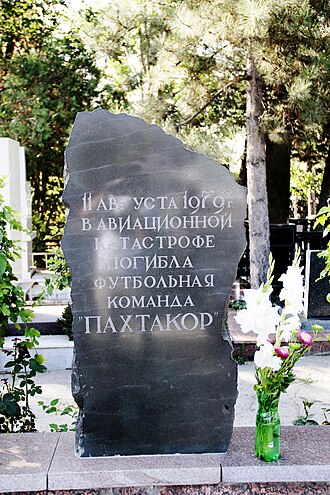
On 11 August 1979, Pakhtakor stopped being only a football club. The team was travelling to Minsk for a Soviet Top League match against Dinamo Minsk when its plane was involved in a mid-air collision over Soviet Ukraine. For many supporters, the first sign that something was wrong was not an official announcement, but an absence: the match did not appear among the day’s results. What followed became one of the deepest tragedies in Soviet and Uzbek sporting history.
The disaster matters because Pakhtakor had already become more than a team. In the Soviet Union, Moscow considered it desirable for each Soviet republic to be represented in the top football tier. Pakhtakor became the first Central Asian club to play at that level in 1959. It remained the only Uzbek club to appear in the Soviet top league and the only Central Asian club to reach a Soviet Cup final. For supporters in Tashkent and across Uzbekistan, Pakhtakor was proof that Uzbek football could appear on the all-Union stage.
The 1979 crash transformed that symbolism into memory. The team lost players and staff, including figures such as Mikhail An and Vladimir Fedorov, and the club’s tragedy became part of Uzbekistan’s collective football identity. In later decades, Pakhtakor would rebuild, win, dominate and represent the independent country abroad, but the memory of the lost generation remained central to how the club was understood.
Pakhtakor’s importance also extends beyond football. Few clubs in Central Asia have entered popular culture in the same way. The team has been celebrated in songs by well-known Uzbek performers, including Shahzoda, Bojalar, Rustam Gaipov, Kvartet and Ummon. Shahzoda released a music video titled Paxtakor, while Bojalar’s song Paxtakor turned the club into a pop refrain, with lyrics built around supporters, goals and collective confidence in the team. This musical presence matters: Pakhtakor is not only watched in stadiums; it has been sung as part of Uzbek urban and popular culture.
The 1979 tragedy also gave Pakhtakor a place in memorial culture. The lost team is remembered through monuments, annual commemorations, articles, documentaries and public storytelling. The memory of “Pakhtakor-79” is often compared to the Munich air disaster of Manchester United’s Busby Babes: a football team turned into a national symbol of loss, youth and interrupted promise.
Also read on Novastan: L’Ouzbékistan savoure sa première participation à la Coupe du monde de football
This is why Pakhtakor is different from most football clubs. It is a sports institution, but also a cultural reference. Its name evokes cotton and Soviet Uzbekistan; its stadium evokes Tashkent’s football geography; its songs evoke popular pride; and its tragedy evokes collective memory. To write about Pakhtakor is therefore to write not only about football, but about how Uzbekistan remembers, celebrates and narrates itself.
Pakhtakor’s history is also a history of players who shaped Uzbek football across different periods. Berador Abduraimov, one of the greatest footballers produced by Uzbekistan, became a Soviet Top League top scorer while playing for Pakhtakor and later coached independent Uzbekistan to its 1994 Asian Games title. Gennadi Krasnitsky, another legendary Pakhtakor striker, became so closely associated with goalscoring that Uzbekistan later created a scorers’ club in his memory. In the late Soviet and early post-Soviet periods, names such as Gennadi Denisov and Igor Shkvyrin connected Pakhtakor to continuity and renewal.
In the independent era, players such as Server Djeparov and Odil Ahmedov helped link the club to the modern national team and to Uzbekistan’s growing football presence abroad. Djeparov became one of the country’s most decorated footballers, while Ahmedov’s later career in Russia and China showed how Uzbek players could move into larger football markets. Today, Dostonbek Khamdamov offers another link between Pakhtakor and the current national-team story: once one of Asia’s most promising young players, he returned to the club and entered the World Cup cycle as part of Cannavaro’s squad.
After independence, Pakhtakor became the powerhouse of the new Uzbek league. The club has won 16 Uzbek league titles, 14 Uzbek Cups and 2 Uzbek Super Cups, making it the most decorated side in the country’s post-Soviet football history. This domestic dominance, especially during the 2000s, made Pakhtakor the reference point against which other clubs were measured. The club became associated with professionalism, hierarchy and expectation: the team everyone wanted to beat, and the team expected to represent Uzbekistan abroad.
Also read on Novastan: Discussions sur le développement du football féminin au Kazakhstan
That dominance also created rivalries. In the Soviet period, Pakhtakor’s most symbolic opponent was Kairat Almaty, then the leading club of Kazakhstan. Their meetings were remembered as a kind of Central Asian derby, a football expression of the broader Uzbekistan-Kazakhstan rivalry within the Soviet Union. After independence, Pakhtakor’s rivalries became more domestic. Matches against Bunyodkor Tashkent developed into a capital derby, especially after Bunyodkor’s rise in the 2000s. Games against Neftchi Fergana became one of the classic rivalries of the Uzbek league, linking Tashkent’s historic powerhouse with one of the strongest clubs of the early independence period. More broadly, matches against clubs such as Navbahor Namangan, Lokomotiv Tashkent and Nasaf Qarshi have often carried the weight of regional pride and competition against Pakhtakor’s capital-city dominance.
Pakhtakor’s history is also a story of ownership and state power. Like many post-Soviet clubs, it has never been only a private sporting institution. In 2017, SFI Management Group was reported to have acquired an 80 percent stake in Pakhtakor under investment obligations, with a commitment to invest in the club’s infrastructure. Later, the club became associated with businessman and former Tashkent mayor Jahongir Artikkhodjayev, who has been listed as club president and described in Uzbek media as the club’s owner. In January 2024, Uzbekistan’s State Assets Management Agency put 100 percent of the state share in Pakhtakor Football Club LLC up for sale, before temporarily suspending the privatisation process after public reaction.
This makes Pakhtakor not only a football institution, but also a case study in how Uzbek sport sits at the intersection of public assets, private capital and national prestige. These ownership debates show why Pakhtakor still matters in 2026. It is not a museum club remembered only for Soviet history or the 1979 tragedy. It remains a living institution in Uzbek football: a producer of national-team players, a target for rivals, a symbol of Tashkent’s football power and a club whose future reflects wider questions about investment, privatisation and the role of the state in Uzbek sport.
In Asian competition, Pakhtakor came close to a larger breakthrough. It reached the AFC Champions League semi-finals in 2003 and 2004, showing that Uzbek club football could compete beyond the domestic league. In more recent years, the club has remained part of Uzbekistan’s continental presence, including participation in Asia’s elite club competitions. Yet Pakhtakor never quite turned continental visibility into an Asian title. That absence is important, because it shows both the club’s strength and the limits of Uzbek football’s capital-centred model.
That is why the story of Uzbek club football cannot end in Tashkent. Pakhtakor carries the memory, prestige and institutional weight of the game. But the first major Asian club title won by an Uzbek side would come from elsewhere: from Nasaf Qarshi. If Pakhtakor is the memory of Uzbek football, Nasaf is the beginning of its modern regional ambition.
As Uzbekistan steps onto the World Cup stage, Pakhtakor’s role is therefore double. It is present in the squad through current players, but it is also present as history. Before Shomurodov, Khusanov and Fayzullaev carried the White Wolves into the global spotlight, Pakhtakor had already carried Uzbek football into Soviet stadiums, through tragedy, into independence, and towards Asia. The World Cup is new. The dream behind it is not.
Mathieu Lemoine, Editor-in-Chief for Novastan-English