

 What lies beneath Central Asia? Rare earths, critical minerals and the new race for resources
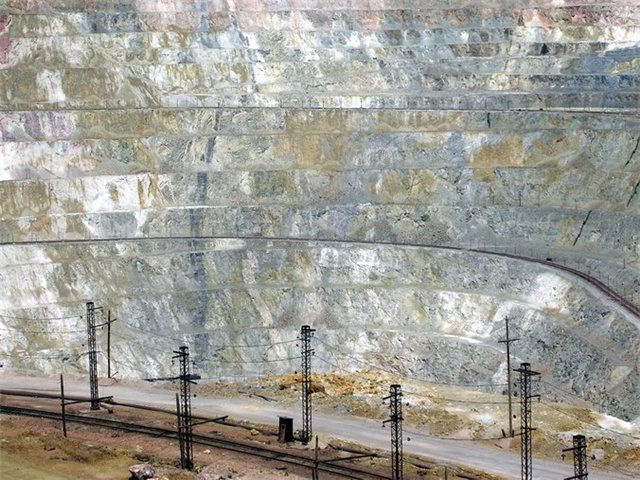
Central Asia is often described as the next frontier in the global race for rare earths. The reality is both more promising and more complicated. Kazakhstan, Uzbekistan and their neighbours do hold major reserves of critical raw materials, from uranium and copper to chromium, manganese, tungsten, antimony, graphite and rare earth elements. But much remains uncertain: some deposits are still under exploration, processing capacity is limited, and the most valuable parts of the supply chain remain outside the region.
What is already clear, however, is that governments, state mining companies and foreign investors are moving fast. The European Union has signed critical raw materials partnerships with Kazakhstan and Uzbekistan. American investors are looking at tungsten and rare earths. France is active in uranium. Development banks are financing graphite and mining governance. China remains the unavoidable reference point, because it dominates global refining and processing.
For Central Asia, the question is not only what lies underground. It is whether the region can avoid becoming simply another supplier of raw materials for richer industrial powers.
Why these minerals matter
Also read on Novastan: Carbon neutral by 2060? Kazakhstan’s green pledge faces a reality check
The term “critical raw materials” can sound technical, but the products they make possible are familiar. A smartphone contains copper, tungsten, rare earth elements and other metals. An electric vehicle depends on lithium, graphite, copper and sometimes cobalt. Wind turbines require steel, copper and powerful permanent magnets. Satellites, missiles, semiconductors and aircraft all need specialised metals.
Support Novastan, the European Central Asia magazine
By supporting Novastan, you are supporting the only English, French and German-language media specialising in Central Asia. We’re independent and we need your help to stay that way!Rare earths are only one part of the story. They include elements such as neodymium, praseodymium, dysprosium, cerium, lanthanum and yttrium. Some are used in permanent magnets for electric vehicles, wind turbines, drones, missiles and electronic devices. Others are used in polishing, catalysts, lasers or specialised industrial applications.
But Central Asia’s strategic importance is wider than rare earths. Uranium is essential for nuclear power. Copper is needed for electrical grids, renewable energy infrastructure, electric vehicles and data centres. Graphite is used in battery anodes. Tungsten hardens steel and is used in cutting tools, aerospace and defence. Antimony is used in flame retardants, ammunition, batteries and semiconductors. Chromium and manganese are essential for steel. Titanium is used in aircraft, spacecraft and medical implants. Molybdenum strengthens steel used in pipelines, industry and defence. Gallium is important for semiconductors, radar systems and advanced electronics.
In other words, the issue is not only about “green energy”. It is also about industrial power, military technology, digital infrastructure and geopolitical dependency.
What is actually known
According to the OECD, Central Asia holds a significant share of global reserves of several critical raw materials. The region accounts for around 39% of global manganese ore reserves, 31% of chromium, 20% of lead, 13% of zinc, 9% of titanium, 6% of aluminium, and about 5% each of copper, cobalt and molybdenum.
Kazakhstan is the strongest player. It is already the world’s largest uranium producer and can export many of the materials included in the European Union’s critical raw materials list. Its known strengths include uranium, chromium, manganese, copper, titanium, tungsten, beryllium, gallium and rare earth potential.
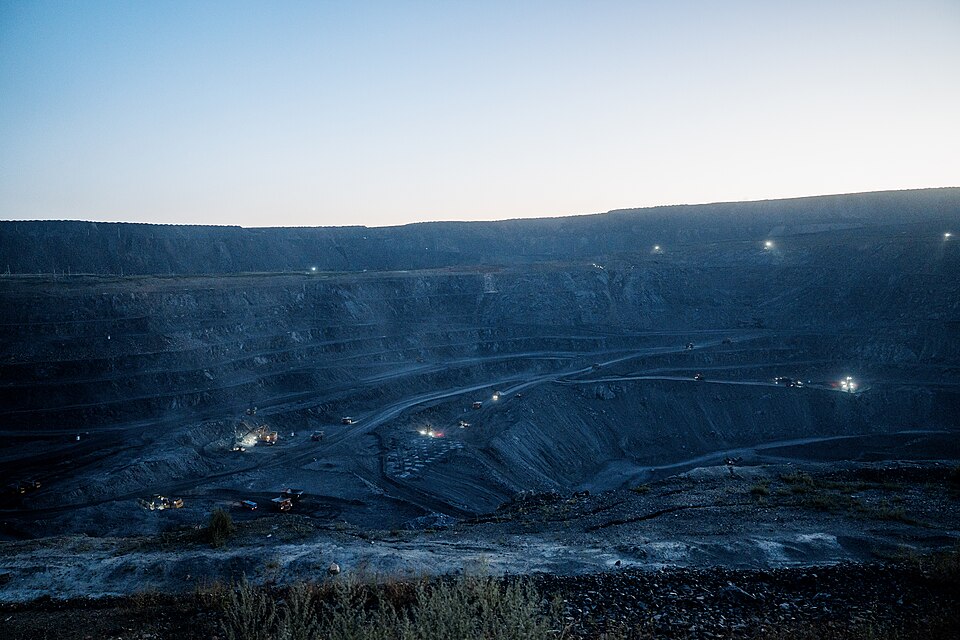
Uzbekistan is also increasingly visible. The country has large copper resources, uranium, molybdenum, tungsten, gold-associated metals and rare metals. Its mining sector is dominated by national champions such as Almalyk Mining and Metallurgical Complex, Navoi Mining and Metallurgical Company and Navoiyuran.
Kyrgyzstan has a smaller mining sector, but it is important for antimony, gold and rare earth occurrences. Tajikistan is also relevant for antimony, silver and rare metals. Turkmenistan remains the least transparent case, with public information still much thinner than for the rest of the region.
Kazakhstan’s rare earth moment
The strongest recent rare earth story comes from Kazakhstan. In 2025, the Kazakhstani authorities announced the discovery of the Zhana Kazakhstan deposit, reportedly containing more than 20 million metric tons of rare earth metals. The deposit is said to include neodymium, cerium, lanthanum and yttrium, with an average content of about 700 grams per ton.
The announcement attracted attention because neodymium and related elements are central to permanent magnets used in electric vehicles, wind turbines and defence technologies. But it should be treated with caution. A deposit is not the same as a mine. A mine is not the same as a processing industry. And processing rare earths is technically difficult, expensive and environmentally sensitive.
This is one of the main problems in the global rare earth race. China does not dominate only because it has resources. It dominates because it controls refining, separation and manufacturing capacity. For Central Asia, the real challenge is therefore not only geological. It is industrial.
The companies entering the race
In Kazakhstan, several national and foreign actors are already positioning themselves.
Tau-Ken Samruk, the state mining company, is expected to play a central role in exploration and strategic mineral projects. Kazatomprom remains the key uranium actor, while Eurasian Resources Group is important for aluminium, copper, cobalt and gallium. ERG has announced plans to produce gallium in Kazakhstan, a metal used in semiconductors, radar systems and missile guidance.
American interest is also growing. Cove Capital has been linked to tungsten projects in Kazakhstan, including Northern Katpar and Upper Kairakty, in partnership with Tau-Ken Samruk. Tungsten is strategically important because it is used in hard metals, defence and industrial tools, while Western countries are trying to reduce dependence on China.
Sarytogan Graphite, active in Kazakhstan’s Karaganda region, is another example. Graphite is essential for battery anodes, especially in electric vehicles. The European Bank for Reconstruction and Development acquired a stake in the company in 2024, showing that development banks are also entering the critical minerals field.
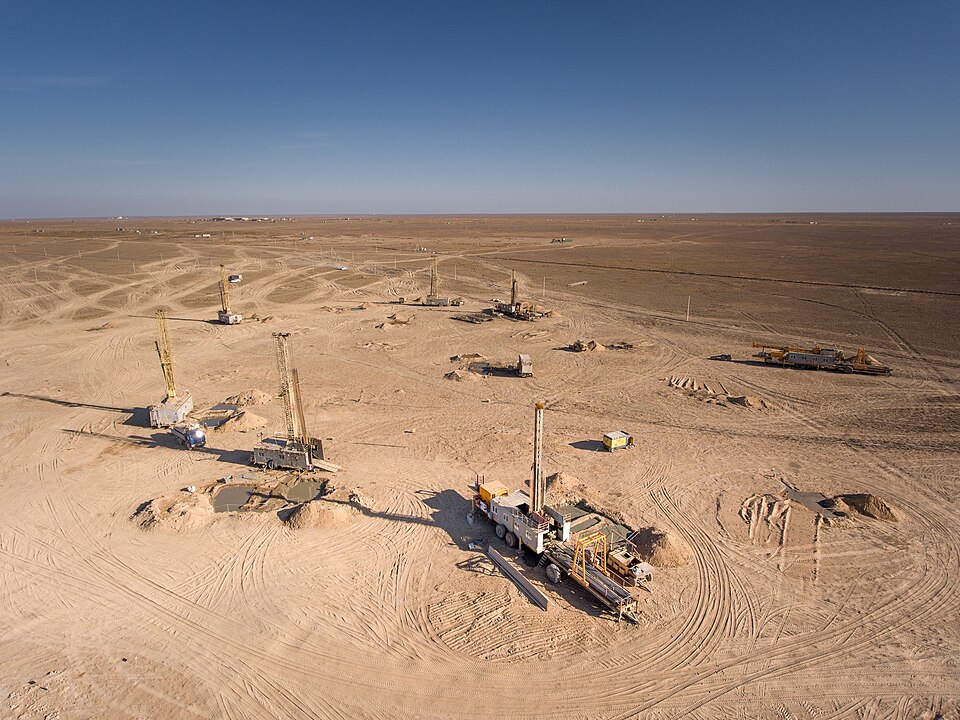
In Uzbekistan, the main actors are domestic state companies. Almalyk Mining and Metallurgical Complex is central for copper, molybdenum and other metals. Navoi Mining and Metallurgical Company remains one of the country’s major mining giants. Navoiyuran, the Uzbekistani uranium company, has signed with France’s Orano to develop a new uranium mining venture.
These examples show that the critical minerals race is not only a matter of abstract geopolitics. It is already visible in company strategies, financing decisions and bilateral agreements.
Europe, China, Russia and the United States
For Europe, Central Asia is attractive because it offers potential diversification. The European Union signed a strategic partnership with Kazakhstan in 2022 on sustainable raw materials, batteries and renewable hydrogen value chains. In 2024, it signed a similar memorandum with Uzbekistan. The first EU-Central Asia summit in Samarkand in 2025 also placed critical raw materials within a broader agenda of trade, transport, energy and connectivity.
For the United States, Central Asian minerals are part of a larger attempt to reduce dependence on China in strategic supply chains. Interest in tungsten, rare earths, gallium and other materials fits into this broader competition.
Also read on Novastan: L’héritage de Tabochar : l’extraction d’uranium au Tadjikistan et ses conséquences
China remains the central actor, even when it is not directly mentioned. It is the world’s dominant processor of rare earths and many other critical minerals. Any Western strategy on Central Asian resources is therefore, implicitly or explicitly, about reducing China’s leverage.
Russia still matters through legacy infrastructure, Soviet-era geological knowledge, uranium links and regional influence. But Moscow is no longer the only external actor able to shape Central Asia’s mineral future. This is one reason why the topic is becoming politically sensitive.
The real bottleneck: processing
The most important part of the story is not extraction. It is processing.
A country can have uranium, copper, tungsten or rare earth deposits and still capture only a small part of the value. The highest profits and strategic leverage often come from refining, separation, metallurgy, battery components, magnets and advanced manufacturing.
This is where Kazakhstan and Uzbekistan are trying to change the model. Both countries want more local value creation, not only raw exports. Uzbekistan is promoting mining reform and industrial processing. Kazakhstan is trying to position itself as a partner for value chains rather than just a supplier of ore.
Also read on Novastan: En Ouzbékistan, la percée saoudienne dans le secteur de l’énergie
The risk is obvious. Central Asia has already experienced extractive economic models: cotton, oil, gas, uranium and metals have often generated revenue without creating diversified, high-value economies. Critical minerals could reproduce the same pattern under a greener label.
Environmental and social risks
Critical minerals are often presented as tools of the green transition, but their extraction can be environmentally damaging. Mining requires water, energy, chemicals and waste management. Rare earth processing can be particularly polluting if not properly regulated. In a region already facing water stress, desertification and fragile ecosystems, this matters.
There are also governance questions. Who benefits from new mining projects? How transparent are contracts? Are local communities consulted? Are environmental standards enforced? Do projects create skilled employment, or mainly export raw materials?
Also read on Novastan: En Asie centrale, le marché des véhicules électriques fait ses débuts
For Central Asian governments, the opportunity is real. But so is the danger of a “green resource curse”, where global demand for clean technologies reinforces old patterns of dependency, opacity and environmental damage.
A starter pack for readers
The simplest way to understand the issue is this:
- Rare earths such as neodymium and dysprosium are used in magnets for electric vehicles, wind turbines and defence technologies.
- Uranium is used for nuclear power.
- Copper is used in electrical grids, renewable energy, electric vehicles and data centres.
- Graphite is used in battery anodes.
- Lithium is used in rechargeable batteries, though Central Asia is not yet a major global lithium centre.
- Cobalt is used in batteries and aerospace alloys.
- Tungsten is used in hard metals, cutting tools, aerospace and military equipment.
- Antimony is used in flame retardants, ammunition, batteries and semiconductors.
- Chromium and manganese are used in steelmaking.
- Titanium is used in aircraft, spacecraft and medical implants.
- Molybdenum is used in high-strength steel.
- Gallium is used in semiconductors, radar and advanced electronics.
- Beryllium is used in aerospace, satellites, telecommunications and defence systems.
This is why Central Asia’s mineral base is suddenly being watched so closely. The region is not only sitting on obscure metals. It may hold some of the materials needed for the energy transition, digital technologies and modern defence industries.
More than a mine?
The coming years will show whether Central Asia can turn critical minerals into a development opportunity. The region has the resources. It has growing diplomatic attention. It has national mining companies and foreign investors willing to engage.
But the decisive question is whether Kazakhstan, Uzbekistan and their neighbours can move beyond extraction. Without processing, transparency, environmental standards and local value creation, the new critical minerals boom could simply repeat older patterns of dependency.
Also read on Novastan: Le Kazakhstan renforce son emprise sur son uranium face à une demande mondiale croissante
Central Asia is not yet the next rare earth superpower. But it is becoming an important region in the global competition for critical raw materials. For the region itself, the challenge is to ensure that what lies beneath the ground helps build something above it.
Mathieu Lemoine, Editor-in-Chief for Novastan-English