


 “Disability is a Mirror for the Development of Societies” – A Conversation with Dilmurad Yusupov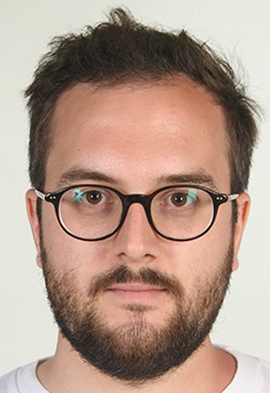
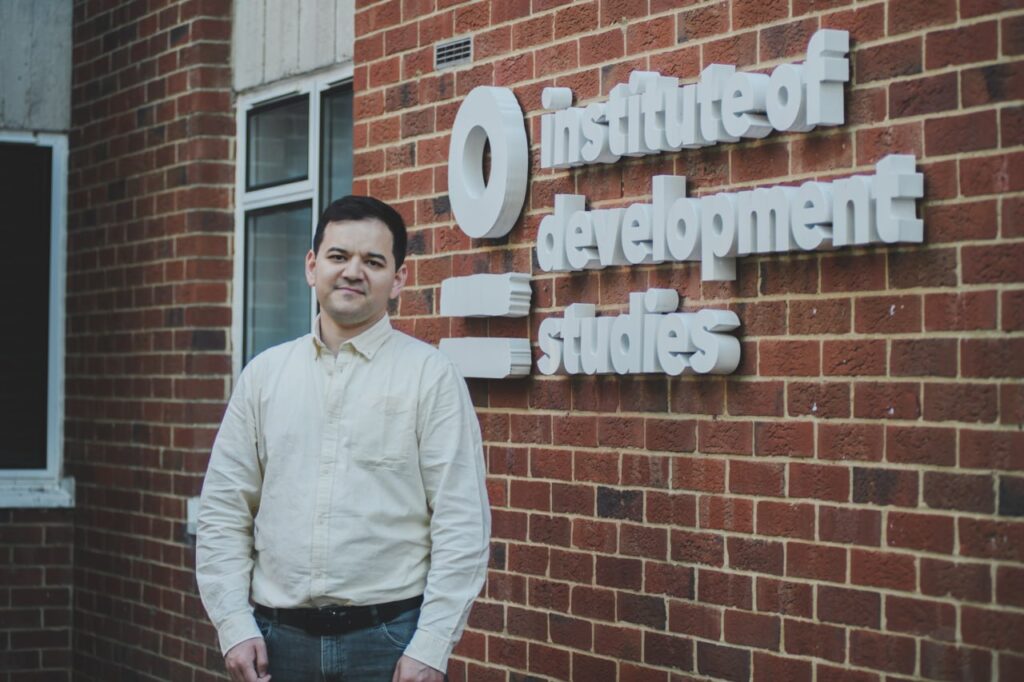
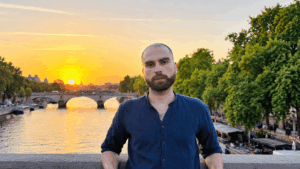
Dilmurad Yusupov is an Uzbekistani researcher, civil society activist and international development consultant advocating for the rights and inclusion of persons with disabilities. He co-founded NGO Sharoit Plus, a grassroots disabled people’s organisation in Tashkent, and launched IshPlus.uz, Uzbekistan’s first disability-inclusive recruitment platform. After completing a PhD in Development Studies at the University of Sussex, he is currently a Postdoctoral Fellow at Tokyo College, the University of Tokyo, where he further researches disability inclusion focusing on employment of persons with disabilities.
From Economics to Disability Rights Advocacy
Novastan : You are an Uzbekistani researcher and disability rights advocate whose work has taken you from Central Asia to Europe and now Japan. How has this international journey shaped the way you understand disability, inclusion, and citizenship?
Dilmurad Yusupov : Every country I have lived in has given me a new pair of glasses and forced me to take off the previous ones. I started as an economist when I studied at MGIMO in Moscow, then did a master’s in development economics at Waseda University in Tokyo. I was initially trained to look at the world through numbers and aggregate indicators. But with my first work experience while working in Uzbekistan with Japanese international development organisations such as the Japan International Cooperation Agency (JICA) my whole worldview has shifted entirely. I started working as JICA project assistant on disability inclusion projects along with persons with various impairments: wheelchair users, deaf men and women, parents of children with intellectual disabilities – and it struck me that no statistic was capturing what I was seeing: the humiliation at an inaccessible government office, the mother who had never left her flat in years because she had no help with her son, the university graduate who was told he could not work because his medical commission had classified him as “unemployable.”
I went to Sussex to do a PhD specifically because I needed different tools: ethnography, participatory methods, critical disability theory. And now in Tokyo, I am back in Japan, but as a researcher looking at how Japan designs employment support for persons with disabilities, trying to extract lessons for Uzbekistan. The journey has taught me one fundamental thing: disability is not a personal or medical problem. It is a social and political question. Where you are born, what kind of state you live in, whether your community sees you as a full human being – these things determine your life far more than your physical condition.
Reform Beyond the Headlines
When you look at Uzbekistan from abroad, what progress becomes more visible, and what gaps become harder to ignore?
Distance gives you a strange kind of clarity but the progress is genuinely visible. Uzbekistan has ratified the UN Convention on the Rights of Persons with Disabilities in 2021. The National Agency for Social Protection and its “Inson” Social Services Centres have been established since 2023. For the last couple of years there have been new presidential decrees on employment. We have a 3% employment quota for companies with more than 20 employees, some effort to improve physical accessibility. I see more Uzbek women and men with disabilities present in public life speaking at forums, running NGOs, appearing in media. Ten years ago that was rare. The disability rights conversation has finally begun in our country as well.
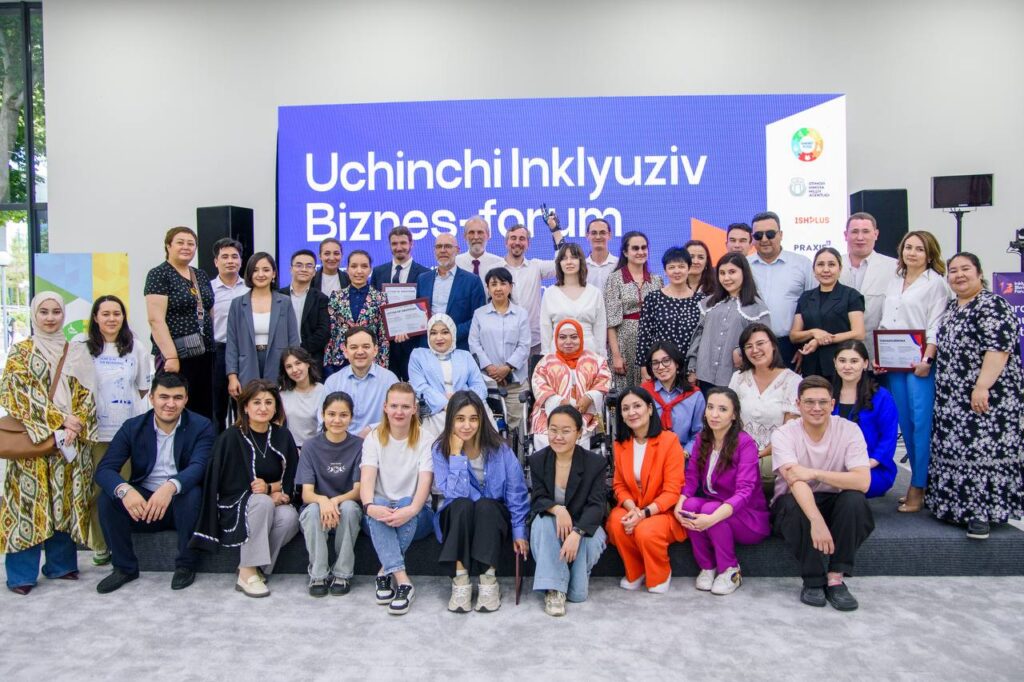
But from outside, the gaps also become impossible to ignore. Boarding houses closed institutional facilities where persons with disabilities, including children and adults with psychosocial or intellectual disabilities still exist and still confine people. The medical model of disability, inherited from the Soviet era, is still dominant in how the state assesses, classifies, and relates to disabled citizens. And there is a persistent gap between legislation and lived reality that frustrates everyone working in this field. It still often feels like laws exist on paper but a wheelchair user still cannot enter their district administration building. Disabled people’s organisations and other related NGOs still lack organisational capacity to advocate for the rights of persons with disabilities and still look at the problem through charity perspectives.
Can disability rights be used as a lens to assess the depth of Uzbekistan’s broader reforms since 2016?
Absolutely, and I would argue it is one of the most revealing lenses available which I have been applying in my work a lot. The reforms of the President Shavkat Mirziyoyev era have been substantive in some domains: economic liberalisation, somewhat cautious opening of civil society and media space, increased engagement with international institutions. But reforms that only benefit people who are already relatively advantaged tell us little about the depth of transformation.
Disability inclusion tests the genuineness of reform because it requires changing entrenched institutions, not just policies. It requires breaking the paternalistic logic of Soviet social protection which assumed that the state knows best, provides a minimal subsidy, and keeps “abnormal” people out of public life. If Uzbekistan’s reforms are real, we should see deinstitutionalisation people leaving boarding houses and living independently in communities. We should see more disabled people in parliament, on advisory committees, in leadership of public institutions. We should see the disability assessment system overhauled from a purely medical examination into a needs-assessment that actually enables meaningful participation. These things have not happened yet. The reforms are real, but they are still mostly skin-deep when it comes to disability.
The Soviet Legacy Lives On
To what extent are current disability policies still shaped by Soviet-era institutions and assumptions?
Enormously. My research thesis is essentially built around this question. The Soviet system treated disability as a medical deficit as the “loss of working capacity” caused by a health condition. The response was twofold: medical rehabilitation to return people to “normal”, and segregation for those who could not be normalised. That logic shaped the entire institutional architecture: the Medical and Social Expert Commission that classifies you as a “first group”, “second group” or “third group” disabled person; the specialised boarding schools and care homes; the sheltered workshops. These institutions are still with us, physically and conceptually.
What has changed since Soviet times is that disability is now more explicitly framed in rights terms, especially post-CRPD ratification. But the assumption that disability is primarily a medical issue, something to be fixed or managed rather than accommodated is still deeply embedded in how civil servants think, how families behave, and even how disabled people themselves have been taught to understand their own lives. One of the most painful aspects of participatory research is when the person with a disability internalises that logic: “I can’t work because I’m disabled,” rather than “I can’t work because there are no accessible workplaces.”
Uzbekistan ratified the UN Convention on the Rights of Persons with Disabilities in 2021. What has changed in practice, and what remains mostly on paper?
The ratification mattered. It was a political signal, and it created a reference point that activists and DPOs can use to hold the government accountable. Some things followed: new legislation on employment support, some amendments to the law on social protection, the development of national action plans. I celebrated the ratification publicly in 2021.
But the CRPD requires a paradigm shift from the medical model to the human rights model of disability and that shift has not happened at the institutional level. The legal definition of disability in Uzbekistan still essentially conflates disability with impairment. The Medical and Social Expert Commission (MSEC) system still divides people into those who can and cannot work based on a medical assessment. There are still no independent living, services personal assistance, accessible housing, supported decision-making which the CRPD requires.
The pattern I observe is common across many countries that ratify international conventions: the ratification is real, the rhetoric changes, some laws are amended, but the deeper bureaucratic, cultural, and financial changes that would actually transform disabled people’s lives get deferred indefinitely. The CRPD is a powerful tool but only if disabled people’s organisations have the political standing, resources and access to use it. That is the real bottleneck in Uzbekistan.
Read also on Novastan: Comment les femmes handicapées sont discriminées au Tadjikistan
What Disability Reveals About Society
What does the treatment of disabled people reveal about the relationship between the state and citizens in Central Asia?
It reveals a deeply paternalistic social contract. The state’s implicit message to disabled citizens has been: “We will provide you with a modest benefit and manage your needs, but you will not be a full public subject.” That logic is not unique to disability it shapes how the state relates to many categories of citizen. But disabled people make it especially visible because they depend on state services and infrastructure so directly.
The mahalla, the neighbourhood community, institution is a fascinating case study in this. On the one hand, mahalla networks provide real informal support to disabled people and their families: a neighbour who helps with shopping, a community that knows about a child who needs assistance. On the other hand, the mahalla is also a mechanism of social control and conformity, and it can reinforce stigma and exclusion just as readily as solidarity. For disabled people, the mahalla is simultaneously a lifeline and a site of judgement.
What I find most telling is that disability allowances in Uzbekistan are set at levels that make independent living impossible. They are supplementary to family support, not substitutes for it. The entire system assumes that disabled people live with and are cared for by families. Independent living – as a right – is not a design principle of the system.
In Uzbekistan, families often play a central role in care and support. Is this a strength, a burden, or both?
Both, without any doubt and I want to resist the temptation of romanticising family solidarity without naming its costs. When there are no community-based services, no personal assistance systems, no accessible housing, families have no choice but to become the primary support system. And in that context, families do extraordinary things. I have met mothers who have spent twenty years advocating for their child’s right to education, fathers who have rebuilt their homes to make them accessible, siblings who have become unpaid carers while working full-time.
But the word “choice” matters here. When families bear this burden because there is no alternative, it is not solidarity – it is structural neglect dressed in cultural clothing. And the cost falls most heavily on women, who are by far the primary carers in Uzbekistan. A woman who spends her life caring for a disabled relative often has a very low pension, no career, no independent income, no respite. She is made invisible by a system that counts on her labour without compensating or supporting her.
The vision I work towards is not one where families abandon disabled relatives the family bond in Central Asia is real and valuable. It is one where families who choose to provide care are genuinely supported, and where disabled people who want to live independently have the services to do so. These should be choices, not compulsions.
The Unequal Burden of Exclusion
How does the experience of disability differ for women, rural residents, or persons with psychosocial and intellectual disabilities?
Every additional axis of disadvantage compounds dramatically in Uzbekistan. Let me be concrete. A woman with a physical disability in Tashkent faces barriers – but she lives in the city where Sharoit Plus and IshPlus.uz operate, where there is at least some accessible infrastructure, some specialist services, some community. A woman with a physical disability in a remote district of Surkhandarya faces all of those same barriers, plus almost no services, greater family pressure to stay at home, less information about her rights, and fewer journalists or NGOs to notice if something goes wrong.
For persons with psychosocial and intellectual disabilities, the situation is the most serious and the least visible. These are the people most likely to be in boarding houses. These are the people whose voices are least present in public consultations on disability policy. In 2024 I wrote about a case in Syrdarya where a woman with a mental disability was filmed being mocked and abused in a residential care facility – the video went viral, but what struck me was not the exceptional cruelty of one act but how unsurprising it was to anyone who knew these institutions. Closed institutions breed abuse. That is not a bug; it is a structural feature.
Work, Dignity and Belonging
You have researched disability-inclusive employment. Why is access to work such a decisive issue for equality and citizenship?
Work is not only about income, though income matters enormously as disabled people in Uzbekistan are among the poorest population groups. Work is about dignity, belonging, identity, and citizenship in the fullest sense. When you work, you are visible. You have a schedule, colleagues, a place in the social fabric. You contribute and are recognised as contributing. When you do not work when you are told by a medical commission that you are “unemployable”, or when every employer turns you away because of stereotypes about your capacity you are consigned to a kind of social invisibility.
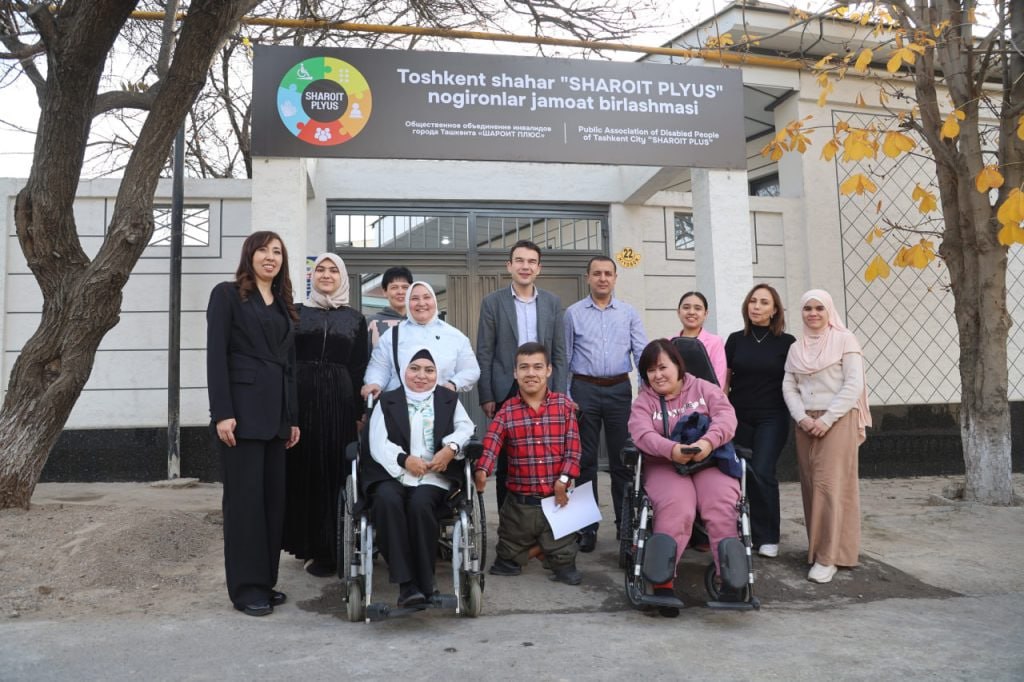
That is why I consider the Soviet-era concept of “unemployable” so harmful. It is not a medical finding – it is a social sentence. When we launched IshPlus.uz in 2021, we were directly challenging that logic. Within a year, 50 persons with disabilities had found jobs through the platform. When we scaled up with Eurasia Foundation’s support, 130 people found employment in just six months – persons with visual impairments, hearing impairments, physical disabilities, intellectual disabilities. Behind each number is a life that changed.
Are disabled people in Uzbekistan still too often seen as recipients of assistance rather than workers, experts and decision-makers?
Yes – and this is the core cultural battle. The dominant public image of disability in Uzbekistan is still the charity model: a person in need of pity, whose story should inspire gratitude for one’s own health. That image is present in media, in how government programmes are designed, in how businesses think about the 3% quota (as a burden to be minimised rather than an opportunity). Even some disabled people’s organisations reproduce it because they have learned to navigate a system built on those assumptions.
The shift I advocate for – and that the CRPD requires – is from seeing disabled people as objects of welfare to recognising them as rights-holders, experts in their own lives and in the design of the systems that affect them. “Nothing about us without us” is the foundational principle of the global disability rights movement, and it is still quite foreign to how policymakers in Uzbekistan approach disability reform.
Learning from Abroad
What lessons from Ireland and Japan could be useful for Uzbekistan, and what should not be copied blindly?
Ireland went through a serious deinstitutionalisation process, moving persons with intellectual and psychosocial disabilities out of large institutions and into community-based living. The process was painful and incomplete, and Ireland is still reckoning with the abuses that occurred in those institutions – but the direction of travel was right, and it shows what is possible with political will. The Irish independent living movement also developed strong models of personal assistance and direct payments that are worth studying for Uzbekistan.
Japan is fascinating because I have lived there twice now, in very different capacities. Japan has invested heavily in physical accessibility – its cities are among the most barrier-free I have experienced, the public transport system is genuinely wheelchair accessible, and there is sophisticated legislation including the 2016 Act for Eliminating Discrimination against Persons with Disabilities. JICA has also been active in Uzbekistan on disability rehabilitation for years, and those partnerships have real value.
But Japan also teaches the lesson of what not to copy. Physical infrastructure does not automatically produce social inclusion. Japan still has very high rates of institutional care for persons with intellectual and psychosocial disabilities. Stigma around mental health is acute. Employment discrimination persists despite legal protections. A disabled person with perfect ramp access to a building may still encounter assumptions about their competence the moment they walk in the door. The lesson is that hardware without software – accessibility without attitude change – is not inclusion. Uzbekistan can learn the infrastructure lessons from Japan and the deinstitutionalisation lessons from Ireland, while understanding that both countries are still on an unfinished journey.
Central Asia as a Producer of Knowledge
How can Central Asian researchers contribute to global disability studies, rather than simply being treated as case studies by scholars elsewhere?
This question matters to me personally and professionally. For a long time, Central Asia was studied primarily by Western or Russian scholars, and the region’s disabled people appeared in academic literature mainly as examples – illustrations of post-Soviet transition, of Islamic culture, of development deficits. Local researchers were rarely cited as theorists or methodologists; they were cited as informants or acknowledged in footnotes.
This is a form of epistemic injustice, and it limits the quality of the scholarship itself. The theoretical tools we need to understand disability in post-Soviet Muslim majority Central Asia – the intersections of Soviet institutionalisation, Islamic notions of compassion and charity, mahalla-based informal care, rapid economic transformation – cannot be developed from a distance by someone who has never negotiated those realities.
I try to practise a different kind of research: participatory, with disabled people as co-researchers and co-authors, not just subjects. I try to publish in accessible formats in Uzbek and Russian, not only in English-language academic journals. And I try to position my work as contributing concepts and frameworks to global disability studies, not just providing data points about Uzbekistan. The ambition should be for Central Asian disability studies to produce theory, not just cases.
Read also on Novastan: Sur scène, plus de handicap
Telling Better Stories About Disability
How should journalists report on disability – and how can success stories be told without falling into pity, charity, or “inspirational” stereotypes?
This is something I think about a great deal, because bad journalism about disability does real harm. The two dominant failure modes are the pity narrative – the disabled person as tragic sufferer deserving charity – and what the disability studies scholar Stella Young called “inspiration porn” – the disabled person as a heroic overcomer, whose story is meant to make non-disabled audiences feel grateful for their own lives. Both narratives make the disabled person an object, not a subject.
Good journalism focuses on systems, not just individuals. Good journalism also asks disabled people what they think, want, and advocate for, not just how they suffer or cope. It treats them as sources of analysis and expertise, not just of emotional testimony. And it avoids language and framing that frames disability as inherently deficient – “confined to a wheelchair”, “suffers from”, “despite her disability.” These phrases embed the medical model into the grammar of every sentence.
“Nothing About Us Without Us”
What would it take for disabled people’s organisations in Uzbekistan to be involved not as consultees, but as co-authors of reform?
First, financial sustainability. Uzbekistani DPOs are chronically under-resourced. The state allocates minimal social orders to civil society, and the NGO regulatory environment creates significant administrative burdens. A DPO that spends most of its energy on survival cannot invest in policy advocacy. Dedicated, multi-year funding for DPOs – from the state and from donors – is a precondition.
Second, genuine access to decision-making spaces. Consultation processes in Uzbekistan often invite DPOs to comment on documents that are already finalised, in rooms that may not be physically accessible, with materials that are not in accessible formats, without sign language interpretation. That is not co-authorship – it is the performance of inclusion. Real participation starts at the problem-definition stage, before solutions are on the table.
Third, and perhaps most fundamentally: a political culture that treats disabled people’s lived expertise as legitimate. Civil servants, international experts and academics need to internalise that people who live with disability know things about it that no policy paper can capture. That is not a soft or optional supplement to technical knowledge – it is essential knowledge. The CRPD principle of “nothing about us without us” should be operationalised as a procedural requirement for all disability-related legislation and programming in Uzbekistan.
Reasons for Hope
What gives you hope today in Uzbekistan, and what worries you most?
Hope: there is a new generation of disability rights activists in Uzbekistan who are young, connected, demanding, and tired of being patient. They use social media. They call out inaccessible buildings by name. The CRPD ratification also gives me hope, not because of what it has already changed, but because it shifts the terms of argument. Rights are no longer a Western imposition – they are a commitment the Uzbekistani state made to its own citizens.
I also worry about the pattern I observe across Central Asia: reforms are initiated from the top, which means they can be reversed or stalled from the top too. Genuine inclusion requires a society that demands it – a disability rights movement with political weight, public support, and allies across different sectors. We are building that, but slowly.
Dilmurad Yusupov can be followed at dilmurad.me and on social media as @d_yusupov.
Want more Central Asia in your inbox? Subscribe to our newsletter here.
Interview by
Mathieu Lemoine, Editor-in-Chief at Novastan-English
Maya Ivanova, Contributor at Novastan
Thank you for reading this article! If you have time, we would appreciate your feedback, either through this anonymous form or by email at editorial@novastan.org. Thank you very much!