


 “River Dreams”: A river, 100 women and a portrait of Kazakhstan
Support Novastan, the European Central Asia magazine
By supporting Novastan, you are supporting the only English, French and German-language media specialising in Central Asia. We’re independent and we need your help to stay that way!Following a small river from the mountains into the Kazakh steppe, filmmaker Kristina Mikhailova set out to imagine its dreams. Five years later, the journey had become a portrait of Kazakhstan told through the voices of its women – and an intensely personal exploration of freedom, identity and belonging.
A small river runs for 130 kilometres through Kazakhstan, beginning among mountain peaks and glaciers before gradually disappearing into the vast landscape below. When filmmaker Kristina Mikhailova first decided to follow the Aksay from beginning to end, she imagined making a film about the river’s dreams.
Five years later, that idea had become something much larger.
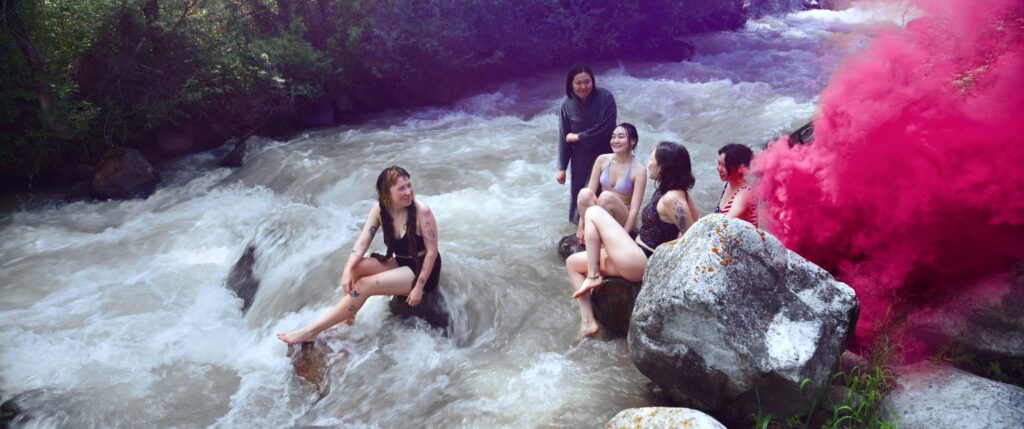
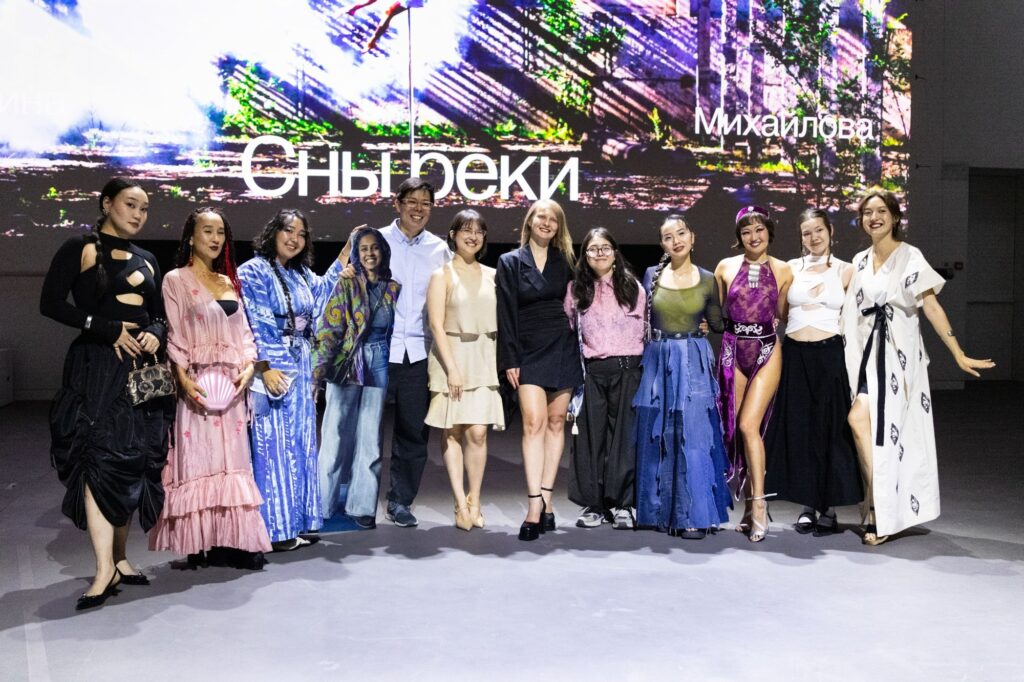
Along the river, Kristina interviewed around 100 women, asking each an unusual question: if you were a river, what kind of river would you be? Fifteen of them eventually became part of River Dreams, a 98-minute film in which the Aksay serves simultaneously as landscape, witness and metaphor.
What emerged is not simply a portrait of a river. Through women’s stories of freedom, violence, dignity and belonging, the film became what its director describes as “a political portrait of Kazakhstan through a female perspective”.
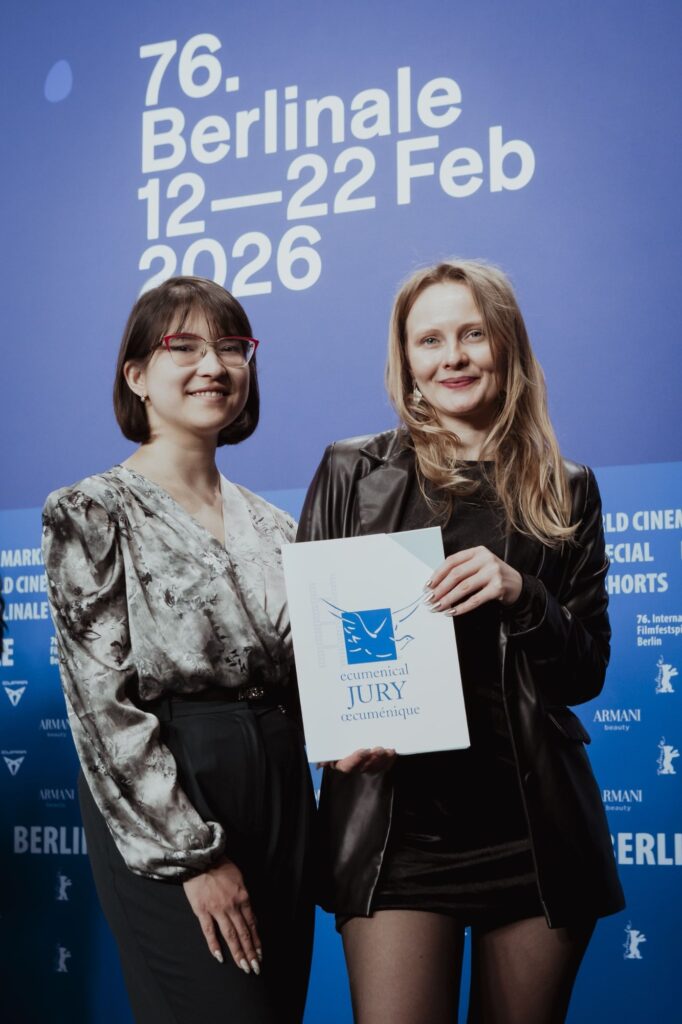
The film has since travelled internationally, receiving around 30 festival invitations and and winning the Prize of the Ecumenical Jury in the Forum section at the 2026 Berlinale. It has also drawn enthusiastic audiences closer to home, including three sold-out screenings in Kazakhstan and a packed morning screening in Kyrgyzstan, where it won Best Feature-Length Documentary Film at the UmutDoc International Documentary Film Festival in Bishkek.
Yet bringing the film to a wider audience in Kazakhstan itself has proved much more difficult. Kristina says censorship has prevented River Dreams from securing the domestic release she wants.
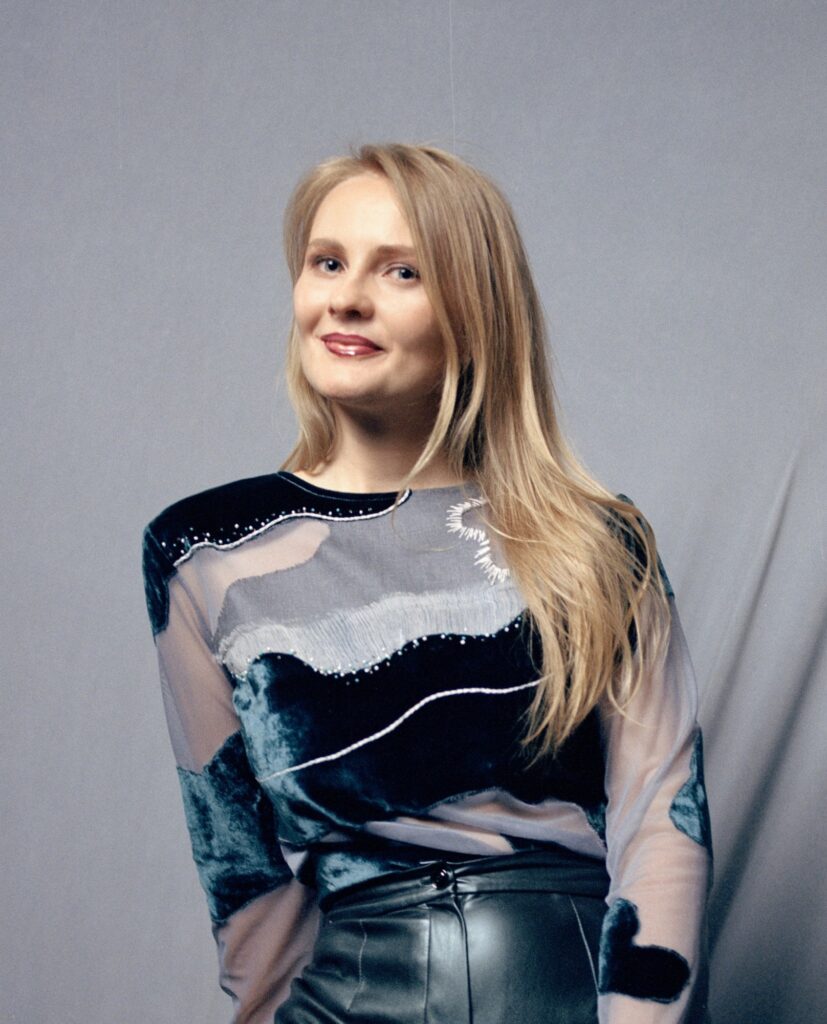
For Novastan, Kristina Mikhailova spoke with Novastan Editor-in-Chief Mathieu Lemoine about the “sisterhood of rivers”, the women she met along the Aksay, her Ukrainian grandmother’s memories, female agency and violence, her identity as a Russian Kazakhstani, and the painful experience of feeling deeply attached to a country that she sometimes feels is pushing her away.
A sisterhood of rivers
Novastan: The film began with the idea of following the Aksay River for its entire 130-kilometre course. What were you looking for when you first set out?
Kristina Mikhailova: When I started filming, I was very young. This was the idea for my first feature-length film: I wanted to follow the river all the way, 130 kilometres from beginning to end, and imagine what it might dream about – to film those dreams as I saw them.
But after walking the entire river alone, I saw how much it changed along the way. I wanted to capture those changes and see reality through the river’s eyes, to personify it. I was working with a post-humanist approach and looking for a way to give the river a voice.
That is how I came up with the idea of asking the girls who lived along the river what kind of rivers they would be.
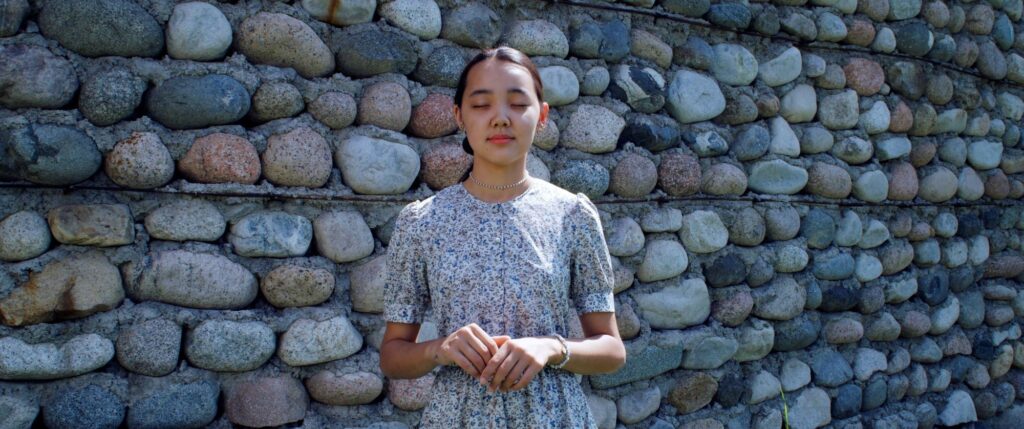
That question immediately helped me understand the person in front of me and shape the conversation in a way that allowed her to share something very important to her. In the Kazakhstani context, very little space is often given to women’s perspectives. It mattered to me that, as a woman, I was creating such a space, and that through the film other women could have that space too.
Gradually, what emerged was a political portrait of Kazakhstan through a female perspective.
Why did you choose the Aksay in particular?
Aksay, or Aksaika, is a very small, modest river. I wanted to film precisely this kind of inconspicuous river, because we have so many of them.
Its journey is typical of many mountain rivers in Central Asia: they begin among mountain peaks and glaciers and then disappear somewhere in the steppe or flow into lakes, never reaching the ocean.
By filming Aksay, I was also filming all these other rivers. I called it a “sisterhood of rivers”.
It is funny because I once heard someone say that the film shows some of the negative aspects of women’s lives in Kazakhstan because I had chosen the “wrong” river – one that was too insignificant. Apparently, if I had chosen some great, “proper” river, the story would have turned out differently.
I doubt it.
Making female agency visible
You interviewed around 100 women during the making of the film, with 15 eventually appearing in the final version. What did these encounters teach you?
First and foremost, I learned about myself.
Recently, I started thinking about how I changed over the five years it took to make the film. Of course, I established myself as a filmmaker, my name became known and new opportunities opened up. But something much more personal happened too: I discovered myself as a woman of Kazakhstan. I saw who I was.
Through meeting other women, I realised how different we are and how many pains we share. I came to understand relationships between men and women better – and men themselves, too.
For me, it was a genuine step up in my understanding of myself. One film led to so many personal discoveries.
Freedom seems to be one of the central themes of the film. Did making it change the way you understood freedom and the restrictions women face?
I am glad you noticed the theme of freedom because, for me, it was one of the key themes on a human level.
While making the film, I realised how many layers restrictions can have. Some are so deeply embedded and so difficult even to recognise that overcoming them can sometimes seem utopian.
But if we are talking about empowerment, then yes, absolutely. And women expand these possibilities for themselves.
I think every one of the 100 girls I interviewed, and each of the 15 who eventually appeared in the film, helped create a safe space through her story and her willingness to share her vulnerability – a safe space for all of us within those 98 minutes.
It is a space that women throughout Kazakhstan can enter.
That is why I am trying so hard to secure a wide release for the film in Kazakhstan. I want every Kazakhstani woman to be able to see it. Its distribution title is Qyz Republic.
The film deals with difficult experiences, including violence, but the women are never reduced to victims. Was challenging stereotypical representations of women something you consciously set out to do?
I did not explicitly set out to move away from stereotypical representations of women. I had a different objective: to make female agency visible.
That sounds slightly paradoxical, but there is a need for it.
Above all, I wanted my girls to feel strong.
I think both men and women can connect with that experience. But for girls in particular, the film creates a place where they can recognise themselves, feel seen and feel strong – where they can see themselves as capable of preserving their dignity despite everything.
The culmination of this, of course, comes in the final scenes involving violence. At that point, the conflict becomes completely explicit – almost black and white.
But in my view, not one of my girls looks like a victim.
The river as witness
The landscape itself seems to function almost like another character. How did you want the river and its surroundings to appear on screen?
The landscape is definitely my silent witness – the ghost of Hamlet’s father.
I always wanted the landscape cinematography to be minimalist and static, without camera movement. I wanted it to record impartially whatever was in front of it, creating what my cinematographer calls “moving photographs”.
I wanted to leave room for a transcendental experience beyond my own statement, so that each viewer could develop their own idea of the river through these landscapes.
I did not want to dramatise them or deliberately select only emotionally charged scenery. I showed the landscapes as the river passed through them, from beginning to end.
Of course, a lot had to be left out, but I think the film still gives you a sense of roughly every ten kilometres of the river’s journey.
I wanted the landscape to speak for itself.
A grandmother’s river
Your grandmother also appears in the film, although you did not originally intend for her to be part of it. How did her story enter the film?
I think I inherited my particular attentiveness to the world around me from my grandmother.
She understood the world intuitively. The war had a profound impact on her childhood – on where and how she was able to study – and eventually brought her to Kazakhstan as a little girl.
When my grandmother arrived here, she spoke only Ukrainian. She did not know Russian. I think that sharpened her perception too: she had to read reality and learn from it through observation.
I had not originally planned to include my grandmother in the film. I simply decided to speak with her by the river about our family history and her past. Then, during the editing process, I found this moment when she suddenly comes alive while remembering the river of her childhood.
My grandmother is 93. That is almost a century. Yet both the river of her childhood in Siberia and my river in Kazakhstan can overflow, flooding houses and cities.
Through my grandmother’s memory, I wanted this sense of timelessness to enter the film.
“I belong entirely to this place”
The film is multilingual, much like Kazakhstan itself. How does your own identity shape the perspective from which you portray the country?
I love the fact that the film turned out to be multilingual – just like our reality in Kazakhstan. I see that as an advantage.
But I understand that, as a Kazakhstani whose passport says “Russian”, I have my own perspective. It cannot express the general mood surrounding identity in Kazakhstan.
Speaking purely about my own feelings, I belong entirely to this place. I am deeply connected to it.
But sometimes – or often? – I feel that it is trying to push me out.
I feel that both as a Russian Kazakhstani and as a woman and filmmaker.
At the same time, there is nowhere else on Earth where I feel so needed, or where I can so easily find common ground with people.
I understand everything here. Unfortunately, I cannot accept everything.
Between documentary and visual art
River Dreams combines documentary filmmaking with dreams, metaphor, music and highly stylised imagery. Did you ever think of it as a conventional documentary?
From the beginning, I was not making a traditional documentary. For me, it was a large artistic practice that happened to come closest to documentary cinema.
Essentially, I was making visual and conceptual art.
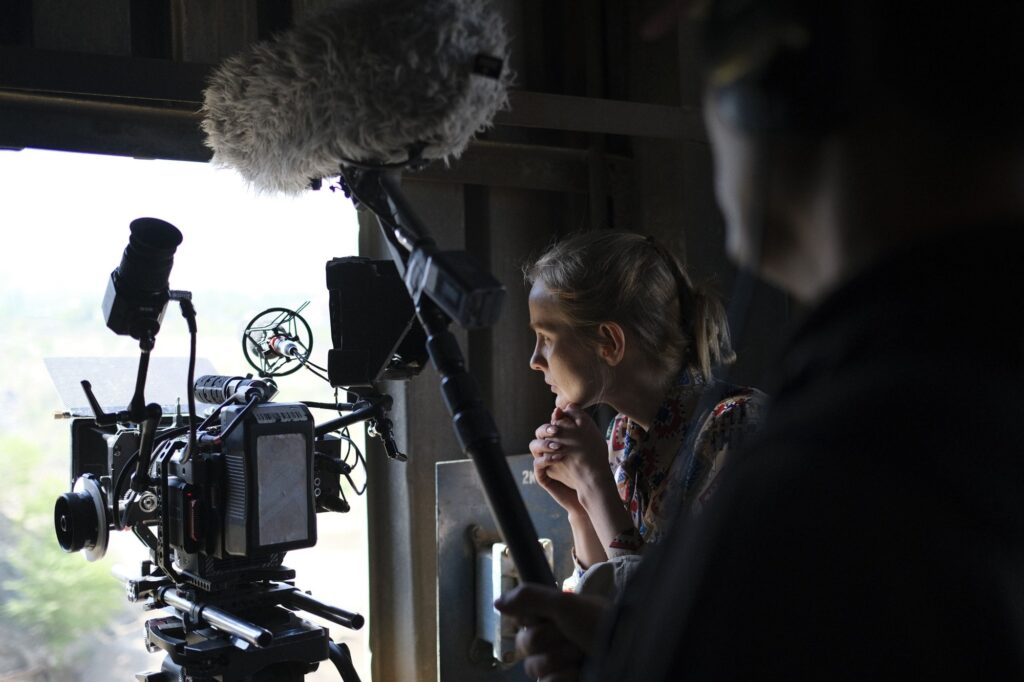
So I did not restrict the means I could use. I looked for ways of expressing my metaphors through different images, visual registers and the editing itself.
In the end, I think the river itself dictated what its dreams should look like.
I receive very different reactions to these techniques. Some people call them outstanding. Some see them as nothing more than B-roll. Some say they are not poetic at all, while others find them endlessly poetic. Some people think they are naive.
I like the fact that they provoke an emotional response and make the imagination work. I think that is what real cinema should do.
At least, that is what cinema does to me. And I am glad my film has had that effect on other people.
Music also plays a prominent role in the film. What did you want it to contribute?
Music plays a very important role.
The film includes several compositions by a Scottish artist I like and a track by a well-known American artist. But the most important element for me is the a cappella singing.
It appears four times. I perform one short melody myself, while the others are sung by girls I met along the river. Then, at the end, there is a music video featuring the classic line-up of the group KeshYOU, which becomes a separate, meta-ironic statement for me.
I feel no affinity with the idea, familiar across the post-Soviet space, that “real cinema” should not have music.
I use music because, for me, it speaks first and foremost to our emotions. And it fits this film particularly well because the film’s structure is itself profoundly emotional.
Success abroad, censorship at home
The film has now travelled widely and received considerable international recognition. What has the response been like?
By the time we are recording this interview, the Kazakhstani premiere has already taken place and we have had three sold-out screenings.
In Kyrgyzstan, we filled a cinema at 9:30 in the morning and won the festival’s Grand Prix. The film has received an award at the Berlinale and around 30 festival invitations around the world.
Soon I will leave for a three-month tour through Europe, Africa, Asia and Latin America. The US premiere has already taken place in New York, and the Latin American premiere is coming next.
But despite all of this, I am still struggling to get the film into general release at home.
The reason is censorship.
I hope we will manage to overcome it, but as an artist I find the fact that I constantly have to fight simply humiliating.
It is still difficult for me to cope with the enormous pain of not being accepted at the state or industry level.
And yet the reaction from audiences in Kazakhstan itself seems to have been very different. How do you reconcile those two experiences?
Kazakhstan is also my audience – both women and men.
The film received an extraordinary and deeply emotional response here. I saw rivers of tears. I heard so many people open up to me after the screenings.
And my heart is torn between my love for my homeland and the searing pain of feeling that it rejects me.
I do not yet know how to resolve that contradiction.
I tried to express it in the film.
“The universe is my country”
After five years making this film and speaking to so many people along the river, how do you think about Kazakhstan’s future?
I think about the country’s future as the future of the people who live in it.
In Kazakhstan, I have met so many people who give me hope. They express their opinions openly. They value their freedom and are prepared to fight for it. They create space for others. They make the people around them happier.
But there have also been periods when I encountered many people filled with self-censorship and despair – people who seem no longer to regard their own dignity as something inviolable.
That is why thinking about the country’s future is very painful for me at the moment.
In the film, I describe a dream I had as a child. I am a baby who keeps growing and expanding until I reach the dimensions of the universe, but I never reach its boundaries.
Now I feel as though I am that baby again, and the universe is my country, Kazakhstan.
Maybe I need to go beyond its boundaries. Maybe I am already outgrowing them.
But I do not know.
My family lives here.
I love this place very deeply.
By Mathieu Lemoine, Editor-in-Chief for Novastan English.