



 How Young Kyrgyz Digital Artists Are Reimagining Their Cultural Heritage

Support Novastan, the European Central Asia magazine
By supporting Novastan, you are supporting the only English, French and German-language media specialising in Central Asia. We’re independent and we need your help to stay that way!From fantasy worlds inspired by Kyrgyz mythology to AI-powered cultural installations, a new generation of artists is bringing traditional stories and symbols into the digital age.
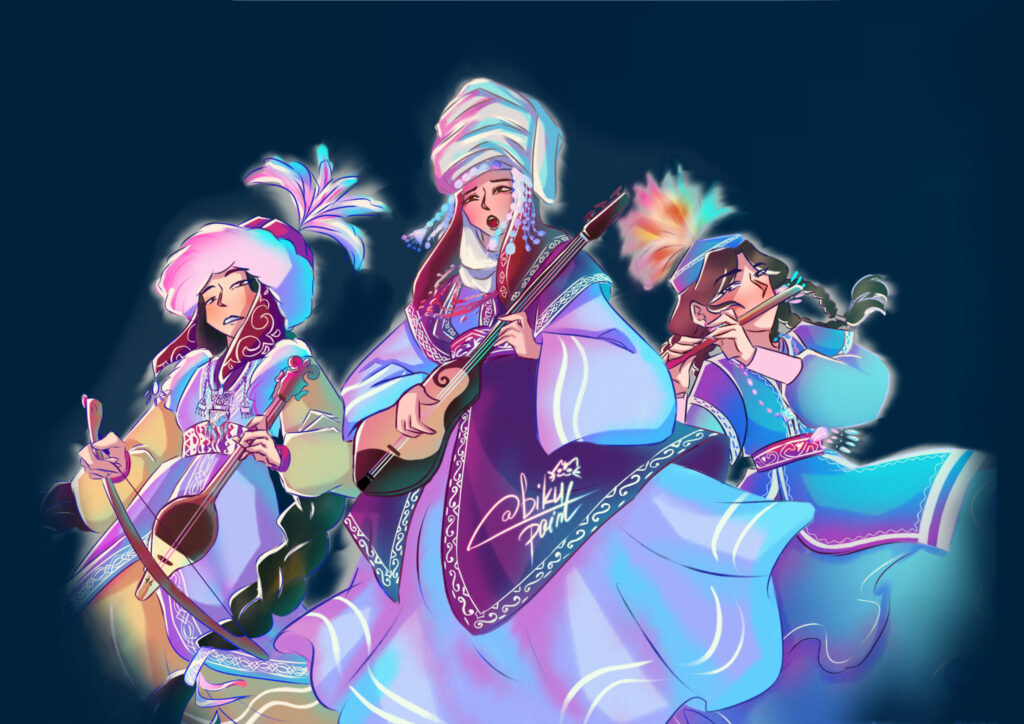
Kyrgyz mythology, traditional ornaments and stories passed down through generations are finding new life in unexpected places: fantasy comics, digital illustrations, interactive installations and AI-generated worlds.
In Bishkek and beyond, a new generation of Kyrgyz artists is drawing on the country’s cultural heritage while experimenting with global creative trends, from anime and science fiction to immersive technologies.
Read more on Novastan: Art without Borders: The Coffee Artist Nurlan Duishobekov from Bishkek
Their work challenges the idea that traditional culture belongs primarily in museums or historical monuments. Instead, these creators are finding new ways to reinterpret it, introduce it to international audiences and make it relevant to their own generation.
But this creative experimentation also brings challenges. Young artists must navigate limited resources, questions of cultural authenticity and digital platforms where Central Asian identities and artistic traditions are often poorly represented.
As 19-year-old digital artist Anastasiia Kozdrovich puts it: “If you want culture to live, you have to evolve it.”
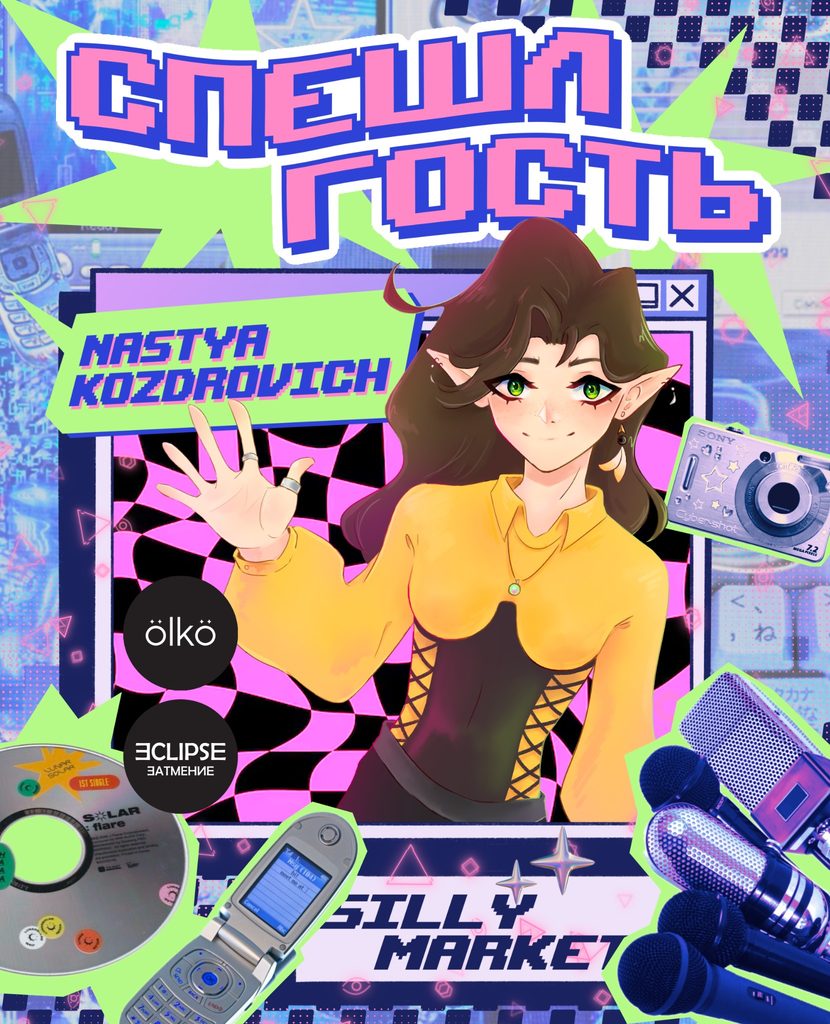
Anastasiia “Elvenmia” Kozdrovich
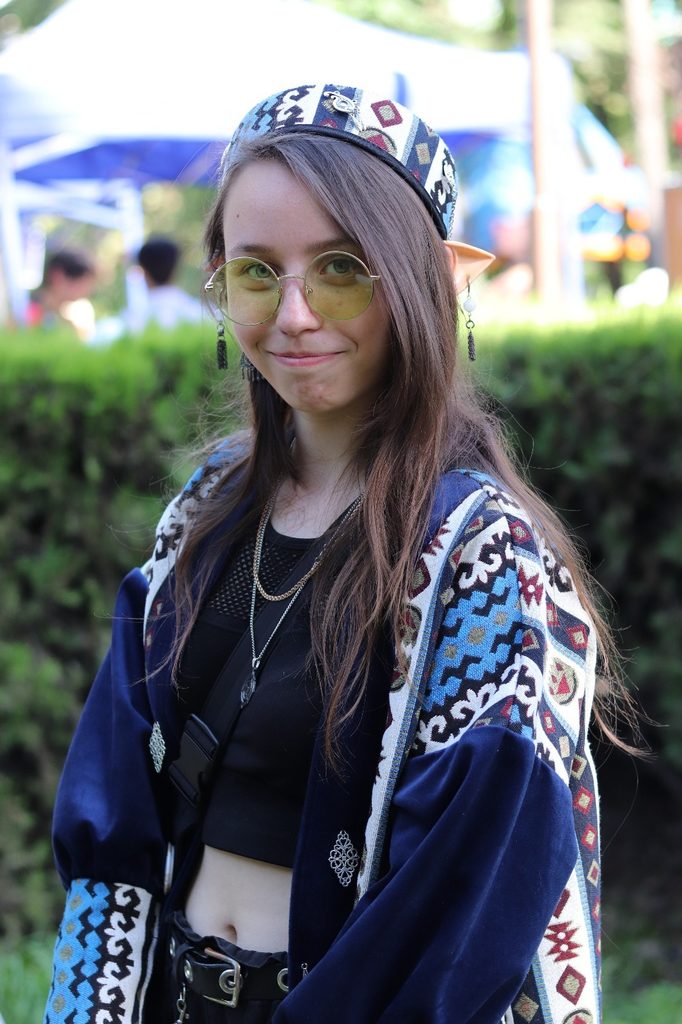
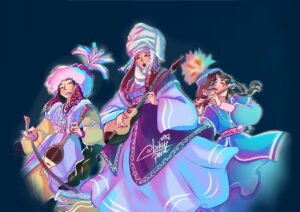
When students at Bishkek’s Compass College choose topics for their final diploma projects, most play it safe by choosing to design branding for local coffee shops or illustrations for children’s books. Anastasiia Kozdrovich, known online as Elvenmia, went in the exact opposite direction. She decided to build an entire fantasy universe rooted in Kyrgyz and Turkic cultural codes, titled ölkö.
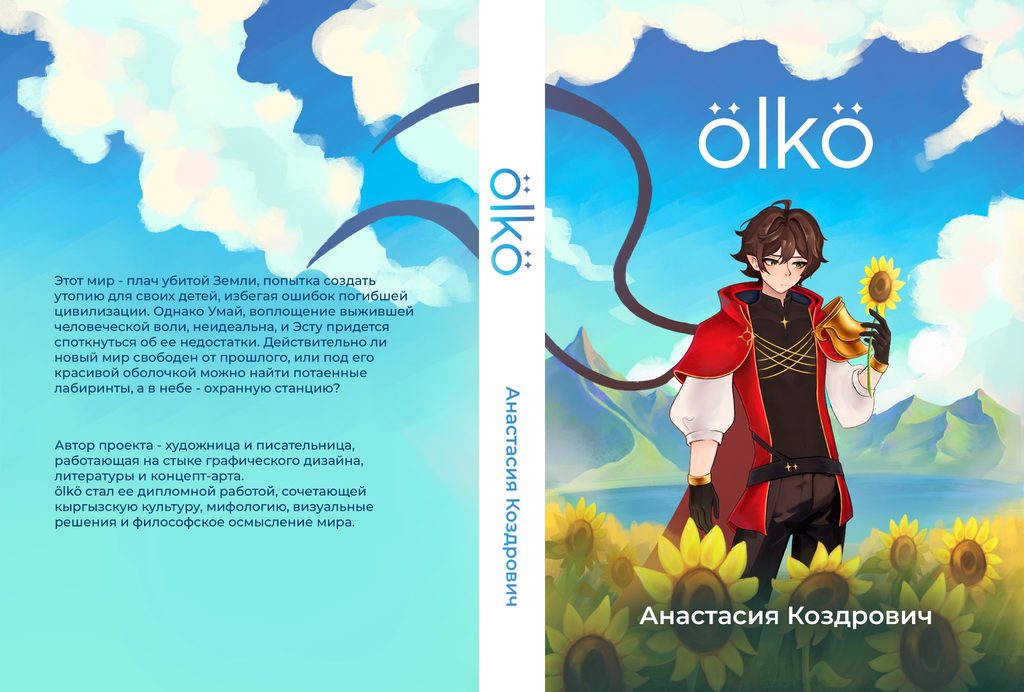
Ethnically Russian-Kyrgyz and second-generation, born in Kyrgyzstan, Anastasiia doesn’t speak the Kyrgyz language, yet she considers the country her one and only home. When diving into ölkö, she spent months researching tumars, Turkic star symbols, and carpet patterns. What she discovered was a frustrating gap: unlike more “popular” visual cultures such as Japanese or Chinese, where references are endless, reliable guides on Kyrgyz ornaments are scattered and hard to verify.
Read more on Novastan: “A Person of Conscience Is Almost a Fairytale Character”: Chingiz Narynov on His Kyrgyz Thriller Mergen
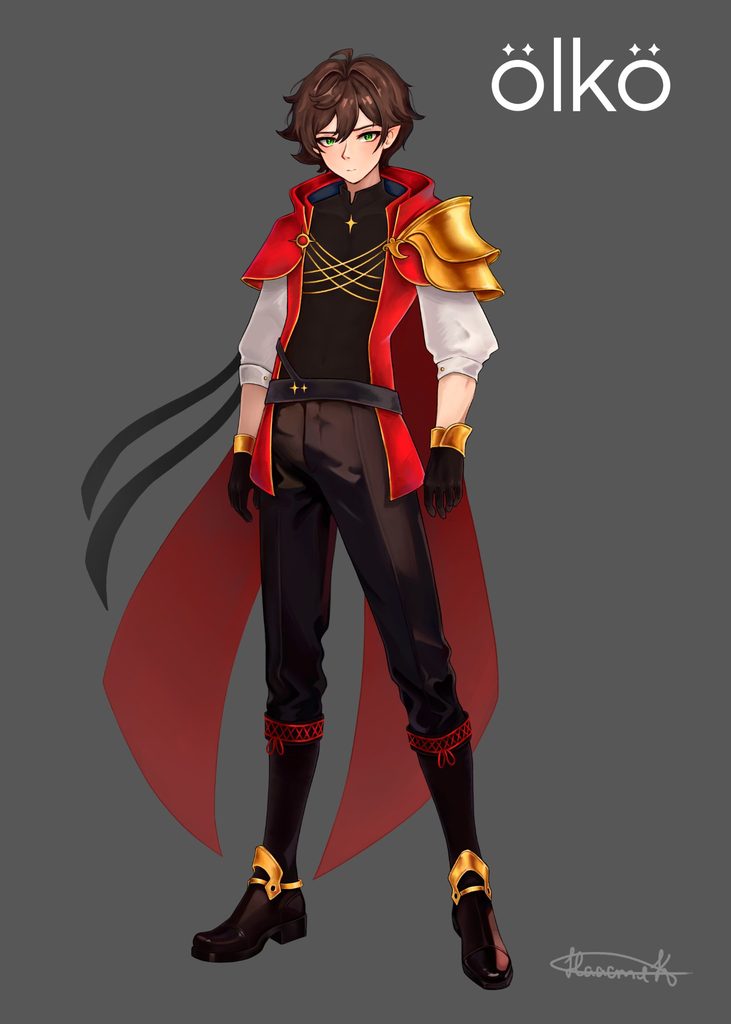
There is also real anxiety about getting it right. In a digital age where a single misstep can lead to public backlash for cultural insensitivity, Anastasiia double-checks every pattern carefully before posting. The Tengrist deities Umai and Tengri serve as two of the main characters in her fantasy world, reimagined as a wise mother and a steady father figure, respectively. It parallels her own parents, both doctors who fostered and inspired her love for drawing and storytelling. Meanwhile, her main character, a mythical elf named Est, has inspiration for his design from Aether from the video game Genshin Impact, while the emotional atmosphere of the story is fueled by the alternative metal band Sleep Token.
While her Kyrgyz-inspired pieces initially drew less engagement online compared to standard art from popular pieces of media, stepping offline changed everything. Silly Market –an independent Bishkek art fair for young creators and fandom communities– drew crowds around her table, buying prints from her art and asking questions. Seeing people’s eyes light up when traditional mythology met fantasy characters gave her the confidence she needed to keep going, proving that reinterpretation helps tradition stay alive over time.
Read more on Novastan: Beyond the postcard: An exhibition in Kyrgyzstan puts everyday life in the frame
Aziza Kanimetova
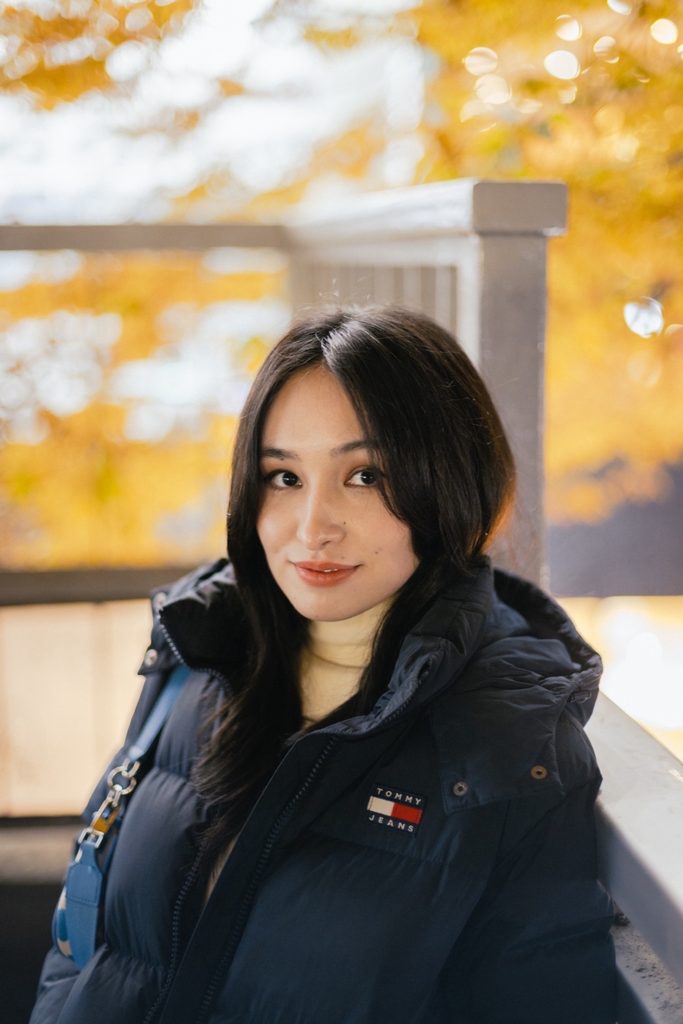
Bringing heritage and technology for 27-year-old designer Aziza Kanimetova meant taking a traditional Kyrgyz yurt all the way to a design laboratory located at Keio University in Tokyo.
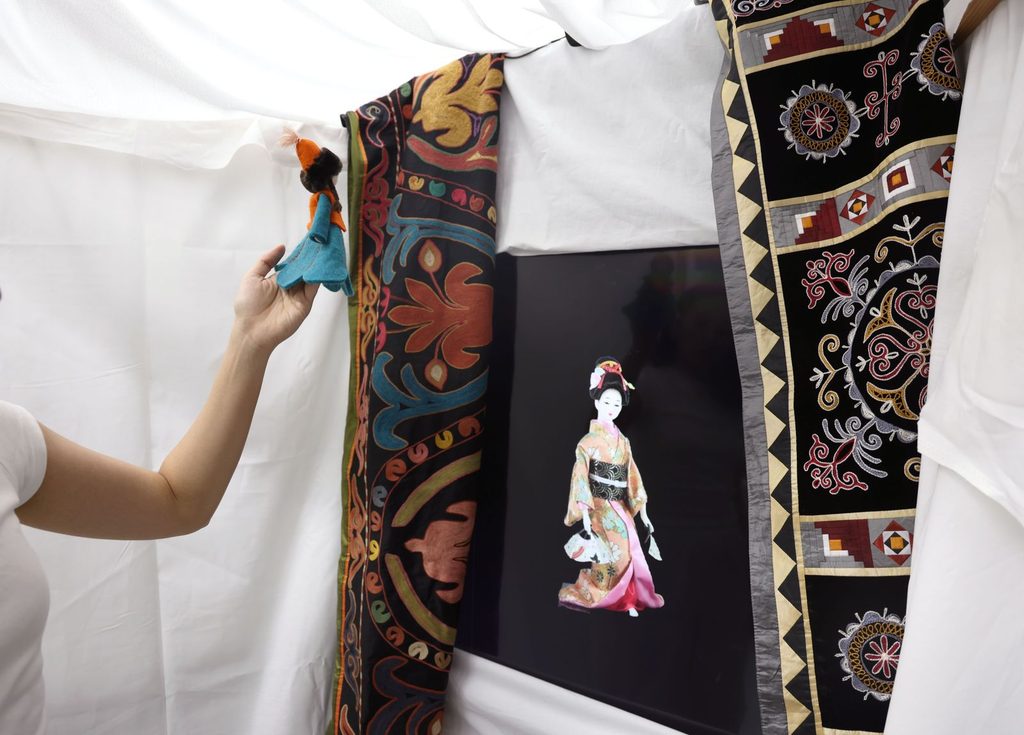
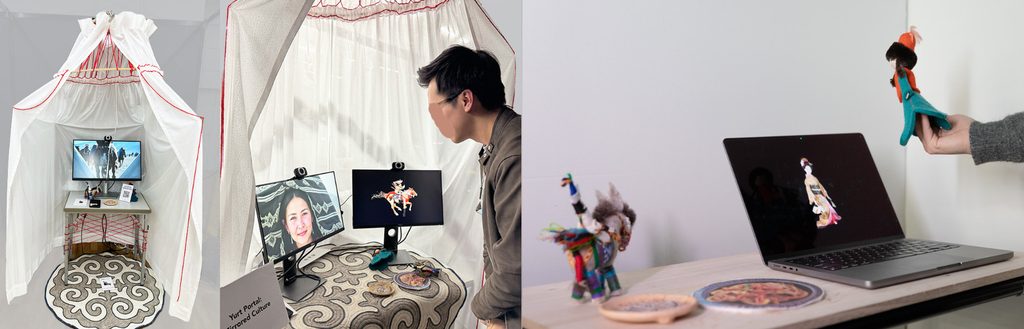
Aziza’s path from studying journalism and graphic design to winning a competitive government scholarship (on her second try) culminated in Mirrored Culture, an interactive master’s thesis installation. Her goal was simple: create a digital space where anyone could step into Kyrgyz culture without feeling like an outsider. She built an experience by featuring a “cultural twin” that personalized the installation for visitors and using Python, TouchDesigner, Unity, and generative AI.
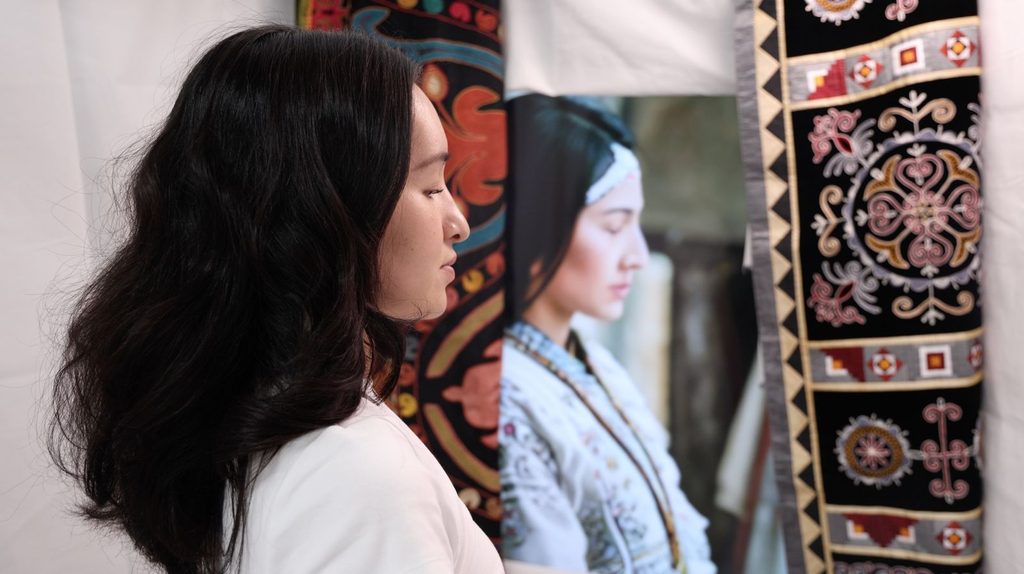
The technical obstacles soon emerged. They revealed a blind spot in modern technology: “AI did not know what an average Kyrgyz looks like.” Because Central Asians continue to be underrepresented in global training datasets, the algorithms repeatedly failed to generate accurate Kyrgyz faces until Aziza manually fed the system visual references of her own people.
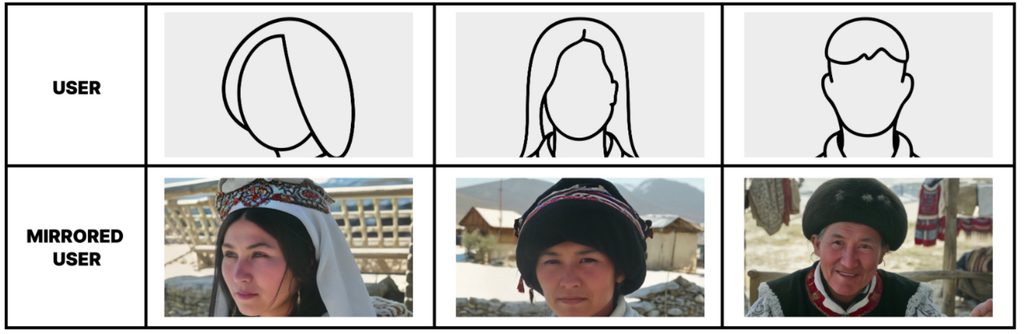
When the installation finally debuted in Tokyo, visitors lined up with childlike curiosity, with questions like: “Do you still live in a yurt? Is it spacious enough inside to fit everything?” It revealed just how little the outside world knows about the intricacies behind Kyrgyz culture. Even online, Aziza noticed that posting in English from Japan brought engagement and connections with global design leaders, whereas posting from Central Asia often had struggles to have algorithmic visibility. Aziza’s philosophy remains the same: “Only by combining our Kyrgyz culture, technology, and human touch will we prevail.”
Nurmat “Bob” Manaev : The Underground Storyteller
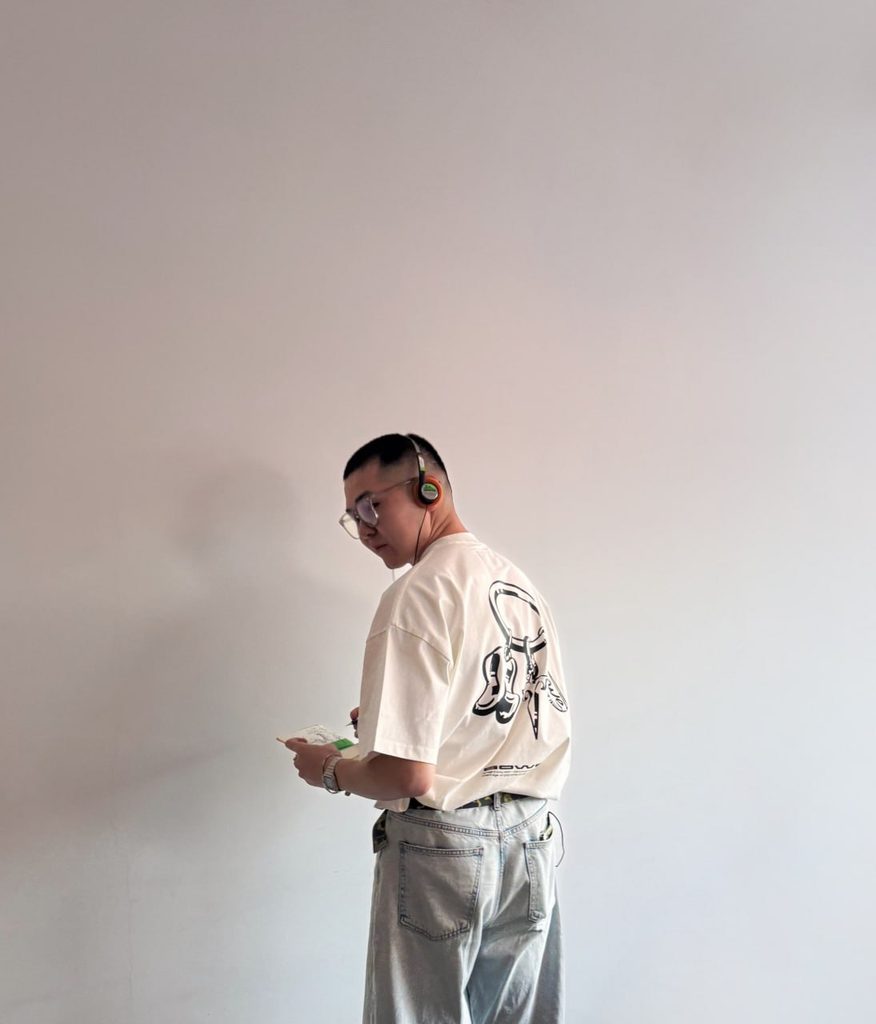
Traditional cultural institutions often focus on monumental epics such as Manas; at the same time, young male illustrators in Bishkek are shaping darker, more personal corners of the digital landscape.
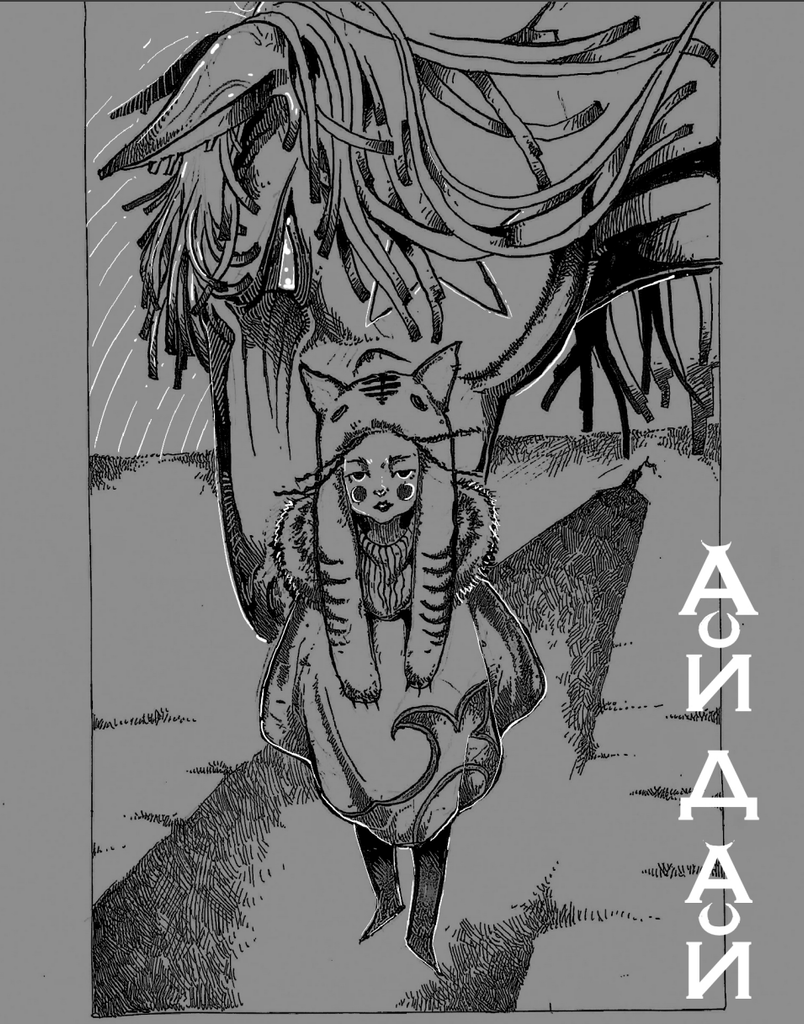
23-year-old Nurmat Manaev, working under the alias Bob to keep his digital persona separate from his offline life, dropped out of art academy to focus on real-world commissions. His main interests include post-apocalyptic and sci-fi aesthetics. Nurmat deliberately avoids mainstream epics he feels are overdone. His first major competition – the Saima Comics competition, a local contest hosted by the grassroots graphic literature community Micson Club- had him thinking about how to approach it, but one thing remained certain: he would skip famous heroes instantly. Instead, he turned to a lesser-known legend his grandmother used to tell him, fighting against a strict two-week deadline alongside his peers to produce Aidai, a fourteen-page comic project covered in dark, restrained emotion.
Syimyk Sultanov : The Chaotic Tactician
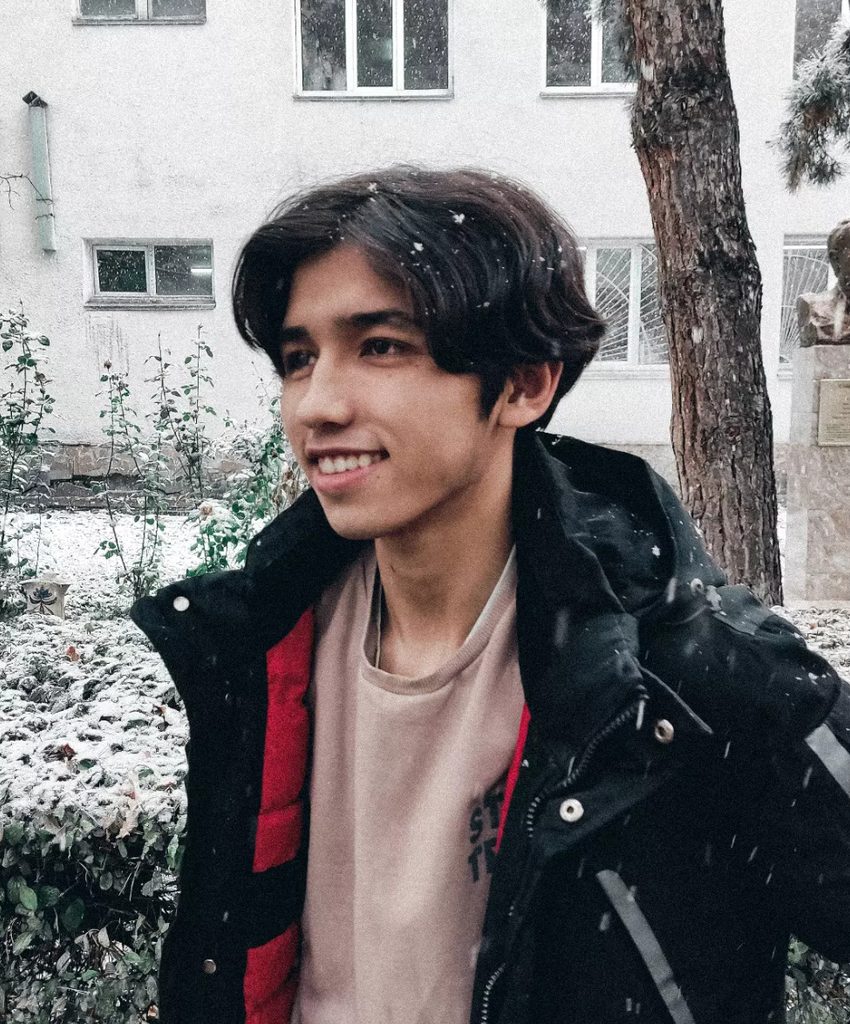
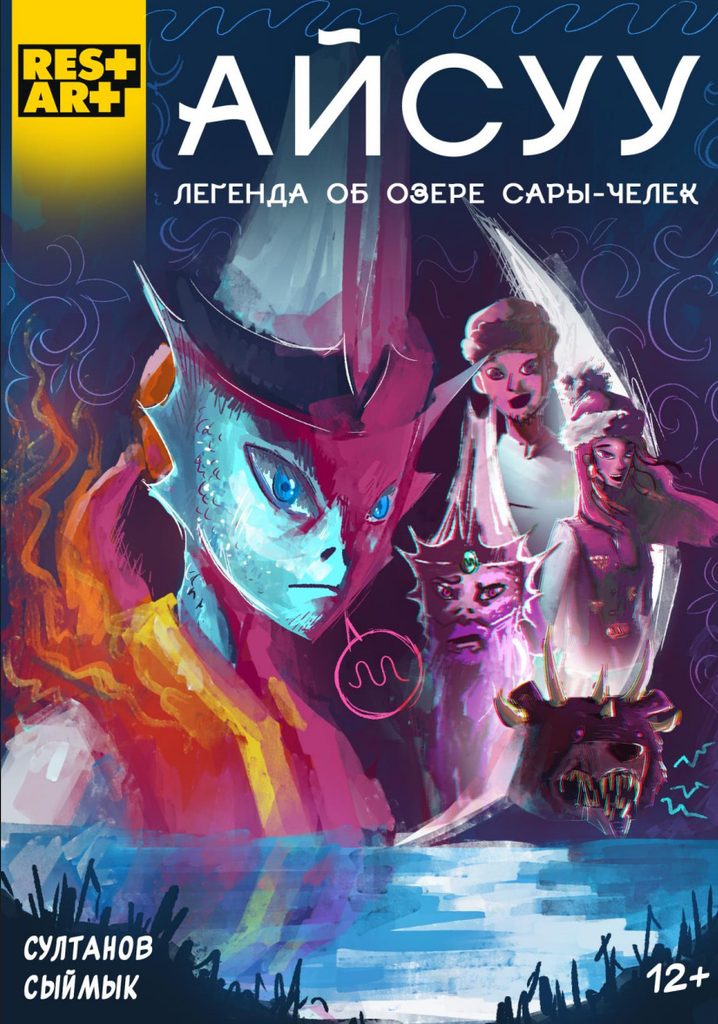
22-year-old Syimyk Sultanov, creator of Aisuu, brings classical training with raw digital expression. He was raised by a father who is an accomplished painter, so Syimyk developed a style that is chaotic yet coherent, blending rigorous anatomical foundation with contemporary comic storytelling to produce Aisuu, a reimagining of the legend of the Sary-Chelek lake where he is from. Syimyk represents how grassroots mentorship keeps the local scene growing from within by already being published by the prominent Kazakh studio Khan Comics and teaching young aspiring artists in Bishkek.
In global digital spaces dominated by Western visual standards, an easy way for Central Asian creators is to simply copy whatever trends globally. Instead, these artists are doing the opposite: they are taking local codes, grandmother’s legends, and ancient amulets to proudly say: “Our culture belongs in the future too”.
Kyrgyzstan’s digital generation is treating heritage just like their nomadic ancestors did – they packed up only what matters the most, adapted to a new terrain, and carried it forward without necessarily relying on institutional validation or formal funding.
By Darika Bolot.
Edited by Maya Ivanova and Mathieu Lemoine.