




 “A Person of Conscience Is Almost a Fairytale Character”: Chingiz Narynov on His Kyrgyz Thriller Mergen
Support Novastan, the European Central Asia magazine
By supporting Novastan, you are supporting the only English, French and German-language media specialising in Central Asia. We’re independent and we need your help to stay that way!Blending crime drama, psychological suspense and Kyrgyz mythology, Mergen explores corruption, environmental exploitation and the struggle for justice in contemporary Kyrgyzstan. Director Chingiz Narynov speaks to Novastan about the legends that inspired his film, the challenges of casting its characters, and why audiences at home and abroad have interpreted it differently.
Watch here the trailer of Mergen.
Kyrgyz cinema has increasingly attracted international attention, with filmmakers exploring contemporary social issues through a variety of cinematic forms. In Mergen, director Chingiz Narynov draws on the country’s rich mythological traditions to tell a dark story about corruption, greed, environmental destruction and the limits of individual morality.
Read more on Novastan: Through roads, markets and silence: Tolomush Zhanybekov films Kyrgyzstan’s unseen lives
Set in a fictional town, the film follows Nurtai, a police officer confronting a world where powerful interests often prevail over justice. Combining elements of a detective story and psychological thriller with references to Kyrgyz folklore, Mergen raises questions about humanity’s relationship with nature and the moral compromises imposed by an unequal society.
The film is featured in the programme of the 2026 Asian Film Festival Barcelona. Novastan Editor-in-Chief Mathieu Lemoine spoke with Narynov about the making of Mergen, the importance of local mythology, and his plans for future projects.
Read more on Novastan: New voices: Central Asian short films at the GoEast Festival 2024
Novastan: Mergen combines elements of crime drama, psychological thriller and Kyrgyz mythology, while presenting a rather dark vision of contemporary society. What inspired you to tell this story, and what message did you hope to convey?
Chingiz Narynov: The starting point was Kyrgyz mythology. One day, screenwriter Aikyz Gaparova and I were discussing the ancient legend of Karagul-Botom, particularly how relevant it remains today and how it resonates with contemporary problems in Kyrgyz society. That conversation gradually developed into the idea for the film.
Read more on Novastan: “Manastchy”: the Kyrgyz soul in all its poetry
At the same time, we wanted to tell a contemporary story, which led us towards genre cinema. The problems facing Kyrgyzstan largely shaped the film’s mood and atmosphere. Ultimately, ancient legends and present-day realities came together in Mergen.
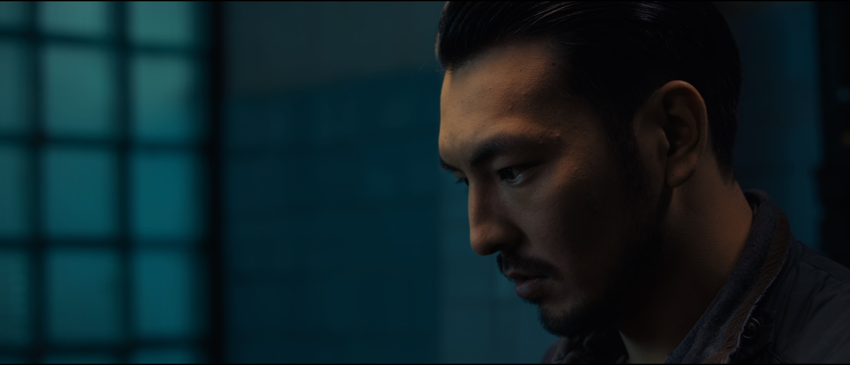
The characters are particularly convincing, and the casting is one of the film’s strengths. How did you select the actors playing Nurtai, Kerim and the young girl, Anara? Were any of these roles cinematic debuts?
The casting process was lengthy. We spent a long time looking for the right actor to play Nurtai, but when Omurbek Israilov came in, I immediately felt that we had found our protagonist.
Kerim was more complicated. We held more than eighteen auditions with different actors. Nazym Mendebairov was among our first candidates, but I wanted to move away from the familiar criminal roles that audiences associated with this well-known actor. After a long search, however, we returned to him. Ultimately, he was the most convincing person for the part.
Regina Talantbekova, who played Anara, had already had some acting experience, as far as I remember, but Mergen was her feature-film debut. I think she did a wonderful job.
Another remarkable debut was the role of Turdukul, played by Tilektesh Usenakunov, who had previously worked primarily as a stunt performer. The role of Jacob also has an interesting story behind it. He was played by Toon Cavens, a mathematics teacher at a private school in Bishkek, making his film debut in Mergen. I think he did a wonderful job.
Nurtai is a police officer trying to uphold justice in a world dominated by corruption, violence and powerful interests. He seems torn between his professional duty, his conscience and a system he can do little to change. How did you develop this character, and what did you want to say through him about justice and personal responsibility?
In our circumstances, a police officer who acts strictly according to the law and his conscience can almost seem like a fairytale character.
That was precisely the painful issue I wanted to address: the feeling that a person with a conscience is doomed to fail within an imperfect, corrupt system, and that without some kind of intervention from above, they cannot achieve anything.
I think the nihilism that is widespread in our society is largely connected to the gap between how things ought to work and how they actually function.
For someone with an idealistic view of the world, that discrepancy can create a profound internal fracture. Through Nurtai, I wanted to convey this contradiction.
Gold mining, poverty and human greed play important roles in Mergen. In Kyrgyzstan, longstanding controversies surrounding the Kumtor gold mine have raised questions about environmental damage, control over natural resources and the distribution of mining revenues. Did these debates influence your film? How closely does the social inequality portrayed in Mergen reflect contemporary Kyrgyz realities?
It wasn’t only Kumtor that influenced us. Kyrgyzstan has experienced numerous conflicts surrounding mineral extraction.
The tension between the desire to make money and the desire to protect nature and natural resources keeps resurfacing in public debate. Naturally, all of this found its way into our creative thinking.
I see the film as a kind of crystal in which the internal problems of our society and the atmosphere surrounding us have come together.
We wanted to talk about ourselves, about the things we know and the things that hurt us. That is how the film took shape.
Kyrgyz mythology is central to the film. Mergen draws on the legend of Kozhozhash, a hunter who violates the laws of nature, but you also mentioned Karagul-Botom as an important inspiration. The film additionally references Umai-Ene, a female mythological figure associated with motherhood and nature. How did you bring these different traditions together, and what relevance do they have for contemporary Kyrgyz society?
We drew inspiration from a whole range of Kyrgyz epics and legends.
We took a key plot twist from Karagul-Botom. Kozhozhash was also important: it is the story of a hunter who violates the laws of nature and a tale about human greed.
For us, one of its most significant messages is that you should never take more than you need.
Umai-Ene is a goddess from Tengrism who embodies motherhood and femininity, as well as the connection with the earth and nature.
I consider these images and stories highly relevant today. Otherwise, I would not have turned to them.
With every passing year, Kyrgyz folklore and our culture become increasingly interesting to me.
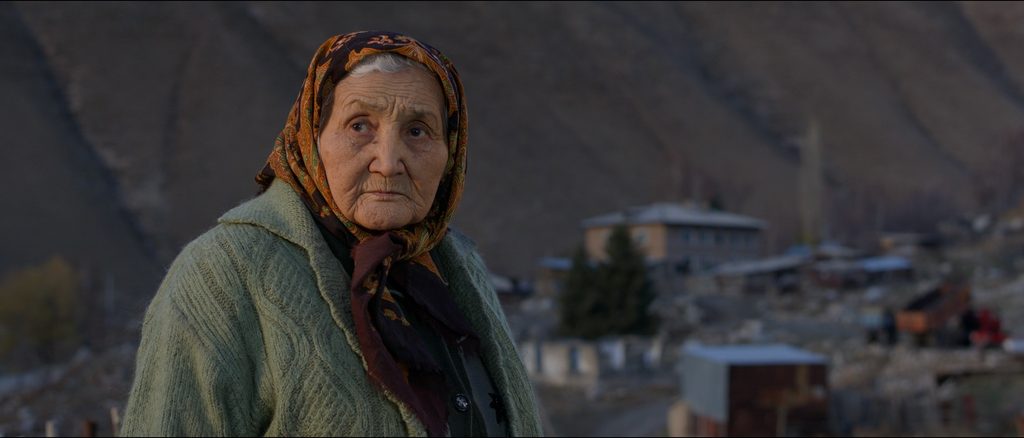
Spoiler warning: The following question discusses the film’s ending.
The ending of Mergen is particularly intriguing and open to interpretation. Does Nurtai actually manage to return to the past and save the girl, or are we seeing his imagined version of how events might have unfolded? Why did you decide to leave the ending ambiguous?
We always intended to have an open ending, allowing viewers to experience what happened for themselves and draw their own conclusions.
I have my own interpretation: Nurtai really did manage to return to the past, influence events and change everything.
But I don’t want to impose that interpretation on the audience. I deliberately leave viewers free to decide for themselves.
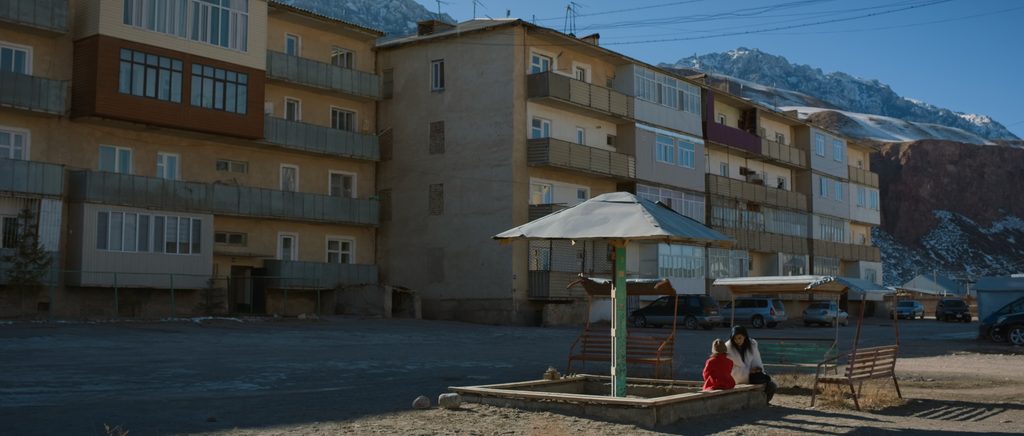
The natural landscapes and filming locations contribute enormously to the film’s atmosphere. I noticed that the closing credits mention Balykchy and Kadzhi-Sai in the Issyk-Kul Region. Kadzhi-Sai, in particular, is known for its Soviet-era uranium mining and industrial heritage. Where was Mergen filmed, and how did these locations influence the film’s visual identity?
We shot most of the film in a small settlement called Ak-Tyuz. We also filmed in Kadzhi-Sai, Balykchy and Naryn.
When choosing locations, we looked for places that felt organic to our story and conveyed the atmosphere we needed.
By bringing together different locations, we created the fictional town of Mergen.
I think we managed to achieve what I had envisioned. The town turned out exactly as I wanted it to look.
Finally, how have audiences in Kyrgyzstan responded to Mergen, particularly its portrayal of corruption, poverty and environmental exploitation? Has the reaction differed internationally? And are you currently working on any new films?
The reactions of international and local audiences have been noticeably different.
For international viewers, it is primarily a genre film, somewhere between a detective story and a thriller: a mystery they want to solve, a puzzle whose pieces gradually fall into place.
In Kyrgyzstan, audiences picked up on the social issues much more deeply. Corruption and environmental problems need no additional explanation here because we encounter them every day.
After local screenings, we had some fascinating discussions. People asked questions and thanked us for the film. It was during these conversations that I particularly felt how relevant the story was to our society.
After Mergen, I wanted to take a little break from directing and writing.
I’m currently working on several projects as a producer. We have both a fiction film and a documentary in development, some of which are being produced in collaboration with Kyrgyzfilm. I’m also involved as a producer in several animation projects.
I’m gradually preparing for my next personal project, but I don’t think I’ll begin working on it for at least another year. We’ll see!
This interview was conducted in Russian and translated into English by Novastan. It has been edited for clarity and length.
By Mathieu Lemoine, Editor-in-Chief for Novastan English.