
 ‘I am a German from Kazakhstan’: Lena Wolf on deportation, memory and finding home
Support Novastan, the European Central Asia magazine
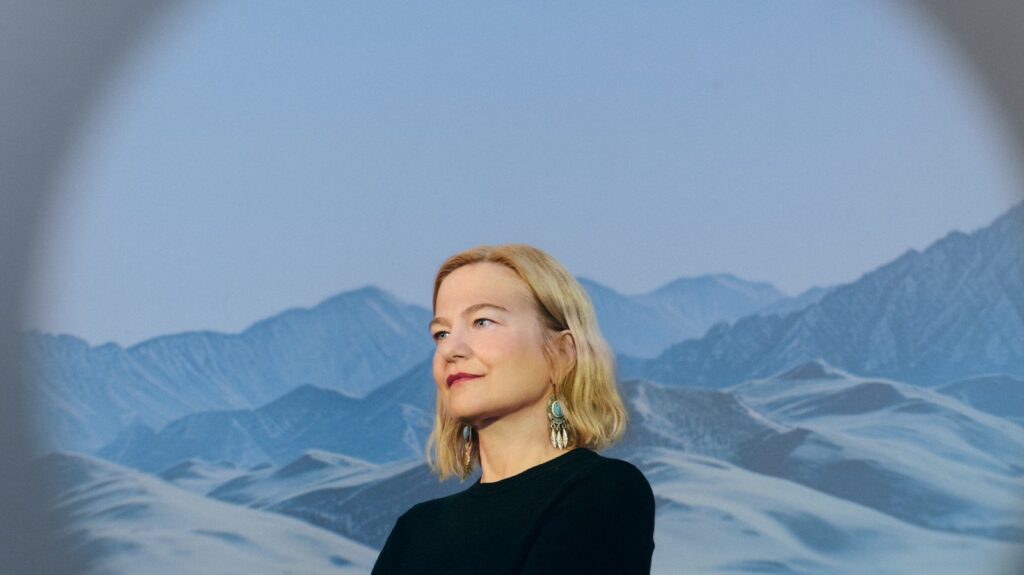
By supporting Novastan, you are supporting the only English, French and German-language media specialising in Central Asia. We’re independent and we need your help to stay that way!Born in Latvia and raised in Kazakhstan, Lena Wolf grew up with fragments of a history that Soviet society rarely discussed openly. In her graphic memoir, she retraces the deportation of her German family to Kazakhstan, their struggle to preserve language and identity, and her own journey from Aktobe to Germany.
For our readers in Kazakhstan, Kyrgyzstan and Uzbekistan:
Lena Wolf’s e-book is now available at reduced regional prices on Google Play Books in Kazakhstan, Kyrgyzstan and Uzbekistan.
Available in English and Russian.
For much of her childhood, Lena Wolf believed that all Germans came from Kazakhstan.
Aktobe was home. Her grandmother cooked German dishes alongside baursaki and manti, organised clandestine religious gatherings and spoke German to her grandchildren, even when they answered her in Russian. Around them lived families whose own histories had been shaped by deportation, repression and displacement.
Yet Wolf also learned early that being German could set her apart.
“I don’t think I really understood what being German meant to other people until I was called a fascist for the first time,” she recalls. “I was probably about six.”
Decades later, Wolf began piecing together the family history that had reached her in fragments behind closed doors. The result was a graphic memoir illustrated by Christoph Heuer, tracing almost two centuries of migration, persecution and repeated attempts to build a home.
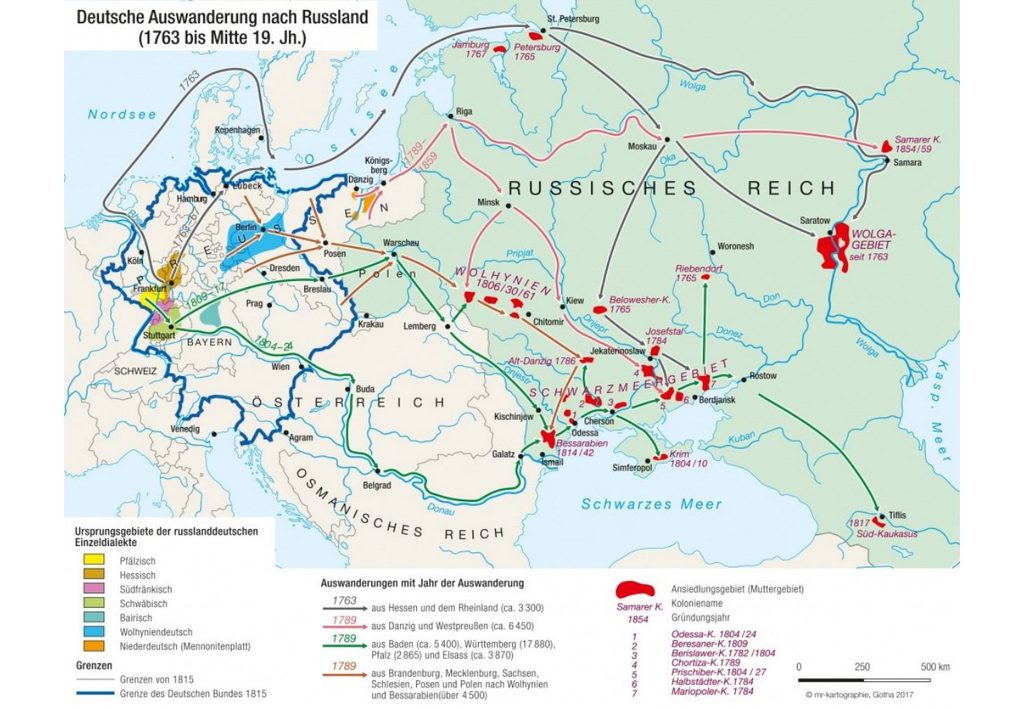
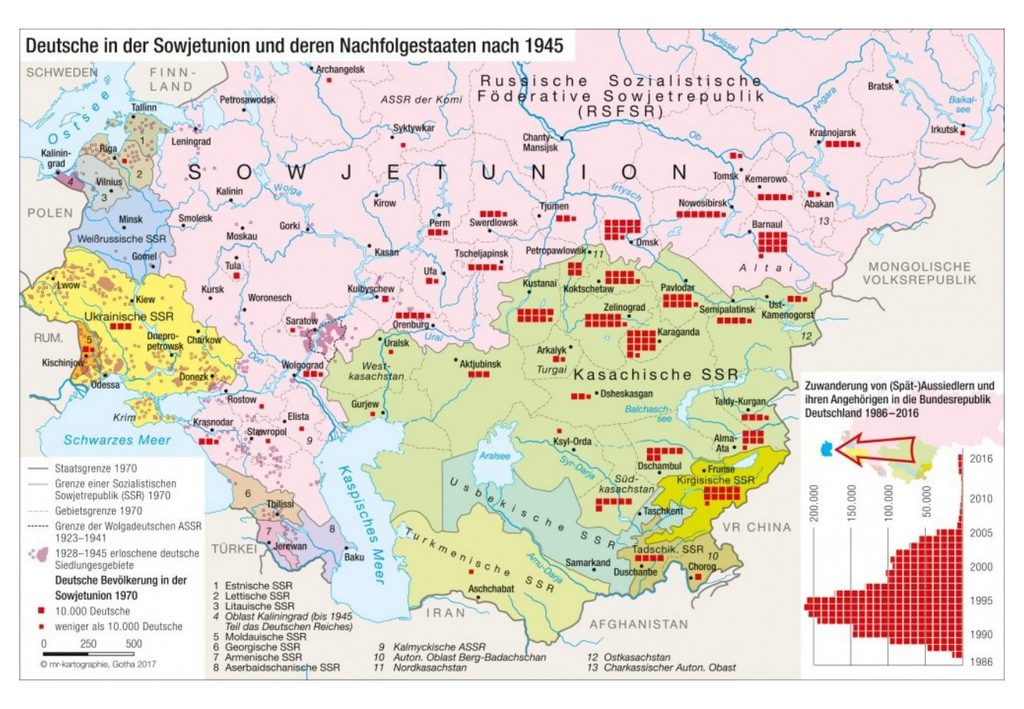
Her grandmother Emilia was 25 when she was deported to Kazakhstan in 1941 with two young children. Like many Soviet Germans, the family initially believed the displacement might be temporary.
“They left behind their houses, land, animals – everything – still hoping they would return,” Wolf says.
They never did.
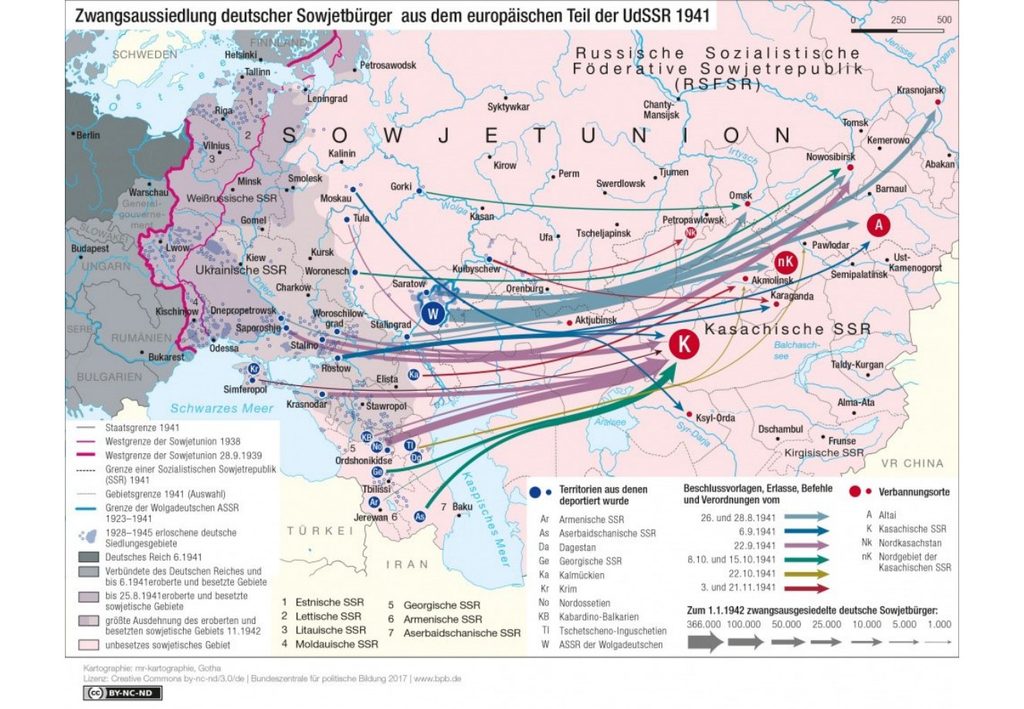
Even after Stalin-era special-settlement restrictions were lifted in 1955, Soviet Germans were not allowed to return to the areas from which they had been deported. Emilia eventually built a new life in Aktobe.
“Kazakhstan did become home for her, partly because she knew she could never return to her village in Ukraine,” Wolf says. “She found her people there and had her family around her.”
The contradiction would become central to Wolf’s understanding of her family history: Kazakhstan was both a place of forced exile and the country in which several generations of the family made their lives.
“Somewhere along the way, she too became a German from Kazakhstan.”
Growing up German in Soviet Kazakhstan
For Wolf herself, Kazakhstan carried no such ambiguity during childhood.
“For me, Kazakhstan was simply home. I didn’t know anything else,” she says. “In fact, when I was very little, I thought all Germans came from Kazakhstan.”
Read more on Novastan: Beyond any borders: a new multicultural generation in Kazakhstan
Her family’s German identity nevertheless remained clearly marked in Soviet society.
Official documents continued to identify Soviet Germans as nemets or nemka, even as German-language education, religious life and much of the community’s institutional culture had been suppressed.
“You were expected to stop being German, but you were never allowed to forget that you were German,” Wolf says.
In her family, survival meant avoiding attention. Her father’s advice was encapsulated in the Russian expression тише воды, ниже травы – “quieter than water, lower than grass.”
“Don’t attract attention. Don’t stand out. That was how you survived.”
Wolf remembers the word “German” being routinely associated with “fascist”, decades after the Second World War. Soviet Germans’ own experience of deportation and repression was largely absent from the history taught in schools.
“When you don’t know the history, you fill the gaps with your own explanations,” she says. “So people assumed that because we had been deported, we must have been guilty. The deportation itself became proof of our guilt.”
As a child, she even changed her surname when helping an elderly Soviet woman whose husband and son had died during the war.
“I invented another name for myself: Volkova instead of Wolf.”
The Russian name, she says, became a form of protection.
When Russian became the common language
Language is another thread running through Wolf’s memoir.
Her grandmother spoke German to her; Wolf usually answered in Russian. She later recognised almost exactly the same pattern among Kazakh families: grandparents speaking Kazakh while younger generations responded in Russian.
“When that happens, it isn’t only language that gets lost,” Wolf says. “Stories, traditions and knowledge can no longer be passed on in the same way.”
She remembers receiving some Kazakh-language teaching at school but says it was far too limited for children to become proficient.
Russian, meanwhile, dominated education, television and popular culture.
“You didn’t necessarily have to force children to speak Russian,” she says. “Education, television, culture and opportunities were in Russian, while Kazakh was often seen as old-fashioned or backward. Of course children were going to choose Russian.”
Read more on Novastan: The Lexicon of Kazakh Decolonisation
Looking back, she says she is glad to see the Kazakh language gaining greater prominence today.
A garden as survival – and as home
One image reappears throughout Wolf’s family history: the garden.
Her ancestors had originally migrated eastward to work the land. After deportation, a garden helped her grandmother and a neighbour survive wartime shortages. Decades later, during Wolf’s own childhood in Kazakhstan, home-grown food helped sustain the family when Soviet shops were empty.
But the garden came to represent more than food.
Wolf recounts the story of her father, whose mother was sentenced to the Gulag after attempting to leave the deportation zone and return to Ukraine. He was sent to an orphanage in Zaporizhzhia shortly after the war.
One teacher once invited him to her home for dinner. While she cooked, he played in the garden with her son.
“He remembers standing there among the flowers and plants and realising, for the first time, that the world was beautiful,” Wolf says.
The memory remained with him throughout his life.
Now 91, he can no longer maintain a large garden but still cares for flowers on his balcony in Offenbach, Germany.
“Perhaps that is what a garden means in our family,” Wolf says. “It feeds you when there is nothing to eat, but it also gives you beauty when there isn’t much beauty around you. And wherever you end up, you can plant something and make that place your own.”
A ‘return’ to a country they did not know
In 1989, Wolf and her family left Kazakhstan for Germany.
Officially, such migration was often presented as a return to an ancestral homeland. In practice, Wolf discovered that Germany was another unfamiliar country.
“What surprised me most was that in Germany I wasn’t seen as German,” she says.
“After everything our families had gone through in the Soviet Union because they were German – persecution, discrimination and sometimes literally fighting for survival – we arrived in Germany and suddenly we were foreigners.”
At 17, Wolf initially tried to assimilate as completely as possible. She stopped speaking Russian, avoided food associated with her Soviet childhood and even began using the name Helene.
Inside the family home, however, the opposite transformation was taking place.
“In Kazakhstan my parents had tried to preserve what was German,” she recalls. “In Germany, suddenly they started cooking the food they missed from Kazakhstan – plov, beshbarmak, baursaki.”
Read more on Novastan: Between integration and inheritance: How Armenians in Uzbekistan are redefining community
Wolf eventually realised that Kazakhstan could not simply be removed from her identity.
“I am a German from Kazakhstan.”
It is a formulation she prefers to the widely used German term Russlanddeutsche, or “Russian Germans”.
Wolf points out that neither she nor her parents lived in Russia. Her family had lived in Ukraine before deportation to Kazakhstan, while earlier generations had been Germans of the Russian Empire.
“The term also hides how diverse these German communities actually were,” she says. Germans deported to Kazakhstan came from Ukraine, the Volga region, Crimea, the Caucasus and elsewhere.
“For myself, I simply say: I am a German from Kazakhstan.”
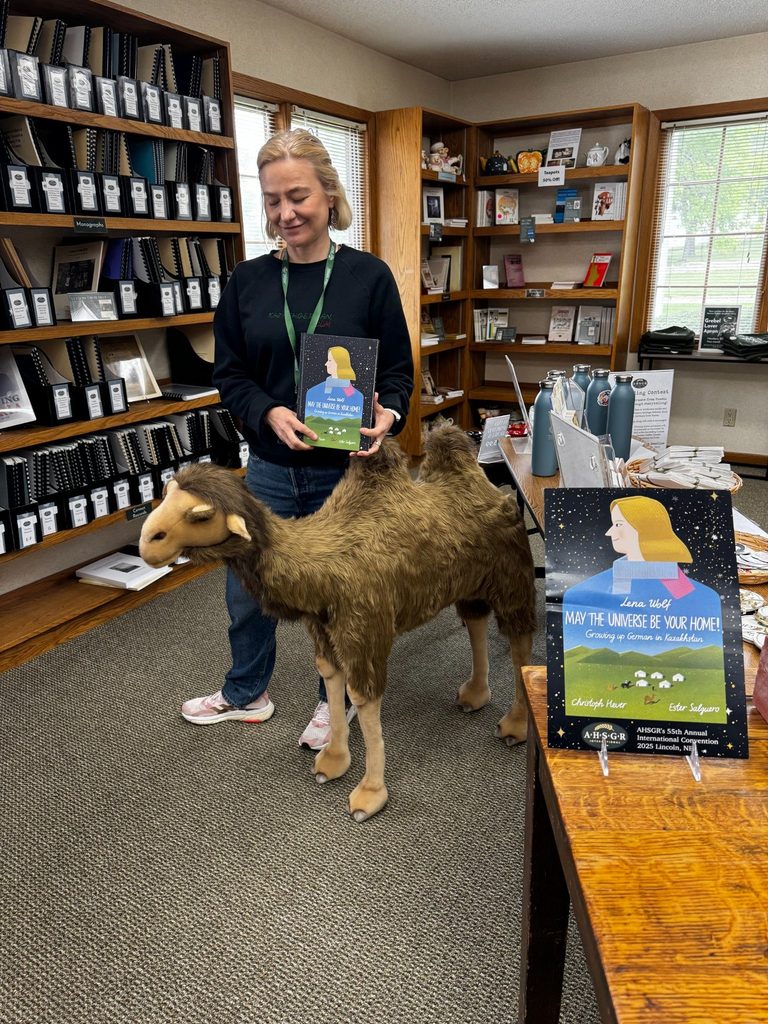
Turning fragments into a history
Wolf’s decision to tell the story as a graphic memoir was partly motivated by younger generations of her own family.
Her nieces and nephews had grown up in Germany knowing little about the experiences of their grandparents and great-grandparents. She wanted to make the history accessible without reducing its complexity.

Works such as Maus and Persepolis showed her that graphic narrative could make difficult histories accessible across generations.
Some experiences, she says, were also easier to communicate visually.
“I could describe in a few sentences how people were transported for weeks in overcrowded trains, cold and hungry, and how people died along the way. But I wanted readers to see their faces, the exhaustion, the desperation and the conditions in which they were deported.”
Illustrator Christoph Heuer eventually drew more than 1,200 panels by hand, reconstructing historical environments from photographs and other archival material.
For Wolf, the research also transformed her understanding of the stories her grandmother had told her.
As a child, she had regarded them almost as dangerous family secrets: accounts of famine, deportation and death that contradicted what was being taught publicly.
“Who do you believe – your grandmother or your country and your teachers?” Wolf asks. “That’s quite a big decision for a child to make.”
Researching the memoir made her realise not only how much her grandmother had told her, but how much she had withheld in an attempt to protect her.
It also changed Wolf’s understanding of resistance.
Her grandmother’s defiance was not dramatic. It meant continuing to practise religion in secret, speaking German to her grandchildren, preparing traditional food and preserving family memories despite decades of pressure to assimilate.
“Her resistance wasn’t loud,” Wolf says. “It was quiet and persistent.”
Writing the book ultimately turned inherited fragments into a coherent family history.
“I think I had to write this book to understand who I am,” she says.
The answer to the question that once troubled her – “Where are you from?” – now comes easily.
“My answer is very simple: I am a German from Kazakhstan. And now I know what came before me.”
By Mathieu Lemoine, Editor-in-Chief for Novastan English.

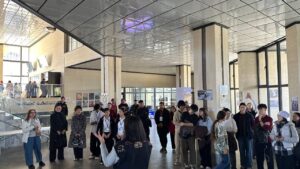
Lena Helene Wolf, 2026-10-8
I find this history of Germans from Kazakhstan highly interesting and I hope other readers will find it too.
Reply