




 “Heritage is something alive”: Ganzorig Miimaa reimagines Mongolia through photography
Support Novastan, the European Central Asia magazine
By supporting Novastan, you are supporting the only English, French and German-language media specialising in Central Asia. We’re independent and we need your help to stay that way!From horse archers and traditional dress to carefully staged portraits, Mongolian photographer Ganzorig Miimaa draws on the country’s nomadic heritage to create a contemporary visual language. The 500px Photographer of the Year 2025 speaks to Novastan about looking at Mongolia differently, the new generation transforming tradition, and why a childhood question about Mortal Kombat still shapes his work.
Mongolian photographer Ganzorig Miimaa spent the early years of his career looking outward.
Like many young photographers, he drew inspiration from images circulating internationally. He wanted the Mongolian people he photographed to appear “international, modern, fashionable, or classical”. Gradually, however, he began to realise that some of his strongest subjects were already around him: Mongolia’s nomadic life, history, people and cultural heritage.
Read more on Novastan: “Mongolia cannot be understood through one lens”: Dr. Mendee Jargalsaikhan on democracy, China and Central Asia
The shift has come to define his photography.
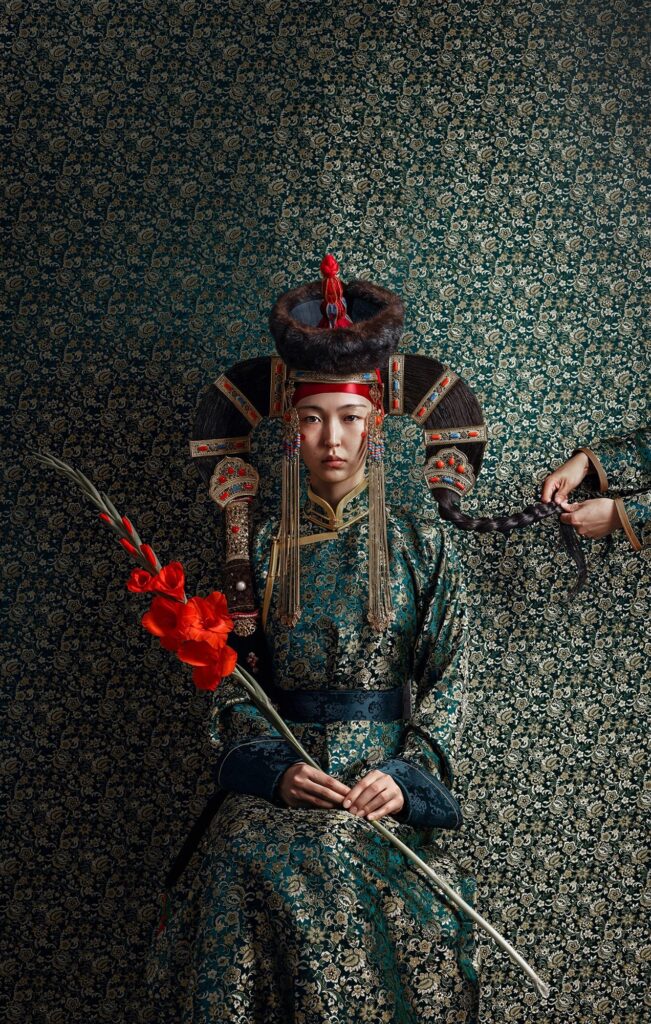
Based in Ulaanbaatar and with more than fifteen years of professional experience, Ganzorig works across portrait, documentary, commercial and staged photography. In 2025, he was named Photographer of the Year at the 500px Global Photography Awards. His portrait Queen, inspired by the elaborate hairstyles worn by Mongolian women historically, also received the competition’s Judges’ Choice award in the Portrait category. In 2026, his Ornamented Identity took second place in the professional division of the reFocus Black & White Photo Contest.
Yet Ganzorig’s work is not primarily an exercise in documenting disappearing traditions. His photographs often reconstruct them. Historical clothing, horses, archery, hunting practices and other elements of Mongolia’s visual heritage are placed within carefully controlled compositions, where lighting, colour, pose and environment become as important as the subjects themselves.
It is an approach that reflects something he sees happening more widely in contemporary Mongolia. A younger generation of artists, he argues, is increasingly treating cultural heritage not simply as something inherited and protected, but as material from which something new can be created.
Novastan English Editor-in-Chief Mathieu Lemoine spoke with Ganzorig Miimaa about photography, cultural identity and what it means to make Mongolia visible to the outside world.
Novastan: Your recent work often explores Mongolian identity, heritage and the relationship between tradition and contemporary life. What does “Mongolian identity” mean to you visually, and how has your understanding of it changed through photography?
Ganzorig Miimaa: It is difficult for me to define exactly what makes Mongolian identity unique, because I have not studied other cultures deeply enough to make that kind of comparison. But I do believe that Mongolia’s vast history, and the nomadic way of life that continues to this day, are something very special.
When I first started photography, I tried to make images similar to the ones I saw on international photography platforms. I wanted to make Mongolian people look more international, modern, fashionable, or classical.
Read more on Novastan: Central Asia through the lens of… Behzod Boltayev
Over time, I began to realise that rather than following what everyone else was doing, it was more important to find and bring out things around me that others had not yet noticed or seen.
Mongolia’s history, nomadic life, people and cultural heritage gradually became some of the closest and strongest sources of visual inspiration for me.
When you photograph subjects that outsiders strongly associate with Mongolia – horses, eagle hunters, traditional dress, the steppe – what do you look for that makes the image feel personal rather than expected?
Because my background is in advertising photography, I pay a great deal of attention not only to the idea or content of an image, but also to its visual and aesthetic qualities.
I would probably divide this kind of work into two categories.
The first consists of photographs I make while researching a subject, meeting people and travelling – images that come from real situations and events as they happen.
Read more on Novastan: Central Asia through the lens of… Kamila Rustambekova
The second consists of fully staged photographs, where I already have an image in my mind of how I want something to look. With these photographs, I work much more deliberately with lighting, colour, composition, environment and the positioning of the subject, and I try to introduce a degree of artistic interpretation and abstraction.
So when I photograph subjects that are already strongly associated with Mongolia, it is less about trying to find a completely different subject and more about finding a way to show it through my own visual language.
What usually comes first for you when making a photograph: a face, a gesture, a landscape, a colour, a story or an idea?
Ideas can come from many different things, and very often they eventually intersect.
For example, I might see someone and think, “I would really like to photograph this person.” Then, sometime later, I might witness an event and suddenly think, “This could be an interesting way to photograph that person.” Later still, I might see a location or an object and think, “This would be the right place for it.”
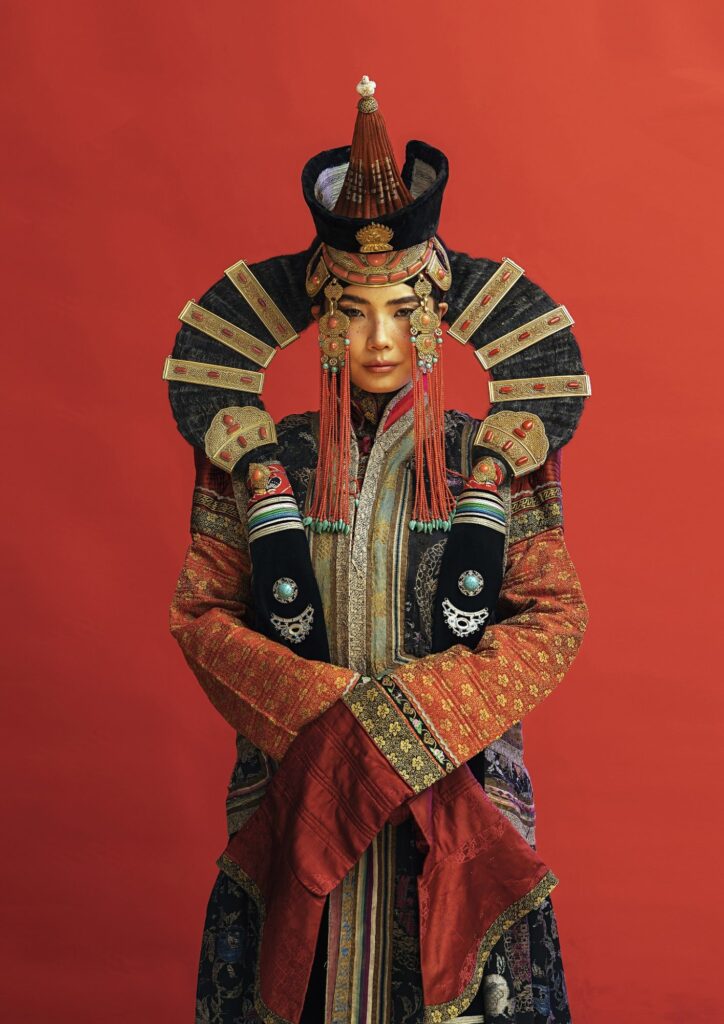
Things that originally had no connection to one another gradually come together in a single photograph.
But there is no fixed order. Sometimes the location comes first, sometimes the person, sometimes a story, or simply an image that appears in my mind. For me, a photograph often develops through connections between things I have noticed at completely different times.
In projects such as Ornamented Identity, you work with carefully constructed portraits and visual symbolism. How do you decide when to stage an image and when to work more observationally or documentarily?
Honestly, there is not a particularly deep philosophy behind that decision. If it were possible, I would probably stage almost all of my photographs and control every element of the image myself.
But in reality, sometimes the most practical option is to photograph something while it is actually happening. Recreating an event later might require coordinating the schedules of many people, as well as arranging costumes, horses, locations, transportation and many other things. The cost of the shoot can also increase very quickly.
So some of my observational or documentary photographs are not necessarily the result of a deliberate artistic principle. Sometimes they are simply about making the best use of the opportunity that exists at that moment.
When circumstances allow, I prefer to plan an image carefully and construct it.
Where in Mongolia do you personally find the strongest artistic inspiration? Are there particular regions, landscapes or communities that continue to draw you back?
One of the places that gives me the most inspiration and material for research is the Nomads Festival.
Cultural heritage practitioners from Mongolia’s 21 provinces gather in one place and present their ways of life, customs, crafts, clothing, traditional knowledge and skills out on the open steppe.
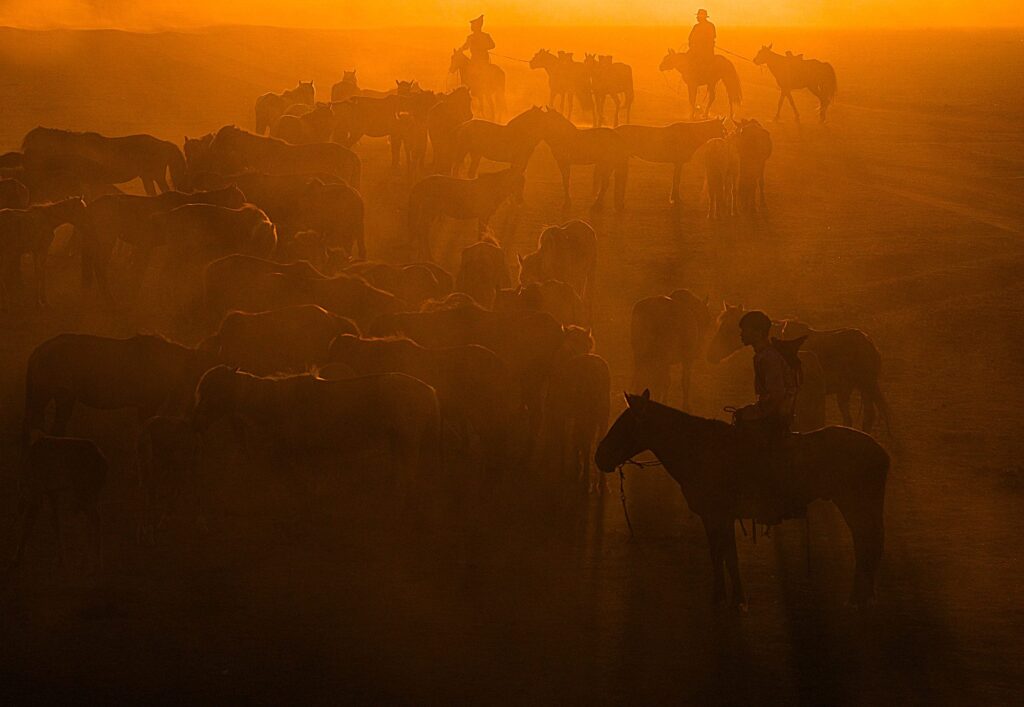
For me, it is an opportunity to encounter an enormous amount of information about the cultures of different regions of Mongolia in a very short period of time.
I might notice a person’s appearance, a small detail of clothing, an object, a custom or a particular skill, and that can lead me towards a new subject that I later research in much greater depth.
So for me, the festival is not only a place to make photographs; it is also a major source of research and ideas for future work.
If someone were visiting Mongolia for the first time and wanted to understand the country beyond the usual tourist itinerary, what would you tell them to do?
I have travelled abroad both with tour companies and independently.
With a tour company, you generally see a prepared itinerary and the things they have chosen to show you. Travelling independently gives you more freedom, but sometimes you have no idea where things are, what you should see, or even what you should and should not do.
So the next time I visit somewhere new, if possible, I would rather get to know a local photographer with similar interests and visit them. A local person sees the place where they live very differently from someone following a tourist itinerary.
In the same way, rather than giving a first-time visitor to Mongolia a list of famous places, I would suggest visiting a herder family and, if possible, spending some time with them and observing their everyday life.
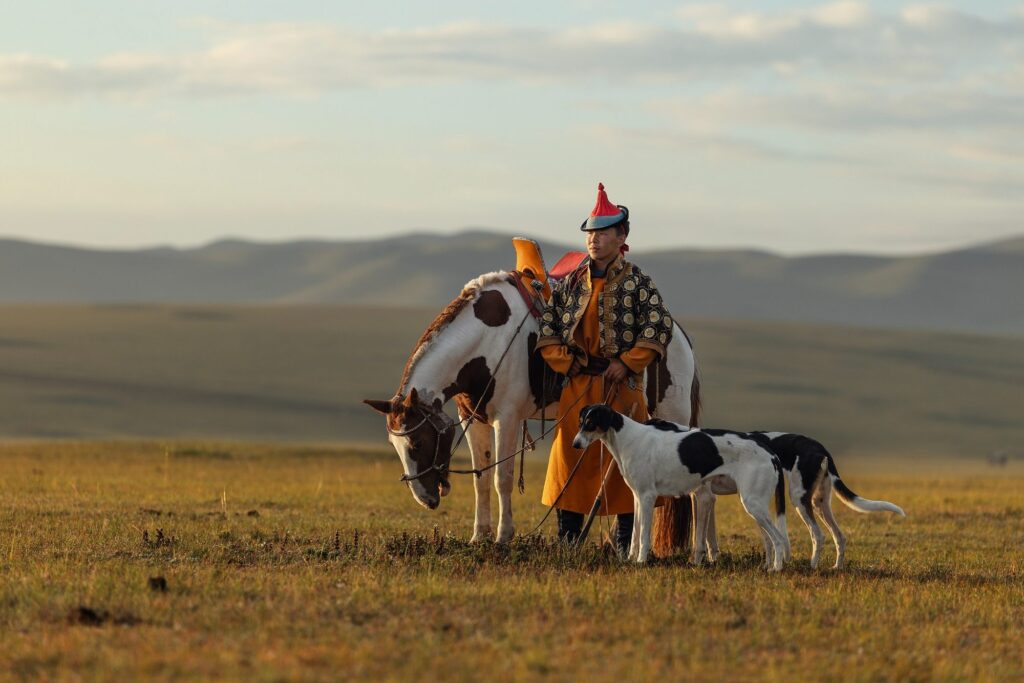
I think getting even a little closer to how people actually live can tell you more about a country than simply visiting a list of places you are supposed to see.
What excites you most in Mongolia’s cultural scene today? Are there photographers, filmmakers, musicians, designers, writers or other artists whose work you think international audiences should know?
What I find exciting is seeing a younger generation of Mongolian artists learning from global culture and artistic practices, but instead of simply imitating them, translating their own heritage and sensibilities into forms that can reach the rest of the world.
One of the clearest examples for me is The HU. They have managed to translate elements of their own cultural heritage and sensibility through the language of contemporary global music and bring it to an enormous international audience.
There are interesting artists working in many different fields in Mongolia, but the list would become very long, so I would rather mention a few people from photography, which is the field I know best.
In nature photography, I would mention Erdenebulgan and Batsukh. In documentary photography, Davaanyam Delgerjargal and Injinaash Bor. And in fine art photography, Suniko B.
I would be very happy to see their work reach wider international audiences.
Do you see younger Mongolian artists engaging with heritage differently from previous generations?
Very differently. I think you can see this particularly clearly in music videos being made in Mongolia today.
In the past, cultural heritage and tradition were often represented more directly. The younger generation, however, is increasingly combining these elements with contemporary music, fashion, photography and new visual languages, and reinterpreting them from their own perspective.
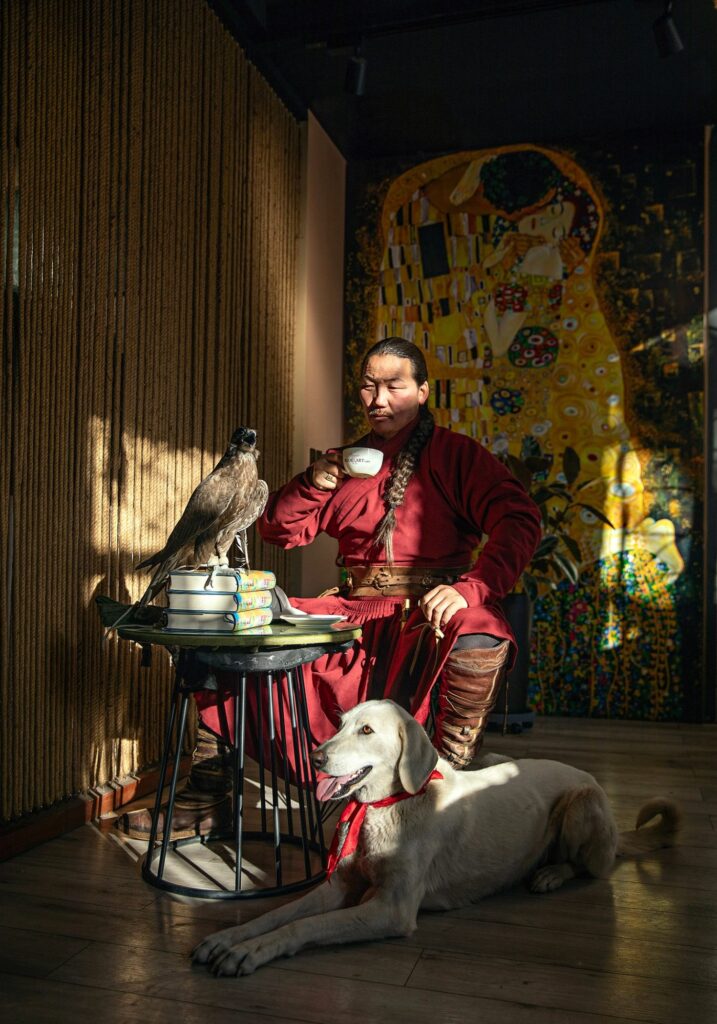
What interests me most is that heritage is not being seen only as something that needs to be preserved, but also as something alive – material that can be used to create something new.
Are there traditions, symbols or aesthetics being reinterpreted in ways that particularly interest you?
There is one image that particularly fascinates me, inspired by historical accounts written by chroniclers of the 13th century, as well as artworks from that period: a mounted archer, carrying his bow and arrows, accompanied by his Taiga dog, with a falcon perched on his arm.
I would nominate this horseman for “the coolest guy of all time.” [Laughs]
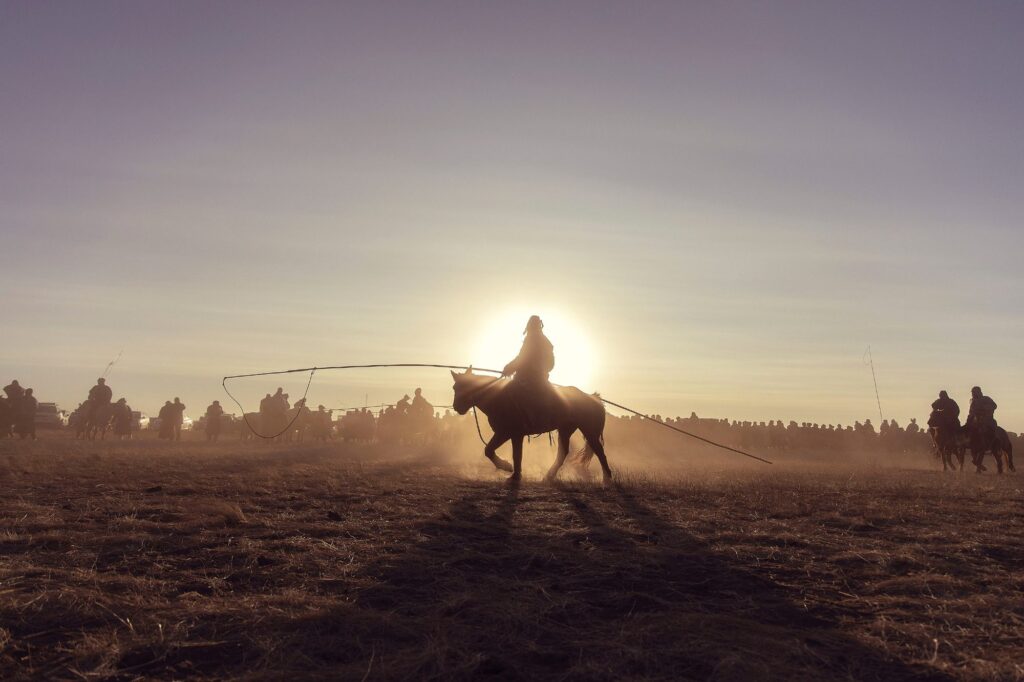
The horse, the hunting dog, the falcon and the bow and arrows all come together in a single figure, and I find that visually incredibly powerful.
Although the image comes from centuries ago, I think it can still feel strikingly contemporary when reimagined through today’s visual language.
You have spoken about looking abroad for inspiration before realising that some of the strongest stories were around you in Mongolia. Was there a particular moment or project that changed the way you looked at your own country?
It is difficult to point to one particular moment when my thinking completely changed. Many different experiences and circumstances gradually came together to shape the way I think today.
But there is one funny memory that probably planted the first seed.
I remember playing Mortal Kombat and thinking, “Why isn’t there a Mongolian character in this game?”
And then the answer seemed quite simple: “Because you haven’t shown that character to the world enough.”
That thought stayed with me.
When you grow up inside a culture, it is easy to assume that other people know its history, characters and visual world because they are so familiar to you. But from the outside, they may hardly be visible at all.
I think part of what I do today has its roots in that thought.
Of course, as someone living inside the culture, my way of seeing my own country has been shaped by many overlapping influences – people, travel, photographs, experiences and research.
So I would not describe it as one dramatic turning point, but perhaps as one of the earliest ideas that set me on this path.
When someone outside Mongolia encounters your work, what do you hope stays with them after they stop looking at the image?
Maybe somewhere in my subconscious I want them to think, “Wow, he’s a really good photographer.” [Laughs]
But more importantly, I hope they come away with a positive impression of Mongolia.
It does not really matter whether they knew much about Mongolia beforehand. If one of my photographs makes them even a little more curious and gives them the desire to learn more about the people, history, culture and life of this country, that is enough for me.
Finally, Ornamented Identity took second place in the professional division of the 2026 reFocus Black & White Photo Contest, a year after you were named 500px Photographer of the Year. What is it about this photograph that best represents where you are creatively today?
I would probably choose that photograph.
Of course, receiving the award is important to me, but that is not the main reason I would choose it.
It is a completely staged photograph. I thought through and planned every element – the character, clothing, environment, lighting and composition. At the same time, I tried to incorporate elements of Mongolian tradition, history and cultural heritage through my own visual language.
For that reason, I think it brings together what I most want to do creatively at this point: to begin with real cultural heritage, but rather than simply documenting it, to reconstruct and reinterpret it through my own imagination and photographic language.
Interview conducted by Novastan English Editor-in-Chief Mathieu Lemoine.