




 Who decides the future of Central Asia’s environment? An interview with Andrea Zinzani

Support Novastan, the European Central Asia magazine
By supporting Novastan, you are supporting the only English, French and German-language media specialising in Central Asia. We’re independent and we need your help to stay that way!From water governance in Uzbekistan to climate adaptation in Tajikistan, environmental policies across Central Asia are reshaping landscapes and livelihoods. Yet local communities often remain excluded from the decisions affecting their environments. In an interview with Novastan, Italian geographer Andrea Zinzani discusses the politics of water, the importance of grassroots knowledge and the tensions between environmental conservation, economic development and community interests.
Water scarcity, glacier retreat and the growing pressures of climate change are among the most pressing environmental challenges facing Central Asia. Yet understanding these transformations requires looking beyond their physical consequences to examine the political and institutional dynamics that shape environmental governance. Who decides how natural resources are managed? Whose knowledge is taken into account? And what happens when government development strategies conflict with the everyday practices of local communities?
Andrea Zinzani is an assistant professor of geography at the University of Bologna whose research focuses on political ecology, environmental governance and society-environment relations. Over the past two decades, he has studied water governance in Uzbekistan, Kazakhstan and Kyrgyzstan, and more recently conservation politics and mountain communities in Uzbekistan and Tajikistan. Drawing on ethnographic research and extensive fieldwork, he explores how state institutions, international development organisations and local communities interact in shaping Central Asia’s environments.
Much of your research approaches environmental questions through the lens of political ecology. For readers unfamiliar with this perspective, what does it reveal about the relationship between environmental change, political power and society in Central Asia?
Since the 2000s, political ecology perspectives have increasingly been adopted within geography and the social sciences more broadly to analyse environmental transformations, governance and conflicts. In particular, they have been employed to highlight the socio-political dimensions of these processes, the power relations and asymmetries underpinning them and, more broadly, to move beyond the nature–society dichotomy. Accordingly, a key objective of political ecology is to investigate the social production of the environment and its politicisation through social and ethnographic methods, among others, as well as through direct engagement with local communities, grassroots socio-environmental movements and indigenous groups. Different approaches within this field have been applied across various regions of the world, including Europe, the United States, Latin America and South Asia. However, a significant research gap remains in relation to Central Asia.
I suggest that this gap can be attributed to two main factors. First, the relative scarcity and limited development of grassroots socio-environmental movements across the region, with the exception of Kyrgyzstan, which can partly be explained by the specific authoritarian and post-Soviet legacies of Central Asian states. Second, and closely related to the first point, the political contexts and authoritarian nature of these regimes pose significant challenges to conducting politically situated research in the region.
Nevertheless, despite these challenges and the political sensitivities involved in conducting research on key resources such as water and land, I believe that adopting a political ecology perspective offers two main analytical lenses. First, it enables a deeper understanding of how political power is mobilised across different scales, and how ideas, discourses and visions are promoted in pursuit of specific political objectives. Second, it provides a framework for examining the social production and transformation of the environment through an analysis of state–society relations, particularly those between local institutions and communities, as well as the everyday practices through which these relations are negotiated and reproduced.
Over the past twenty years, I have conducted research on water governance transformations at different scales in Uzbekistan, Kazakhstan and Kyrgyzstan. Currently, I adopt a political ecology lens, combined with ethnographic methods, to explore conservation politics in mountain environments and the relations between state institutions and mountain communities in Uzbekistan and Tajikistan. My research in Uzbekistan is conducted within the Uzbek-Italian Archaeological Project – Samarkand and its Territory (UIAP), funded by the University of Bologna and the Italian Ministry of Foreign Affairs and supported by the Samarkand Institute of Archaeology, while my research in Tajikistan is carried out within a project on the preservation of cultural and natural heritage and socio-ecological challenges in the highlands of the Zeravshan Valley, funded by the International Institute for Central Asian Studies (IICAS).
Your research has examined land and water governance in Uzbekistan, particularly in the Middle Zeravshan Valley. What have been your main findings about how water resources are managed and how institutional arrangements influence the experiences of local communities?
Over the past twenty years, my research has focused on water politics and transformations in water governance across different scales, primarily in the Middle Zeravshan Valley in Uzbekistan, but also in the Arys Basin in southern Kazakhstan and the Talas Valley, shared by Kyrgyzstan and Kazakhstan. My research has examined the implementation of so-called water governance paradigms promoted by international development organisations, such as Integrated Water Resources Management (IWRM) and Water Users Associations (WUAs), as well as the role of formal water institutions and informal everyday practices at the local level.
Water has played a key role in Central Asia’s socio-environmental relations and transformations since ancient times, when most of the main irrigated areas were progressively developed through hydraulic infrastructure. It remains a key resource for Central Asian states and their socio-economic development. Water plays a crucial role in regional interstate relations, while at the national level, water resources continue to be governed predominantly through centralised state institutions. Since the 2000s, international development organisations, including the Asian Development Bank, the World Bank and USAID, have promoted the adoption of global water policy frameworks aimed at supporting reforms towards decentralisation and liberalisation, as well as encouraging participatory approaches to water governance and the commodification of water resources.
At the national level, these policy frameworks, particularly IWRM, have been adopted by Central Asian states, although their implementation has been adapted and reshaped according to specific national political interests and priorities. At the local level, however, the situation is much more heterogeneous. It ranges from some successful experiences to the progressive failure of certain initiatives, particularly WUAs, as well as the coexistence of formal water governance arrangements between district-level water institutions and water users with informal water practices rooted in the everyday lives of local communities. Based on these observations, it is possible to argue that international development organisations have often failed to recognise and adequately engage with existing grassroots knowledge, practices, institutional roles and social relations shaping water governance at the community level. Some years ago, I had a conversation with a water expert from the United Nations Economic Commission for Europe (UNECE) about controversies surrounding the promotion of participatory principles within WUAs in the borderlands of Kazakhstan and Kyrgyzstan, and their failure. She acknowledged that project designs and principles often did not take into account the complexity and variety of existing grassroots governance practices and relations at the community level.
Water scarcity in Central Asia is often discussed primarily in terms of climate change, glacier retreat and agricultural demand. Based on your research, how important are political and institutional factors in understanding the region’s water challenges?
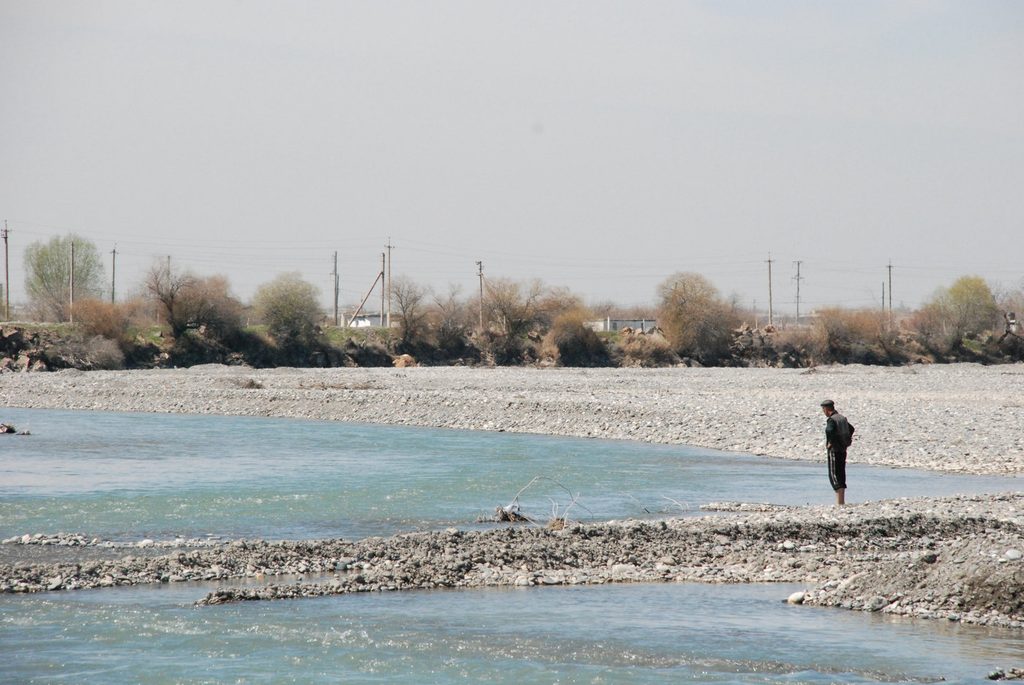
International relations, political dynamics and interstate agreements play a key role in shaping water governance in Central Asia and addressing the challenges posed by water scarcity and climate change. Since the collapse of the Soviet Union, Central Asian states have embarked on a complex and challenging process of cooperation concerning the control, allocation, governance and monitoring of water resources across the Aral Sea basin. This process led to the establishment of the Interstate Commission for Water Coordination (ICWC) in 1992, the International Fund for Saving the Aral Sea (IFAS) in 1993, various interstate barter agreements at the end of the 1990s and transboundary commissions, such as the Chu-Talas Water Commission between Kyrgyzstan and Kazakhstan in 2006. Over the last twenty years, these agreements have been modified to some extent to address contemporary challenges.
Read more on Novastan: Can Afghanistan Become Central Asia’s Bridge to the South?
These different forms of interstate cooperation have had two major implications. First, they have helped prevent potential conflicts over water resources, including the so-called “water wars” controversially predicted by some international experts and policymakers in the early 2000s. Second, they have contributed to the institutionalisation of interstate relations concerning water resources, establishing mechanisms to regulate competing water uses and accommodate the different political and economic priorities of upstream countries, which are primarily oriented towards hydropower generation, and downstream countries, which rely more heavily on irrigated agriculture.
However, despite this framework of institutional cooperation, water scarcity and climate change adaptation remain major challenges for Central Asian states and their future political and socio-economic trajectories. These challenges are becoming particularly significant in relation to rapid demographic growth, food security and access to water resources. Moreover, the development of the Qosh Tepa Canal in northern Afghanistan, promoted by the Taliban government and expected to divert an estimated 15–18% of the Amu Darya’s water flow, represents a key challenge, since Afghanistan has never been involved in the Central Asian interstate water agreements. The need to advance a dialogue with the Taliban government on this important issue is currently under discussion among Central Asian governments, although their political positions differ.
Read more on Novastan: From the Pamirs to the Aral Sea: Following the Amu Darya Through Central Asia
Your work has also taken you to Tajikistan, including research on mountain environments and local communities. What questions have guided this research, and what have you learned about the relationship between environmental change and people’s livelihoods?
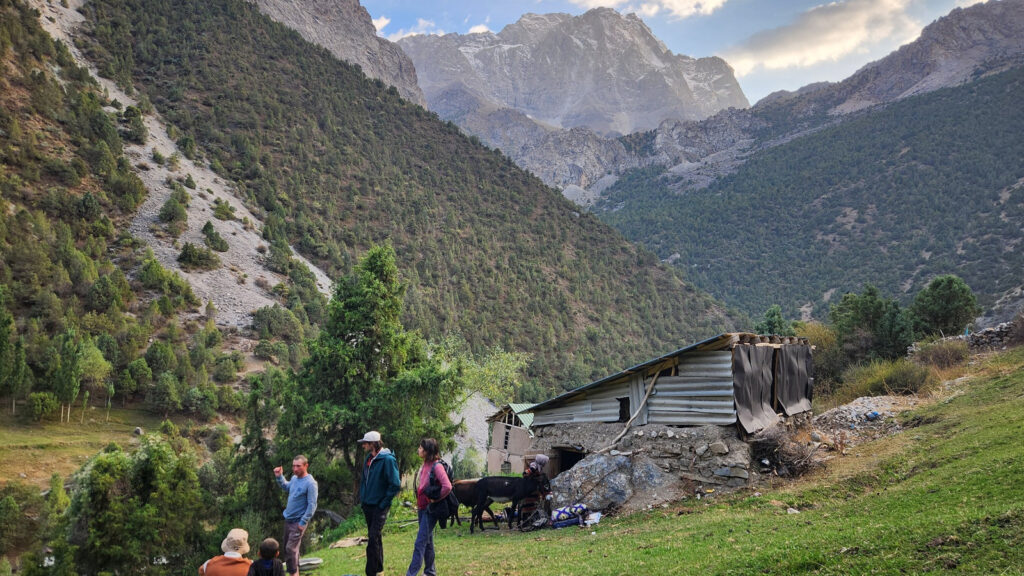
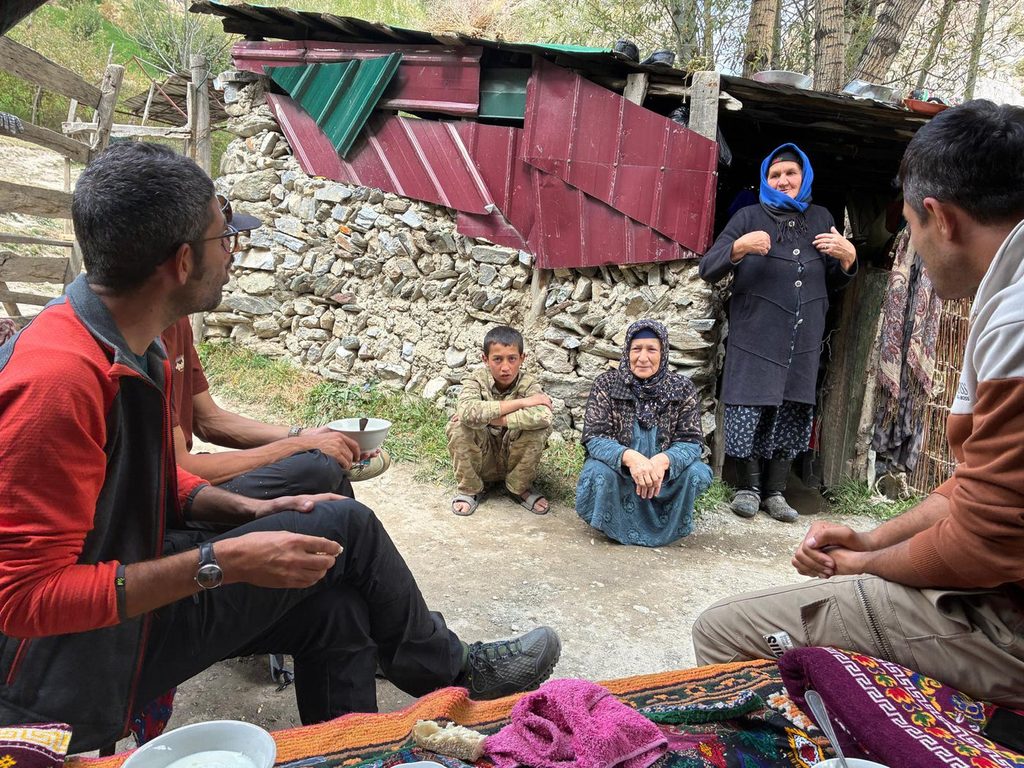
Over the past few years, my research has increasingly focused on mountain environments in Tajikistan, particularly on conservation politics and state–mountain community relations in the context of the climate crisis. The research has focused primarily on the Upper Zeravshan Valley, in the Sughd region, and specifically on the valleys of Madm and Artuch. Preliminary findings highlight the existence of grassroots, community-based forms of convivial relations in natural resource governance, particularly concerning water and agro-silvo-pastoral practices, as well as the conservation of mountain environments. These relations and practices are also supported by state institutions, particularly district-level forestry departments.
Read more on Novastan: From the Aral Sea to eco start-ups: Uzbekistan’s young climate generation
More specifically, in response to the growing impacts of climate change on mountain environments, local climate adaptation initiatives have been guided by forestry departments through the regulation of pastoral activities, aimed at mitigating pasture degradation, and the promotion of afforestation initiatives, together with small-scale household agriculture, to stabilise slopes and increase vegetation cover. These initiatives have been discussed and shared with local communities, revealing forms of dialogue and cooperation between state institutions and local actors.
Furthermore, climate adaptation measures have also been collectively implemented at the community level. Examples include the development of a domestic water supply system in the village of Madm and the rehabilitation of small irrigation canals on the mountain slopes of Artuch, aimed at expanding family orchards and small agro-silvo-pastoral plots. These findings therefore point to the coexistence of formal and informal approaches to mountain conservation and climate change adaptation, as well as to the interaction between institutional initiatives and grassroots collective practices.
Read more on Novastan: Can design help reimagine the future of the Aral Sea? Joseph Grima on a different kind of school
This coexistence, together with the dialogue between district-level state institutions and local communities, also emerges in relation to mountain conservation visions and practices. In both Madm and Artuch, mountain conservation appears to be shaped by shared visions and informal community networks, particularly through grassroots socio-environmental practices based on solidarity and mutual support. Examples include everyday pastoral and agricultural activities, as well as the governance of water resources through informal mechanisms of control and distribution. Particularly relevant are collective forms of labour and mutual assistance, such as hashar, which embody principles of equity, reciprocity and solidarity.
Furthermore, by examining mountain conservation and, more specifically, the relationships between communities and their surrounding environments, this research highlights forms of conviviality with the mountain environment. Despite some differences between the two communities, Madm and Artuch appear to share visions and practices centred on the idea of “living with” the environment. These are shaped by principles of self-governance, self-sufficiency and, more broadly, socio-environmental justice in the context of climate change.
Environmental governance often involves different actors, including state institutions, local communities and international development organisations. In the contexts you have studied, how do these actors interact, and what does this reveal about whose knowledge and priorities influence environmental decision-making?
Over the past decades, regional environmental governance in Central Asia has been shaped by the efforts of international development organisations in two main areas. First, these organisations have promoted reforms in natural resource governance, particularly in the water and agricultural sectors. Second, they have supported climate change mitigation and adaptation initiatives.
These efforts have significantly influenced the agendas of state institutions, particularly in raising awareness of climate change and promoting related policy priorities. Since 2020, there has been a notable increase in regional commitments to developing shared frameworks for climate change adaptation and mitigation, particularly concerning the energy transition, water-saving technologies and food security. Local communities, however, remain largely excluded from formal institutional frameworks of environmental governance. At the same time, their knowledge, visions and informal everyday practices of natural resource management continue to play a significant role in shaping and transforming their local environments.
In your 2025 article with Licia Proserpio on Kafir Kala in Uzbekistan, you explored the relationship between heritage policies, institutional visions and local communities. What were the main findings of this research? Did you identify differences between official approaches to heritage management and the ways local people understand and relate to the site?
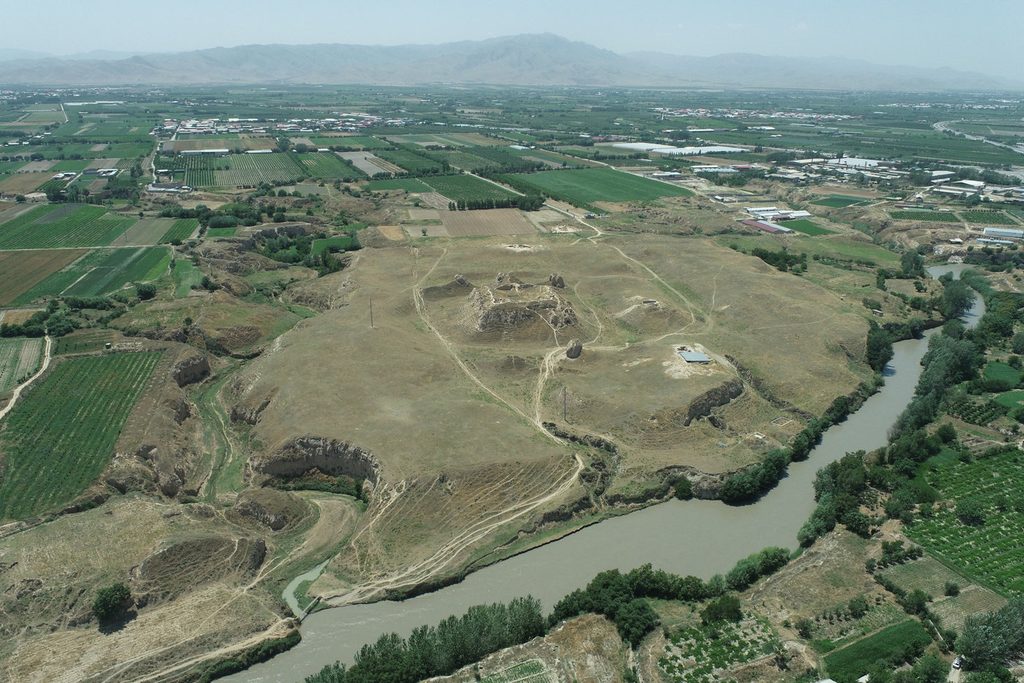
Our research was conducted at the historical and archaeological site of Kafir Kala, near Samarkand, Uzbekistan, as part of the KALAM project, funded by the Volkswagen Foundation. The project adopted an interdisciplinary approach, bringing together archaeology, geography and anthropology, and aimed to promote the conservation and valorisation of the Kafir Kala heritage landscape through the engagement of local communities living in the vicinity of the site. Within this project, our research focused on transformations in the Kafir Kala heritage landscape following its inclusion in the UNESCO World Heritage-listed Silk Roads: Zarafshan-Karakum Corridor and the plans for the development of an archaeological park. In particular, we examined the politics and visions of local institutions and community members in relation to the site, their ideas on conservation and the park initiative.
Our research shows that the processes through which heritage landscapes are shaped and managed at Kafir Kala are influenced by the interaction between state-led heritage policies and local communities’ everyday practices and understandings of the site. We identified a significant gap between the visions of political and scientific institutions concerning heritage management and valorisation, on the one hand, and community knowledge and perceptions of cultural heritage, on the other. Institutional approaches, particularly following the site’s UNESCO recognition and the plans to develop an archaeological park, reflect state-driven visions of heritage preservation, valorisation and development that aim to physically separate heritage from communities and their practices. These approaches are embedded in the country’s broader socio-political legacy and leave limited room for community engagement and participation.
By contrast, local people relate to the Kafir Kala heritage landscape, especially its grassland hill, through their everyday socio-spatial practices, their connections with the surrounding land and water through pastoralism and fishing, and their locally rooted knowledge, which includes legends and tales. Their understanding of heritage is therefore not necessarily aligned with institutional narratives and visions; rather, they emphasise the integration of heritage, environment and daily practices. The research highlights the existence of alternative, grassroots forms of knowledge that remain largely underrepresented in formal heritage-making processes.
Overall, it demonstrates that heritage is not simply a matter of valorisation and conservation, but rather a socially and politically contested process. It highlights the need for greater recognition of local perspectives and everyday practices in the understanding and future governance of heritage landscapes. An academic paper on this research was published in the international journal Landscape Research, while another, focusing on the politics of heritage conservation, is forthcoming.
Looking across your research in Uzbekistan and Tajikistan, what role do local knowledge and community perspectives play in understanding environmental and territorial transformations? Are there particular examples from your fieldwork that have challenged conventional assumptions about these processes?
The knowledge, perspectives and everyday practices of local communities are central to understanding the environment and its transformations, particularly at the local scale. Indeed, social and ethnographic research methodologies, including extended periods of fieldwork and participant observation within communities, as well as opportunities for informal meetings and conversations, make it possible to gain a deeper understanding of local knowledge and practices. Drawing on my research experiences in Uzbekistan and Tajikistan over the past few years, I have found that long-standing relationships and repeated conversations with community members are particularly valuable for understanding informal social relations within communities and between people and their environments.
For example, research on the Kafir Kala heritage landscape in Uzbekistan has provided insights into the community’s attachment to the site, which local people regard as a special hill where history, heritage and the environment are closely intertwined. This understanding is shaped, on the one hand, by legends and stories narrated by older generations, both at home and at school, and, on the other, by everyday practices across generations, including pastoralism, fishing and social interaction. Community perspectives challenged the views of political and scientific institutions, which, in the context of heritage conservation, advocated the need for a physical separation between historical and archaeological research, on the one hand, and local community practices, on the other.
Similarly, my research on mountain environments in Tajikistan has shown how repeated conversations and walks with older shepherds over time can provide valuable insights into the historical evolution of pastoralism, its associated practices and the relationships between groups of shepherds and state institutions. They also help reveal how the progressive impacts of climate change on water availability, springs and pastureland quality have reshaped pastoral spaces and seasonal rhythms. Recent conversations and encounters with local residents, including householders and orchard owners in the Agalik Valley, within the Karatyube Range in Uzbekistan, have provided insights into the deep-rooted relationships between these people and the environment of the valley floor, which their families have actively shaped and cared for over three decades. Furthermore, their perspectives have been important for understanding the potential socio-environmental impacts of a mountain tourism development project that is set to profoundly transform the mountain environment of the valley over the coming years.
Finally, what aspects of environmental governance and the relationship between society and nature in Central Asia do you believe deserve greater attention from researchers, journalists and the wider international public?
I believe that greater attention should be paid to society–environment relations and environmental governance in Central Asia, particularly their multi-scalar nature. First, at the international level, it is important to investigate the evolving and increasingly consolidated interstate relations among Central Asian states, particularly with regard to climate change mitigation and adaptation policies. Equally important is to examine how Central Asian countries are developing relations with other international actors, including Russia, China, the United Arab Emirates, Türkiye and the European Union, in addressing contemporary environmental and climate challenges.
These relationships are becoming increasingly significant, and potentially controversial, in areas such as agribusiness, extractivism, water-saving and green energy technologies, and the development of carbon-credit markets. Second, at the national level, we need to better understand the interests, strategies, visions and narratives developed by individual states in response to contemporary environmental and climate challenges, particularly as they seek to reconcile the often competing priorities of socio-economic development, resource exploitation and environmental conservation.
Third, at the local level, greater attention should be devoted to understanding how relations between state institutions and local communities are evolving through the social production of the environment. This means examining the different forms of knowledge, interests, negotiations and power relations that shape how local environments are governed, transformed and experienced. An interesting example from my own research illustrates the importance of connecting these different scales.
Since 2025, I have been conducting field research in the Karatyube valleys of Uzbekistan, near Samarkand, focusing on mountain communities and socio-environmental transformations. This research has allowed me to investigate in detail a government-led project, formalised through a presidential decree in 2024, aimed at transforming and promoting mountain environments through tourism development. On the one hand, the state-led project seeks to attract foreign capital and investment to support the development of tourism infrastructure, including privately owned facilities. On the other hand, it envisages the construction of new water infrastructure, including groundwater extraction, water-lifting systems and stream diversion, as well as extensive afforestation programmes aimed at making this semi-arid mountain environment greener and cooler. More broadly, the project represents an attempt to socially produce and construct a new mountain environment, based on specific state visions of valorisation, conservation and commodification.
This case illustrates the multi-scalar nature of environmental governance, highlighting how national development strategies, international investment flows and local socio-environmental transformations intersect. It also raises important questions about the evolving relationships between state institutions and mountain communities, particularly concerning local practices, interests and power relations. In this respect, I believe that ethnographic research and direct engagement with people who experience and interact with their environments in their everyday lives are essential analytical approaches, both for academic researchers and journalists.
Listening to local communities and understanding their everyday practices can provide valuable insights into the multi-scalar dynamics and complexities of socio-environmental relations in Central Asia, revealing dimensions that are often overlooked by analyses focusing exclusively on international and national policies.
By Mathieu Lemoine, Editor-in-Chief for Novastan English.