



 When reform reaches everyday life: Lessons from Uzbekistan and Mongolia
Support Novastan, the European Central Asia magazine
By supporting Novastan, you are supporting the only English, French and German-language media specialising in Central Asia. We’re independent and we need your help to stay that way!After more than 25 years in international development, including as UNDP Resident Representative in Uzbekistan and Mongolia, Matilda Dimovska has seen reforms succeed, stall and take unexpected directions. She speaks to Novastan Editor-in-Chief Mathieu Lemoine about public services, women’s economic participation, disability rights, Mongolia’s energy transition and why locally generated solutions often matter more than imported models.
Economic reform can look convincing on paper. Governments adopt strategies, pass new legislation and create institutions, while international organisations measure progress through programmes, indicators and policy frameworks. But for Matilda Dimovska, who spent more than 25 years working in international development, the more important question is often much simpler: does a reform actually change the way people live?
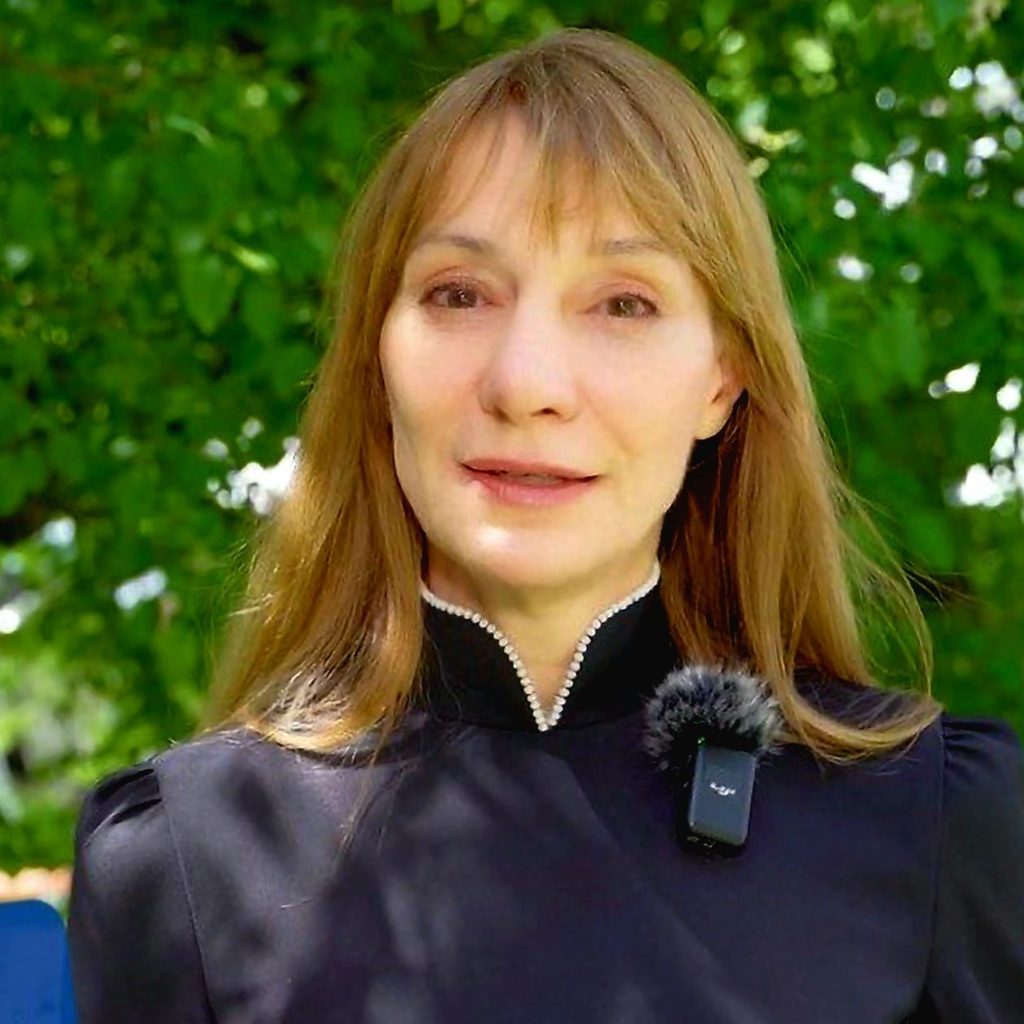
Dimovska served as the United Nations Development Programme’s Resident Representative in both Uzbekistan and Mongolia. The two countries face very different economic, social and environmental challenges, but her experience in both convinced her of the importance of looking beyond formal policy change. Some of the most important lessons, she says, came not from large-scale programmes or national strategies, but from observing how reforms affected people’s daily lives and how local institutions, communities and innovators responded to change.
Across issues ranging from public services and social protection in Uzbekistan to air pollution and household energy in Mongolia, one principle repeatedly emerged: policies become meaningful only when people can actually access, use and benefit from them.
“Institutional reform becomes meaningful when people experience it”
Novastan: During your time in Uzbekistan, UNDP was closely involved in reforms of public-service delivery, local governance and access to justice. Which reforms do you think made the most tangible difference in people’s everyday lives?
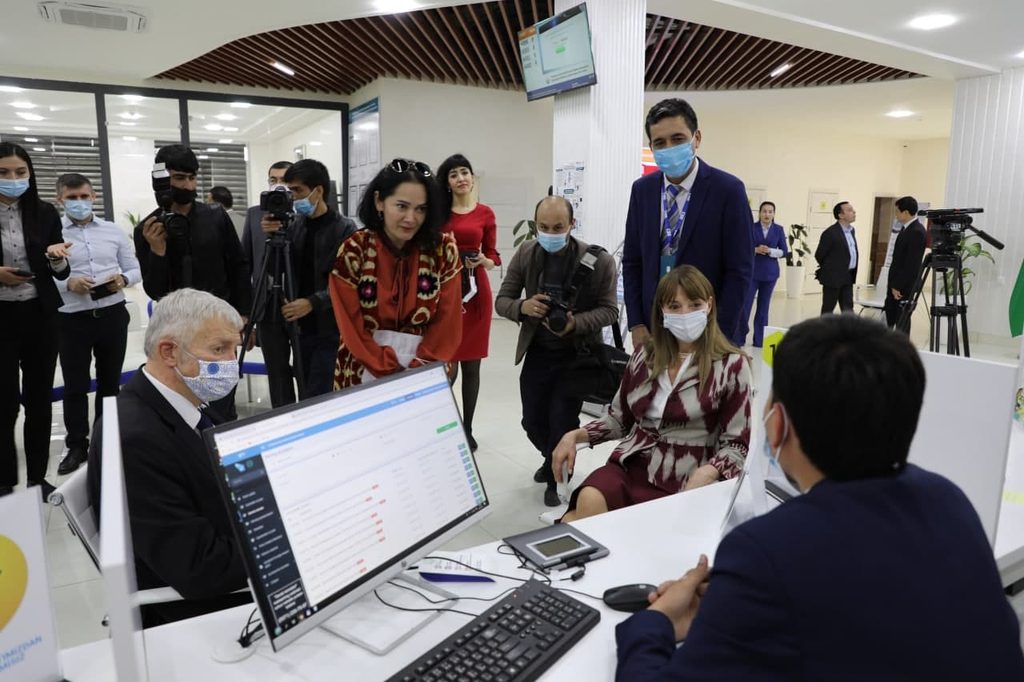
Matilda Dimovska: Public-service delivery probably produced the most visible everyday change. Uzbekistan created a nationwide network of one-stop Public Service Centres, expanding the number of services available through them from 37 in 2018 to 162 in 2021, while annual uptake increased from around five million to eleven million. For citizens, particularly those living in rural areas, this meant fewer journeys between different government agencies, simpler procedures and less need to navigate multiple institutions or rely on informal connections.
Read more on Novastan: Beyond the Counter: Uzbekistan’s Public Service Reforms and the Hidden Infrastructure of the Digital State
What impressed me most was the shift towards user-centred delivery. We worked on mobile services, digital channels and making centres more inclusive for women, older people and persons with disabilities. The broader lesson was that institutional reform becomes meaningful when people experience it through services that are more accessible, dignified and predictable.
Uzbekistan also invested heavily in reforming social protection during your tenure. What did you learn about the difference between providing assistance to vulnerable people and actually helping them become more economically secure and independent?
Assistance helps people through immediate hardship, while economic security gives them the ability to make choices about their future. In Uzbekistan, I learned that social protection works best when benefits and social services are connected to skills, employment, entrepreneurship and opportunities to generate income.
Cash support remains essential, but it cannot by itself remove barriers to work, finance or public services. The broader objective should be to strengthen people’s capabilities and make sure they have equal opportunities to participate in economic and social life.
Women’s economic participation: beyond legal reform
You worked extensively on women’s economic participation in Uzbekistan. Beyond legal reforms, which barriers proved hardest to change in practice?
The hardest challenge was not one particular barrier, but the way several of them reinforced one another. A woman may have the legal right and the skills to work, yet still lack access to finance, affordable childcare, family support or opportunities in sectors traditionally seen as male. Social norms and prejudices are often the most difficult part to change.
Uzbekistan made important progress in strengthening legislation and institutions for gender equality, but changing laws is often faster than changing practices within households, workplaces and financial institutions. Women’s economic participation therefore requires more than training or entrepreneurship programmes. It also depends on accessible finance, care services, supportive employers and visible examples of women succeeding in non-traditional roles. Legal reform can open the door, but institutions and social norms determine whether women can actually walk through it.
UNDP also worked on access to justice and the rights of people with disabilities in Uzbekistan. Were there examples where changing the way a public institution worked mattered more than changing the law itself?
Yes. Uzbekistan’s ratification of the Convention on the Rights of Persons with Disabilities in 2021 was a major step, but rights become real only when institutions change how they work. That means listening to persons with disabilities, assessing individual needs and designing accessible services that support participation and independent living.
Read more on Novastan: “Disability is a Mirror for the Development of Societies” – A Conversation with Dilmurad Yusupov
I saw the same principle in access to justice. Supporting local civil-society organisations to provide free legal assistance was intended to bring services closer to women, young people and persons with disabilities who might otherwise remain outside the formal justice system. A good law creates an entitlement, but an accessible and responsive institution determines whether a person can actually exercise it.
Mongolia: where environmental policy becomes social policy
When Dimovska moved to Mongolia, she encountered a development model under growing pressure from the intersection of climate vulnerability, poverty and inequality. Although these challenges were long-standing, their combined impact became especially visible in a country that had reached upper-middle-income status while still facing major disparities in living conditions and exposure to climate shocks.
When you moved to Mongolia, what development challenge struck you as particularly important but less visible to international audiences?
What struck me most was the close connection between climate vulnerability, poverty and unequal development. International audiences often see Mongolia through its mining sector, renewable-energy potential and vast landscapes. Less visible is the daily reality of families in Ulaanbaatar’s ger districts, many of whom live without central heating, sewerage or adequate public services.
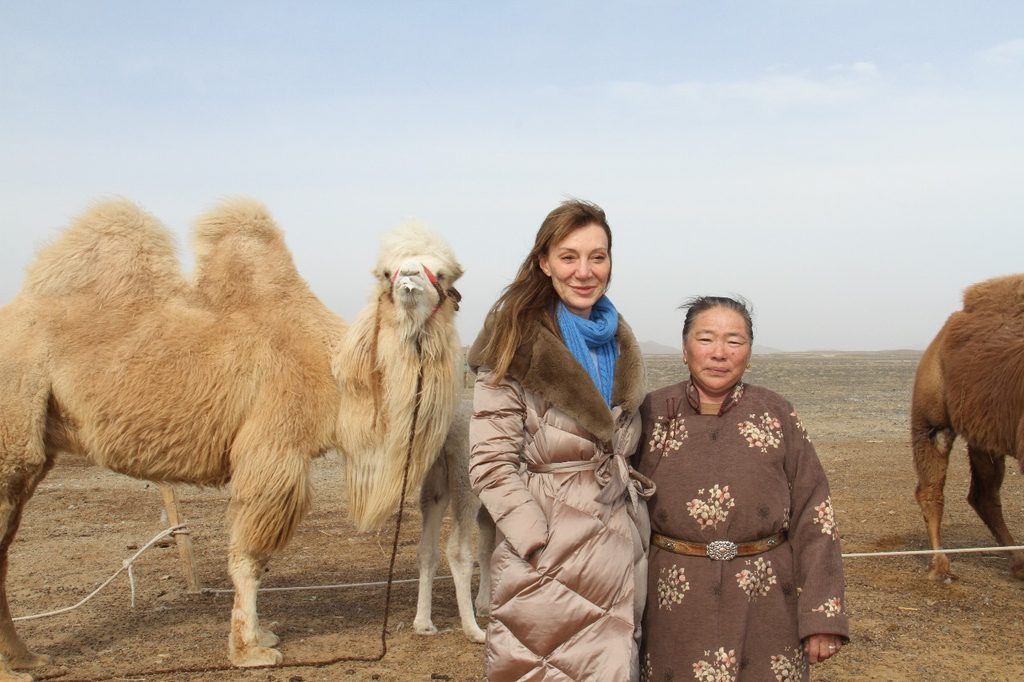
There is also the reality of herders and their families across the country, whose livelihoods depend directly on livestock. As climate-related extreme weather events become more severe and frequent, these households face the risk of losing not only animals but their principal source of income and economic security.
Read more on Novastan: Keeping the heat in: Mongolia’s overlooked answer to Ulaanbaatar’s air pollution
Families in the ger districts burn coal because affordable alternatives are limited. This made me understand air pollution not simply as an environmental problem, but as an issue of poverty, public health and inequality. Mongolia’s challenge is therefore not only to diversify its economy or move away from coal. It is to manage economic, social and energy transitions simultaneously, without placing the greatest burden on the households least able to bear it.
Air pollution in Ulaanbaatar is both an environmental and a social issue, particularly in the ger districts. What have you learned about what it takes to make a green transition work for families who cannot simply absorb higher costs?
I learned that the cleaner option must also be affordable, reliable and practical. We cannot ask a low-income family to stop using coal if the alternative costs more, cannot keep their home warm through a Mongolian winter or depends on infrastructure they do not have. Our research found that low-income households spent, on average, 26.7 percent of their monthly income on energy during winter, more than four times the burden faced by higher-income households.
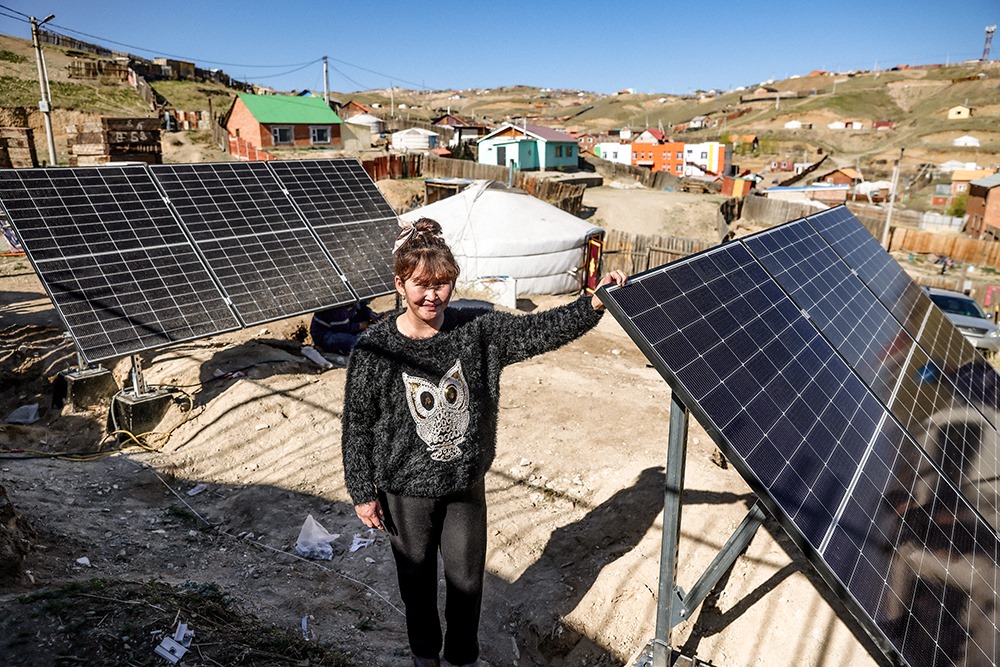
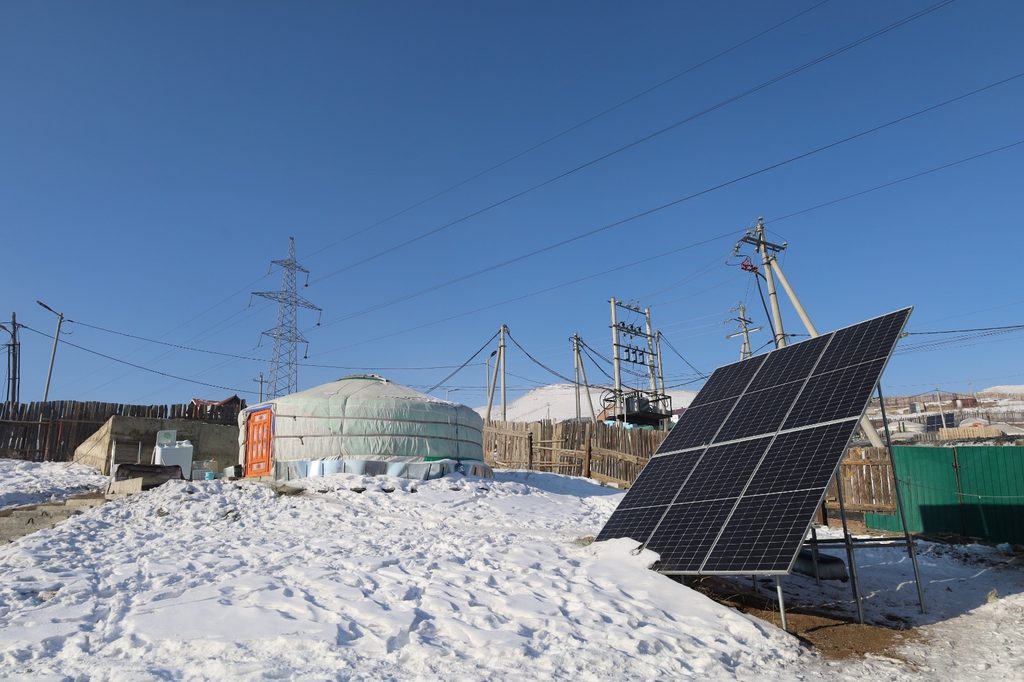
That is why our solar-heating pilot in the ger districts focused not only on technology, but also on affordability, financing models, smart metering and community engagement. We wanted to understand what would make clean energy a realistic option for ordinary households. For me, the central lesson was that a green transition will succeed only if families experience it as an improvement in their daily lives: a warmer and cleaner home, lower financial pressure and greater energy security. Otherwise, even the best environmental policy will struggle to gain public support.
Who benefits from the green transition?
Mongolia has significant renewable-energy and critical-mineral potential, but it also faces climate shocks, water pressures and persistent inequalities. What would convince you that a green transition is genuinely improving human development rather than simply generating economic growth?
I would look beyond investment volumes, exports or installed renewable capacity. I would ask whether families have affordable and reliable energy, whether new industries create decent jobs and skills for Mongolians, and whether women, young people and rural communities share in the opportunities.
I would also look at whether water, land and ecosystems are protected, and whether the revenues generated are invested in better education, health and social protection. Mongolia’s National Human Development Paper 2024 made this central point: the energy transition must be people-centred and expand the capabilities of present and future generations. For me, the real test is not only how much the economy grows, but who benefits, who bears the costs and whether the transition reduces inequality rather than reproducing it.
A solar-heated home in Ulaanbaatar
Of the projects Dimovska encountered during her years in Uzbekistan and Mongolia, one relatively small intervention in Ulaanbaatar’s ger districts stayed with her. Its significance, she says, lay not only in the technology itself, but in the fact that the solution was developed locally and responded directly to the realities of Mongolian winters.
Can you think of a community, project or encounter in either Uzbekistan or Mongolia where a relatively practical intervention changed your understanding of what development cooperation can achieve?
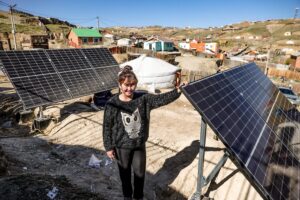
The solar-heating pilot in Ulaanbaatar’s ger districts stayed with me. One participating mother, Gantuya, described how solar heating had made her home warm and clean, eliminated the black smoke and freed her son from spending time tending the coal stove.
What made the intervention especially compelling was that the innovation was locally generated. The solution was developed by Mongolian experts and the climate-technology start-up URECA, with community outreach supported by a local NGO. Because it emerged from a deep understanding of the local context, cultural needs and extreme winter conditions, it was both relevant and practical. It combined solar energy, battery storage, smart heating and technology for monitoring energy use and avoided emissions.
The initial 68-household pilot then attracted district financing for another 80 households and later additional support for expansion to 450 households. For me, it demonstrated that development cooperation is often most effective when it identifies and supports local innovation rather than importing ready-made solutions. A relatively small intervention can provide the evidence, confidence and partnerships needed to take a home-grown idea to scale.
Why good reforms can remain on paper
For Dimovska, the gap between national strategies and implementation is not unique to either Uzbekistan or Mongolia. Governments can adopt ambitious reforms, but their success ultimately depends on institutions and people much closer to the point of delivery.
UNDP often works at the point where national strategies meet local implementation. In your experience, why do good reforms sometimes fail to produce results on the ground?
Because adopting a policy is only the beginning. Results depend on whether local institutions have the capacity, financing, incentives and leadership to implement it, and whether the reform reflects how people actually experience services.
In my experience, reforms often struggle when there is a gap between national ambition and local realities. Governments may adopt strong policies, but frontline institutions are expected to deliver them without the necessary resources, skills or coordination. Sometimes reforms are also designed from the centre without sufficient understanding of how citizens experience them.
Policies are more likely to succeed when they build on credible pilots that have demonstrated the concept in practice. Locally generated solutions are particularly valuable because they are rooted in the social, economic and institutional realities in which they must work. The most successful reforms I have seen have involved local authorities, frontline staff and communities from the beginning. Implementation is not the final stage of reform. It is where reform either becomes real or remains on paper.
“International organisations cannot substitute for national ambition”
After working across public institutions, social protection, justice, climate and local development, what have you come to see as the most important ingredient in a successful reform that international organisations sometimes underestimate?
I would say national commitment, and I mean more than formal government ownership. Successful reform requires institutions, leaders, public servants, communities and businesses to share a sense of direction and remain committed when implementation becomes difficult.
International organisations can bring evidence, expertise and comparative experience. They can convene partners, help test new approaches and create space for learning. But they cannot substitute for national ambition, local initiative and the sustained commitment needed to translate reform into practice.
Local drive and innovation are becoming even more critical in today’s uncertain and fragmented world. Countries need the confidence and capability to generate solutions rooted in their own realities, rather than depend on imported models. The role of international cooperation is not to import a vision or a ready-made solution, but to help turn nationally owned ambition and local innovation into stronger institutions, capabilities and results.
Matilda Dimovska served with UNDP for more than twenty-five years, including as Resident Representative in Uzbekistan and Mongolia.
By Mathieu Lemoine, Editor-in-Chief for Novastan English.