




 Nothing to Waste: Dildora’s Science of Peanuts
Support Novastan, the European Central Asia magazine
By supporting Novastan, you are supporting the only English, French and German-language media specialising in Central Asia. We’re independent and we need your help to stay that way!This article was originally published by UNDP Uzbekistan and is republished here with permission.
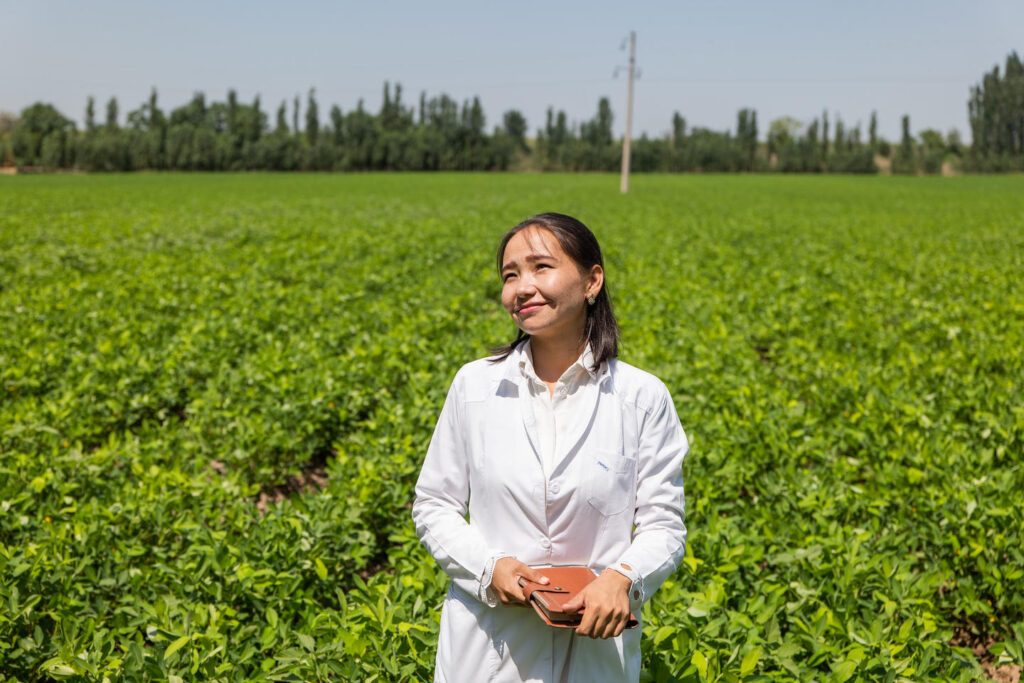
Dildora Nurmatova has a very pleasant smile and she smiles a lot.
She smiles as she explains what the samples are in the university lab, as she walks through the peanut field, as she explains what is inside the bags and containers in her family workshop, and when someone reaches for the brown notebook she carries everywhere, she quickly holds it tight with a smile.
“I don’t leave it anywhere – it has all my work,” she says.
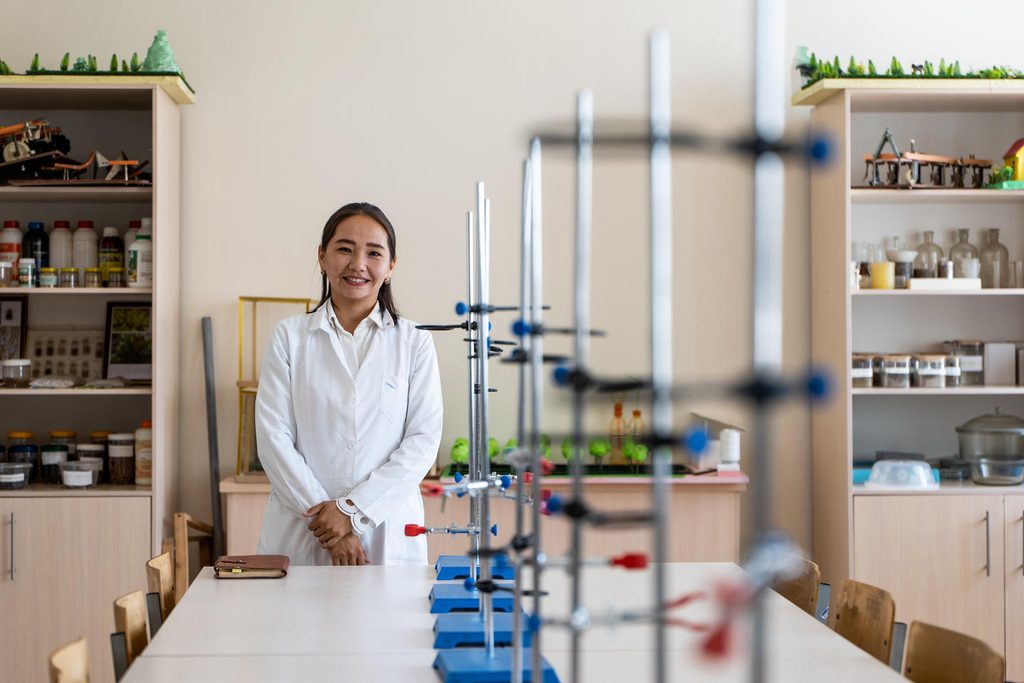
Photo: Elyor Nemat, UNDP Uzbekistan
The notebook is filled with calculations, observations and records. It travels with her between the laboratory, the field and the family business in Andijan region. Dildora is pursuing her PhD in agriculture, raising two children and building a business from a crop she first became interested in as a researcher.
She is also about to turn 30.
For Dildora, this seems to come with a sense of urgency. There is still so much she wants to do. She talks about “catching up”. Yet, watching her move between the laboratory, the field and home, one wonders how anyone could catch up with her.
Dildora is among the 417 women business owners and entrepreneurs whose paths have crossed with UNDP’s Aid for Trade initiative since 2022. Its trainings, entrepreneurship support, and mentorship programmes were shaped to improve productive capabilities, job creation and the export potential of businesses.
Dildora’s initiative, however, started with the peanut.
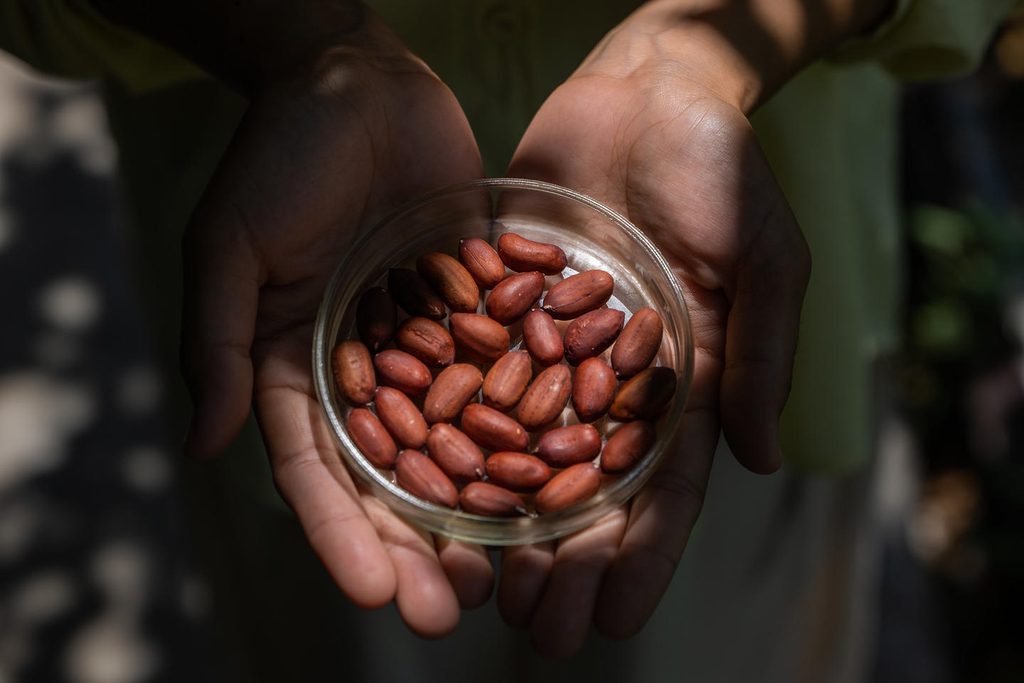
Photo: Elyor Nemat, UNDP Uzbekistan
It started with a different kind of peanut
Her fascination with peanuts began during her master’s studies, when she was researching different varieties and came across one developed by another woman scientist – Amanova Maxfurat. It was unusual: larger than conventional peanuts and distinctive in taste.
Dildora wanted to see what it could do outside research. After obtaining the necessary certification and permission from the scientist for small-scale production, she began growing it herself.
The variety has the potential to yield around six tonnes per hectare, according to project data. In 2024, Dildora’s enterprise was already harvesting five tonnes from one hectare, which yielded almost 3 tonnes of first-grade peanut kernels.
But Dildora was interested in more than yield.
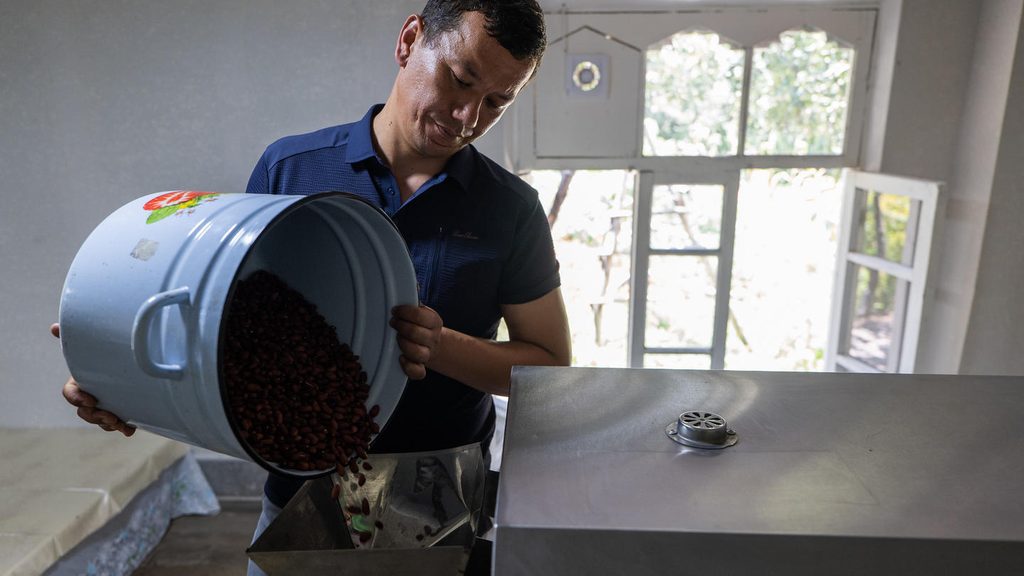
Photo: Elyor Nemat, UNDP Uzbekistan
She began looking at the whole plant and what could be done with every part. This approach is deeply rooted in Uzbek culture, where using resources thoughtfully and finding a purpose for everything have long been part of everyday life.
The good kernels were obvious. They could be sold or roasted and packaged as snacks. Selling processed snacks instead of raw crop gave her a three-fold increase of profit. Lower-grade kernels did not have to be discarded either – they could be milled and used in other products. This is why she would need a sorting machine.
Then there were the parts most people would consider waste.
The green stems could feed animals. The hard outer shells could be ground down for animal feed. Even the thin red skins surrounding the kernels could be ground and used as rabbit feed.
But finding a possible use for something is not enough for Dildora – she wants to know the best way it can work. Her natural mindset is tuned to a waste-free value chain, which echoes well in the Aid for Trade initiative. In the last years, it has supported 77 small businesses in adopting more waste-reducing, energy and water efficient business practices.
Before Dildora began making animal feed, she consulted a professor to understand what a healthy ration should contain for different species. She now prepares different mixtures, accordingly, adding minerals and other supplements in calculated proportions depending on what type of animal the order is placed for.
This is how Dildora tends to work: An idea comes first. Then she learns, consults someone who knows more. She calculates, tests and records.
And the results go into her favorite brown notebook.
A family business in every sense
Her business has an unusual name: ErElDi. There is a simple explanation. Er comes from Erkin – her father, El from Eldor, her brother and Di from Dildora – herself a nice family team.
To understand the business, it helps to visit their home: vegetables grow in neat rows outside; the production equipment is carefully maintained; inside the workspace, everything is in its place; beside the first-aid kit stands a vase of flowers. There is work everywhere, but there is also warmth.
Conversations overlap. People tease one another and laugh.
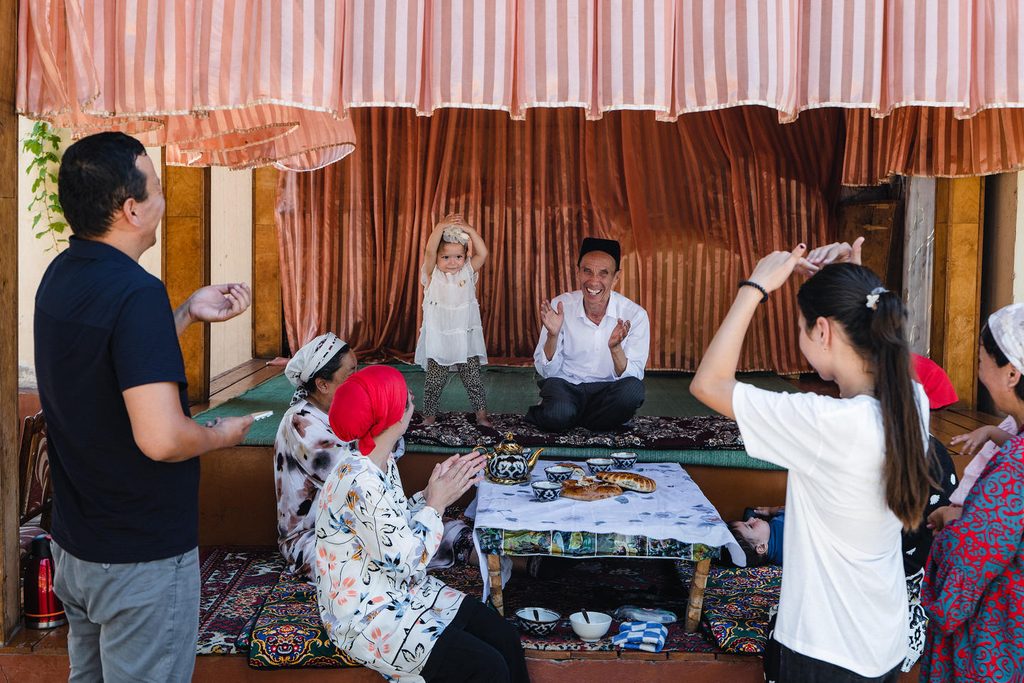
Photo: Elyor Nemat, UNDP Uzbekistan
This is also the place Dildora’s two children wait for her when she is in the field or laboratory. Her younger child is only a few months past one. When Dildora works, her brothers’ wives help care for the children.
Her ambitions, in other words, are not pursued alone. The same is true of the business.
Her brother works with her. And her father is particularly proud to tell visitors something that makes Dildora laugh again: his daughter taught him how to use the equipment. She also taught him how to prepare the mixture. There is no ceremony around this reversal of roles. Her father simply seems delighted by it.
The researcher in the family happens to be his daughter. She knows the calculations. He learned from her. And now they work side by side.
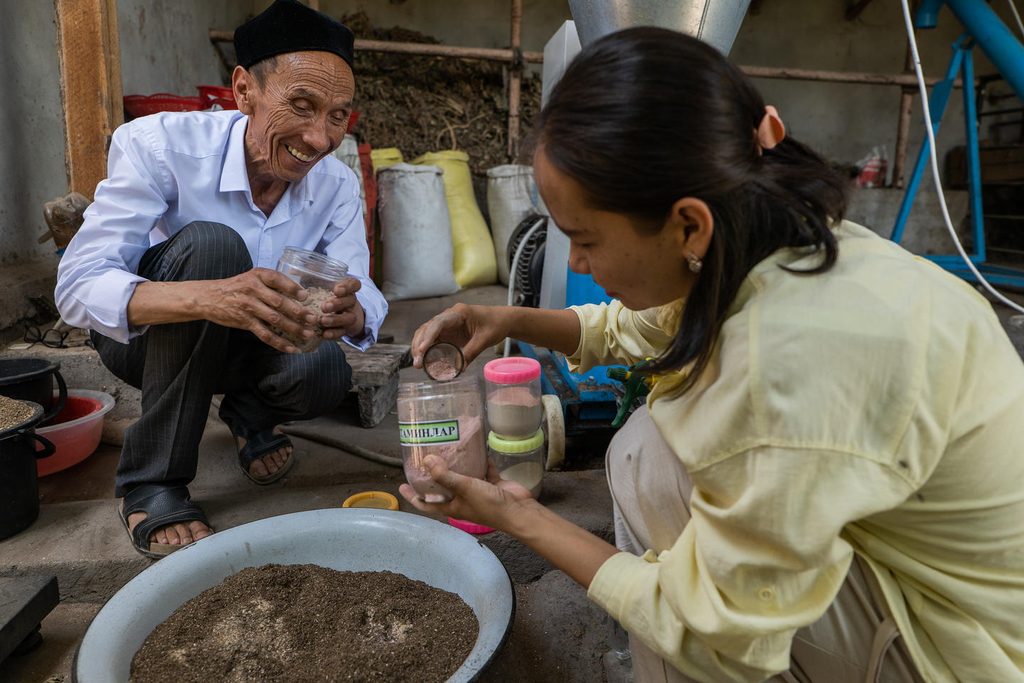
Photo: Elyor Nemat, UNDP Uzbekistan.
From an idea to a production line
There was, however, a limit to how far ingenuity alone could take the family.
If ErElDi was going to move from experiments and small-scale production to a viable business, it needed equipment, reliable electricity and proper space for processing.
Through UNDP’s Aid for Trade initiative, supported by the Government of Finland, the enterprise received equipment for peeling, crushing, frying and drying peanuts, as well as packaging machinery. The support also included a separate processing workshop, a three-phase power line, mentoring, and consultancy on product development, processing, and business management.
ErElDi is not alone. It was among the 30 businesses supported by Aid for Trade across the Ferghana Valley, half of them start-ups venturing into identified sustainable value chains. Each grew with its own mix of technical assistance, mentorship and entrepreneurship support, and access to assets and financing. Together, they generated almost 500 jobs, more than two thirds now held by women.
This support gave the family the means to do more with what they were already growing. And Dildora is the one who can make maximum use out of anything.
Instead of selling only a crop, they process it. Instead of throwing away by-products, they look for another use for them. The snacks go to wholesale market in Andijan, milled peanuts are bought by local ice-cream producers and bakeries, and animal feed is prepared based on orders (but in the rural community where they live, there is always demand).
The enterprise has demonstrated a capacity to produce 1,000 packages of peanuts per month, and has created several jobs, alongside additional income opportunities for farmers and lower-income rural households.
There are still things Dildora wants to improve. These days she is working on a new collaboration that would allow her to potentially expand the area for planting and experimenting.
Almost 30
Back at home, the scientist who is also an entrepreneur thinking about new products is also a mother about to turn 30, thinking about the next academic degree.
But as strong as she is, it helps not to do it alone. Aid for Trade’s mentorship programmes support women like Dildora who are starting out in business, drawing on the knowledge and experience of others. In 2024 and 2025, the programmes connected 33 experienced women entrepreneurs with 74 newcomers and provided technical and practical support to 15 women-led start-ups as they developed their businesses.
In Andijan, women entrepreneurs like Dildora are shaping the region’s economic future. As their businesses grow, new jobs expand the opportunities for other women in different roles, and their knowledge and experience pave the path for emerging entrepreneurs through community and mentorship networks. Women-led businesses with upgraded productive capacities and business skills are demonstrating that women in rural communities can gain financial independence and even promote circular economy solutions.
Around Dildora, the family makes room for all of it – caring for the children, tending to the home, learning the equipment and building ErElDi together.
And somewhere nearby is that brown notebook. There is still space for a lot of new work.
—
UNDP recently completed its regional “Aid for Trade in Central Asia” initiative, funded by the Government of Finland. For over a decade, the initiative worked across Kyrgyzstan, Tajikistan and Uzbekistan to advance more diversified, inclusive and future-fit economies, adaptive to the green and digital shifts reshaping global markets and trade. It enhanced the capabilities of businesses and institutions for developing job-rich, sustainable value chains and strengthened enterprise productivity and competitiveness.
The project contributed towards SDG 5 (Gender Equality), SDG 8 (Decent Work and Economic Growth), and SDG 17 (Partnerships for the Goals).
By Shakhnoza Zafari, Head of Comms at UNDP Uzbekistan.