 Pillars of salt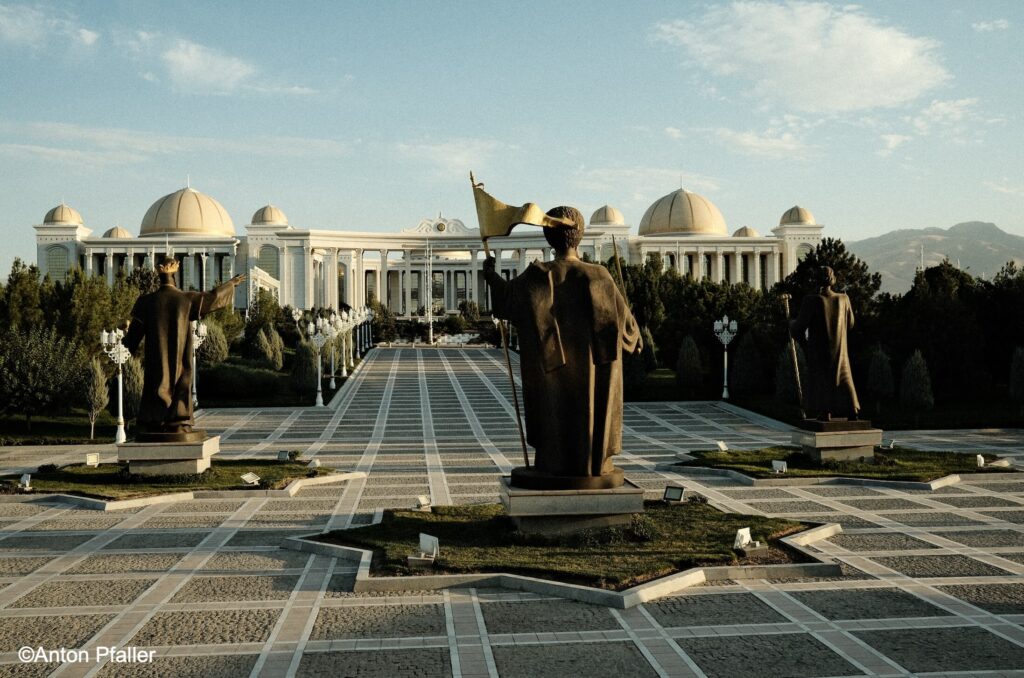
Pillars of salt
- Photo of the day
- 1 minute
Turkmenistan stands as the most extreme case of authoritarianism in Central Asia. From 1991 to 2006, the Saparmyrat Niyyazov state established a near-total grip on all public and private life, shutting down every library and hospital outside the capital on the grounds that the country had no need of them. By the same logic, Covid-19 never, according to regime sources, reached Turkmenistan. Internet access is severely restricted, cinema and opera are banned, and the bulk of university and religious education was reduced to drilling the precepts of the Ruhnama : a text attributed to Niyyazov blending Quranic doctrine, moral instruction, historical revisionism, and elements of Turkmen folk culture. Niyyazov’s towering legacy was somewhat cut down to size by his successor Gurbanguly Berdimuhamedov, who cracked the country open to foreign investment and marginally widened internet access, though under tight surveillance. He carried on the tradition of having golden statues of himself erected in the capital’s centre, while quietly shipping his predecessor Niyyazov’s to the outskirts. Autocrats are rarely generous with the limelight.
Photo credits : Anton Pfaller (Germany, @apr_jnr)
Find all of our photos of the day. You can buy some of these and receive them at home: here is the list! If you can't find your picture in the list, mail us to photo@novastan.org.

Where was the picture taken?
If you see this after your page is loaded completely, leafletJS files are missing.