
 Kazakhstan’s Next Elections: Between Reform and Managed Competition
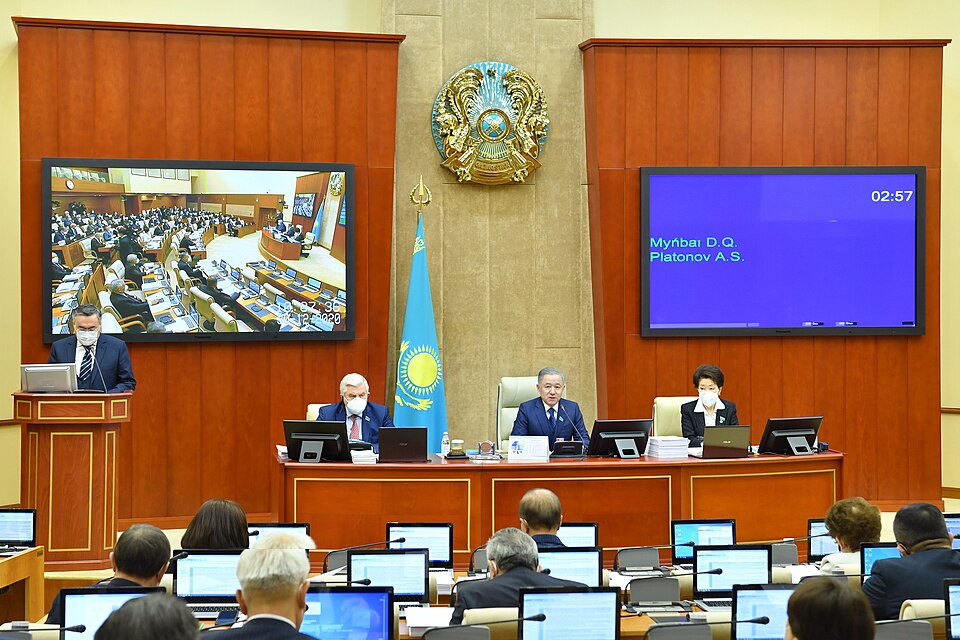
Kazakhstan’s next parliamentary elections are unlikely to determine who governs the country. President Kassym-Jomart Tokayev’s political dominance is not seriously in question. Yet the vote matters because it will test something arguably more significant: whether the “New Kazakhstan” launched after the January 2022 crisis is gradually producing a more representative political system, or merely refining the mechanisms through which political participation is organised and managed.
The elections should therefore not be viewed in isolation. They are the latest stage in a broader political sequence that has included the 2022 constitutional referendum, early presidential and parliamentary elections, the institutionalisation of the National Kurultai, the expansion of direct local elections, and the 2024 referendum on the construction of Kazakhstan’s first nuclear power plant.
Taken together, these developments illustrate Tokayev’s attempt to redefine the political rules of the “New Kazakhstan”: more consultation, broader participation and renewed institutional legitimacy, but without embracing unconstrained political competition. Rather than dismantling the existing political model, the reforms seek to recalibrate it.
Also read on Novastan: Tokayev’s new term: Central Election Commission announces final results of Kazakh presidential election
The constitutional referendum of June 2022 marked the beginning of this new political cycle. It reduced elements of the institutional legacy associated with former President Nursultan Nazarbayev, restored the Constitutional Court, modified the electoral system for the Mazhilis and reintroduced a mixed electoral model combining proportional representation with single-member constituencies. The electoral threshold for parliamentary representation was lowered from seven to five percent, while party lists became subject to quotas requiring the inclusion of women, young people and persons with disabilities.
Support Novastan, the European Central Asia magazine
By supporting Novastan, you are supporting the only English, French and German-language media specialising in Central Asia. We’re independent and we need your help to stay that way!These reforms gave the 2023 parliamentary elections a more pluralistic appearance than previous contests. Six parties entered the Mazhilis: Amanat, Auyl, Respublica, Aq Jol, the People’s Party of Kazakhstan and the National Social Democratic Party. Baytaq, a newly registered environmental party, also participated but failed to cross the electoral threshold. The return of single-member constituencies enabled independent candidates and locally known figures to compete, reintroducing a territorial and personal dimension that had largely disappeared under the previous fully proportional system.
Each of these parties also illustrates a different facet of Kazakhstan’s evolving political landscape. Amanat remains the country’s dominant political force, while Aq Jol continues to position itself as a business-oriented party. Auyl focuses primarily on rural development and agricultural interests, Respublica has sought to appeal to younger entrepreneurs and business circles, and the National Social Democratic Party remains the closest actor to a traditional parliamentary opposition. Baytaq’s participation, despite failing to enter parliament, reflected the growing visibility of environmental issues within Kazakhstan’s public debate.
Also read on Novastan: Kazakhstan: The Blurred Record of the January 2022 Unrest
Yet the political playing field remained highly asymmetrical. Amanat retained a commanding majority, while newer and smaller parties continued to operate within an institutional environment shaped by presidential authority, administrative resources and limited opposition capacity. The central question was therefore not whether Kazakhstan had become a fully competitive democracy, but whether the reforms had genuinely widened the space for political representation.
The National Kurultai is perhaps the clearest illustration of Tokayev’s broader political philosophy. Neither a parliament, nor an opposition forum, nor a conventional civil society assembly, it serves as a consultative platform bringing together selected public figures, academics, experts and representatives of society to discuss questions of national identity, reform, social cohesion and long-term development.
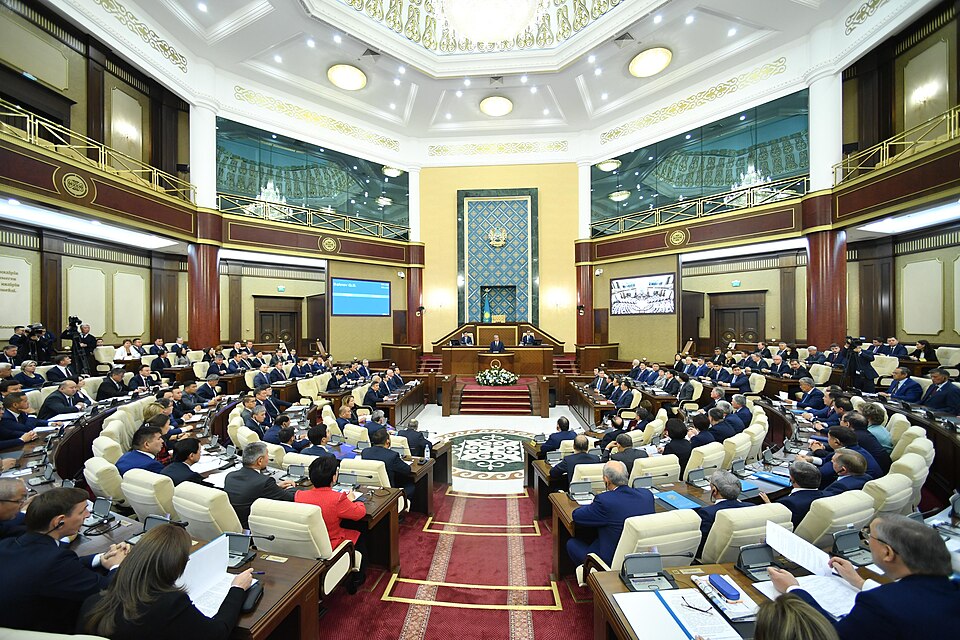
Supporters view the Kurultai as an attempt to broaden consultation and strengthen dialogue between state and society. Critics argue that its participants, agenda and political boundaries remain largely determined from above. Yet its significance lies less in the decisions it produces than in what it reveals about the model of governance that is emerging. Rather than encouraging adversarial politics, the Kurultai reflects a preference for structured consultation within institutions designed and convened by the presidency itself.
Political participation has also expanded below the national level. The gradual introduction of direct elections for district and rural akims, alongside efforts to strengthen local representative bodies, has created new arenas of political competition and accountability. Although these reforms remain limited and continue to operate within a highly centralised political system, they nevertheless provide opportunities for greater citizen engagement and have contributed to a more diverse local political landscape.
The October 2024 referendum on the construction of Kazakhstan’s first nuclear power plant reinforced many of these dynamics. Formally, citizens were asked to decide whether the world’s largest producer of uranium should embark upon a new stage in its energy strategy. The official result – a clear majority in favour – strengthened the government’s mandate for the project. At the same time, the campaign revived familiar debates concerning unequal access to media, pressure on critics and the limited capacity of organised opposition to compete on equal terms. The referendum illustrated Tokayev’s willingness to seek public legitimacy for major strategic decisions while maintaining firm control over the broader political environment.
Civil society has also evolved since 2022. Although important restrictions remain, Kazakhstan today possesses a more diverse ecosystem of public councils, expert communities, civic initiatives and domestic election observers than a decade ago. Online debate has become more visible, and specialised organisations increasingly contribute to discussions on public policy, governance and social issues. The extent to which these actors can influence decision-making remains contested, but they form part of the broader institutional landscape that will shape the forthcoming elections.
Also read on Novastan: What lies beneath Central Asia? Rare earths, critical minerals and the new race for resources
These domestic reforms also have an international dimension. As Kazakhstan continues to pursue its multi-vector foreign policy while deepening cooperation with partners including the European Union, China, Türkiye and the Gulf states, demonstrating gradual political modernisation has become part of the country’s diplomatic positioning. Electoral reform is therefore not only a domestic governance issue, but also an element of Kazakhstan’s international image as a stable, reform-oriented middle power.
This is the central paradox of Kazakhstan’s current political evolution. The state has undeniably expanded the repertoire of participation through constitutional reform, referendums, direct local elections, single-member constituencies, public consultation mechanisms and the National Kurultai. Yet participation remains carefully channelled, institutionally managed and politically bounded.
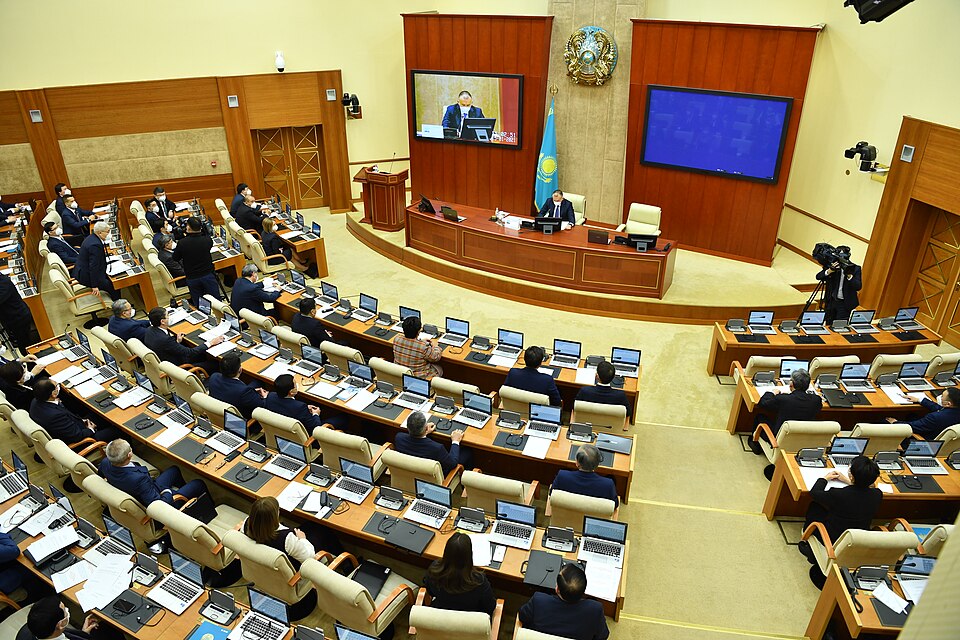
That is why the next parliamentary elections matter. Not because they are likely to produce a dramatic alternation of power, but because they will provide another indication of how this evolving political model functions in practice. Will single-member constituencies produce genuinely accountable local representatives? Can parties such as Respublica, Aq Jol, Auyl or the National Social Democratic Party develop into authentic vehicles for social interests rather than primarily institutional actors? Will new political movements, including those focused on environmental, regional or generational concerns, establish a more durable presence within Kazakhstan’s political system?
Equally important will be the quality of the electoral process itself: candidate registration, campaign conditions, access to the media, the work of election commissions, complaints and appeals procedures, domestic election observation and the ability of civil society to participate freely in public debate.
Also read on Novastan: In Kazakhstan, the futuristic city of “Alatau” reaches a new milestone with special status
Kazakhstan has undoubtedly changed since January 2022. The political system inherited from the Nazarbayev era has evolved, introducing new institutions and expanding opportunities for participation. Yet the “New Kazakhstan” remains an unfinished political project, balancing reform with continuity, consultation with control, stability with accountability.
Whether this trajectory ultimately produces a genuinely more competitive political system remains uncertain. What is already clear, however, is that Kazakhstan is no longer seeking legitimacy solely through promises of stability and economic development. Increasingly, it also seeks legitimacy through institutional reform, managed political participation and structured consultation. The next parliamentary elections will therefore be less a verdict on the government than another measure of how far the “New Kazakhstan” can evolve while preserving the political model on which it continues to rest.
Mathieu Lemoine, Editor-in-Chief for Novastan-English