


 Overview of environmental issues in Kazakhstan
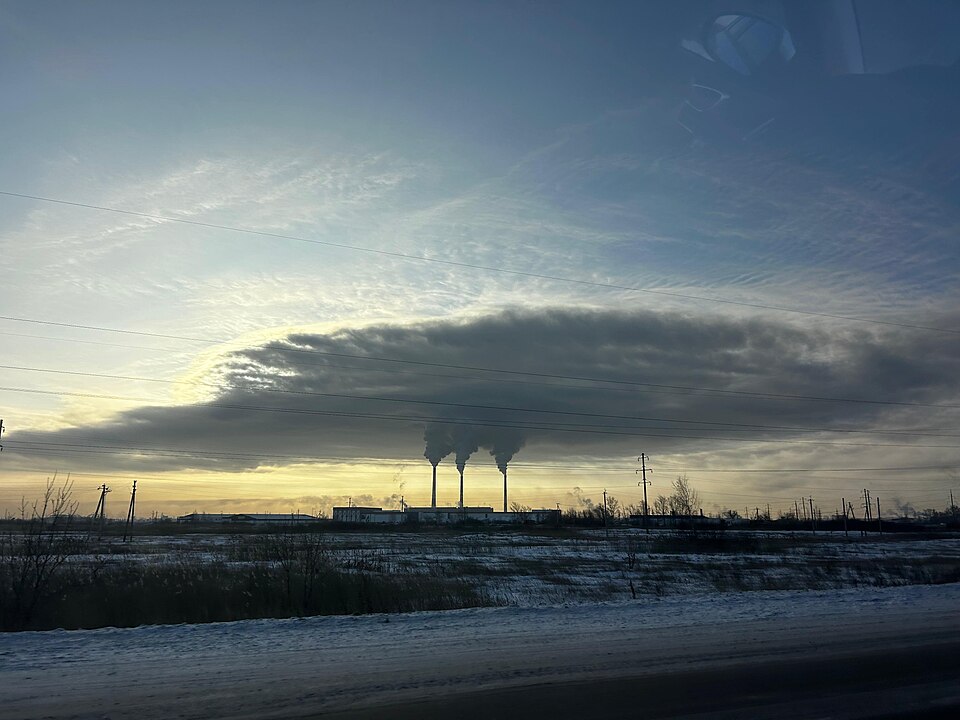
Like many countries, Kazakhstan is facing major environmental problems. Kazakh media outlet The Village has listed the environmental issues most frequently discussed in the country.
Kazakhstan continues to actively address the environmental challenges affecting different regions of the country.
In recent years, the environmental situation in major cities has deteriorated significantly: the basins of many water bodies are gradually drying up, emissions of harmful substances exceed permitted levels several times over, and industrial enterprises are releasing chemicals into the environment in an uncontrolled manner.
Support Novastan, the European Central Asia magazine
By supporting Novastan, you are supporting the only English, French and German-language media specialising in Central Asia. We’re independent and we need your help to stay that way!Kazakh media outlet The Village has listed the main ecological problems facing the country.
Air pollution
For many years, the East Kazakhstan region remained the country’s largest industrial region. According to the Bureau of National Statistics, more than 15,000 companies are registered there. These include major industrial giants such as Kazzinc, KazMinerals, the Ust-Kamenogorsk Titanium and Magnesium Plant, the Ulba Metallurgical Plant and others.
The mining and metallurgical company Kazzinc, which produces zinc, copper, lead and other precious metals, is the most significant source of pollution. According to the region’s ecology department, in 2021 Kazzinc accounted for almost half of all pollutant emissions in the region.
Read also on Novastan : Au Kazakhstan, les villes industrielles souffrent de la pollution atmosphérique
According to Kazhydromet, in the city of Ust-Kamenogorsk, the region’s administrative centre, unfavourable weather conditions are recorded around 100 days a year. These are days when there is no wind in the region, causing harmful substances to accumulate in the air. During such periods, scientists even advise residents to avoid long walks outdoors, not to open windows, and to prioritise distance learning for schoolchildren.
Today, the East Kazakhstan region tops the national ranking for cancer incidence. The rate in the oblast is 55% higher than the national average: 321 cases per 100,000 inhabitants. Residents themselves say they have been experiencing a sweet, metallic taste in their mouths for years.
Polluted rivers
Senator Olga Bulavkina has highlighted the critical level of air pollution in Ust-Kamenogorsk, noting that hydrogen chloride levels exceed the norm by nine times. She has also linked this pollution to the increase in cancer cases.
Representatives of the prosecutor’s office have stated that, out of the region’s 165 landfills, only 22 comply with environmental requirements — just 13%.
It should be noted that pollution of local water bodies is regularly recorded in the region. In May 2019, residents noticed that the Berezovka River had turned bright green. Following an inspection, scientists found that the water contained 140 times the permitted level of manganese, 44 times the permitted level of zinc, twice the permitted level of ammonium, and five times the permitted levels of sulphate and copper.
Kazzinc was held responsible for uncontrolled discharges and fined 8 million tenge, or €14,640. In July 2023, residents noticed that the water in the Filippovka River had turned milky white. Kazzinc again paid a fine, this time of 50 million tenge, or €91,589.
Modernising industrial facilities to reduce pollution
It is important to note that many rivers in East Kazakhstan are tributaries of the Irtysh. They form part of a single ecosystem. When one body of water is polluted, there is always a risk that harmful substances will enter other channels. The water from these rivers is used not only for drinking water, but also for agriculture and for the operation of thermal power plants and industrial enterprises.
Read also on Novastan : Kazakhstan : une hécatombe de cygnes causée par la pollution
As a result, the Ust-Kamenogorsk metallurgical complex had to modernise its sulphur gas purification units, which should reduce sulphur emissions by 10 to 20%. In Ridder, a new workshop was built, reducing emissions by 714 tonnes in 2024.
On 9 October 2024, it was announced that an environmental air monitoring system was being introduced and that eco-offices would be opened to allow residents to monitor air quality themselves. Work is also under way to improve the emissions monitoring system. This was stated by the akim, or local government representative, of the East Kazakhstan region, Ermek Kosherbayev.
Air pollution in Almaty
In January 2025, Almaty topped the ranking of the world’s most polluted megacities. According to environmentalists from the Almaty Air Initiative, one year of living in the city is equivalent to smoking 487 cigarettes. Annual emissions of pollutants into the atmosphere amount to around 125,000 tonnes.
In addition, according to a survey carried out by the Almaty Air Initiative in August 2024, 42% of respondents believe that air quality in their neighbourhood is poor or very poor. One in six residents is considering moving because of the poor environmental conditions.
Read also on Novastan : La pollution de l’air toujours aussi forte en Asie centrale
In 2024, 202 days of high air pollution were recorded in Almaty. Specialists recommend that residents limit their time outdoors and use protective masks, particularly those who are especially sensitive.
At a meeting of the Public Council, data on the main sources of pollution in Almaty were presented. Motor transport is the city’s main source of air pollution, accounting for around 60% of total emissions. Industrial enterprises also heavily pollute the environment, emitting around 27.5% of all harmful substances. The use of coal heating in private homes also contributes to air pollution, accounting for around 11% of total emissions.
The government is aware of the problem
In November 2022, President Kassym-Jomart Tokayev, addressing Almaty residents, raised the issue of air pollution in the city. He noted that the state of the environment has a direct impact on people’s health and lives.
During a meeting with residents of the Zhetysu district, Almaty akim Yerbolat Dossayev explained how the city intends to address environmental problems. According to him, the full modernisation of Combined Heat and Power Plant 2 will be completed in 2026, which should reduce emissions by 90%.
Transport is also being actively developed. By the end of 2026, the city has promised to replace all public transport with environmentally friendly vehicles.
Waste disposal
Waste and rubbish are also among Almaty’s main environmental problems. A large number of illegal dumps have accumulated in the city, and waste recycling remains difficult. During a meeting with residents of the Almaty region in October 2022, Kassym-Jomart Tokayev called for all tourist routes to be equipped with rubbish bins and for waste collection and sorting to be organised. He also instructed the Ministry of Internal Affairs to step up efforts to bring those responsible for illegal dumps to justice.
Plans are being discussed to build a waste recycling plant in the Ile district and another facility in the Karasay district, which would recycle waste and produce electricity from greenhouse gases.
Also read on Novastan : Décharges sauvages au Kazakhstan : d’où viennent-elles, et comment lutter contre ?
As early as 26 February 2022, a rally for clean air was organised in Almaty. Participants called on the authorities to take urgent and comprehensive measures, arguing that the city was on the brink of an ecological disaster. Among the participants were activists, experts, students and families with children.
At the rally, expert Aiymgul Kerimray accused the authorities of manipulating emissions data and called for a transition to European standards for assessing pollution. Activist Asiya Tulesova called on the state not only to listen, but also to act.
The drying up of the Aral Sea
Until 1960, the Aral Sea was the fourth-largest lake in the world. But because of Soviet irrigation projects, the Syr Darya and Amu Darya rivers, which fed the basin, were diverted.
As a result, over the past 60 years, the Aral Sea has shrunk by a factor of three, while its volume has decreased fifteenfold. Its water level has fallen by 29 metres. In the 1980s, the sea split into two parts: the northern Small Aral and the southern Large Aral. This tragedy led to the migration of most of the region’s wildlife, the disappearance of fish, and the emergence of the Aralkum Desert.
Also read on Novastan : Le totalitarisme de l’irrigation a tué la mer d’Aral
In 2023, the akim of the Kyzylorda region, Nurlybek Nalibayev, stated that tens of millions of tonnes of salt and dust are carried by the wind every year from the dried-up bed of the Aral Sea. They travel thousands of kilometres. “The only way to prevent salt from spreading beyond the sea area is to plant saxauls,” a type of Central Asian tree, he said.
According to the akim, 350,000 hectares of saxaul were planted on the dried-up bed of the Aral Sea between 2021 and 2022.
A full restoration of the sea is impossible
However, scientists have expressed doubts about the possibility of fully restoring the Aral Sea. Ecologist Yevgeny Simonov has said that the region’s water deficit is increasing and that it is more realistic to speak of preserving delta water bodies and wetlands than of fully restoring the sea.
Mels Yeleusizov, president of the environmental movement Tabigat, notes that the drying up of the Aral Sea leads to the spread of salty dust, which settles on glaciers and accelerates their melting. He stresses that the disappearance of this body of water has a negative impact on Kazakhstan’s ecosystem, contributing to desertification and the deterioration of the region’s environment.
Want more Central Asia in your inbox? Subscribe to our newsletter here.
At the expense of the state and regional budgets, 101,000 hectares were planted in 2021. In 2022, phytoremediation work was carried out over an area of 250,000 hectares, and in 2023 over an area of 193,200 hectares. From 2024 to 2025, these phytoremediation efforts targeted 556,200 hectares.
Thanks to agreements reached with neighbouring countries, a total of 1.6 billion cubic metres of water had been sent to the northern part of the Aral Sea by the end of March 2025. In April of the same year, the total volume of water in the northern Aral Sea stood at 22.1 billion cubic metres, 3.2 billion cubic metres more than at the beginning of 2022.
Daniyar Beisembayev and Sultan Temirkhan
Journalists for The Village
Translated from Russian by Sophie Combaret and from French by Mathieu Lemoine
Proofread by Elise Medina (French version)