


 Dotor Khuree: “We want to make Mongolian music with contemporary instruments”
Support Novastan, the European Central Asia magazine
By supporting Novastan, you are supporting the only English, French and German-language media specialising in Central Asia. We’re independent and we need your help to stay that way!Formed in Ulaanbaatar in 2023, Dotor Khuree blends Mongolian musical traditions with avant-pop, jazz, rock and other contemporary influences. In this interview with Novastan Editor-in-Chief Mathieu Lemoine, the band discusses its latest EP, the independent music scene in Ulaanbaatar and what it means to make distinctly Mongolian music today.
Mongolian music has gained growing international visibility in recent years, but outside the country it is still often associated primarily with the morin khuur, throat singing and other immediately recognisable traditional forms.
Ulaanbaatar-based band Dotor Khuree is exploring another path.
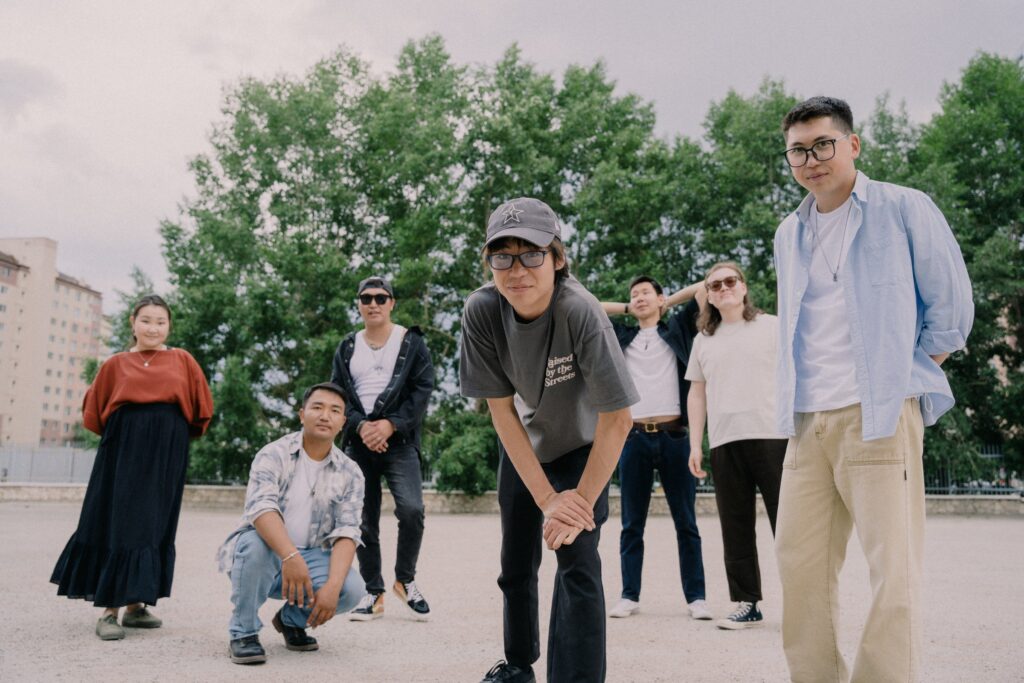
Formed in April 2023 by musicians who met at the Mongolian State University of Arts and Culture, the group describes its sound as avant-pop, post-ethno and poly-genre. Its members draw on Mongolian long song, regional folk traditions and the musical vocabulary of instruments such as the morin khuur, while largely expressing those influences through contemporary instrumentation.
The band released its debut LP, Zarimdaa Zuils, in September 2025, followed by the self-titled Dotor Khuree EP in May 2026. The latter pushed the musicians further towards what they describe as a distinctly Mongolian sound achieved without directly using traditional instruments.
Novastan spoke with the members of Dotor Khuree about Mongolian musical identity, experimentation, Ulaanbaatar’s independent scene and their ambitions beyond Mongolia.
Novastan: Could you introduce Dotor Khuree to readers who may be discovering you for the first time? How did the band come together, and what brought you to the kind of music you make today?
Dotor Khuree: Mandaa: Dotor Khuree was formed on 12 April 2023 and consists of six musicians and two crew members – our band manager and sound engineer – making eight members in total. We are an avant-pop, post-ethno, poly-genre band.
The band was first founded by our bassist Gombojav and me, Narmandakh, the keyboardist. We then started adding our other bandmates: vocalist Tsetsen, guitarist Orgil, sound engineer Enkhdalai, pianist Batzaya and drummer Chultemjamts. Our last addition was our band manager, Oyuntulkhuur, or Roxy.
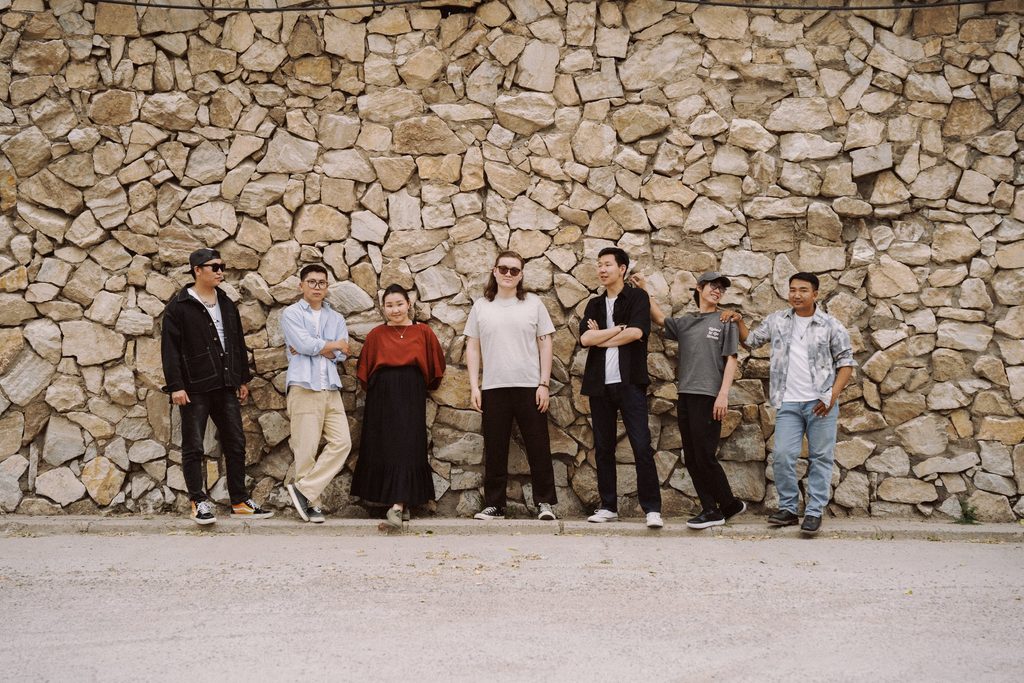
The band members all met at the Mongolian State University of Arts and Culture and were already friends.
The main calling to start making the music we aim to make today began with my childhood and my deep love for Mongolian long songs and the morin khuur while growing up in the countryside. The older I got, the more that love grew, and I aspired to incorporate traditional musical elements into my own music.
After forming the band, I told the others about the kind of Mongolian music I wanted to make, and all our members received the idea with real enthusiasm. That was how the basis of Dotor Khuree’s present sound came to be.
Another important factor was definitely our university mentors and teachers, who inspired and encouraged us to stay close to our Mongolian musical roots and stressed the importance of contributing to their development. That was something that really stayed with us.
One of the things that immediately stood out to me was that your music can sound distinctly Mongolian even when you are using primarily contemporary instruments. How consciously do you think about creating a “Mongolian” sound?
Mandaa: It is definitely a very conscious decision. Because we all love Mongolian music so much, we strongly believe that it is entirely possible to make our sound distinctly Mongolian without using traditional instruments.
That is why we spend so much of our rehearsal time coming up with new ideas about how to achieve that. The song ideas usually come from me, and from there we collaborate as a team, discussing arrangements and musical timbres with the shared goal of creating a distinctly Mongolian sound using contemporary instruments.
We feel that this goal is now gradually coming to life. We are really happy that you noticed it.
What musical traditions, older songs or sounds from Mongolia have influenced Dotor Khuree most strongly? When you reinterpret traditional or older material, how do you decide what to preserve and what to transform?
Gomboo: So many Mongolian musical traditions influence us. Long songs, or urtiin duu, and the morin khuur have so many different varieties. The techniques and sounds vary from region to region: the far western regions of Mongolia have very distinctive sounds, while the Gobi provinces have something different again. That is always very inspiring.
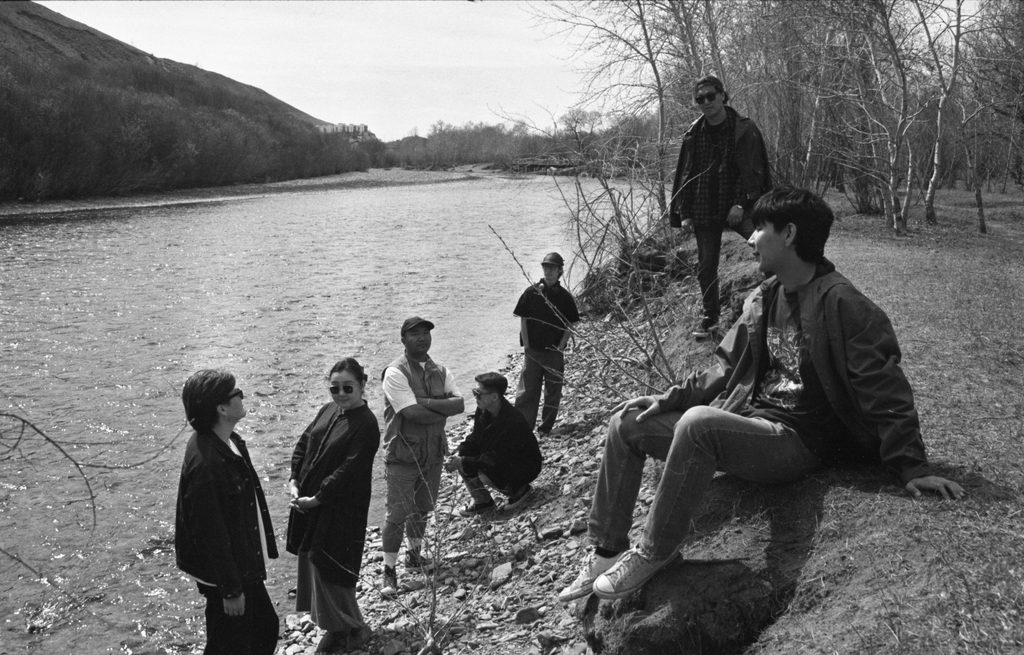
Several of our songs reflect those nuances of Mongolian folk music and long song.
For example, when reinterpreting and rearranging the folk song Shiree Nuur, we made it sound nothing like the original. We shortened the lyrics, using only the first two lines and leaving more room for the listener’s interpretation. The song’s vocal accent in particular blended exceptionally well with our female vocalist’s tone.
Rather than directly copying tradition, we wanted to express it through our own unique musical language.
Could you tell us about your latest EP? What ideas connect the tracks, and how does it differ from your earlier work?
Gomboo: It is always interesting for us to make music using traditional vocal styles and a Mongolian feel, while adding our own modern elements. While making this kind of music, it almost feels as though something awakens within us.
In fact, the Dotor Khuree EP can be described as “our awakened spirit”. Through this EP, compared with our Zarimdaa Zuils LP, we express even more strongly our connection to our national culture and heritage – something that is always close to our hearts.
Roxy: On our debut LP, Zarimdaa Zuils, the band explored a wider range of genres, even dipping into jazz fusion and bossa nova, so the record is more poly-genre.
On the Dotor Khuree EP, the band continued exploring the original idea that began with songs such as Shiree Nuur and Ertnii Saikhan on the first LP. At its core, that has always been about creating a distinct Mongolian sound with a Dotor Khuree feel.
Is there a particular song on the EP that you feel best represents what Dotor Khuree is trying to do musically? Could you take us through how that track developed?
Mandaa: Every song on the EP expresses the direction we want to take with our future sound, but especially Ergen Dervene, the album intro.
The song includes many elements of Mongolian musical traditions, such as folk-song elements, ritual chants, biyelgee – traditional Mongolian dance rhythms – and circular dancing motifs.
The lyrics were co-written by singer Tsetsen and keyboardist Narmandakh, who also finalised the composition, while the entire band collaborated on the production.
The composition is vocal-oriented, with the voice playing the main role and the other musical instruments supporting the central melody.
Roxy: We also recently finished a very creative and interesting project translating the song’s lyrics into English, with help from our friend Unurjargal, who is a book and film translator – a big shout-out to her.
Her interpretation might give listeners even more insight into the song. She translated the title as Spreading Wings.

Another of our favourites is Nariin Saihan Heer. The lyrics come from a Mongolian folk song of the same name, but the music is an entirely new Dotor Khuree composition. The title translates as The Fine Bay Horse, but the meaning of the song goes much deeper.
There is often an expectation outside Mongolia that “Mongolian music” should involve instruments such as the morin khuur or techniques such as throat singing. Do you ever feel that international audiences have a narrow idea of what Mongolian music is supposed to sound like?
Roxy: I wouldn’t call it narrow, maybe just a little outdated, because the morin khuur and throat singing can themselves be used in so many different experimental ways, which sadly is not being done that much.
It is always important for artists to give listeners something they never expected.
What is the independent music scene in Ulaanbaatar like today? Are there particular venues, festivals, labels or communities that have been especially important in allowing alternative music to develop?
Mandaa: Ulaanbaatar has a small but active independent music scene.
There are live music venues such as NarBar Live House, Fat Cat Jazz Club and 78 MusicBar, festivals such as Playtime, music communities such as Sonsloo, and labels like Aydu Records, all contributing to the spread of contemporary sounds.
Do you feel that a recognisable contemporary Ulaanbaatar sound or musical identity is emerging, or is the scene too diverse to describe in those terms?
Mandaa: The scene has become more diverse in recent years, so it is definitely difficult to describe the sound in those terms because the artists are all so different.
I think the lyrics, regardless of the sound, will always remain distinctly unique, because it is very difficult to translate Mongolian poetry and phrasing into English or other languages while preserving their original depth.
How easy is it to sustain an independent band in Mongolia? What are the main practical challenges – recording, rehearsal spaces, venues, financing, reaching audiences?
Orgil: Of course, it is not easy to be an independent band in Mongolia. The biggest challenge is financial sustainability.
Some of our band members have full-time jobs alongside playing in the band. Even if our music gains more recognition and reaches more listeners, that does not guarantee us stable sponsorship.
Finding rehearsal spaces with good acoustics and monitoring setups is also a constant struggle, so we do our absolute best with what we have at the moment.
Maybe if we had enough funding, we could deliver higher-quality productions, record in professional studios and reach a much wider audience much faster.
Mongolia’s younger musicians have much greater access to music from around the world than previous generations did. How do international influences interact with local musical traditions in your own work and in the wider scene?
Orgil : Yes, that’s right. We also have many international musical influences, and we especially love listening to and studying different styles.
Most of our members have formal degrees in music composition and other music-related fields, which is probably one of our strengths. We also have a strong influence from academic and classical music.
However, we strive to master those techniques while remaining true to our core value, which is honouring and evolving our native heritage. That shared purpose is why I believe our sound is continually growing and refining its distinct identity.
To us, Mongolian music feels peaceful, open and expansive, whereas Western music often feels sharper, highly kinetic and harmonically complex.
Because traditional Mongolian music is pentatonic, it blends seamlessly with genres such as blues and rock. Meanwhile, fusing it with jazz, Latin and other contemporary styles produces truly distinctive, unconventional textures.
Moving forward, we will keep striving to spread our unique cultural heritage while making music that genuinely resonates with us and brings us joy.
Has the growth of international interest in Mongolian music changed the way musicians in Mongolia think about presenting themselves abroad? Is there a tension between what foreign audiences expect from Mongolia and what younger Mongolian artists actually want to create?
Tsetsen: Yes, I believe it has.
When our culture and emotions are expressed through music, I believe they carry a rich complexity of emotions as vast as the steppes. We are deeply grateful to all the artists who are sharing this sensibility with international audiences and reshaping the way people hear Mongolian music.
What artists create and envision does not always align with audience expectations – sometimes it matches, and sometimes it diverges. It has always been like that. This is probably because every work emerges from a different perspective and carries its own unique story.
For us, creating music that we want to create and want to listen to also happens to align with what we aim to do: preserve our cultural heritage by infusing and blending it with our new contemporary senses and emotions.
Which other contemporary or independent Mongolian artists would you recommend to someone who wants to understand what is happening musically in Ulaanbaatar today?
Mongolian artists are definitely growing, evolving and diversifying alongside global musical trends.
Here are a few artists we highly recommend checking out:
- Bodikhuu
- Khusugtun
- B.L.M.D
- Magnolian
- Enji
- Even Tide
- Celine Dessberg
Finally, what is next for Dotor Khuree?
Chukana: We are really excited and looking forward to the release of our very first vinyl record for our debut LP Zarimdaa Zuils, featuring specially remastered audio.
We are also yet to organise our first solo concert.
Fuelled by this milestone, we are looking outward – driven by a passion to step onto international festival stages and bring our music to global audiences.
Dotor Khuree’s music is available on Bandcamp and other streaming platforms. The band can also be followed through its official Linktree.
By Mathieu Lemoine, Editor-in-Chief for Novastan English.