




 Almira Saifullina: “The steppe is an archive of violence, memory and silence”
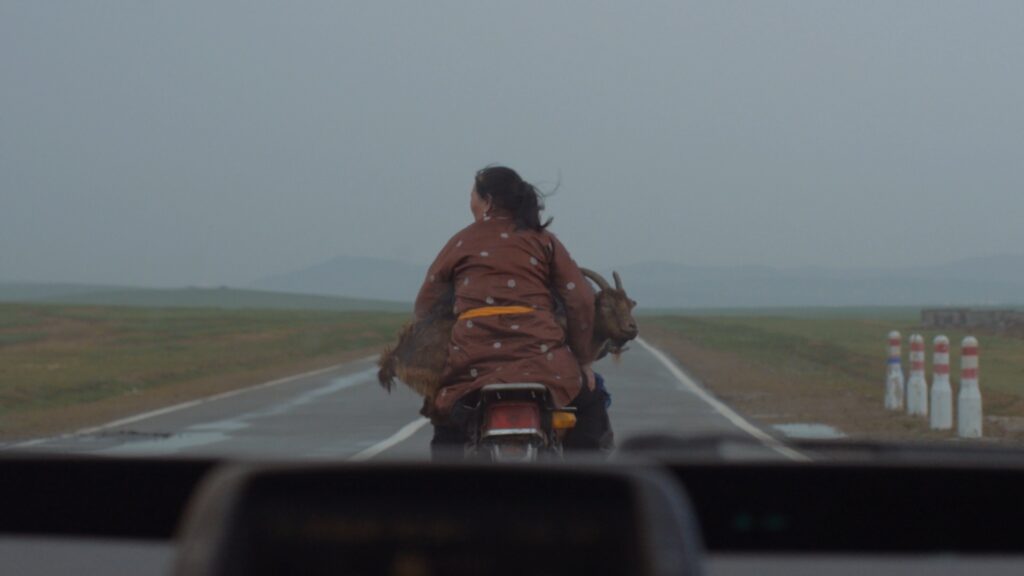
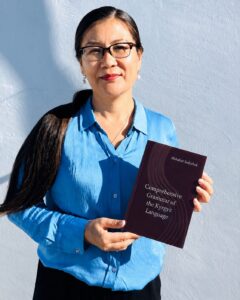
Documentary filmmaker and visual anthropologist Almira Saifullina explores how landscapes preserve traces of Soviet violence, forced displacement and family memory. In this interview with Novastan, she discusses her new film project DALA, the legacy of Karlag in Central Kazakhstan, the risks of aestheticizing historical trauma, and her earlier work in Mongolia and Uzbekistan.
Novastan: Could you introduce yourself to Novastan’s readers? How would you describe your path into cinema, visual anthropology and documentary research?
Almira Saifullina: My name is Almira Saifullina. I am a documentary filmmaker and visual anthropologist.
My journey began with a passion for documentary photography at a young age. With the first money I ever earned, I bought a camera and started photographing the world around me. My first conscious attempt to explore people’s lives through a camera came in 2011, when I travelled across Uzbekistan and created my first photo series. Looking back, I think that was my first step into documentary filmmaking and visual anthropology, although at the time I did not know those disciplines had names.
I continued searching for my own language and tools, and in 2014 I enrolled at the Moscow School of New Cinema. There I met friends and like-minded collaborators with whom I began making films. In 2022, after several years working in documentary cinema, I realised that I wanted to give a new form to my visual method and expand the boundaries of how knowledge and art can be produced. I enrolled in a master’s programme in Visual Anthropology in Berlin. That experience gave a new impulse to my work.
You have lived and worked in different cities and countries, including Kyiv, Kazakhstan, Moscow and elsewhere. How has this personal geography influenced your perspective as a filmmaker?
I was born in Kyiv, where my father was completing postgraduate studies. Three months later, however, we left because of the Chernobyl disaster and returned to Karaganda, in central Kazakhstan, where my family comes from.
After that came many moves across Kazakhstan: Almaty in the 1990s, Astana in the 2000s, then Moscow, and later the wider world. I have had a fairly nomadic biography, moving between cities and countries since birth.
I think this path has allowed me not to become trapped within a single locality. It has given me a broader view of the world and made me more open to different cultures. At the same time, there are disadvantages. I cannot describe myself as a filmmaker of one particular country, nor can I fully claim any place as my own in every sense. I do not possess a deeply local insider’s perspective. In that sense, it is a double-edged sword.
How did Kazakhstan become part of your biography and creative imagination? What does it mean for you to film and research Kazakhstan today?
Kazakhstan is my homeland and a place of constant return. My family lives there, and my ancestors are buried there.
For the past several years, I have been working on a new film with the working title DALA, which is my first film shot in Kazakhstan.
At the same time, it is a difficult project because I do not have the same distance that I had when filming in Mongolia or Uzbekistan. Many things pass directly through me. They affect me emotionally and draw me into the history of my own family.
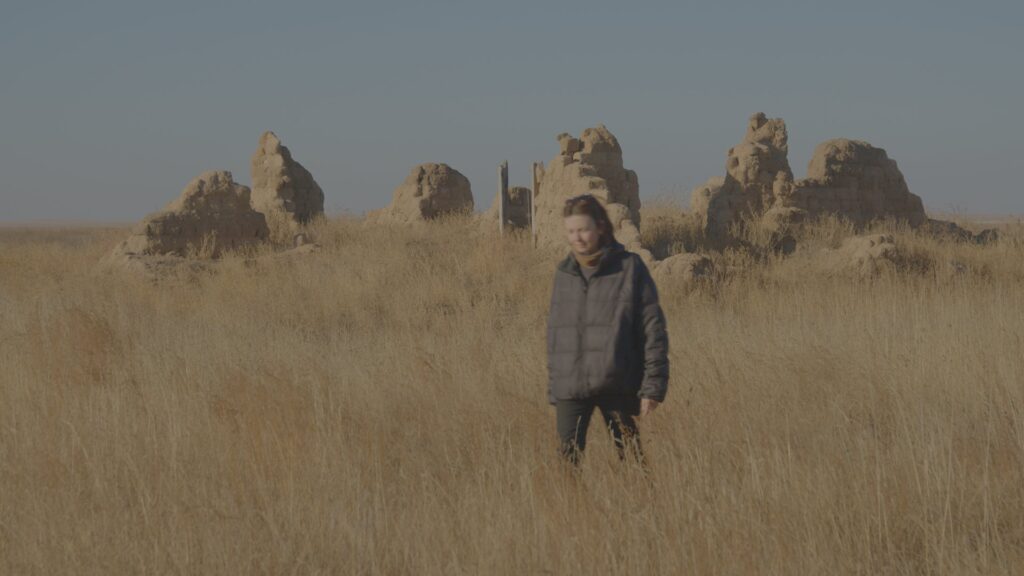
Yet I also feel an absolute artistic and personal necessity to make a film in my homeland, however emotionally demanding that may be.
In some ways, I am glad that I am making a film in Kazakhstan now, after having gained substantial experience in documentary cinema. It allows me to engage with complex themes while focusing more on meaning and less on the practical challenges of production.
You studied economics at Moscow State University before turning to filmmaking and later studying directing at the Moscow School of New Cinema. How did that transition happen? Were there any films, directors or artistic discoveries that particularly influenced your decision to pursue cinema?
Since childhood, I have been drawn to art and to expressing myself through it. Studying economics at Moscow State University was more of a compromise shaped by circumstances than a genuine passion for economics.
When I moved to Moscow in 2005, however, I discovered auteur cinema. Someone introduced me to the Mir Iskusstva cinema, which at the time was a gathering place for young people who wanted to study, watch and even make a different kind of cinema. They screened masterpieces from around the world.
I spent nearly all my free time there. Those films were a revelation.
The real turning point came when I discovered the work of Artavazd Peleshian. Through his short films, I felt the magic and power of cinema. They awakened in me an irresistible desire to work in film and to make the invisible visible.
What did the Moscow School of New Cinema give you in terms of artistic method, discipline and freedom? Were there teachers, directors, films or exercises that changed the way you observe people and spaces?
More than anything, the Moscow School of New Cinema gave me close friends and like-minded collaborators. They became my greatest source of inspiration.
Together we explored cinema, dramaturgy, cinematography and editing. We experimented with form and language, discussed ideas endlessly, and learned by making films together.
I studied there at the very beginning of the school’s history, what I consider its golden period. It was a fortunate moment when we were not yet concerned with industry questions such as funding, distribution, professional status or careers. We existed entirely within the space of art and ideas. We dreamed about cinema and searched for ourselves through it.
We supported one another and worked on each other’s films with complete commitment and enthusiasm. It was a very special environment. It gave me an important foundation, and the discoveries that emerged from that collective experience profoundly shaped the way I observe life and transform it into cinema.
Your work sits at the intersection of documentary cinema, visual anthropology and practice-based research. Do you see yourself primarily as a filmmaker, a researcher, an anthropologist, or someone who moves between these roles?
First and foremost, I see myself as an author.
Filmmaking, research and visual anthropology are different angles, different tools and different methods. Yet they all follow the same trajectory. I observe the world, study it, live through it and reflect on it. Then I materialise that knowledge in one form or another so that it can be shared with others.
For me, a film is not an illustration of research that has already been completed. The process of making a film itself – observation, filming, being present in a space, building relationships with participants, and later working with the material through editing- becomes a form of research.
Very often, it is during filming or editing that I begin to understand things I could neither see nor articulate beforehand. Cinema is therefore not only a form of expression for me; it is also a way of producing knowledge.
I move between these different roles and sometimes blend them together, but for me they are all parts of the same process. I believe that the intersection of anthropological inquiry and documentary filmmaking is where some of the most interesting forms and subjects are emerging today. In many ways, that intersection is not the future anymore- it is already the present.
Novastan est le seul média en français et en allemand spécialisé sur l'Asie centrale. Entièrement associatif, il fonctionne grâce à votre participation. Nous sommes indépendants et pour le rester, nous avons besoin de vous ! Vous pouvez nous soutenir à partir de 2 euros par mois (défiscalisé à 66 %), ou en devenant membre actif par ici.
Your current project DALA focuses on Soviet forced deportations, labour camps and industrial experiments in Central Kazakhstan. How did this project begin?
This project grew out of my interest in the history of my home region, Karaganda and the wider Karaganda oblast. I would regularly travel there, filming the steppe and sites of memory, visiting former Gulag camp territories. For a long time, however, this remained more of a personal historical interest.
In 2022, I began to see this history from a different perspective and realized that it concerned me much more deeply than I had previously understood. My own family arrived in Central Kazakhstan as a result of forced displacement. The family of my great-grandfather, who was a mullah, was deported from Orenburg to the Karaganda steppe. I grew up in a region whose population was largely shaped by deportations, exile, labour camps and the industrialization that followed.
Over the last two years, together with my cinematographer, I have travelled across the steppe in search of camp remains, former camp settlements, buildings, burial sites and other traces of this history. Gradually, these journeys became more than a process of collecting material. They turned into a way of understanding how the violence of the past continues to exist within the contemporary landscape, within family memory and within the very structure of the region itself.
DALA means “steppe” in Kazakh. Why did the steppe become the central image and space of the project?
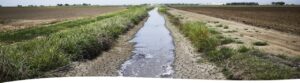
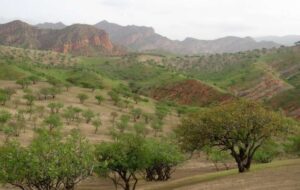
Because the steppe is a blank canvas upon which people and historical events have drawn their own picture. It is like a guiding thread, a silent protagonist that follows you everywhere, a place where you inevitably encounter things you would often rather avoid.
The steppe is a silent witness to what human beings do. It is a place of life and death, suffering, memory, cruelty and violence, but also of humility and mercy.
In the film, the steppe becomes more than an image or a backdrop. It becomes a space of inquiry. We move through it in search of camp remains and historical artefacts that have sometimes almost completely merged with the landscape itself.
You describe the steppe as a kind of archive. What can the landscape tell us about violence, memory and history that documents or official archives often cannot?
The steppe offers a direct, physical encounter with history.
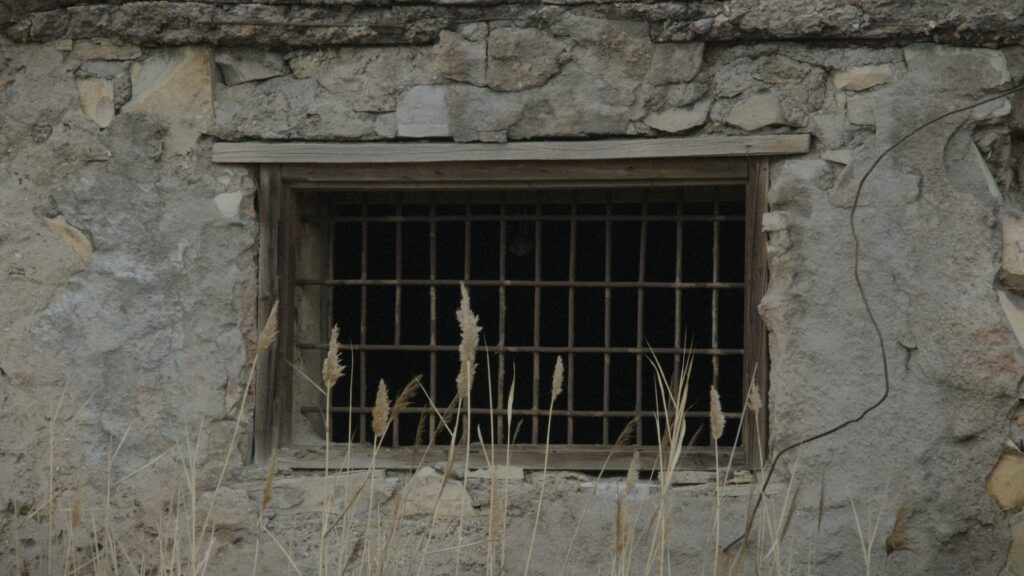
When local historians show you how a transit camp was organized, how the camp system functioned, where prisoners were transported from and to, when you enter a prison building and find yourself inside a punishment cell, or stand inside a barrack where prisoners once lived, you immediately gain a different understanding of historical events, their significance, the conditions people endured and the realities they experienced.
No document can provide that kind of experience.
It is a form of immersion into history through space and through one’s own body.
At the same time, the landscape does not speak directly. Very often, what you see is simply steppe, ruins or an ordinary house. You need to search, listen to local residents and regional historians, and compare what you see with archival sources and testimonies. Only then does the landscape begin to reveal itself as an archive.
For readers unfamiliar with this history, could you explain what the Karaganda camp system, or Karlag, was? Why is it so important for understanding Soviet repression in Kazakhstan?
It is important to understand Karlag not as a single camp surrounded by barbed wire, but as a vast and highly complex system of camp branches, farms, industrial enterprises and settlements spread across a significant part of Central Kazakhstan.
Karlag was established in 1931 and reported directly to the central Gulag administration in Moscow. Its administrative centre was located in the settlement of Dolinka, near Karaganda.
The territory of Karlag stretched roughly 300 kilometres from north to south and 200 kilometres from west to east. By the early 1950s, the system included more than two hundred camp branches and facilities.
In many ways, Karlag functioned as a state within a state, with its own administration, production system, agricultural sector, transport network, prisons and vast numbers of forced labourers.
Prisoners and special settlers were used as labour for the development of agriculture, construction, mining and the coal and metallurgical industries of Central Kazakhstan. Karlag was therefore not only a system of punishment and isolation. It was also one of the key instruments of Soviet industrialization and the colonial development of the region.
Karlag is essential to understanding Kazakhstan’s history because labour camps, mass deportations and forced labour all played a role in creating the modern face of the region: its cities, mines, factories, roads and multi-ethnic population.
This is not a separate chapter of history that existed somewhere outside ordinary life. In many respects, it is one of the foundations upon which contemporary Central Kazakhstan was built.
What traces of Karlag and other forms of Soviet violence remain visible today: buildings, ruins, archives, graves, family stories, silences, industrial landscapes?
There are many traces, although not all of them are immediately recognized as traces of violence.
The former Karlag administration building in Dolinka still stands and now houses a museum. Individual prison facilities, barracks, agricultural buildings, camp settlements, railway stations through which prisoners arrived, and transport routes have also survived.
There are mass graves, the Spassk Memorial, and “Mamochkino Cemetery”, where women prisoners and children connected to the Karlag system were buried.
Yet much of this history is not preserved in museums or memorials.
Some former camp buildings are still inhabited. Others have become ruins or have nearly disappeared into the steppe. Sometimes all that remains of a camp site is a foundation, part of a wall, fragments of wire, a few trees or a subtle change in the landscape that would be impossible to identify without the explanation of a local historian.
There are also Soviet archives, personal files, photographs, letters, memoirs of former prisoners and special settlers, family archives and oral histories passed down through generations.
Family memory often preserves things that official documents do not: how a person arrived in Kazakhstan, what happened to them, how the family survived, what they chose to forget or what they were afraid to discuss.
And, of course, one of the most important traces is the industrial landscape of Central Kazakhstan itself. Mines, factories, railways and workers’ settlements are now seen as natural parts of the region, even though many were created or developed through the labour of prisoners and special settlers.
The traces of Karlag are therefore everywhere. They often remain invisible precisely because they have become part of everyday life.
How do people living in these places today relate to this history? Is it present in everyday life, or does it remain marginalized and largely invisible?
This is a densely populated region, so I would be cautious about making broad generalizations.
Most people know the history of the region to some extent. For many, the history of repression, deportation, exile and subsequent industrial development forms part of their own family history.
A significant proportion of the region’s non-Kazakh population still lives there today: Germans, Koreans, Chechens, Russians, Ukrainians, Tatars and many others. Yet the reasons why these communities arrived in Kazakhstan differ greatly, and it would be inaccurate to reduce all of these histories solely to repression and deportation.
I would say that this history is present in everyday life in a fragmented way.
Some people know in great detail how their family arrived there and preserve documents, photographs and stories. Others know only fragments. Still others view the mining towns, workers’ settlements and multi-ethnic character of the region as something entirely natural, without questioning how these realities came into existence.
As a result, the past is simultaneously everywhere and almost invisible. It exists in surnames, family histories, buildings, cemeteries and the layout of cities, but it is not always explicitly recognized as the product of specific historical policies.
How is Kazakhstan engaging today with the memory of Soviet repression? Are there museums, archives, research centres, NGOs or memorial initiatives supporting this work?
In recent years, Kazakhstan has undertaken substantial state-led work in this field.
A State Commission for the Full Rehabilitation of Victims of Political Repression was established. Hundreds of thousands of people have been rehabilitated. Large numbers of archival documents have been declassified, collections of materials have been published and a unified electronic database has been created.
There are state museums dedicated to Karlag in Dolinka and ALZHIR near Astana, as well as regional museums, archives and research projects. Every year on May 31st, Kazakhstan commemorates the Day of Remembrance of the Victims of Political Repression and Famine. Numerous memorials and monuments dedicated to victims of repression and the Asharshylyk famine have also been erected.
It would therefore be incorrect to say that the state is doing nothing or that this history is completely silenced. On the contrary, it has been officially acknowledged, and a tremendous amount of material has been collected and made accessible in recent years.
However, in my view, this remains insufficient, particularly when it comes to drawing lessons from this history and critically examining contemporary social and political processes through the lens of how the Soviet system, and especially Stalinist repression in the 1930s-1950s, shaped present-day Kazakhstan.
I believe there is a need for more civic initiatives devoted to working through this difficult past. This work should not be confined to official history, state archives, museums and commemorative dates. It should also exist within civic discourse.
Memory should not be preserved exclusively within state institutions. It should remain a living and open space where difficult questions can be asked.
What remains the most difficult aspect of this work of memory today: access to archives, recognition of victims, public interest, political sensitivity or passing memory on to younger generations?
Perhaps the most difficult challenge is transforming documents, museums, monuments and official commemorations into a living public engagement with the past.
Archives can be opened, victims rehabilitated and monuments erected, but that does not necessarily mean that society has truly reflected on what happened.
The consequences of repression remain present in families, in the fear of speaking openly, in attitudes toward the state, and in lost histories and identities.
The subject remains politically sensitive, but that is precisely why honest and open engagement is so important for Kazakh society.
For younger generations, it is not enough simply to transmit facts. We need to create spaces in which this history can provoke genuine questions.
How can filmmakers represent sites of historical violence without aestheticizing suffering or turning memory into spectacle?
I do not yet have a definitive answer to that question. In many ways, I am still working through it as part of this film.
The risk of aestheticization is particularly high in the steppe because the steppe is inherently beautiful and cinematic. A camera can very easily transform a site of violence into a beautiful landscape and thereby obscure what actually happened there.
I do not want to reconstruct suffering, artificially intensify emotions or turn camp ruins into scenery.
I am more interested in sustained observation of space and material traces, in working with archives, with the voices of descendants and with silence itself.
I hope that the final form of the film will emerge through the process of filming and editing.
Novastan est le seul média en français et en allemand spécialisé sur l'Asie centrale. Entièrement associatif, il fonctionne grâce à votre participation. Nous sommes indépendants et pour le rester, nous avons besoin de vous ! Vous pouvez nous soutenir à partir de 2 euros par mois (défiscalisé à 66 %), ou en devenant membre actif par ici.
Your film My Father Genghis Khan was shot in Mongolia. Why did you turn to Mongolia, and what made you realize that this experience could become a full-length film?
I first encountered Mongolia through a photo essay published in Russian Reporter magazine by the renowned photographer Sergey Maximishin. It told the story of a ballerina from a ger district. Her name was Baska. She attended ballet school in Ulaanbaatar and then returned home to the ger settlements on the outskirts of the city.
I was struck by the contrast between the different realities in which she lived, particularly on a visual level.
Through Maximishin, I got in touch with her. We initially became acquainted remotely. I then invited my classmate and cinematographer, Leonid Nikiforenko, to travel with me and make a film. At the time, it sounded like a complete adventure, but we both believed in it and decided to go.
When we arrived in Mongolia and saw everything with our own eyes, it became clear that our protagonist was not only Baska herself, but also the reality surrounding her and the people living within it.
Watch the trailer here: My Father Genghis Khan
Everything looked incredibly cinematic. We felt a strong desire to film, and as often happens in such situations, the film seemed to come to us on its own – or rather, into our camera.
We filmed not only in Ulaanbaatar but also in provincial areas where nomadic ways of life remained much more visible in everyday life.
What did you observe in Mongolia regarding the transition from rural or nomadic life to Ulaanbaatar? How visible was this shift in housing, infrastructure, work, air pollution and family life?
We filmed the documentary ten years ago, and I am sure many things have changed since then. At the time, however, there was a strong sense that Mongolia was undergoing rapid economic, political and social transformation.
At the same time, there was also a feeling of uncertainty, as though many people were struggling to keep pace with these changes.
This was particularly visible in Ulaanbaatar, where large numbers of former nomads were moving and attempting to adapt to urban life. Such a transition inevitably created numerous social challenges: a radically different way of life, unemployment, and the difficulties of adjusting to both city life and permanent settlement.
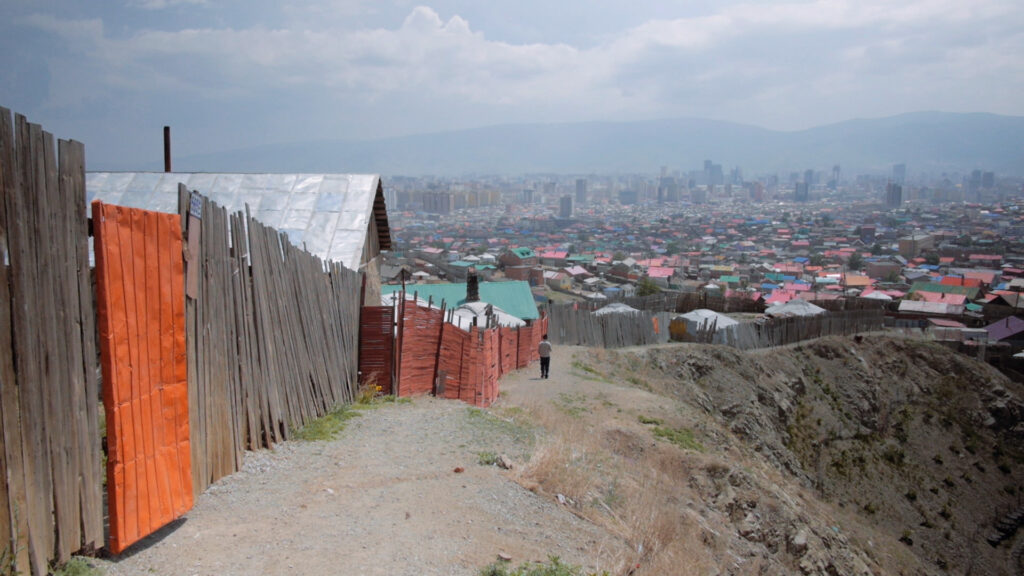
People arriving in the city rarely moved directly into apartments. Instead, they first set up their gers on the outskirts, in the now well-known ger districts. Many lacked sewage systems, reliable heating and other forms of urban infrastructure. This situation contributed significantly to the severe air pollution affecting the city.
In the provinces, life seemed to change more slowly. There, it was still possible to immerse oneself more deeply in nomadic culture, which remained an important part of everyday life, even as it continued to evolve under the influence of modern civilization.
Many people associate both Kazakhstan and Mongolia with nomadic life, yurts and the steppe. Beyond these images, what deeper similarities did you notice between the two countries?
When I first arrived in Mongolia to make the film, I saw a picture that strongly reminded me of Kazakhstan in the 1990s and early 2000s.
It was largely an intuitive and visual impression: new architecture rising in the middle of the steppe, a fascination with large-scale projects, fragmented infrastructure and a broader atmosphere of transition.
Both countries were experiencing rapid urbanization, the expansion of their capitals, internal migration and a pronounced divide between the centre and the periphery.
At the same time, Mongolia followed its own distinct historical trajectory. It was never formally part of the Soviet Union, although it was strongly influenced by it. In my view, Mongolia had more opportunities to preserve aspects of its traditional way of life.
In everyday life, Buddhism and shamanism are far more visible there, as is the direct connection to the land and to nomadic culture.
Kazakhstan, by contrast, underwent far more extensive industrialization, collectivization and forced transformation of traditional lifestyles.
As a result, the apparent similarity of the steppe landscapes conceals very different historical experiences.
In Mulberry, you portray Bukhara through the story of Bekhzod, a young man entering adulthood through marriage and traditional rites of passage. Why Bukhara, why Bekhzod, and what did his story reveal about masculinity and patriarchy in Uzbekistan?
I first came to Bukhara in 2011, and this remarkable city resonated deeply with me. I returned several times afterwards.
Sometimes certain places create the feeling that you are coming home. That is exactly what happened to me in Bukhara, and it made me want to make a film there.
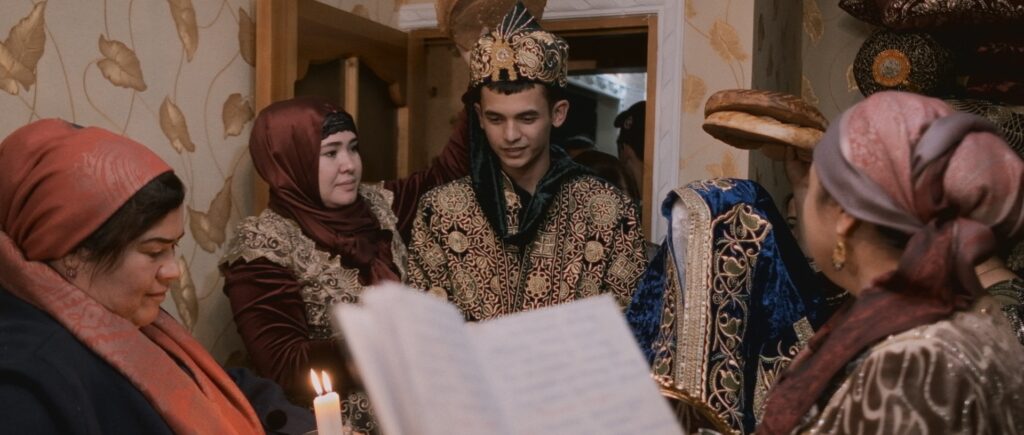
From the beginning, I was drawn to the image of the mulberry tree standing in the courtyard of the Kalyan Mosque, as well as to the local culture and daily life that I wanted to explore beyond the usual tourist routes.
Watch the trailer here: Mulberry
By chance, I met Bekhzod. He helped me find my hostel in the old city. Later, I realised that he would become my guide into Bukhara’s inner life.
By following Bekhzod and the events unfolding in his life, I gradually discovered the film’s central theme, its conflict and its narrative direction.
For me, Bekhzod’s story became a story about constrained choices and predetermined life paths within a patriarchal society, where men, especially young men, can become just as trapped by traditional norms and social hierarchies as women, although in different ways.
This pressure rarely appears openly. It is seldom discussed publicly and often remains internalized, sometimes even unconsciously. Yet it exerts a significant emotional burden.
How did you film in Bukhara given the strong separation of male and female spaces in certain contexts? How did you gain access to rituals, family interiors or religious spaces such as mosques?
I spent roughly four years with Bekhzod and his family, and during that time we developed close and trusting relationships.
I entered the family circle as a guest, which meant I was invited to family celebrations, wedding rituals and religious ceremonies. Quite quickly, the protagonists stopped paying attention to the camera.
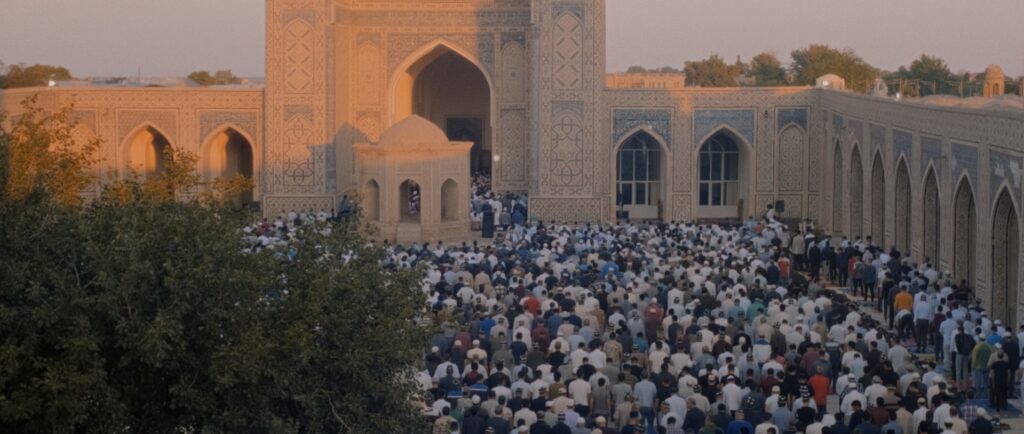
Access to mosques during religious rituals was indeed more complicated because I am a woman filming men. I tried to work discreetly and respectfully, remaining sensitive both to the events themselves and to the people involved.
Another friend from Bukhara, whom I met during the making of the film, also helped me obtain filming permissions when necessary.
For Novastan readers interested in discovering your work, where can they watch DALA, My Father Genghis Khan, Mulberry and your other films? Are they available online, at festivals, through private screeners, streaming platforms or upon request?
Work on DALA is still ongoing, so the film is not yet available for viewing.
My Father Genghis Khan can already be watched online, and I hope that Mulberry will soon become available on one of the online streaming platforms as well.
At the same time, readers are always welcome to contact me directly. I am happy to share viewing links to my films upon request.
Interview with Almira Saifullina by Mathieu Lemoine, Editor-in-Chief for Novastan-English, and Maya Ivanova, Contributor for Novastan-English
Thank you for reading this article! If you have time, we would appreciate your feedback, either through this anonymous form or by email at editorial@novastan.org. Thank you very much!