




 How Central Asia is trying to protect the snow leopard
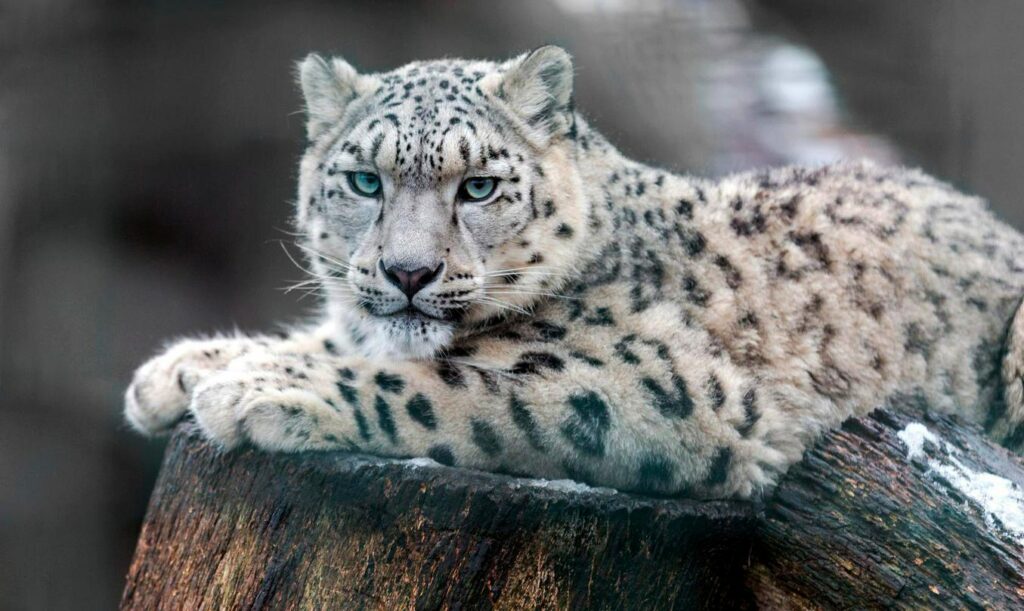
Used as a symbol throughout Central Asia, whether by sports clubs or municipalities, the snow leopard enjoys great popularity. This helps ensure its protection, as it is included on the international list of endangered animals.
The snow leopard, or irbis, is a large feline living in the mountains of Central and South Asia. Today, the species is on the Red List: only between 3,500 and 7,500 individuals remain worldwide. Officially, snow leopards have the status of a “vulnerable species”, one level below the “endangered” category.
In 2013, in Bishkek, during the Global Snow Leopard Conservation Forum, International Snow Leopard Day was established. It is celebrated on 23 October. On this date, experts and environmentalists organize various events dedicated to the protection of snow leopards.
Support Novastan, the European Central Asia magazine
By supporting Novastan, you are supporting the only English, French and German-language media specialising in Central Asia. We’re independent and we need your help to stay that way!Fergana News has decided to make its modest contribution to raising awareness about the preservation of rare species and is publishing an article prepared using data from the United Nations Environment Programme (UNEP).
From Afghanistan to Siberia
The irbis is a large mammal of the feline family, living exclusively in cold climates. The snow leopard has a long, slender body which, including the head, can reach 100 to 130 centimetres in length. Its thick coat, marked with dark ring-shaped spots, provides excellent protection against frost.
Its distinctive feature is its long, bushy tail, which measures between 80 and 105 centimetres. The predator weighs between 22 and 40 kilograms.
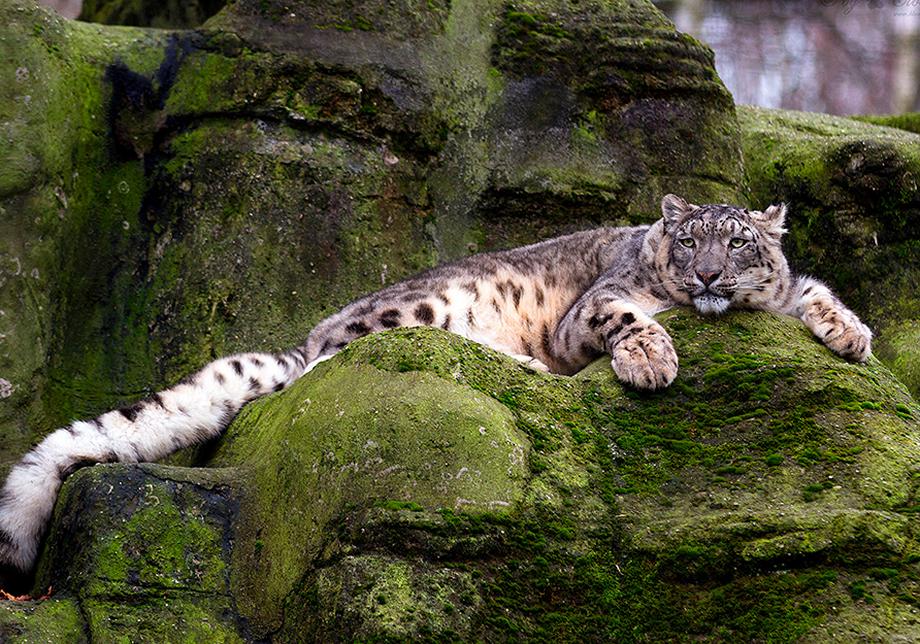
The geographical range of snow leopards is fairly vast, covering around 1.2 million square kilometres. It stretches from the Hindu Kush range in eastern Afghanistan, through the Pamir, the Tian Shan, the Karakoram and the Himalayas, as far as the Altai and the Sayan Mountains in southern Siberia.
These animals are therefore found in the territory of four former Soviet republics of Central Asia: Kazakhstan, Kyrgyzstan, Tajikistan and Uzbekistan. These predators favour large prey, especially ungulates: sheep, mountain goats, argalis, roe deer and deer. But they also sometimes hunt smaller animals, such as ground squirrels and even birds.
A habitat threatened by human presence
The snow leopard fears humans. This is why, in some regions, it is called the ghost of the mountains. The animal lives at altitudes between 1,000 and 4,000 metres — more rarely up to 6,000 metres — above sea level and hides in caves and hard-to-reach valleys. It is practically impossible to encounter one. If one appears on a camera trap, it is already considered a real stroke of luck.
However, humans have managed to create problems even for these hermits. The issue is poachers engaged in the smuggling of wild ungulate horns. Illegal hunters reduce the food resources available to snow leopards.
Read also on Novastan : Sauver la panthère des neiges : comment les scientifiques luttent pour la survie d’une espèce
Shepherds also contribute to the problem. Because of pasture degradation, they are forced to move higher into the mountains, thereby driving irbises out of their usual habitats. Moreover, the felines remain predators and sometimes attack domestic livestock, risking becoming targets themselves for armed shepherds.
Climate change, linked to rising temperatures and the drying-up of glacial water sources, is also forcing the predators to migrate in search of more suitable habitats. All these factors have brought the snow leopard practically to the brink of extinction. Fortunately, some committed people understand the importance of preserving the mountain ecosystem, including its rare species.
A group of volunteers
In an area of the Tian Shan range in Kyrgyzstan, a group of volunteer rangers has formed and taken responsibility for monitoring 380 square kilometres in one of the harshest regions of Central Asia. Braving freezing cold and armed poachers, these volunteers strive to protect the prey and habitat of snow leopards.
As one of them, Baatyrbek Akmatov, explains, he and four of his companions are responsible for monitoring the Baiboosun community reserve. Many of these activists are former hunters and understand the scale of the damage caused to nature by wildlife smuggling, including of ibexes.
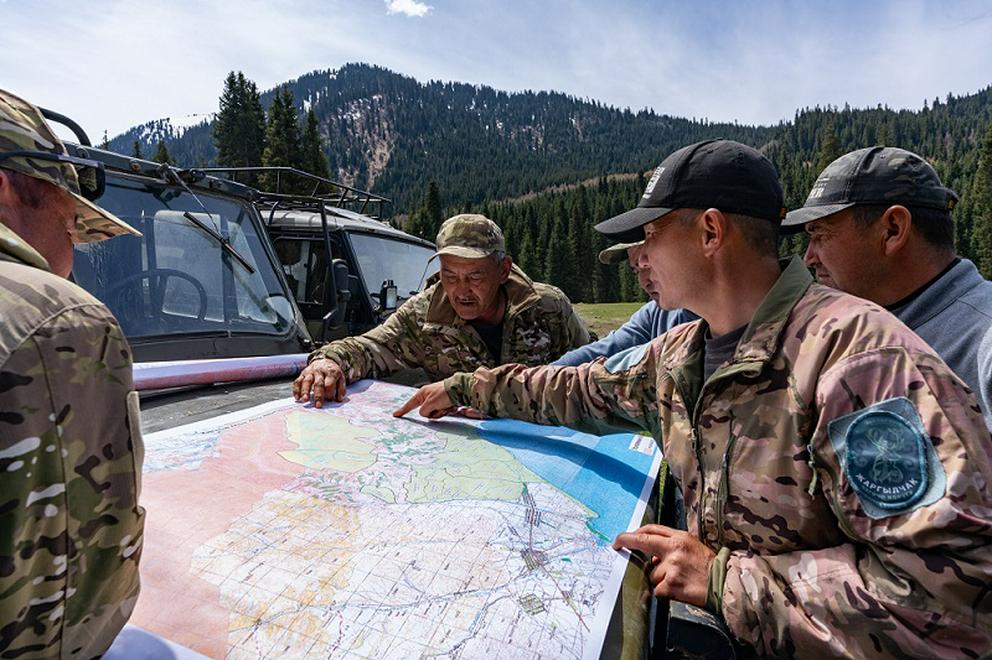
“We decided to launch this initiative, otherwise we will lose everything,” Baatyrbek Akmatov says of his group’s activities. “I don’t want to show children on my mobile phone that we once had this environment, these animals. I want them to be able to see them with their own eyes.”
The volunteers are supported by international organizations, in particular UNEP, as well as by local partners such as CAMP Alatoo and the Ilbirs Foundation. The project also receives financial support from Germany’s International Climate Initiative.
Changing mindsets
According to UNEP, the Kyrgyz government could not afford to pay the rangers, but gave them the authority to manage the territorial corridor and arrest poachers. In addition, experts from the United Nations Programme trained the volunteers and provided them with the necessary equipment.
At first, many local residents were outraged by the patrols. Shepherds feared they would be banned from grazing their livestock. But over time, according to Baatyrbek Akmatov, residents began to change their mindset, becoming aware of the importance of environmental protection.
UNEP’s partners became actively involved, training the population in agricultural practices less vulnerable to climate change. As a result, many people turned to beekeeping, cheese production or greenhouse farming, which helped increase their incomes.
The results of the patrols, the rangers say, are already being felt. For the first time in almost two decades, wild boars have returned to the region. Mountain goats, which had almost disappeared from sight, are now regularly observed. Deer antlers have also been discovered in the mountains, a sign that they too may be returning. Finally, recently, 12 snow leopards were spotted in and around the Baiboosun reserve.
Strict measures to protect the leopard in Uzbekistan
It should be emphasized that the protection of irbises is ensured at state level in all the former Soviet Central Asian republics where this feline species lives. It is listed in the Red Books of Kazakhstan, Kyrgyzstan, Tajikistan and Uzbekistan.
In addition, the authorities provide for penalties for hunting rare animals. For example, in Uzbekistan, poachers are prosecuted under the provisions of a government decree on damage to wildlife. According to this text, the fine for harming irbises amounts to 3,000 base calculation units — 1.2 billion soms, or 85,600 euros — for citizens of the republic, or 400,000 dollars — 343,000 euros at the Central Bank exchange rate — for foreigners.
Read also on Novastan : Deux léopards des neiges photographiés près du grand lac d’Almaty, une première en plus de 30 ans
Furthermore, in 2021, the Uzbekistani authorities adopted the Action Plan for the Conservation of the Snow Leopard in the country, covering the period up to 2030.
The snow leopard as a national symbol
The snow leopard is also remarkable for its imprint on culture and sport, becoming a widespread element of heraldry. The irbis is a national symbol for two countries. In Kazakhstan, this predator acquired this status during the presidency of Nursultan Nazarbayev. It was explained that, since ancient times, this rare animal had embodied power, strength and prosperity.
Indeed, the snow leopard appears on the national currency. It is represented on the 10,000 tenge banknote from the 2003 issue and on banknotes of the same value issued in 2024. The stylized high-mountain feline was also the official mascot of the 2011 Asian Winter Games, which were held in Almaty and Astana.
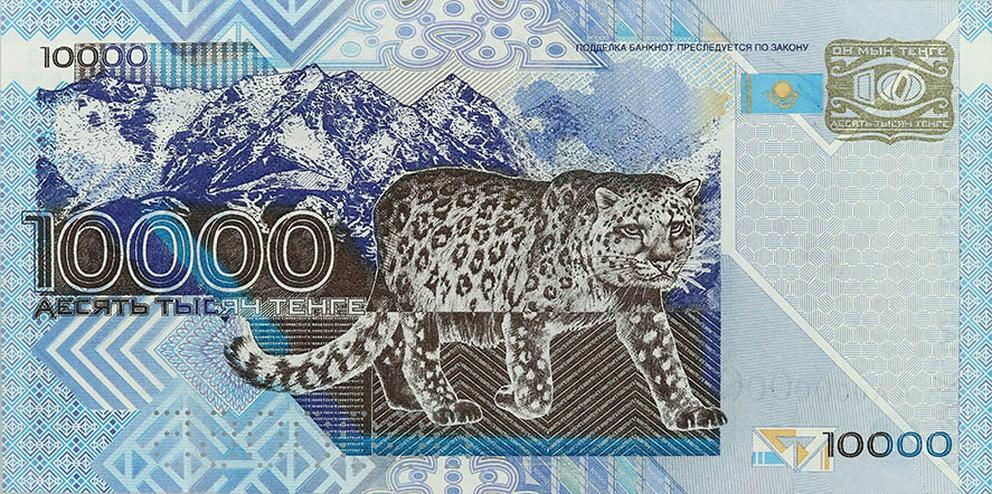
Since July 2025, the snow leopard has also appeared on new Kazakh passports, in holographic form, helping to protect the document against counterfeiting.
An ornament for many coats of arms
In December 2023, the president of Kyrgyzstan, Sadyr Japarov, signed a decree recognizing the snow leopard as a national symbol of the country. It was stated that the species was not only part of the country’s natural heritage, but also a symbol of national identity, strength and freedom, widely present in the republic’s culture, folklore and heraldry. Recognizing the irbis at such a high level was intended to unite the efforts of the authorities, scientists, civil society organizations and international organizations to protect and promote these felines.
The irbis appears on the coats of arms of certain cities, districts and republics, and not only in Central Asia. The animal has thus long adorned the heraldic emblems of Russian regions such as Tatarstan and the Republic of Khakassia, as well as districts of the Krasnoyarsk region, including Ermakovsky and Shushensky.
Read also on Novastan : Le léopard des neiges, symbole national de la diplomatie verte au Kirghizstan
As for Central Asian cities, the spotted feline has been incorporated into Almaty’s coat of arms since July 1993. It holds in its mouth a branch bearing eight apple blossoms, corresponding to the number of districts in the municipality.
Since January 1994, a highly stylized snow leopard has appeared on Bishkek’s main symbol. According to the emblem’s description, the irbis is drawn at the centre of an azure circle inside a white square. The whole composition is set against the background of a fortress silhouette, and beneath the broken line of the mountains appears the name of the Kyrgyz capital.
An ideal symbol for athletes
In July of the same year, the coat of arms of Samarkand, in Uzbekistan, was adopted, with the snow leopard also playing the central role. According to artist Grigory Ulko, who designed the emblem, he was inspired by a legend according to which an irbis descended from the mountains to bless the builders during the founding of the city. To better understand the structure of the predator’s muzzle, the artist drew his domestic cat, Prokhor.
One could say that the snow leopard leads a sporting life, so much do its strength and endurance attract the founders of sports clubs. For example, in the Kontinental Hockey League, two teams have chosen to refer to the animal in their names: Ak Bars Kazan and Barys Astana. The trend also extends to summer sports: in 2024, in the Kyrgyz city of Karakol, a team named Bars was created, with, of course, a magnificent irbis as its logo.
Want more Central Asia in your inbox? Subscribe to our newsletter here.
But the most famous link between the big cat and sport is undoubtedly the title of “Snow Leopard”, awarded to seasoned mountaineers since the Soviet era, more precisely since the 1960s. Since 1990, this prestigious title has been awarded to those who have climbed five “7,000-metre peaks” of the former USSR: two peaks in the Tian Shan and three in the Pamir.
Such is the irbis: rare, discreet, but emblematic, especially in Central Asia.
The editorial team of Fergana News
Translated from Russian by Aruzhan Urazova and from French by Mathieu Lemoine.