





 In Uzbekistan, one family wants to support the revival of wine production
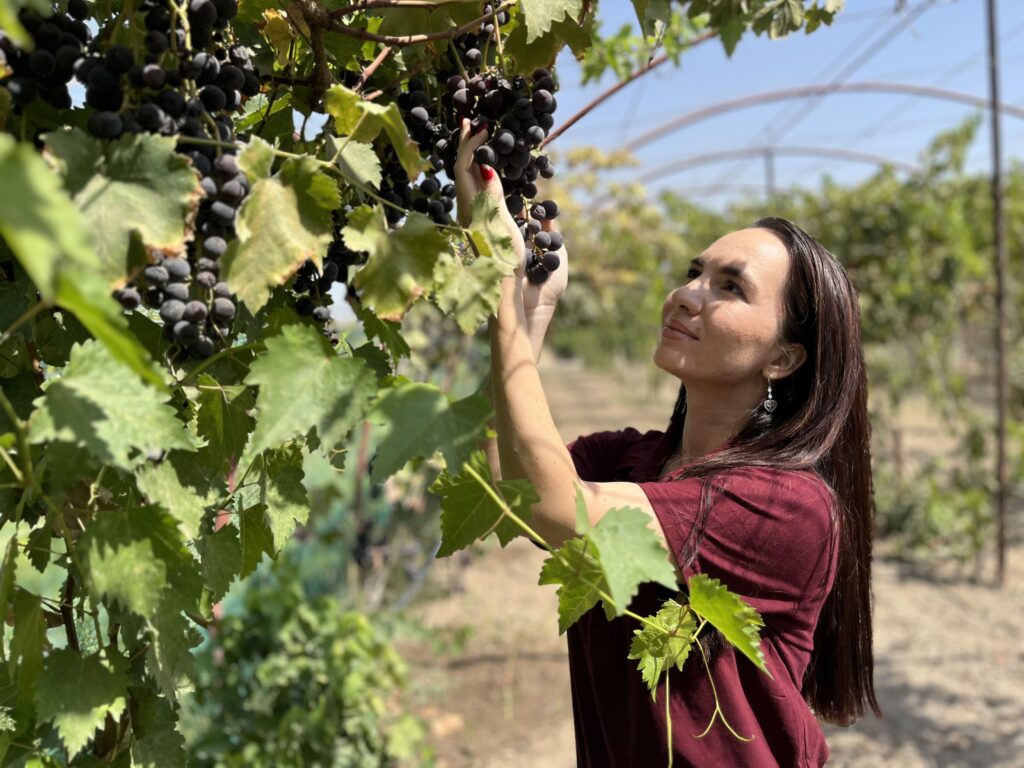
Renowned for the quality of its grapes, Uzbekistan nevertheless saw its vineyards massively destroyed after the fall of the USSR, as part of measures aimed at limiting alcohol consumption. It took years of work for the Akhunov family to rebuild a wine collection that is now unique in Central Asia.
A report on the still-emerging renaissance of Uzbekistan’s wine industry.
A few turns of the key are enough. And already, through the half-open door, they begin to appear: touches of purplish colour diluted among the foliage. The oldest of these vines come from cuttings dating back nearly 80 years. Planted side by side, they rise towards the sky until they almost block it out. Over time, they have woven their web, forming a green setting around the precious bunches of grapes.
With a determined step, 30-year-old Kamila Akhunova enters this green space, located just a few steps from the family property. The Akhunovs own a 21-hectare estate in the town of Qibray, Uzbekistan, about 20 kilometres from the capital, Tashkent. On this remote land, nearly 15 hectares are devoted to grape production. Their company, UzumFermer, produces 100,000 litres of wine per year.
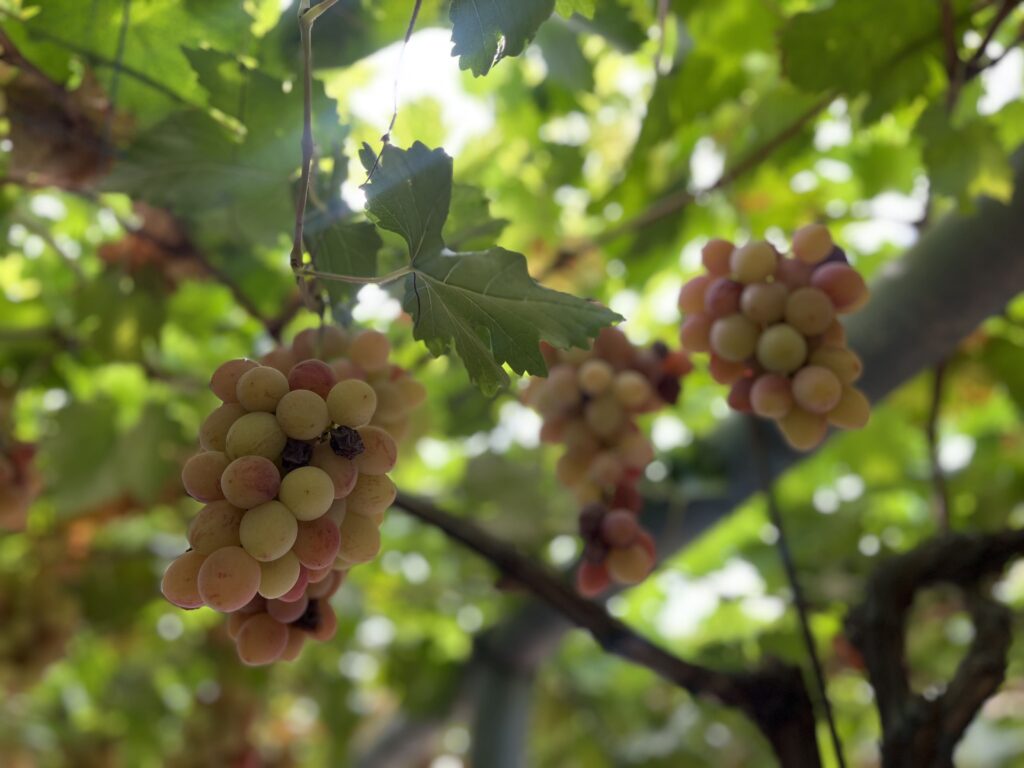
Hidden from view, a veritable treasure cave of grape varieties is revealed. Here, grapes of every shape and kind grow side by side. Among them is a unique treasure: a Japanese grape variety called “Ruby Roman”, sold for nearly 10,000 dollars per bunch. A little further on, Kamila Akhunova presents another variety: “Jupiter”. “It is also a treasure because only five countries in the world have it. And on our continent, we are the only ones to have it.”
A unique collection in Central Asia
This unique sample of vine plants was “collected all over Uzbekistan, and is the only one that exists in the country,” Kamila Akhunova insists. “We went to former laboratories and old gardens to recover all these grapes.” It was a painstaking quest to build up this collection, after many years spent travelling across Uzbek soil. Today, she proudly looks over the 125 different vine varieties: “100 are for table grapes and 25 for standard wine.”
Behind this initiative is her father, Rachid Akhunov. Now 57, after studying physics in Russia and leaving behind laboratories and pipettes, this vine and grape enthusiast decided to dedicate himself to rebuilding this heritage. “For me, it was a real quest. During my travels, I began collecting all kinds of grapes,” he says proudly. “My father,” Kamila Akhunova stresses, “received the gold medal from the Uzbek president, Shavkat Mirziyoyev, in 2016, as thanks for the revival of vine cultivation. We do not make wine with them; we simply present our collection to tourists.”
Although their quest to rebuild this collection is now complete in Uzbekistan, Kamila would like it to continue abroad. “We are waiting for the law to change so that we can import other varieties from all over the world, from France, Germany, Chile, Africa, Australia, New Zealand…” the young woman explains. In Uzbekistan, many regulations drastically limit the import of vines — plants and cuttings — by subjecting them to very strict health controls.
A family business
Kamila Akhunova’s passion for wine dates back to her teenage years. In 2015, at the age of 20, she decided to leave for Spain, to Barcelona, drawn by its crowded summer beaches and, above all, by the vineyards of the surrounding region. These are spread out less than an hour from the city centre, on hillsides. There, she immersed herself in the study of oenology at the Sant Ignasi Faculty of Tourism and Hotel Management, part of Ramon Llull University.
“It was a very enriching experience for me. I discovered a profession that really interested me.” Her mother’s dream was for her to settle permanently abroad. “She wanted me to marry a foreigner and open my own business in another country.” But with her diploma in hand, and feeling nostalgic, she eventually returned to Uzbekistan. Back on her home soil, the young woman had only one goal in mind: to continue this adventure around wine.
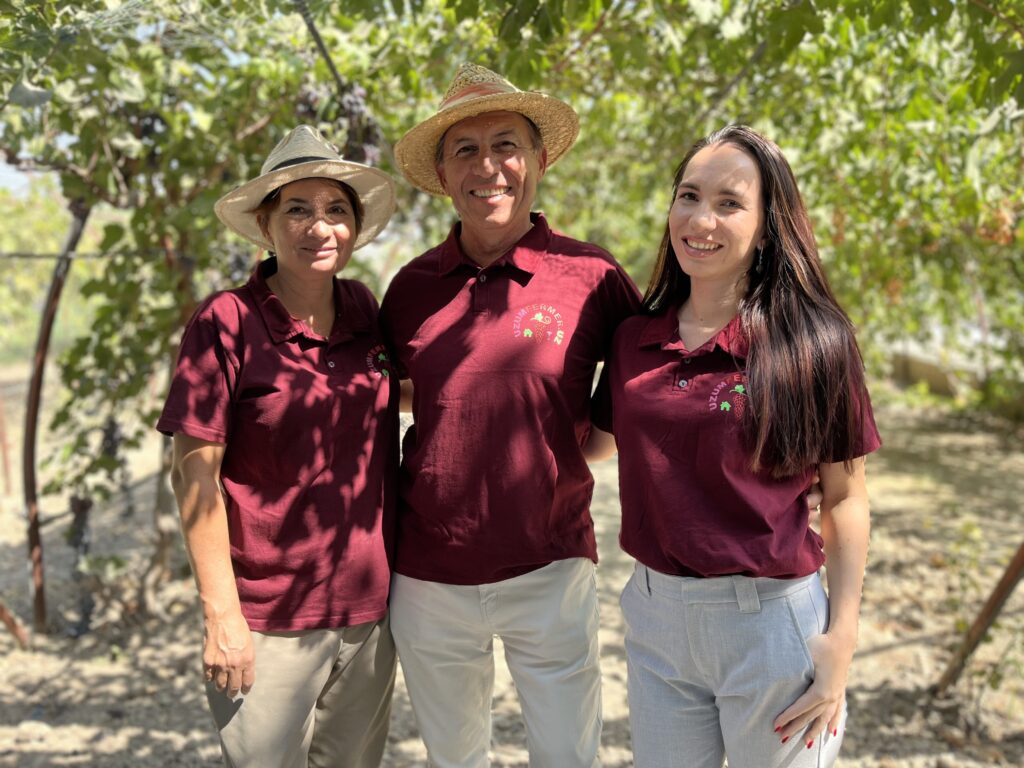
It was around this time that her parents decided to look for land away from Tashkent. After travelling around the region, they settled on a wasteland a few kilometres from the Uzbek capital. “We found this place and rented it. Because in Uzbekistan, you cannot buy land; you lease it from the government, for a lease that can run from 15 to 55 years,” she explains. “There was nothing here at the time. No trees, no vines… It was abandoned land,” Kamila Akhunova recalls. The family’s objective was to build their holiday home here, their “dacha”, to rest away from the Uzbek capital.
It was her mother who first decided to plant vines. “As a landscape designer, she loves nature. At first, when she began planting them, it was just for the family. We also exported a little grape to Russia, but just for pleasure.” The year 2019 marked a turning point, when a new law allowed them to expand their land to 21 hectares, Kamila explains. Shortly afterwards, another law stipulated that “if you have a vineyard, regardless of the type of vine, you have the right to make wine.” No licence or documents were needed.
Novastan est le seul média en français et en allemand spécialisé sur l'Asie centrale. Entièrement associatif, il fonctionne grâce à votre participation. Nous sommes indépendants et pour le rester, nous avons besoin de vous ! Vous pouvez nous soutenir à partir de 2 euros par mois (défiscalisé à 66 %), ou en devenant membre actif par ici.
It was an opportunity the Akhunov family seized. Kamila Akhunova’s father then planted more vines on the property, this time to produce wine and sell it. At first, “it was not professional wine, but rather homemade wine, table wine. It was ‘Rizamat’, made from a local grape. We also had ‘Jupiter’” – a wine made from a seedless muscat-type grape variety popular in domestic vineyards. Building on this momentum, the family business continued to develop, launching event organization and tastings for tourists alongside the vineyards.
A climate suited to vines
Then, very quickly, the Akhunov family decided to professionalize its activity. In 2020, they invested in highly sophisticated equipment from Italy. To train on these new machines, they brought in an expert for six months. “We found a professional oenologist in New Zealand, the director of a large vineyard there, who had a lot of experience in the field. She was Ukrainian, so she spoke Russian. It was perfect for us. She came here and lived with us. She was our teacher: she taught us everything.” After she left, other specialists, including some from France, took over to share their experience. It was also that year that Kamila’s family decided to create its own company.
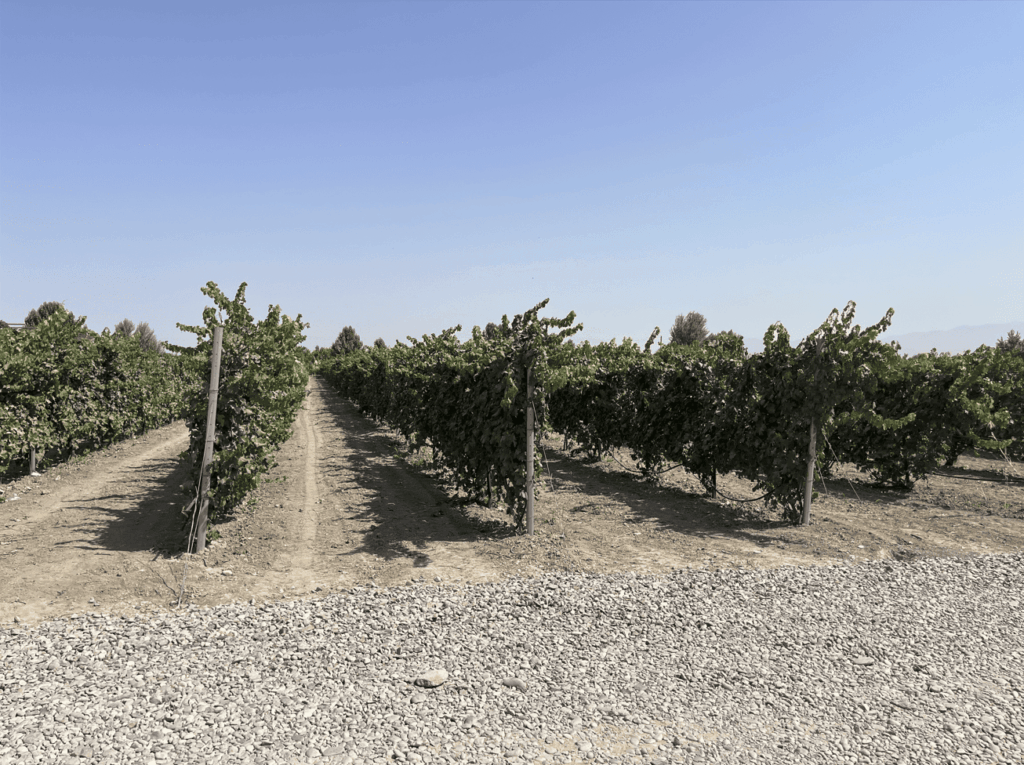
If they chose to invest in vines, it is because in this Central Asian country, the climate is favourable to grape production. With more than 200 days of sunshine per year, Uzbek wines are distinguished by the intensity of their flavour. “It is very hot in summer and very cold in winter, but our temperatures are not too low. It is therefore an ideal climate for vines. Grapes like heat,” Kamila Akhunova says.
Cabernet Sauvignon, Jupiter, Pinot Noir, Bayanshiri, Riesling… Their production remains diverse. As for their vines, they are spread over two plots of land. One is near their property, the other in Parkent, a town about 30 kilometres from Tashkent. There, the vines cling to the mountainside. “What is very different in Parkent is the soil: the earth is black and rich, with many minerals. There is also a difference in temperature: it reaches a maximum of 28 degrees in summer, whereas here, in the plain, it gets very hot in summer.”
“Reviving the culture of the vine”
In this Muslim-majority country, viticulture nevertheless occupies an important place. Currently the leading wine producer in Central Asia, its earliest traces date back to Antiquity. “Uzbekistan is one of the countries that has preserved an indigenous grape variety — a vine variety originating from a specific region, where it has adapted over the centuries. Vines have been present there for a very long time. This dates back to the sixth century BC. There is therefore a long history between this country and wine. One could say it is a true heritage,” explains Benoist Simmat, a specialist in the history and economy of wine and author of the book The Incredible History of Wine.
Yet through the vicissitudes of history, this tradition experienced turbulent periods. In the nineteenth century, at the beginning of the Tsarist period, viticulture developed at an industrial level in the country. Dmitry Filatov, a Russian merchant, founded the country’s first winery in Samarkand in 1868, and trade developed around it. Factories multiplied, but this upturn was slowed by the advent of the Soviet Union.
Read also on Novastan : La vodka tadjike, un produit d’exportation oublié
Measures were then taken to combat alcohol consumption among the population. In the late 1980s, Mikhail Gorbachev, then General Secretary of the Communist Party of the USSR, launched an awareness campaign. This was accompanied by the destruction of many vineyards across the Soviet republics, including in Uzbekistan. It was not until the fall of the communist bloc and the country’s independence in 1991 that they began to be revived. “They were replanted after the country’s independence. The objective was to revive the culture of the vine,” Kamila Akhunova explains.
Yet the economic isolation promoted by former president Islam Karimov placed another brake on wine production. In 2016, the arrival in power of Shavkat Mirziyoyev marked a turning point, triggering the modernization of viticulture. He introduced measures encouraging the growth of this culture, such as increasing vineyard areas, rational land use and the promotion of wine tourism.
However, the import of vine plants remains restricted in the country. “They are afraid of phylloxera. It is an insect that eats vines, especially their roots,” Kamila Akhunova explains. “And because it would also attack cotton, which is one of our main crops, the import of vine plants is very limited. During the Soviet Union, it was completely prohibited.”
The first wine festival in Uzbekistan
Alongside wine production, the Akhunov family wanted to diversify. Tastings, cellar visits and estate tours… Many events are organized throughout the year on the property. “We do all kinds of events: weddings, conferences, photo shoots, Uzbek film shoots. Sometimes even Uzbek stars come here!” Kamila Akhunova exclaims. Navruz, Halloween, Victory Day, Christmas… major holidays are also celebrated on the estate.
The family is also behind the Tashkent Wine Festival. It has now been held every year on their land for six years. “We were the first to create this kind of festival in Uzbekistan. At first, we only had 200 people,” the young woman says proudly. Last September, they gathered nearly 1,000 people on the lawns of their property. Crowded among the vines and bunches of grapes were politicians, doctors, business leaders and ordinary tourists, each strolling around with a glass of wine in hand.
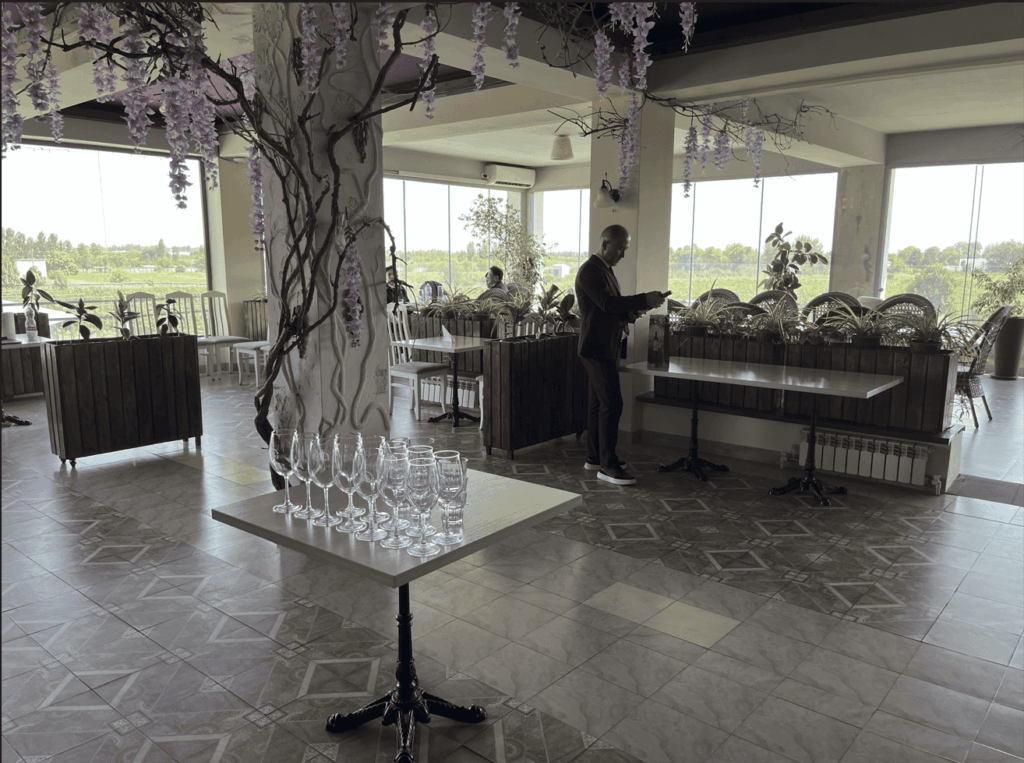
Among this year’s participants, Irina, a psychologist working in the capital, came specifically to discover the vineyard and enjoy the tasting. “It is a very good way to discover the different wines they produce here,” she explains. “I did not know that wine was produced in Uzbekistan. Some friends told me to come. It is a good discovery.” A little further away, a group of Russians working in Tashkent sing songs while tasting the precious beverage. What they appreciate is “the slightly sweet taste”. Their preference is for “Jupiter”.
“For us, this festival is a huge showcase for our products,” Kamila stresses. Over the years, the Akhunovs have managed to develop partnerships with companies, but also with the embassies present in the capital, such as the French embassy in Tashkent. “We were present at the 14 July ceremony. We also had people taste our wine during the Independence Day celebration at the American embassy.”
A “micro-market” seeking expansion
Today, the objective of the young woman and her family is to continue “developing wine culture in Uzbekistan and its export”. “We focus on quality, not quantity,” she explains. “We produce 200,000 bottles per year; that is not much. We do not want to increase production, because we want to control it. The large factories in Uzbekistan produce much more, but the quality is not exceptional. They sell bottles for 85 euro cents for export to China or Russia, whereas our prices range from 12 to 50 euros.”
Read also on Novastan : Au Kazakhstan, découverte des vignes des routes de la soie
“Wine exports and production in Uzbekistan remain fairly low. There are micro-markets: a local micro-market, a Russian micro-market which also includes the countries of Central Asia, and a tourism micro-market. Does that make it a market in its own right? Currently, no. Especially since globally, there is overproduction, particularly of red wine,” says specialist Benoist Simmat.
Yet year after year, wine production continues to increase in the country. In January 2024, Uzbekistan’s large wine companies produced 708,400 litres of grape wine — an increase of 26.4% compared with the same period in 2023, according to official figures from the National Statistics Committee.
Want more Central Asia in your inbox? Subscribe to our newsletter here.
For now, the Akhunov family has only a few partnerships with Uzbek restaurants in Russia, Kazakhstan and Malaysia. “It is not a large quantity in terms of exports. They just buy a few boxes for their restaurants,” Kamila Akhunova explains. As for France, their bottles are displayed at the wine museum in Bordeaux, where a special section is dedicated to Uzbekistan. They are currently in discussions to supply an Uzbek restaurant in Lyon and would like to develop partnerships with Uzbek restaurants in Paris.
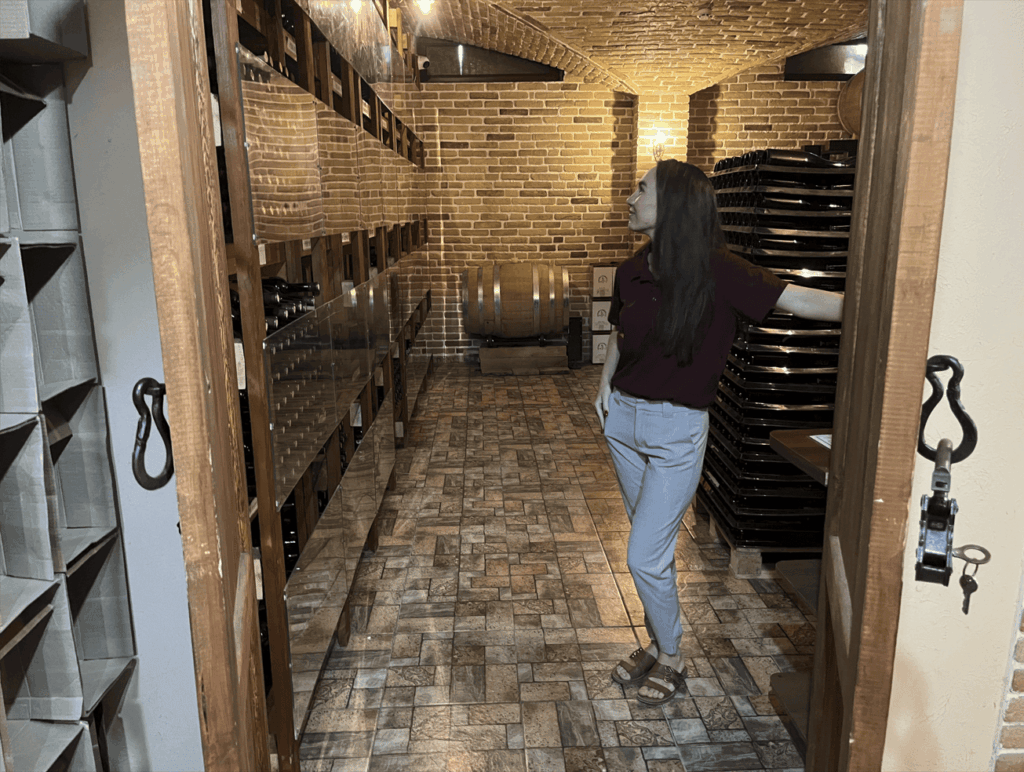
In this desire for international recognition, reforms aim to position Uzbekistan as a major player in the international wine market. Initiated in August 2023, one of them aims to establish a system of agro-industrial wine clusters. At the same time, the state has committed to strengthening financial support in this sector.
“Our objective is to take our country to a higher level in terms of production and export,” Kamila emphasizes. “Now that our quest to rebuild a collection of grape varieties in Uzbekistan is complete, this is our new mission.”
Louise Simondet,
Correspondent in Uzbekistan for Novastan
Translated by Mathieu Lemoine
Thank you for reading this article! If you have time, we would appreciate your feedback, either through this anonymous form or by email at editorial@novastan.org. Thank you very much!