



 At home in Central Asia: the lives and identity of the Lyuli/Mughat
Support Novastan, the European Central Asia magazine
By supporting Novastan, you are supporting the only English, French and German-language media specialising in Central Asia. We’re independent and we need your help to stay that way!Often portrayed through poverty and begging, Lyuli/Mughat communities have lived across Central Asia for centuries. Researchers and filmmakers are now drawing attention to a much richer story of language, craftsmanship, family life and belonging.
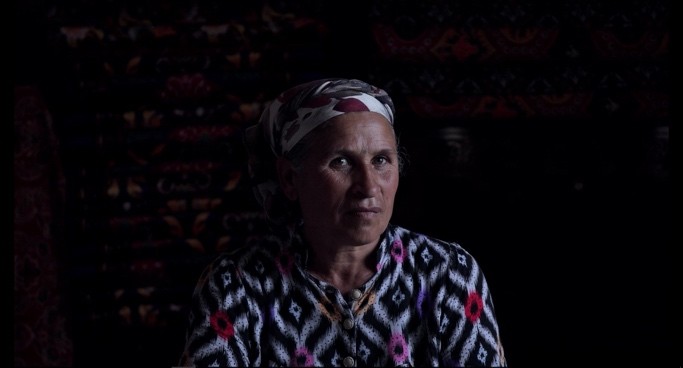
In Shakhzoda Mirakova’s documentary We Are (At) Home, the title itself carries an argument. The film was shot largely in different districts of Bukhara, where Mirakova and her team spent time with Lyuli/Mughat families and community members. For her, the idea of “home” was not simply geographical. “Despite often being treated as outsiders, Lyuli have built their lives, families and communities here,” she told Novastan. That tension – between being deeply rooted in Central Asia and still perceived as somehow outside it – runs through much of the history of the Lyuli/Mughat.
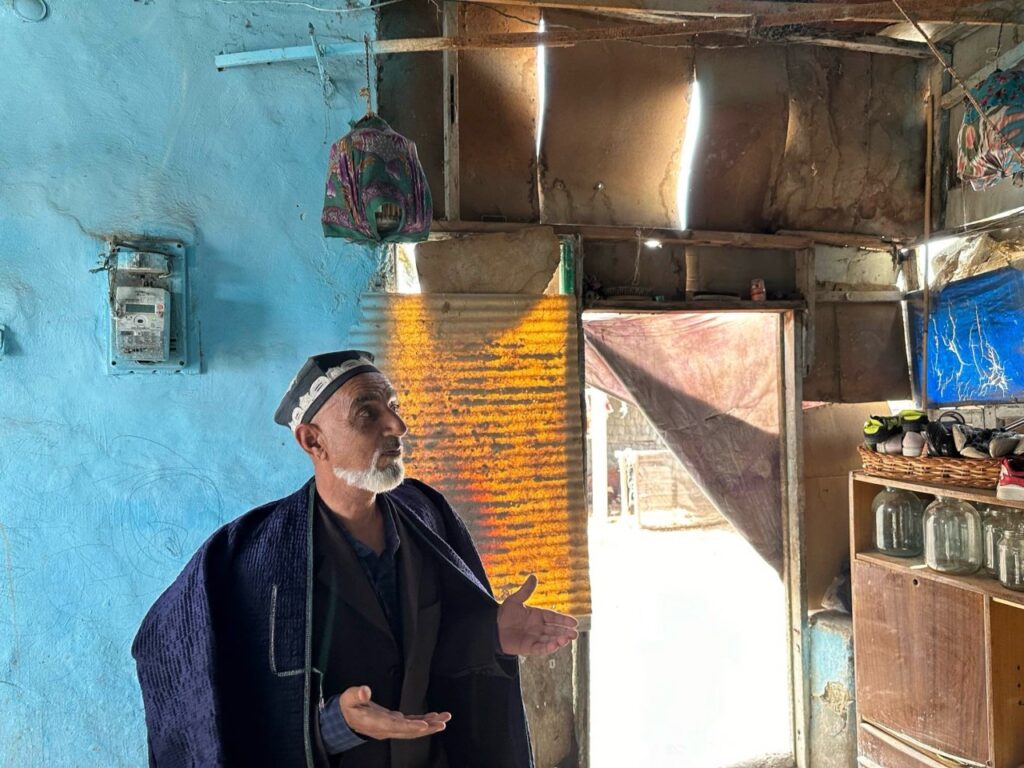
They have lived in the region for centuries and can be found across all five Central Asian republics, although the largest concentrations are generally associated with Uzbekistan, Tajikistan and southern Kyrgyzstan, with smaller communities in Kazakhstan and Turkmenistan. Their distant origins are usually linked by researchers to migrations from the Indian subcontinent, but their precise relationship with European Roma populations remains debated. Researcher Kamilla Zakirova argues that it is more accurate to understand them as a distinct Central Asian community that has often been placed within a wider Roma or “Gypsy” category, rather than simply describing them as a Central Asian branch of European Roma. Their identity today is unmistakably shaped by the societies in which they live: by Uzbek and Tajik languages, Sunni Islam, local neighbourhoods, extended families and the economic and cultural life of Central Asia.
One community, many names
Even the question of what to call the community is complicated. “Lyuli” or “Luli” is widely used in Uzbekistan and in Russian-language sources, while “Jughi” or “Jugi” is especially common in Tajikistan and parts of Uzbekistan. Historical names including Multoni or Multani and Ghorbat or Gurbat have also appeared in different parts of the region. “Mughat”, meanwhile, is an important self-designation for many people.
Zakirova notes that some community members prefer it precisely because names such as Lyuli or Jughi may carry derogatory stereotypes. At the same time, preferences differ by place and individual, meaning there is no single term that can be assumed to be universally accepted. For an international audience, she considers “Lyuli/Mughat” a useful compromise. The terminology reflects a broader difficulty: outsiders have often attempted to fit highly diverse communities into a single category. Different groups have developed within different linguistic and social environments, and this makes it difficult to speak of one single Lyuli language, occupation or lifestyle extending unchanged across Central Asia.
This distinction also matters when comparing Lyuli/Mughat with Russian-speaking Roma communities in the region, historically often referred to as Tsygane. Zakirova stresses that these are not simply interchangeable categories. The Lyuli/Mughat have developed within Central Asian society and have linguistic, religious and social practices shaped by that setting.
How important is the Indian connection?
The community’s distant South Asian origins are one of the most frequently mentioned aspects of its history, but they do not necessarily occupy the same place in the identity of people living in Central Asia today. During the making of We Are (At) Home, Mirakova encountered contradictory accounts. “We met several families, and their accounts were not the same,” she said. “Some people denied having a connection to the Indian subcontinent, while others claimed Indian ancestry.” One community leader the filmmakers met knew several words that he identified as coming from an Indian language and also described himself as having Indian ancestry, yet this kind of memory was not shared by everyone.
That distinction matters. A distant historical origin identified through linguistic or ethnographic research does not necessarily determine how people understand themselves generations later. For communities whose everyday lives have developed for centuries in Uzbekistan, Tajikistan or Kyrgyzstan, India may be an ancestral reference, a family story, or something largely absent from daily identity. The more immediate cultural environment is Central Asian, and this is reflected in language, religion, settlement patterns and social life.
Speaking the languages of Central Asia
Language demonstrates this particularly clearly. Zakirova describes Lyuli/Mughat communities as generally multilingual. In Uzbekistan, Uzbek and Tajik are widely spoken, while Russian remains present, particularly among older generations. Mirakova observed much the same thing while filming in Bukhara. “The people we interviewed could speak Uzbek, Tajik and Russian,” she said. “From what we observed, Lyuli generally speak the language that is common in the region where they live, rather than using one single language across Central Asia.”
Their religious practices likewise overlap extensively with those of neighbouring communities. Most are Sunni Muslims, and celebrations and rituals associated with Ramadan, weddings, circumcision and funerals form part of the broader religious culture of Central Asia. For Zakirova, differences between Lyuli/Mughat communities are therefore often shaped less by religion than by local history, language and different levels of integration into surrounding society. Most are no longer nomadic. Communities are generally settled, often organised around extended families, neighbourhoods and local networks. The image of the permanently travelling “Gypsy” community can consequently obscure as much as it explains.
Everyday life beyond begging
The most persistent public stereotype surrounding the Lyuli is begging, and it is also the image that Mirakova most wants to complicate. “Public portrayals tend to focus on poverty and begging, which gives a very narrow picture of the community,” she said. “Spending time with people showed us that there is much more to their everyday lives, including craftsmanship, family traditions, skills and cultural practices.”
During filming in Bukhara, the team encountered families involved in forms of craftsmanship that receive little public attention. Mirakova recalls people making everyday household objects such as plates and cups, as well as carpet-making. Other people worked in waste collection, seasonal labour and work connected to pastures. The range of occupations, she felt, was becoming more diverse rather than remaining confined to only a few traditional activities. Zakirova similarly points to longer traditions of music, performance, jewellery-making, woodworking and metalworking among different Lyuli/Mughat groups, and notes that some communities have historically been associated with professional music and entertainment.
None of these occupations should be treated as universal characteristics. Mirakova’s observations relate specifically to the families she encountered around Bukhara, while the economic lives of Lyuli/Mughat communities vary considerably across the region. But they help reveal a basic problem with the dominant stereotype: economic marginalisation has often become a substitute for describing an entire culture. Craftsmanship illustrates that invisibility particularly well. “Lyuli families make plates and cups – everyday objects that people often use without knowing who produced them,” Mirakova said. The producer may remain socially invisible even when the object itself circulates widely.
School, documents and changing opportunities
The situation of Lyuli/Mughat communities has improved in some respects over the past decade, according to Zakirova, but significant inequalities remain. Education is one area where the gap is particularly visible. In the families Mirakova met, girls generally remained at school until around the ninth grade. This observation cannot be generalised to the whole population, but it reflects broader concerns about limited educational attainment and low representation in higher and vocational education.
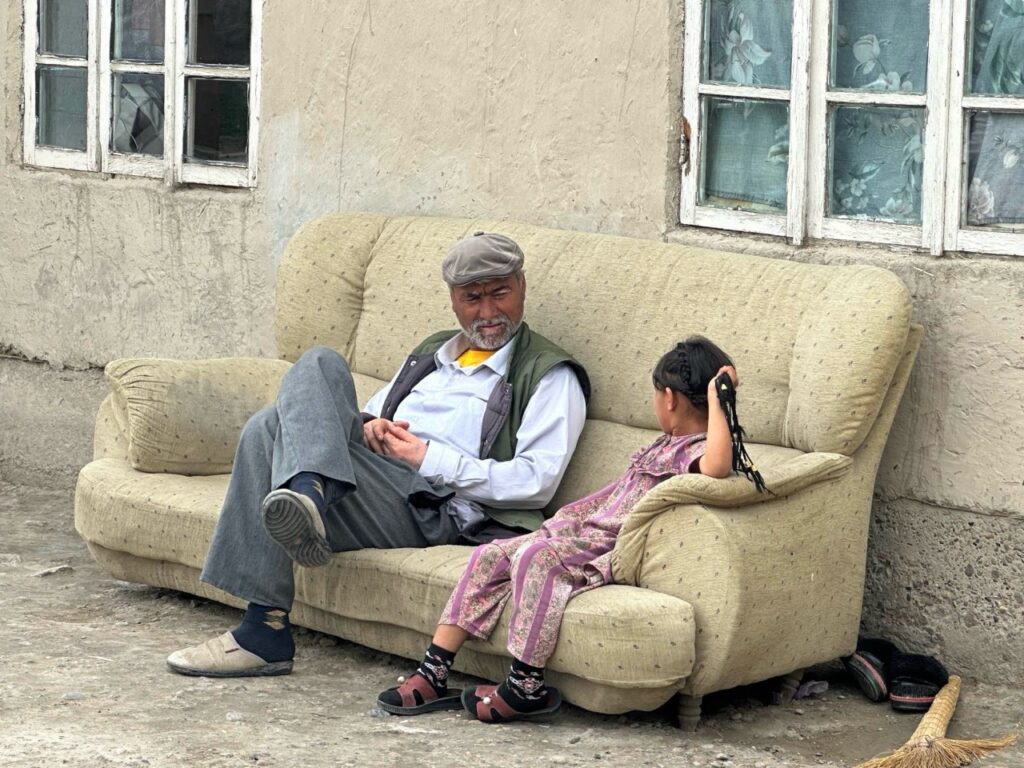
Earlier research and official reporting have also identified problems with school inclusion, poverty and the costs associated with education. Documentation has historically posed another obstacle. Mirakova encountered people who held passports and identity documents alongside others who did not. This problem intersects with the wider legacy of statelessness in post-Soviet Central Asia. Uzbekistan’s reforms on citizenship and birth registration, including the 2020 Citizenship Law, have helped tens of thousands of formerly stateless people obtain or confirm citizenship, although these measures were not designed specifically for Lyuli/Mughat communities.
For Zakirova, that distinction is important. Broader legal reforms can still matter greatly for groups that have historically faced barriers to documentation, even when they are not targeted at a particular minority. At the same time, major challenges remain in education, poverty, housing, employment opportunities and discrimination. Representation in higher and vocational education remains particularly limited.
Integration does not mean visibility
The paradox is that a community can be deeply integrated into the language, religion and everyday life of a country without being strongly represented in its public institutions. Zakirova describes national political representation of Lyuli/Mughat people in Uzbekistan as extremely limited. She is not aware of a nationally prominent elected politician who publicly identifies as Lyuli/Mughat, nor of a major national newspaper, radio station or political organisation representing the community specifically.
This limited visibility extends to cultural representation. For decades, Lyuli communities have frequently appeared in public discourse through stories about begging, social deprivation or marginalisation. What is much less visible is ordinary life: weddings, work, religious practices, family relationships, artisanship or changing aspirations among younger generations. That is one reason Zakirova sees the appearance of younger journalists and filmmakers interested in the community as significant. She pointed specifically to Mirakova’s We Are (At) Home as an example of a younger generation beginning to explore questions of Lyuli identity and belonging from a different perspective.
Filming a community usually seen from outside
Mirakova’s documentary did not emerge from a large institutional project. Most of the filming took place locally in Bukhara partly because the filmmakers had a limited budget, and they were also able to work through people who already knew community members and helped establish contact with families. This mattered because marginalised communities are frequently documented by outsiders who arrive with pre-existing ideas about the story they expect to find. Establishing relationships through trusted contacts gave the filmmakers a different entry point.
What they encountered was not a uniform community. Neighbours responded differently to Lyuli families. Some interacted warmly with them and showed genuine curiosity about their culture and traditions, while others viewed them overwhelmingly through negative stereotypes, particularly the association with begging. Mirakova said her team did not encounter any specific state, municipal or NGO programme designed explicitly for the families they met in areas such as education, employment, housing or documentation. That does not necessarily mean no such measures exist elsewhere, but it shows how limited their visibility can be at community level.
Family, weddings and cultural life
Some of the strongest impressions Mirakova took away from the documentary had little to do with poverty. She remembers conversations about family obligations in which people described leaving or separating from their own family for the benefit or needs of another family member. The exact form of this practice varied in the accounts she heard, but she was struck by the weight placed on family duty and sacrifice.
The filmmakers also encountered tattoos or markings that some people compared visually with an Indian bindi, although Mirakova stresses that these practices varied from person to person. Such observations should not be treated as evidence of historical origin, but they reveal the kinds of cultural details that rarely appear in public representations of the community.
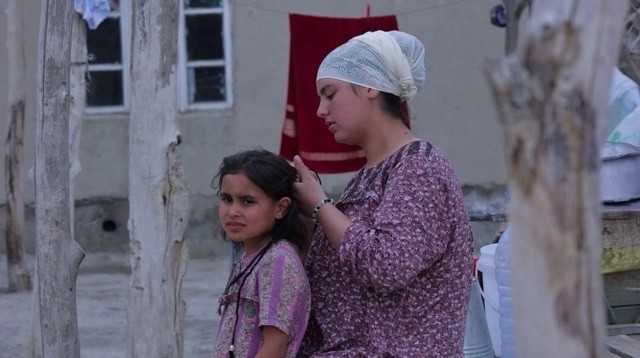
She would particularly like to see more attention paid to weddings and craftsmanship. “I think their wedding traditions and craftsmanship, particularly carpet-making, deserve much more attention,” she said. “These are aspects of their cultural life that are rarely visible in the way the community is usually portrayed.” That absence is itself significant. Minority communities are often made visible precisely at moments of crisis: when discussing poverty, exclusion, documentation or discrimination. Cultural life is then treated as secondary. For Mirakova, reversing that hierarchy was one of the lessons of spending time with Lyuli families.
“We are at home”
The title of We Are (At) Home ultimately returns the discussion to belonging. Lyuli/Mughat communities may have distant histories connected with South Asia. They may retain names, memories or forms of identification that distinguish them from surrounding populations. But their contemporary lives have developed over generations in Central Asia. They speak Uzbek and Tajik, practise Islam alongside their neighbours, attend the same schools, work in local economies, produce household goods and build families in the same cities and villages. Yet they can still be described as outsiders.
The contradiction is perhaps most visible in the language used about them. “Nomadic”, “Gypsy”, “beggar” and “marginalised” can all become labels through which a highly diverse population is compressed into a single social image. None of this means overlooking real inequalities. Education, documentation, housing, poverty and discrimination remain significant concerns, and representation in higher education and national public life remains limited. But reducing the community to those problems reproduces another form of exclusion.
Mirakova’s experience suggests a different starting point. “I think their skills and everyday cultural life are largely missing from public portrayals,” she said. The most revealing thing about the Lyuli/Mughat may therefore not be how different they are from Central Asia, but how thoroughly their history has become part of it.
By Mathieu Lemoine, Editor-in-Chief for Novastan English.