




 Beyond the postcard: An exhibition in Kyrgyzstan puts everyday life in the frame
Support Novastan, the European Central Asia magazine
By supporting Novastan, you are supporting the only English, French and German-language media specialising in Central Asia. We’re independent and we need your help to stay that way!From bustling markets and changing neighbourhoods to overlooked courtyards, a photography exhibition at Karakol Bus Station offers a different perspective on Kyrgyzstan. Featuring works by more than 50 amateur photographers, it also asks a deceptively simple question: who gets to create art?
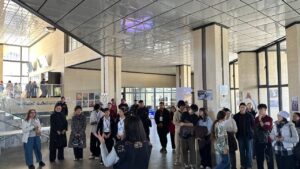
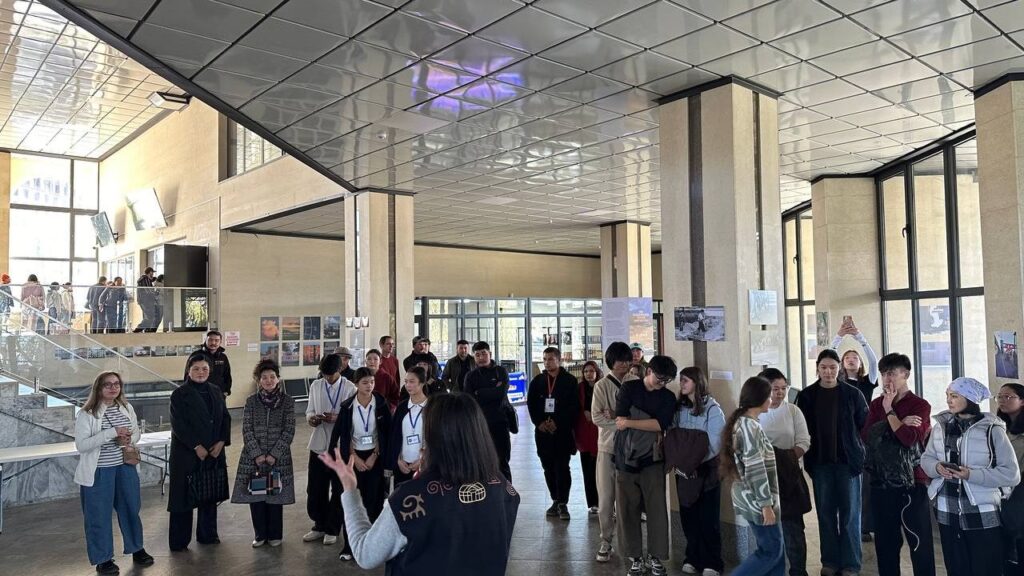
Passengers arriving at Karakol Bus Station in eastern Kyrgyzstan this October may find something unexpected alongside the ticket counters and waiting areas: a photography exhibition documenting everyday life across the country.
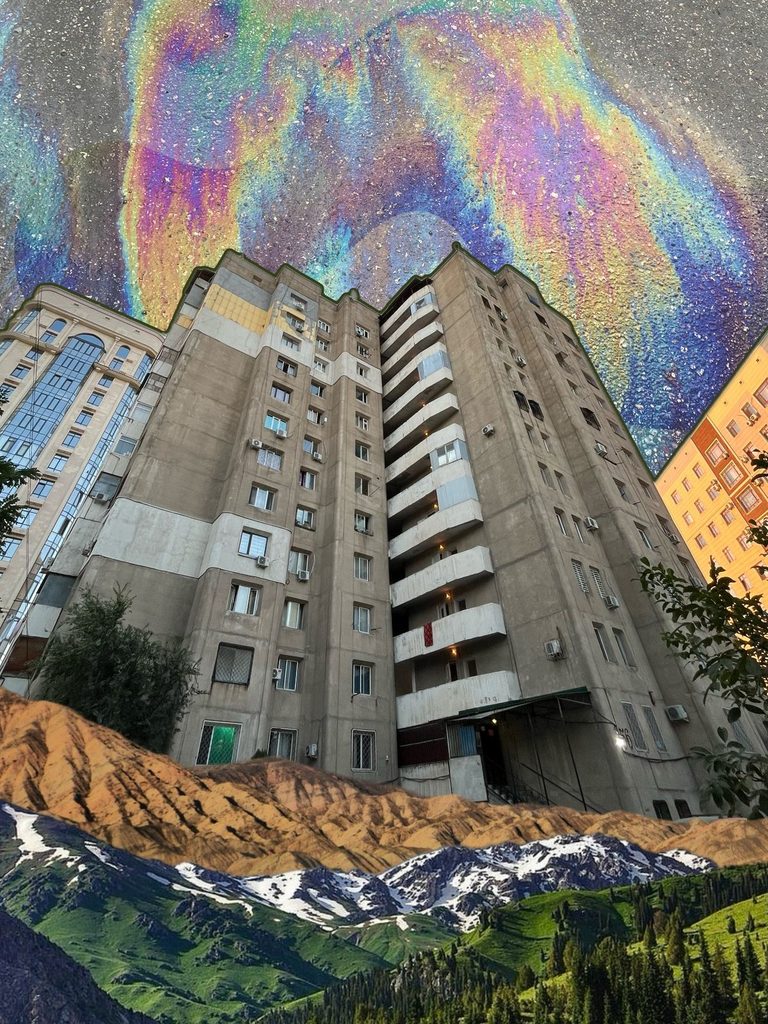
Opened on 16 October, Kyrgyzstan Beyond the Postcard (Неоткрыточный Кыргызстан) brings together works by more than 50 contributors from cities across Kyrgyzstan. Rather than showcasing the country’s spectacular mountain landscapes, alpine lakes or familiar tourist attractions, the exhibition turns its attention to courtyards, markets, residential neighbourhoods and the often-overlooked details of urban life.
Organised by the Street Gudit photography community and the Peshcom urban initiative, the exhibition runs until 31 October. Most of its contributors are not professional photographers, and many of the images were taken using mobile phones.
The organisers hope to challenge not only conventional representations of Kyrgyzstan, but also assumptions about who has the right to produce and exhibit art.
Turning a bus station into an art gallery
The choice of Karakol Bus Station as the exhibition venue was deliberate.
“We initially wanted to hold the exhibition somewhere other than a gallery or museum, in a space that is not usually used for exhibitions,” Anna Karamurzina, the exhibition’s curator, told Novastan.
For Karamurzina, the bus station offers an opportunity to reach an audience that might not ordinarily seek out contemporary photography.
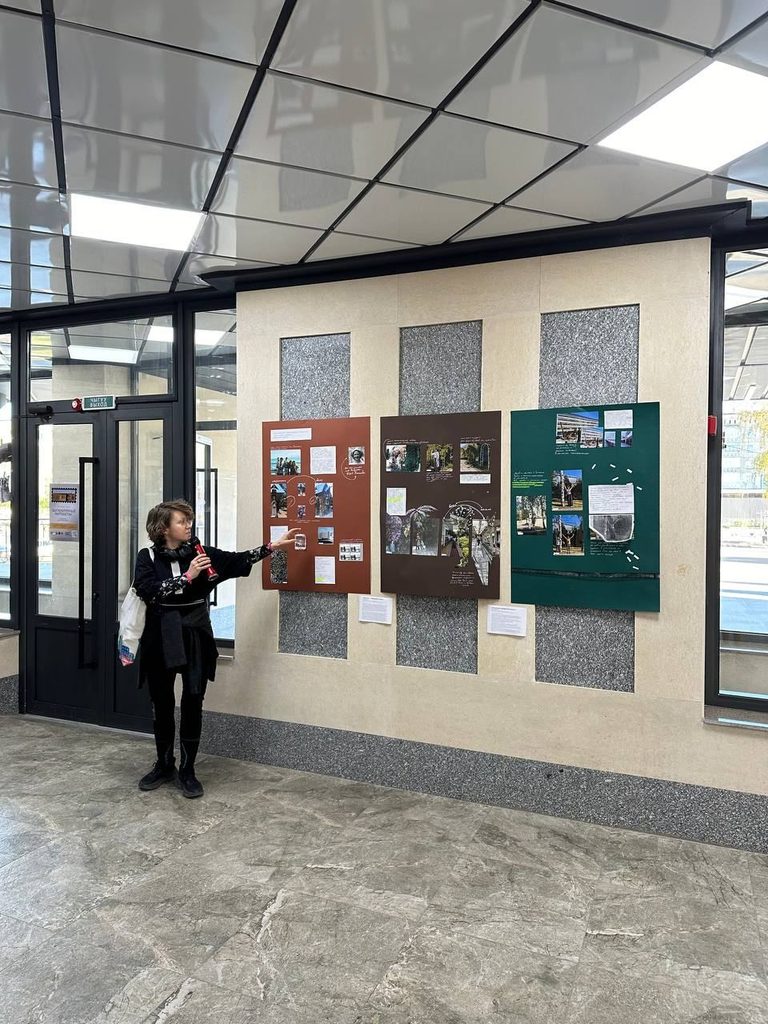
Since the opening, the organisers have observed passengers stopping with their backpacks and suitcases to read about the project and examine the photographs.
“Someone who might never have planned to visit an exhibition in a gallery can encounter art at the bus station, simply on their way somewhere,” she explained.
The venue also carries symbolic significance. Just as a bus station brings together travellers from different cities, the exhibition connects the experiences and perspectives of people living across Kyrgyzstan.
Some photographs are displayed inside the building, while many others have been installed outside. In one particularly striking coincidence, images documenting urban development are exhibited alongside construction work taking place next to the station itself.
Read more on Novastan: Artists and activists raise awareness for Bishkek’s waste problem
The surrounding city thus becomes part of the exhibition, blurring the distinction between the photographs and the everyday environment they portray.
A Kyrgyzstan rarely seen in tourist brochures
The exhibition emerged from Street Gudit, a community launched in 2025 to encourage people to explore and document their urban surroundings through street photography.
The organisers began with weekly photography challenges on Telegram and held three street photography workshops in Naryn, Karakol and Osh.
When they launched an open call for the exhibition, however, the response exceeded their expectations.
Read more on Novastan: Through roads, markets and silence: Tolomush Zhanybekov films Kyrgyzstan’s unseen lives
“We thought we had a fairly good understanding of our participants and the kinds of photographs they would submit,” Karamurzina recalled. “But we received works not only from the Street Gudit community, but also from many other residents of Kyrgyzstan who wanted to share their stories.”
The diversity of submissions was a particularly welcome surprise.
The photographs explore subjects ranging from access to public space and mobility to environmental challenges, historical memory and the transformation of urban neighbourhoods.
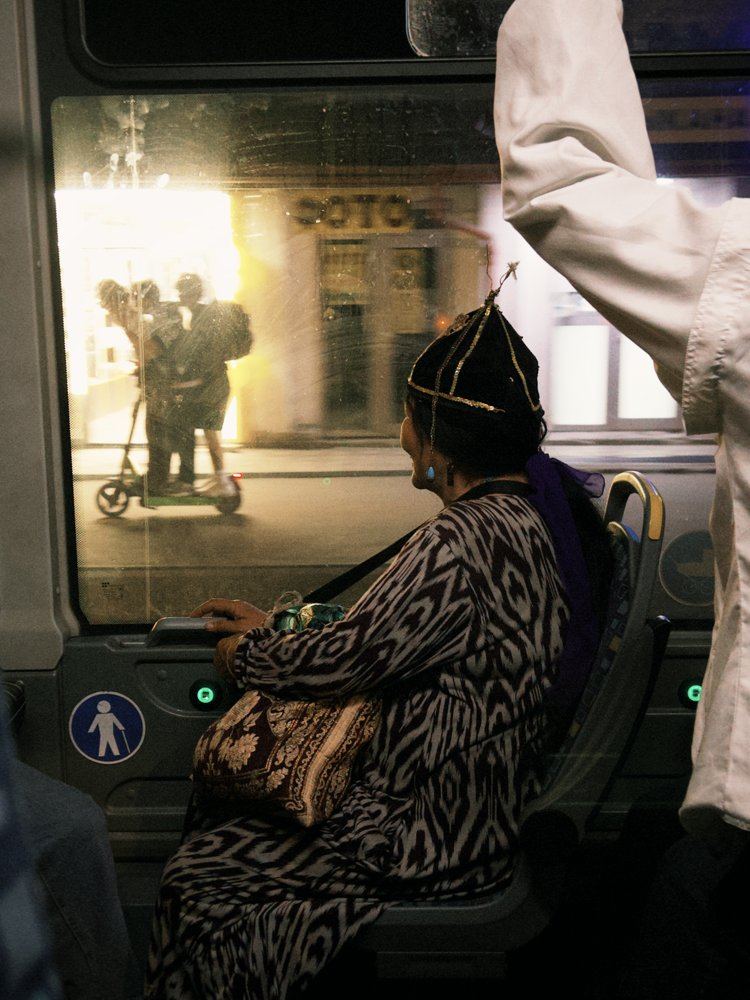
Urban development emerged as a particularly prominent theme, reflecting the rapid changes taking place in cities across the country.
Instead of familiar images of Kyrgyzstan’s natural beauty, visitors encounter children playing in Naryn, construction reshaping Bishkek’s Asanbay neighbourhood, and scenes from the livestock market in Razzakov.
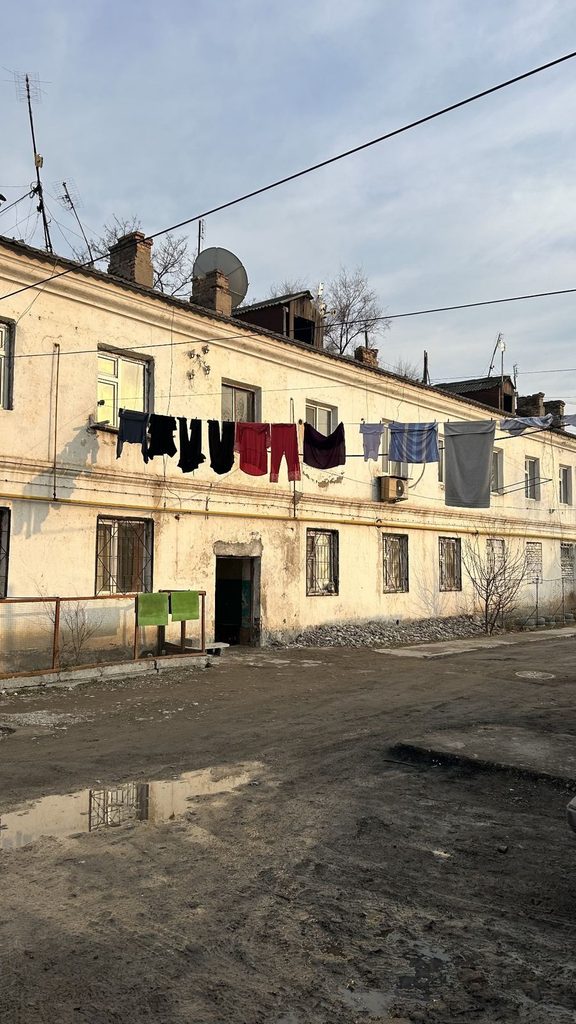
Other photographs capture flea markets, overlooked streets and ordinary residential buildings, offering glimpses of places and experiences that rarely appear in conventional representations of the country.
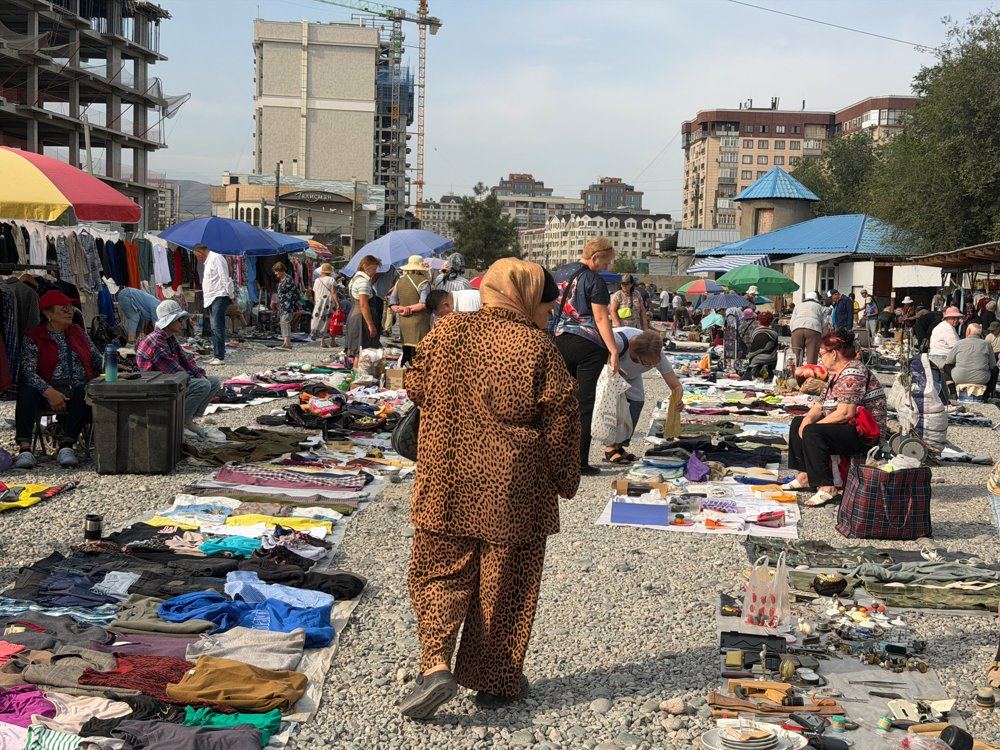
“We don’t have the usual glossy landscapes of Kyrgyzstan,” Karamurzina explained. “Instead, there are many photographs of cities, including their most hidden courtyards and streets.”
For the organisers, these images are not simply alternatives to tourist photography. They are also a way of documenting how residents experience their cities, the changes they witness and the places that matter to them.
“We wanted to give people across Kyrgyzstan an opportunity to share what concerns them, moves them, surprises them, or inspires them,” said Rada Valentina kyzy, one of the exhibition’s organisers.
“This exhibition is an attempt to show our country not from the outside, but from within, through the way ordinary people see, feel, and experience the places where they live.”
Who has the right to create art?
Beyond offering an alternative portrait of Kyrgyzstan, the exhibition raises a broader question about artistic expression.
Can photographs taken by ordinary residents, sometimes using nothing more than a mobile phone, be considered art?
Rather than providing a definitive answer, the organisers have invited visitors to decide for themselves.
Voting boxes have been installed at the exhibition, allowing visitors to express their opinions on whether the works on display qualify as art. The results are expected to be announced on the exhibition’s final day.
The initiative reflects Street Gudit and Peshcom’s wider interest in the right to the city, a concept that emphasises residents’ ability to participate in shaping, using and representing the urban spaces in which they live.
For Karamurzina, giving non-professional photographers a platform is central to that ambition.
“We support the idea that everyone can create and tell their own stories, including visual ones, without necessarily having a specialised education,” she said.
Opening the exhibition to participants regardless of their experience or equipment allows Kyrgyzstan to be represented not only through the work of professional photographers, but also through the perspectives of its residents.
And by bringing those photographs into a public transport hub, the organisers are extending the same principle to the audience: art should not be confined to conventional cultural institutions.
For passengers passing through Karakol Bus Station, the exhibition offers a chance to see familiar aspects of everyday life from a different perspective, and perhaps reconsider what deserves to be photographed, displayed and called art.
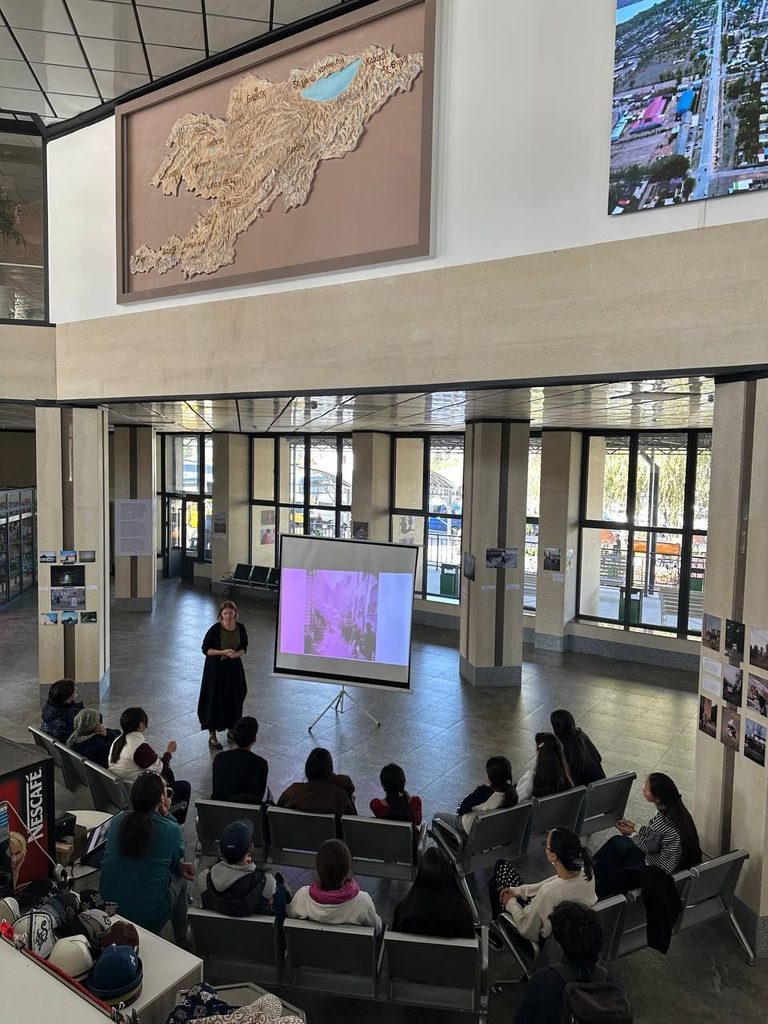
Practical information: Kyrgyzstan Beyond the Postcard is open until 31 October 2026 at Karakol Bus Station, 149 Przhevalsky Street, Karakol, daily from 8:00 a.m. to 7:00 p.m. Admission is free.
The exhibition is organised by Street Gudit and Peshcom, in partnership with Liderstvo and Karakol’s municipal Department of Transport, Tourism and Digitalisation. It is supported by the Rosa Luxemburg Foundation, with funding from Germany’s Federal Ministry for Economic Cooperation and Development.
By Mathieu Lemoine, Editor-in-Chief for Novastan English.