




 How Kazakh NGOs and Farmers Are Adapting to Climate Change

Support Novastan, the European Central Asia magazine
By supporting Novastan, you are supporting the only English, French and German-language media specialising in Central Asia. We’re independent and we need your help to stay that way!As Kazakhstan confronts increasingly severe droughts, floods and extreme temperatures, farmers and environmental organisations are turning to relatively inexpensive methods of retaining water and restoring ecosystems. Their field experience calls into question the country’s exclusive reliance on mega hydro-engineering projects.
Kazakhstan is increasingly exposed to drought, flooding and extreme heat. A severe drought hit its southern and western regions in 2021, while widespread flooding in 2024 affected much of the country. These events have intensified the debate over how Kazakhstan should adapt to a changing climate.
While major water infrastructure projects form a central part of the government’s response, some farmers and conservationists argue that simpler techniques – including snow retention and soil-moisture management – also deserve attention. Their effectiveness depends on local conditions, but their relatively modest costs make them attractive in water-stressed areas.
Projects in the Aqtöbe Region and efforts to restore Lake Zhumay in the Aqmola Region illustrate the potential of locally led adaptation. They also raise a broader question: how can Kazakhstan combine major infrastructure investment with approaches that retain water within landscapes?
Read more on Novastan: Kazakhstan: Residents suffer from lack of water
Agro-Technical Adaptation in the Aqtöbe Region
Local farmers practice autumn cultivation to retain moisture in the fields, a technique also recommended as a flood-prevention measure. Marina Tsygankova, director of the “ElitAgro” public foundation in the Aqtöbe Region, considers field preparation for these purposes economically justified. According to her, combating floods by directing precipitation straight into deep soil layers at the site of snowfall is a rational strategy.
The alternative would be building special moisture storage reservoirs, but such technology is significantly more expensive and complex from an engineering standpoint. In the current economic climate – where state budgets face constraints and big business is hesitant to invest – emphasis must be placed on practices accessible to the population.
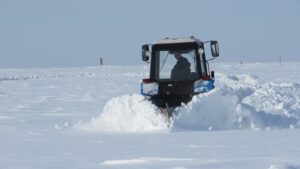
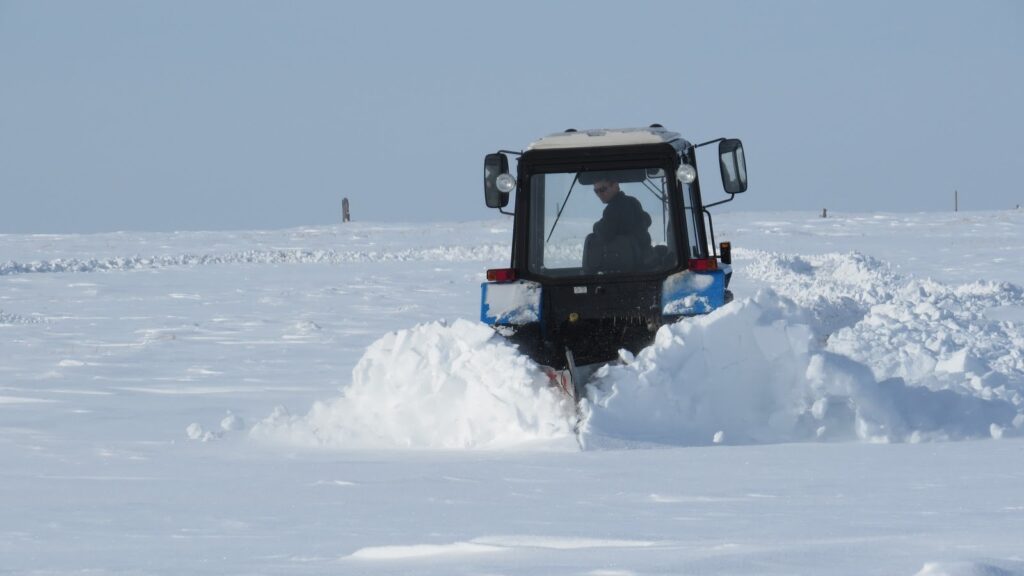
Mechanical snow retention remains a budget-friendly and effective solution for the dry steppe zone of Western Kazakhstan. Here, spring floods often turn into micro-disasters as rapidly melting snow rushes off fields in torrents, washing away fertile topsoil. Using tractors with snowplows and ridgers allows farmers to keep snow where it falls, protecting it from strong winds that typically blow winter precipitation into ravines and roadside ditches.
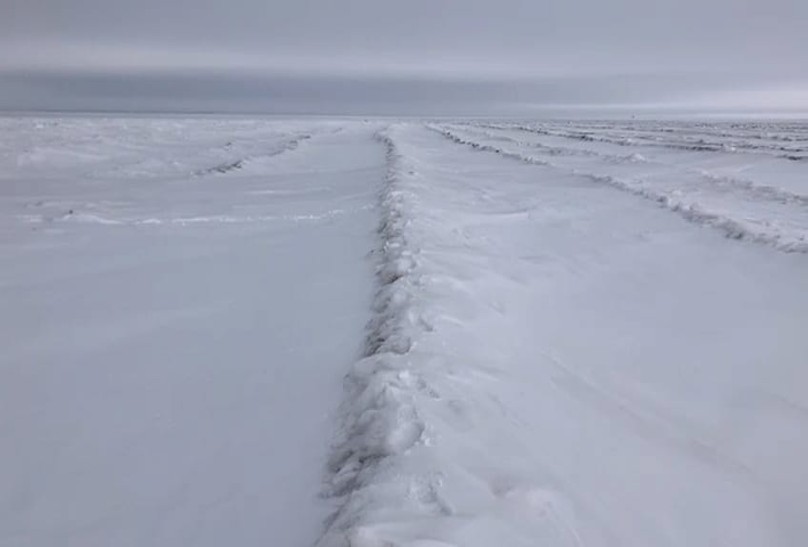
According to observations cited by local practitioners in the Aqtöbe Region, combining snow retention with autumn cultivation can help meltwater penetrate deeper into the soil. They report moisture reaching depths of up to 110 cm, compared with 45-60 cm on untreated sloping fields, and yield gains of up to 400 kg per hectare in some drought years. These site-specific figures should not be taken as typical results across the region. Practitioners also argue that keeping snow on fields can reduce topsoil erosion and limit snowdrifts on nearby roads.
Read more on Novastan: A disappearing river: the fate of the Ural
Asyl Baitleuov has been farming in the Martuk District of the Aqtöbe Region for 26 years, growing barley, sorghum, wheat, and sunflower across 3,000 hectares.
“We do not receive subsidies for snow retention,” Baitleuov explains. “If the snow cover is 50 to 70 centimeters, we leave it alone. Spring snowmelt plays a huge role: if it freezes at night and melts during the day, the earth absorbs the water. But if it melts around the clock, moisture washes off with the humus. We usually have a lot of snow, so we only do snow retention where accumulation is low – treating up to 500 sown hectares annually. Although costly, it generally pays off.”
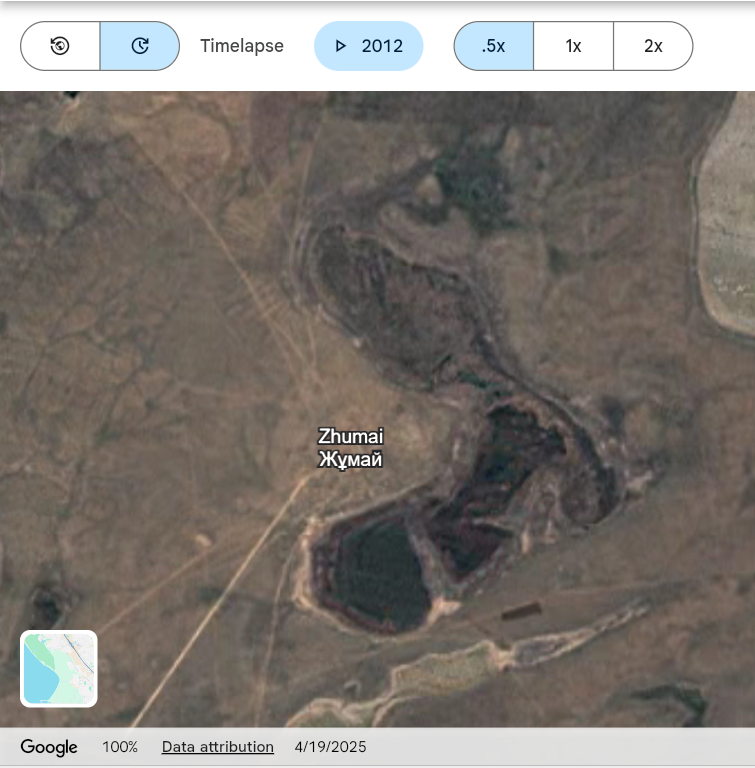
Snow retention has also been used to help restore a dried-up lake. Ruslan Urazaliyev, a researcher at the Association for the Conservation of Biodiversity of Kazakhstan (ACBK), describes the effort at Lake Zhumay in the Aqmola Region:
“For the first time, we carried out snow retention in the Qorgalzhyn District of the Aqmola Region at Lake Zhumay,” Urazaliyev recalls. “The reservoir is a key ornithological territory attracting rare birds, including the Dalmatian pelican, white-headed duck, Pallas’s gull, and greater flamingo – all listed in Kazakhstan’s Red Book. Lake Zhumay also serves as a watering hole for livestock and poultry. In 2010-2011, due to a lack of moisture and high temperatures, the lake dried up completely.”
At the time, ACBK was implementing a project supported by the Global Environment Facility Small Grants Programme. Local resident Timur Iskakov helped initiate a snow-retention project, working with residents during the winter of 2012-2013 to build snow barriers around the lake. ACBK’s 2013 annual report records snow depths of 80 cm in treated areas, compared with 30-40 cm on open steppe. Urazaliyev says water returned in spring 2013 and the lake’s recovery continued into 2014. He stresses that the intervention accelerated a natural process: neighbouring lakes recovered without such measures approximately two years later.
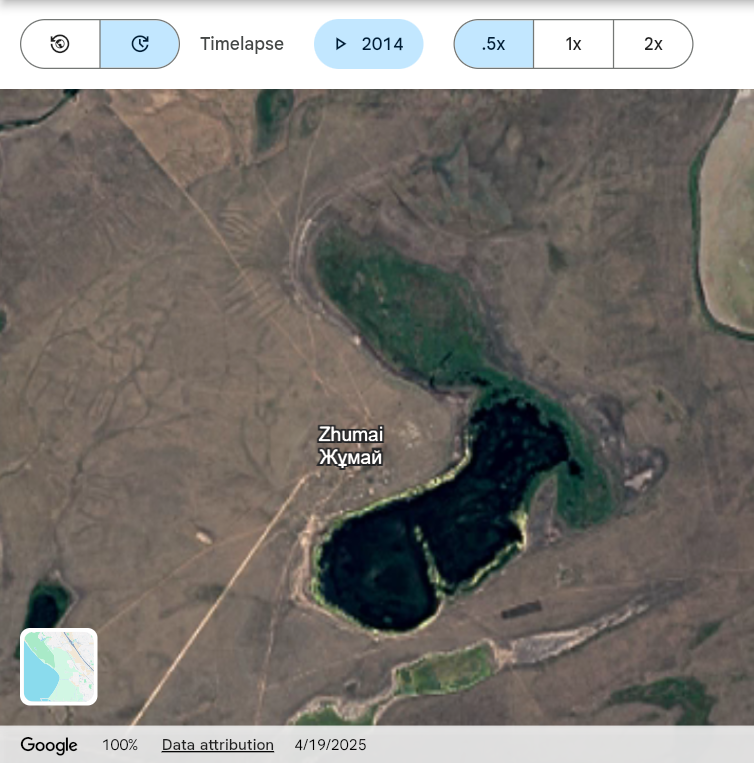
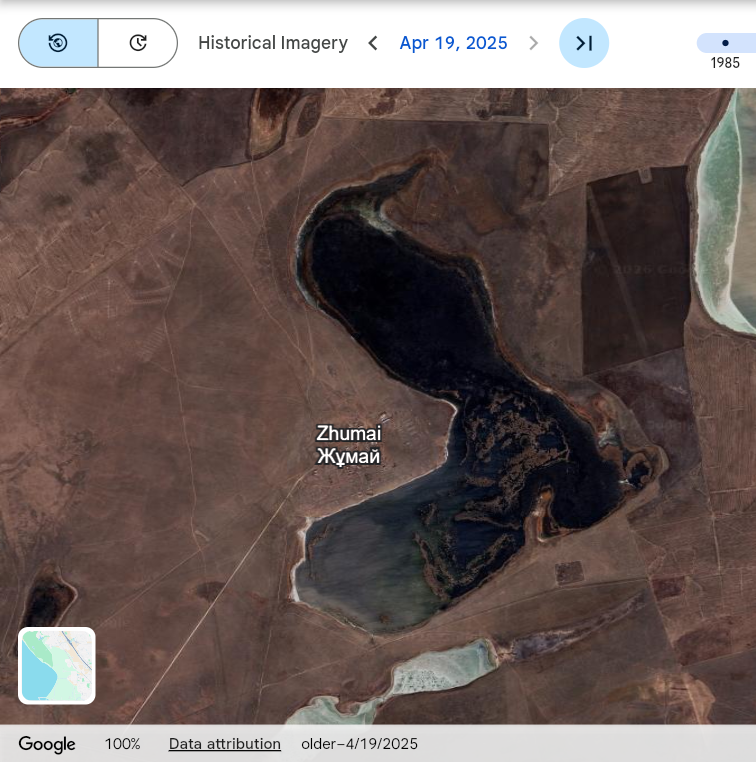
Urazaliyev estimates that the work cost slightly less than 1.7 million tenge. The precise project cost and the lake-area figures cited in his account were not independently established from the historical reports reviewed for this article.
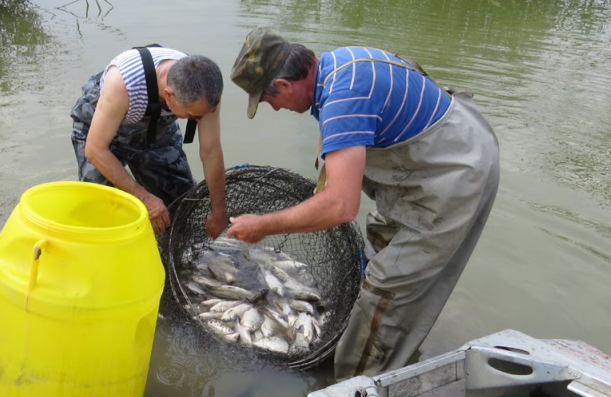
“Through our actions, we accelerated the natural restoration of an 885-hectare lake,” Urazaliyev summarizes. “Later, we successfully stocked it with crucian carp to support the food chain for fish-eating birds. In 2015-2016, residents of Arykty village in the Aqmola Region used our experience to refill a dried-up reservoir of their own.”
ACBK’s experience extends to other regions. In the Jambyl Region, the organization fostered ecotourism at Lake Qyzylkol through the local community, where visitors with cameras deterred poachers. Meanwhile, staff at the Buyratau National Park in the Karaganda Region used wooden snow shields to restore two drying watering holes for wild animals.
Nature-Based Solutions vs. Technocratic Megaprojects
Kazakhstan’s locally developed water-retention techniques reflect wider interest in nature-based approaches to climate adaptation. Bulat Esekin, an environmental policy expert, argues that restoring soils and natural water cycles should receive greater emphasis in public policy.
Read more on Novastan: The Caspian Sea Is Retreating. Central Asia Is Not Ready
“Instead of artificially altering riverbeds and building expensive structures, it is far more efficient to restore natural small water cycles and soils,” Esekin says. “What our farmers are talking about is proven worldwide: the Potapenko paradigm in Chuvashia or the methods of Slovak expert Michal Kravčík, who has spent over 20 years implementing simple water-retention techniques. Forests and healthy soils are the main drivers of the water cycle. Natural ecosystems can absorb and regulate flood peaks for free – and far more effectively than concrete – if we simply do not interfere.”
The government, meanwhile, is investing heavily in water infrastructure. Under its water-management strategy through 2030, Kazakhstan plans to build 42 reservoirs with combined capacity of approximately 2.6 billion cubic metres, reconstruct existing reservoirs and modernise more than 14,000 km of irrigation canals. The government says this investment is intended to strengthen water security, support irrigation and reduce flood risks.
Kazakhstan’s Comprehensive Plan for the Development of the Water Sector for 2024-2028 sets out 160 measures with planned funding of approximately 3.153 trillion tenge. Importantly, this total combines republican and local government budgets with extrabudgetary financing, including funds from international financial institutions and private investment. It should therefore not be interpreted as an allocation entirely from the state budget.
The high cost of reservoir construction is striking. For instance, to reduce flood peaks by up to 50% in the Esil and Jarkain districts of the Aqmola Region – and ensure the stable operation of the Sergeyevka and Petropavlovsk reservoirs – a counter-regulator on the Esil River is scheduled for construction in 2027. This single project costs 103 billion tenge. According to Dias Orazbekov, head of the Kazvodkhoz project office, an ADB memorandum is signed, financing negotiations continue, and the facility opens in 2028.
Could some of the goals of major water infrastructure projects also be achieved through smaller-scale local measures? Esekin argues that institutional incentives and the emphasis on large construction projects make nature-based alternatives less prominent in planning.
Researcher Ruslan Urazaliyev highlights a fundamental disconnect: “Water is treated purely as a resource. The Ministry of Water Resources and Irrigation plans to build reservoirs based on a simple logic: take water and move it. But water is an element. The 2024 floods demonstrated human powerlessness before nature. All our infrastructure aims at collecting water, not keeping it in the ecosystem. Rivers are the planet’s blood vessels; disrupting their pathways brings us closer to water bankruptcy.”
“Building new reservoirs and encasing rivers in concrete is a strategic error,” Esekin adds. “These ‘grey’ strategies create an illusion of control but worsen the water and climate crisis by increasing moisture evaporation. In the US and Western Europe, there is a massive rollback, marked by demolishing hundreds of dams and abandoning small hydropower plants. Yet our ministry remains hostage to criteria from forty years ago. Over the past 30 years, business has subverted environmental filters.”
Institutional Barriers and the Path Forward
Reliable water monitoring remains a concern. The experts point to the decline in hydrological monitoring sites as a challenge for water management. Without consistent monitoring, forecasting water-level fluctuations becomes more difficult.
Farmers also point to the cost of fuel and machinery as a barrier to wider use of autumn cultivation and snow retention. Support mechanisms could make these techniques more accessible, although their benefits would need to be assessed under different local conditions.
For the experience of Aqtöbe farmers and conservation groups to inform national policy, experts interviewed for this article call for stronger evaluation of proposed water-management measures and closer engagement with local communities.
Esekin advocates mandatory assessments of the water implications of major public programmes, alongside greater consideration of water-saving technologies and nature-based alternatives. Landscape planning, digital tools and satellite monitoring could help decision-makers evaluate which combinations of interventions are best suited to individual watersheds.
Read more on Novastan: Talas and its people: life by a Central Asian river affected by climate change
Kazakhstan’s climate-adaptation challenge is not simply a choice between reservoirs and natural systems. It is how to assess the costs, benefits and ecological trade-offs of each approach, while giving local practitioners and affected communities a meaningful voice in the decisions that shape their landscapes.
Edited by Mathieu Lemoine.
Written by Helena Garkava.