




 From Tashkent to the international stage: Diana Skobina brings Uzbek music to new audiences
Support Novastan, the European Central Asia magazine
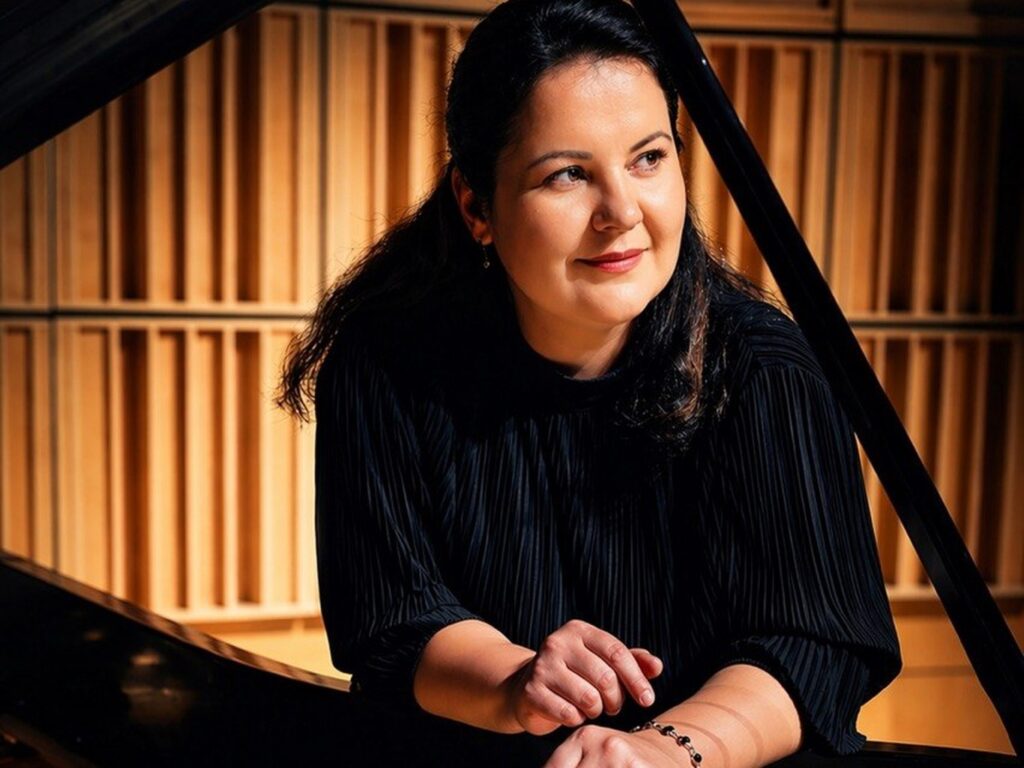
By supporting Novastan, you are supporting the only English, French and German-language media specialising in Central Asia. We’re independent and we need your help to stay that way!Uzbek-born concert pianist Diana Skobina began playing at four and performed with the National Orchestra of Uzbekistan at nine. Now based in the United States, she has performed at venues including Carnegie Hall’s Weill Recital Hall, the Musikverein in Vienna and Walt Disney Concert Hall. As she enters a new stage of her career, Skobina is increasingly looking back to the musical culture that shaped her – and towards ways of bringing Uzbek and Central Asian composers to wider international audiences.
This article was produced as a paid partnership with Diana Skobina.
For Diana Skobina, music began at home in Tashkent.
Her earliest memories of the piano are not of formal lessons or concert halls, but of listening to her mother play Beethoven, Rachmaninoff and composers including Georgy Mushel and Boris Gienko. She remembers sitting nearby, captivated by the sound and thinking simply: I want to be able to play that.
She began lessons at the age of four. By nine, she was performing with the National Orchestra of Uzbekistan – an experience she now sees as the moment when music ceased to be something private.
“It was the first time I understood what it actually means to be a performer – that music isn’t just something you work on alone, it’s something you give to other people,” she tells Novastan.
Yet Skobina says there was never a single moment when she consciously decided that the piano would become her life.
“It crept up on me gradually. Music became so woven into my everyday life that at some point it stopped being a decision and just became who I was.”
Today, that journey has taken her from musical institutions in Tashkent to conservatories in the United States and onto international stages. But as her career has expanded geographically, Skobina says her relationship with Uzbekistan has become more, rather than less, important to her artistic identity.
A musical education shaped in Tashkent
Skobina studied at the Uspensky School of Music in Tashkent, where she describes an environment in which musical education was taken seriously from an early age.
Her teachers Tatiana Sotnikova and Guzal Ardashirova gave her what she describes as the fundamentals of her musical education: careful listening, attention to detail, discipline and respect for the score.
“Being a musician takes discipline, patience and consistent work,” she says. “But it was never only about discipline for me. It was also where I found curiosity, discovery, real joy.”
At the State Conservatory of Uzbekistan, where she studied with Professor Elmira Mirkasimova, music gradually changed from a passion into a professional path. Mirkasimova encouraged her to go deeper into structure, phrasing, character and expression – lessons that Skobina says continue to influence her performances today.
The technical foundations of that education remain central to the way she approaches the piano.
“The biggest lesson was that technique should never exist for its own sake. It has to serve the musical idea,” she says.
She learned to pay close attention to sound, articulation, rhythm, structure and character, but also to search beneath the notes for the intention of the composer.
“A technically clean performance was never the goal in itself. Every detail has to ultimately serve communication and expression.”
When Skobina later continued her education in the United States, she encountered different musical traditions and teaching methods. But she never saw that as a reason to abandon what she had learned in Uzbekistan.
“I’ve always seen it as something to build on, not replace.”
Learning to build an artistic career in the United States
Moving to the United States required another kind of education.
Skobina says one of the biggest differences she encountered was the expectation that professional musicians must actively shape their own careers rather than concentrating exclusively on artistic development.
“Back home, my job was to become the best musician I could be,” she explains. “In the US, I learned that an artist also has to create their own opportunities – build relationships, connect with audiences, collaborate, teach, understand the practical side of the profession.”
Her studies at the Lynn University Conservatory with Dr Roberta Rust were important in that transition. Rust encouraged her to combine rigorous preparation with greater artistic individuality and to develop her own voice rather than reproduce an established formula.
The experience also pushed Skobina to become more independent professionally.
“I had to navigate a new culture and a new professional landscape while staying true to myself,” she says. “That balance – adapting and growing without losing the foundation I brought with me – still matters to me today.”
She later continued her training at the Manhattan School of Music and has now completed her postgraduate studies there, working with pianist and educator Dr Wael Farouk.
Skobina credits Farouk with encouraging her to listen more deeply to tone and colour, think more carefully about musical structure and interpretation, and approach memorisation in new ways. His influence, she adds, went beyond technique.
“What touched me just as much was his generosity and genuine care as a teacher,” she says. “He reminded me that real musicianship and real kindness go hand in hand.”
From Carnegie Hall to the Musikverein
Skobina’s career has since taken her onto stages including Weill Recital Hall at Carnegie Hall in New York, the Musikverein in Vienna and Walt Disney Concert Hall in Los Angeles.
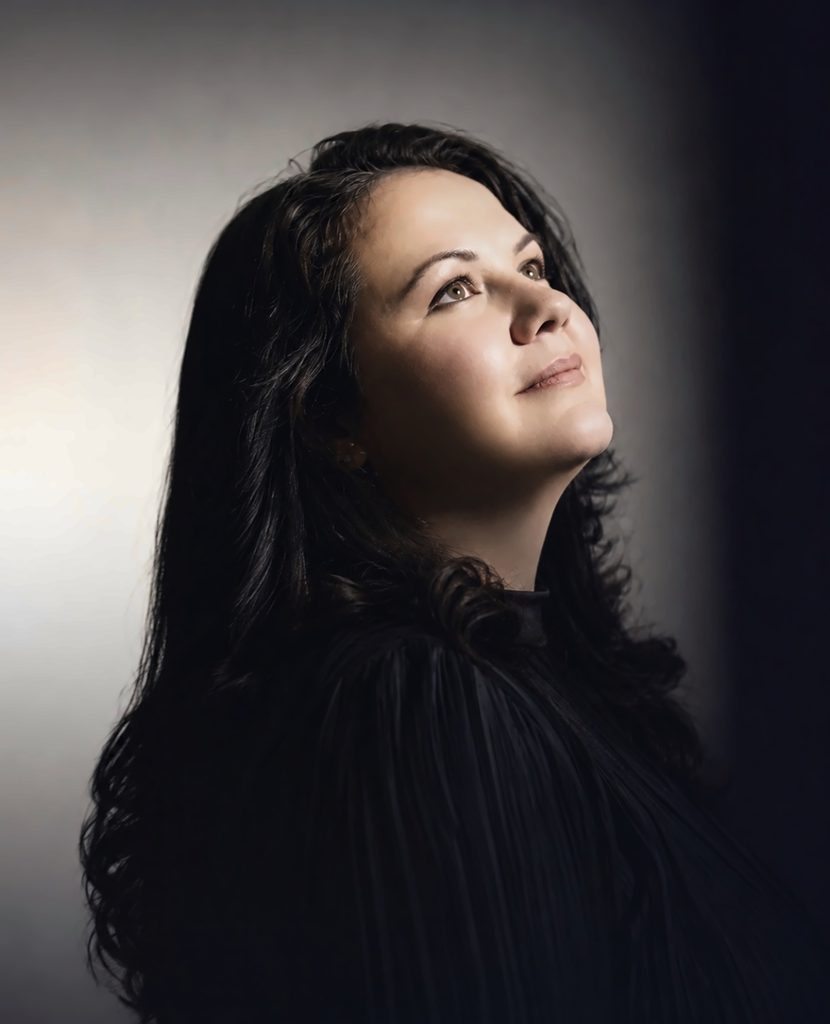
Those performances have inevitably carried symbolic weight.
“Each has its own history and atmosphere, and standing on those stages naturally makes me reflect on the journey that got me there,” she says.
Yet she is reluctant to identify one venue or performance as the moment everything changed.
Rather, her sense of possibility developed gradually – through concerts, audiences, backstage moments and the accumulated realisation of how far music had carried her from where she began.
“The prestige of the hall has never been the most important thing to me,” she says. “What matters most is the relationship between the performer, the music and the audience. Even in the most celebrated room in the world, I want to feel that I’m communicating something sincere.”
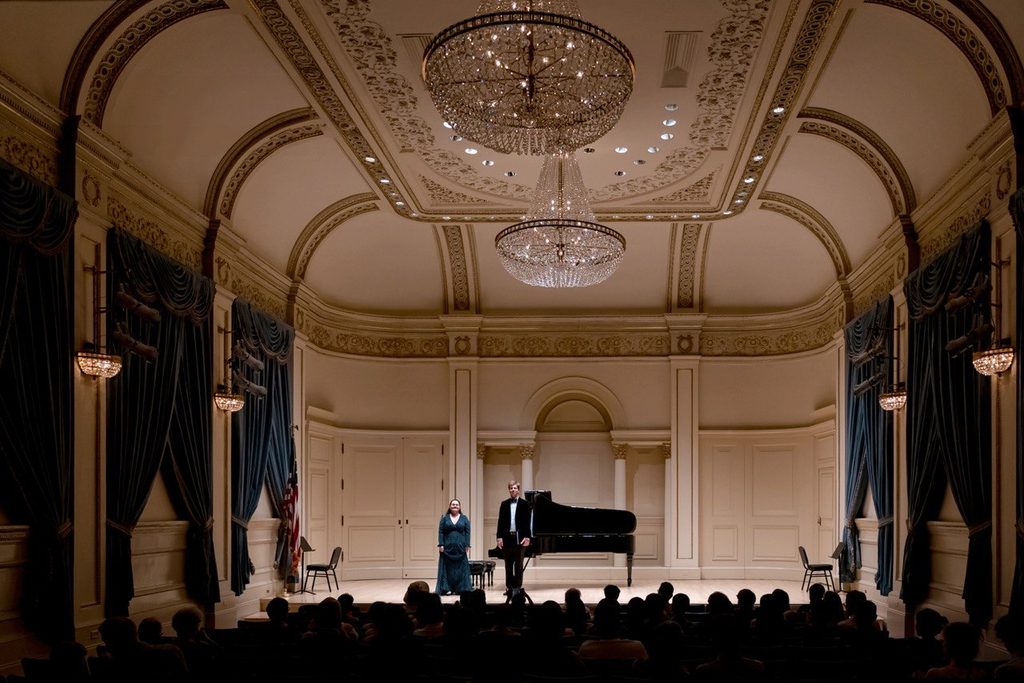
Uzbekistan remains part of the sound
That idea of communication is also closely connected to Skobina’s sense of cultural identity.
“Uzbekistan is deeply present in who I am as an artist,” she says.
Growing up in Tashkent meant hearing European classical music alongside the musical traditions of Central Asia. Skobina believes the coexistence of those musical worlds helped shape her sensitivity to melody, rhythm, colour and emotional nuance.
She compares it to language: the sounds heard during childhood can continue to influence the ear long after someone stops consciously thinking about them.
“I don’t set out to make a piece sound ‘Uzbek’, or to layer one tradition visibly onto another,” she explains. “It’s more that my background comes through naturally in how I interpret music, because it’s simply part of who I am.”
“Cultural identity doesn’t need to be added to the music artificially – it’s already there, quietly shaping how I listen and how I communicate.”
That heritage is increasingly influencing not only how Skobina performs, but also the repertoire she wants to champion.
She names Mukhtar Ashrafi, Georgy Mushel, Mutal Burkhanov, Mirkhalil Mahmudov and Rustam Abdullaev among the Uzbek composers whose work she would like to see reach larger audiences. She is also particularly interested in drawing attention to women composers from Uzbekistan.
“There’s so much wonderful music from Uzbekistan and Central Asia that international audiences simply haven’t encountered yet,” she says.
For Skobina, the objective is not to present the repertoire primarily as unfamiliar or “exotic”, but to make a case for its artistic value in its own right.
“When I play music from Uzbekistan for an international audience, it feels personal – I’m sharing something connected to my home with people who may be hearing it for the first time.”
She hopes future concerts, recordings and collaborations can place Central Asian works alongside more established classical repertoire and allow listeners to encounter them as part of a living musical tradition.
One piano, two pianists
Collaboration is another important part of Skobina’s musical life.
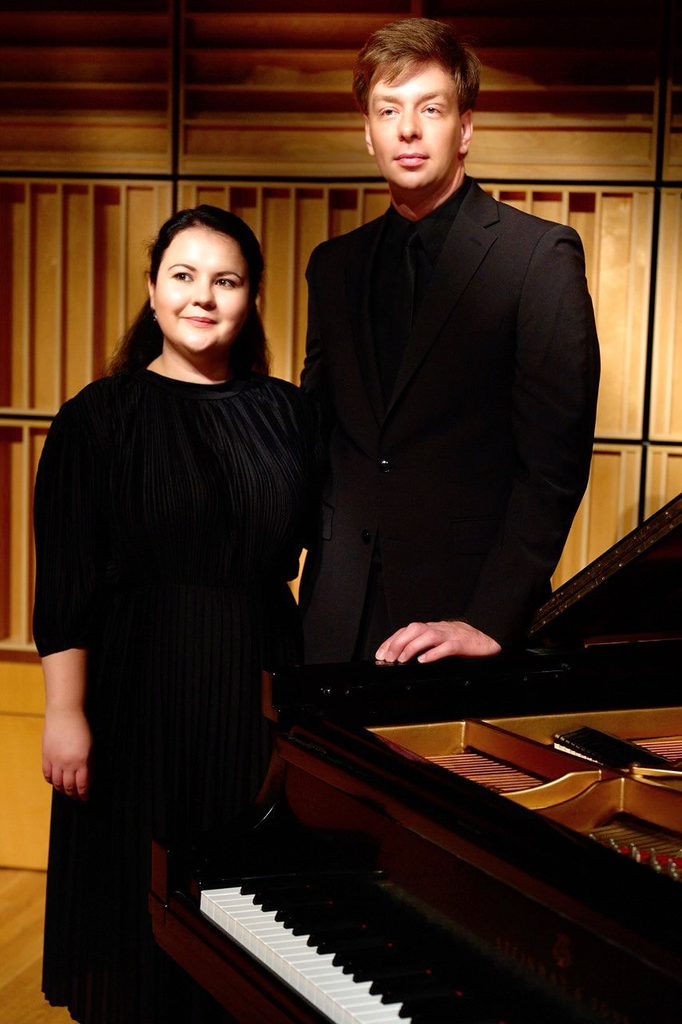
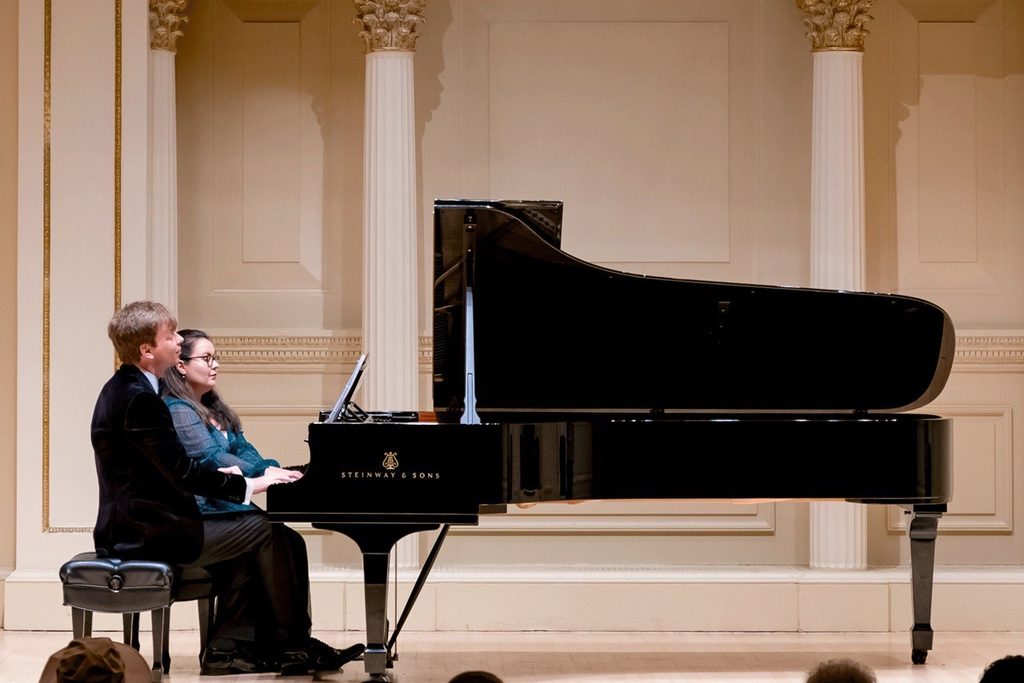
She performs with her husband, pianist Sergei Skobin, as the Skobin Duo, working across four-hand and piano-duo repertoire.
Playing together, she says, requires a different form of listening from solo performance.
“As a soloist, you’re responsible for the whole musical architecture yourself. In a duo, you have to build one musical organism together with another person.”
That means listening constantly – to timing, direction, sound, phrasing and the other performer’s intentions – while retaining an individual artistic voice.
Their marriage creates a degree of instinctive understanding, Skobina says, but not necessarily agreement.
“We don’t always hear things the same way, and I think that’s actually productive. Our conversations about phrasing, tempo, articulation and character often lead us somewhere neither of us would have found alone.”
Their repertoire has included Dvořák’s Slavonic Dances, the four-hand version of Gershwin’s Rhapsody in Blue and music connected to their Central Asian heritage.
For Skobina, the experience has also influenced her solo playing.
“Playing chamber music has made me a better listener, and that’s made me a better solo pianist too.”
Teaching the next generation
Teaching occupies an increasingly important place alongside performance.
Skobina says the influence of her own teachers – from Tashkent to Florida and New York – has convinced her that music education is not simply about transmitting technique.
She sees traces of each stage of her own education in the way she now works with students: discipline and foundations from her early teachers in Uzbekistan, depth from her conservatory training, individuality from Lynn University and a more developed understanding of sound and structure from Manhattan.
But she does not want her students to reproduce her own path.
“Every student is different,” she says. “Some need technical guidance, some need to learn to trust themselves, some need help finding their own voice, some just need someone to believe in them.”
“I don’t want my students to become copies of me. I want them to become themselves – independent, thoughtful musicians who can listen, question and make their own artistic decisions. Most of all, I want them to love music.”
A new international chapter
Skobina has recently been welcomed as a signed artist with Global Art & Culture USA, which she sees as an opportunity to bring several strands of her career together.
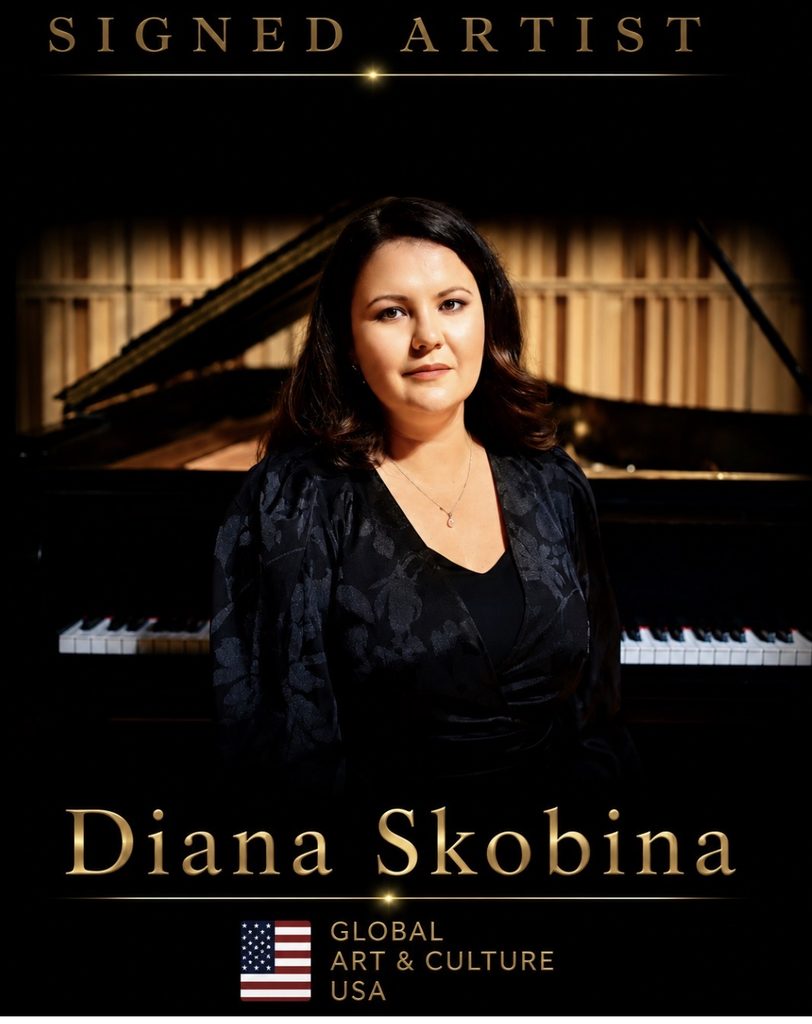
She hopes the new stage will support further international performance, recordings, collaborations and projects combining artistic work with education and cultural exchange.
In particular, she wants to develop programmes introducing audiences to music from Uzbekistan and Central Asia.
“I’m especially drawn to projects where different cultures meet through music,” she says. “For me, cultural exchange only really works when it’s grounded in genuine artistic dialogue.”
It is also an opportunity to define more clearly what she wants her international artistic identity to represent: an artist whose career and education span countries and institutions, but whose musical roots remain firmly connected to Uzbekistan.
Building that career has not always been straightforward.
Skobina speaks openly about the less visible aspects of international musical life: years of preparation, applications, travel, financial pressures, uncertainty and the constant need to create opportunities.
“There are moments where you have to be patient with yourself and keep moving even when the path isn’t clear,” she says.
But the reward remains essentially the same as it was when she first sat at the piano.
“There’s something incredibly special about sitting down at the piano and feeling, for a moment, that the audience and I are sharing the same emotional space.”
“And I feel especially fortunate that music has let me stay connected to Uzbekistan while building my life here in the US.”
Bringing Central Asian repertoire onto the international stage
With her postgraduate studies now completed, Skobina wants the coming years to bring more performance, recording, teaching and collaboration.
She plans to continue expanding her solo repertoire while developing the Skobin Duo and other chamber projects.
One of her clearest ambitions is to create programmes and recordings that place familiar works from the European classical repertoire alongside lesser-known music by Uzbek and Central Asian composers.
For Skobina, the point is not to separate the two traditions but to allow audiences to hear them in conversation.
“I’m also drawn to collaborations with musicians from different backgrounds and projects that combine performance, education and cultural exchange,” she says.
Her goal is an international career that continues to expand without weakening the link to where it began.
“I began this journey as a little girl in Tashkent, and I feel fortunate that the piano has taken me to so many places and introduced me to so many wonderful people.”
“I don’t know exactly where the next chapter leads, but I know I want to keep learning, performing, sharing music, and representing my culture with warmth and pride.”
For Skobina, the idea ultimately returns to the same principle that first drew her to performance as a child: music as something shared.
“Music has always been about connection for me,” she says. “It connects me to my childhood in Tashkent, to the traditions I was raised in, to the life and education I built in the US, and to audiences and musicians from many different cultures.”
“That’s what I hope to keep doing through my career – using music to connect people, while carrying forward the culture and heritage that shaped who I am.”
By Mathieu Lemoine, Editor-in-Chief for Novastan English.